
 100% FREE ACCESS
6th Standard Syllabus & Materials
6th Standard
TN 6th Tamil பருவம் 1 - இயல் 1 - மொழி -தமிழ்த்தேன் - இன்பத்தமிழ் Sample Question Papers Study Material - QB365 Set A
NEW6th Standard
TN 6th English T1 - Supplementary - The Apple Tree and The Farmer Sample Question Papers Study Material - QB365 Set A
NEW6th Standard
TN 6th English T1 - Prose - When The Trees Walked Sample Question Papers Study Material - QB365 Set A
NEW6th Standard
TN 6th Social Science T3 - CIV - Road Safety Sample Question Papers Study Material - QB365 Set A
NEW6th Standard
TN 6th Social Science T3 - CIV - Local Bodies - Rural and Urban Sample Question Papers Study Material - QB365 Set A
NEW6th Standard
TN 6th Social Science T3 - CIV - Democracy Sample Question Papers Study Material - QB365 Set A

Published on: 03/12/2019
Matter Around Us
Download Tamil Nadu 6th Standard Science question papers, model tests, one-mark questions, important questions, and public exam papers in PDF format. Free study materials and answer keys for TN State Board students.
Questions + Answers key
Take MCQ Science Test1.
One dot that you make with Your pen has more than ___________ Lakh Molecule
One
Two
Four
Three
2.
A standard sheet of paper is about___________ atoms thick.
Thousands
Crores
Lakhs
Million
3.
Among the following_________is not a mixture.
Coffee with milk
lemon juice
water
ice cream embedded with nuts.
4.
Seeds from water-melon can be removed by ________
hand-picking
filtration
magnetic separation
decantation
5.
200 ml of water is poured into a bowl of 400 ml capacity. The volume of water will be_________
400 ml
600 ml
200 ml
800 ml
6.
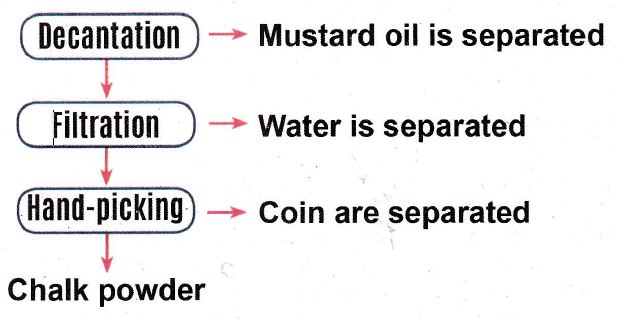
Using suitable apparatus from your laboratory separate the mixture of chalk powder, mustard oil, water and coins. Draw a flow chart to show the separation process
7.
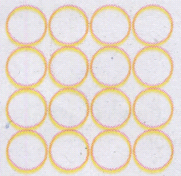
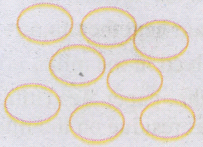
Distinguish the properties of solid, liquid and gas. Draw a suitable diagram.
8.
9.
What method will you employ to separate cheese (paneer) from milk? Explain.
10.
Why do gases not have fixed shape?
11.
Define - Sedimentation
12.
Give an example for mixture and justify your answer with reason.
13.
Why do we separate mixtures?
1.
(b)
Two
2.
(d)
Million
3.
(c)
water
4.
(a)
hand-picking
5.
(c)
200 ml
6.
(i) Using beakers, the mustard oil is separated by the process of decantation, because oil being lighter than water, floats on water.
(ii) Next filtration is using a funnel and filter paper and thus water gets separated from chalk powder and coins.
(iii) By hand-picking method, the coins are separated frorn chalk powder.
7.
| PARTTCLES IN A SOLID |
PARTICLES IN A LIQUID | PARTICLES IN GASEOUS |
 |
 |
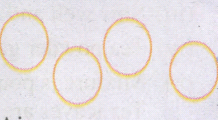 |
| S.No. | SOLID STATE | LIQUID STATE | GASEOUS STATE |
| 1. | Definite shape and volume | No definite shape, liquids attain the shape of the vessel in which they are kept. | Gases have neither a definite shape nor a definite volume. |
| 2. | Incompressible | Compressible to a small extent. | Highly compressible |
| 3. | There is little space between the particles of solid. | These particles have a greater space between them. | The space between gas particles is the greatest. |
| 4. | These particles attract each other very strongly. | The force of attraction between liquid particles is lesser than solid particles. | Thd force of attraction is least between gaseous particles. |
| 5. | Particles of solid cannot move freely. | These particles move freely. | Gaseous particles are in a continuous, random motion. |
8.
9.
Cheese canbe separated from milk by
(i) Filtering the mixture through a fine cloth or strainer.
(ii) The solid particles will be retained by the strainer and unwanted liquid will pass through.
10.
(i) The atoms of a gas never stop moving.
(ii) They are not affected by gravity.
(iii) They spread out in order to occupy the available space.
11.
The settling down of heavier component of a mixture when allowed to remain undisturbed for some time is called sedimentation.
12.
Lemon juice is a mixture because it is a miture of lemon extract, water and sugar. This is a mixture though the amount of sugar and water added is different we know that, in a mixture the components are mixed in any proportion.
13.
We have to separate mixture,
(i) to remoe impurities
(ii) to separate useful components
(iii) to get a highty pure form substance

6th Standard Syllabus & Materials
6th Standard
TN 6th Social Science T3 - GEO - Understanding Disaster Sample Question Papers Study Material - QB365 Set A
NEW6th Standard
TN 6th Social Science T3 - GEO - Globe Sample Question Papers Study Material - QB365 Set A
NEW6th Standard
TN 6th Social Science T3 - GEO - Asia and Europe Sample Question Papers Study Material - QB365 Set A
NEW6th Standard
TN 6th Social Science T3 - HIS - South Indian Kingdoms Sample Question Papers Study Material - QB365 Set A



Tamilnadu Stateboard 6th Standard Subjects
Tamilnadu Stateboard Standards




