
 100% FREE ACCESS
6th Standard Syllabus & Materials
6th Standard
TN 6th Tamil பருவம் 1 - இயல் 1 - மொழி -தமிழ்த்தேன் - இன்பத்தமிழ் Sample Question Papers Study Material - QB365 Set A
NEW6th Standard
TN 6th English T1 - Supplementary - The Apple Tree and The Farmer Sample Question Papers Study Material - QB365 Set A
NEW6th Standard
TN 6th English T1 - Prose - When The Trees Walked Sample Question Papers Study Material - QB365 Set A
NEW6th Standard
TN 6th Social Science T3 - CIV - Road Safety Sample Question Papers Study Material - QB365 Set A
NEW6th Standard
TN 6th Social Science T3 - CIV - Local Bodies - Rural and Urban Sample Question Papers Study Material - QB365 Set A
NEW6th Standard
TN 6th Social Science T3 - CIV - Democracy Sample Question Papers Study Material - QB365 Set A

Published on: 13/12/2019
The Cell
Download Tamil Nadu 6th Standard Science question papers, model tests, one-mark questions, important questions, and public exam papers in PDF format. Free study materials and answer keys for TN State Board students.
Questions + Answers key
Take MCQ Science Test1.
Shiva said “ Bigger onion has larger cells when compared to the cells of smaller onion”! Do you agree with his statement or not ? Explain Why?
2.
Which one is called as “Area of movement"?
3.
Give any three examples of eukaryotic cell?
4.
What type of cells do we have?
5.
Who discovered the cell in 1665?
6.
Write about the contribution of Robert Hooke in cell biology.
7.
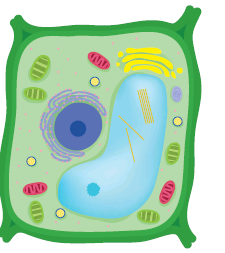
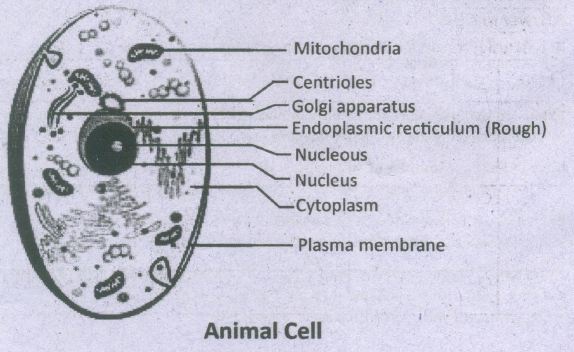
Make sketches of animal and plant cells which you observe under microscope.
8.
Distinguish between prokaryotic and eukaryotic cells
9.
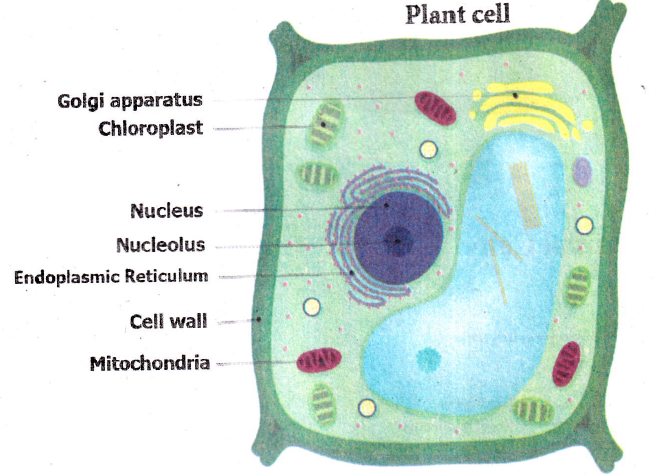
Identify any four parts of the Plant cell.
10.
Why cells are called building blocks of life?
11.
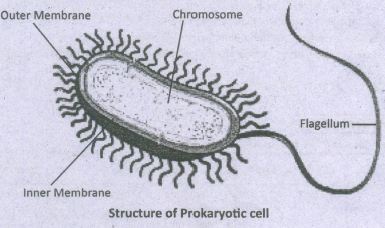
Draw a neat labelled diagram of a prokaryotic cell.
12.
Tabulate any five cell organelles and their function.
13.
Most organelles in an eukaryotic cell is found in the
Cell wall
cytoplasm
nucleus
Vacuole
14.
Which one of the following is not an unicellular organism?
Yeast
Amoeba
Spirogyra
Bacteria
15.
The ‘control centre’ of the eukaryotic cell is
Cell wall
Nucleus
Vacuoles
Chloroplast
16.
Under the microscope Priya observes a cell that has a cell wall and distinct nucleus. The cell that she observed is
a plant cell
an animal cell
a nerve cell
a bacteria cell
17.
The unit of measurement used for expressing dimension (size) of cell is _________
centimeter
millimeter
micrometer
meter
1.
I can't agree his statement. Because cell sizdhas no relation to the size of an organism.
2.
Cytoplasm is called as "Area of movement"
3.
Plant cell,Animal cell and most of fungi.
4.
We have eukaryotic cells.
5.
Robert hook discovered the cell in 1665.
6.
(i) Robert Hook designed the compound microscope.
(ii) He published a book named "Micrographia" in the year 1665.
(iii) He introduce the term cell, which from the latin word "cellula" means a small chamber.
(iv) He observed many objects like Butterfly's wings, Bee's compound eyes under microscope.
7.
.JPG)
8.
| SI.No. | Prokaryotic cell | Eukaryotic cell |
| 1. | It's diameter ranges from 1 to 2 micron | It's diameter ranges from 10 to 100 micron |
| 2. | Absence of membrane bound organelles | Presence of membrane bound organelles |
| 3. | Nucleus consisting of no nuclear membrane | True nucleus consisting of nuclear membrane |
| 4. | Absence of nucleoli | Presence of nucleoli |
9.
10.
(i) Cell is the basic structural and functional unit of every living organism.
(ii) cell is self sufficient to carryout all the fundamental and essential functions of an organism.
(iii) Without cell there is no life, So cells are called as building blocks of life.
11.
12.
| Cell Organelles | Main Functions |
|---|---|
| Cell wall | Surrounds and protects the cell. Make the cell stiff and strong. |
| Cell membrane | Holds and protects the cell. Controls the movement of materials in and out of the cell. |
| Cytoplasm | A watery gel - like material in which cell parts move. |
| Mitochondria | Produce and supply most of the energy for the cell. |
| Chloroplasts | Capture the energy from sunlight and use it to produce food for the cell by photosynthesis. |
13.
(b)
cytoplasm
14.
(c)
Spirogyra
15.
(b)
Nucleus
16.
(a)
a plant cell
17.
(c)
micrometer

6th Standard Syllabus & Materials
6th Standard
TN 6th Social Science T3 - GEO - Understanding Disaster Sample Question Papers Study Material - QB365 Set A
NEW6th Standard
TN 6th Social Science T3 - GEO - Globe Sample Question Papers Study Material - QB365 Set A
NEW6th Standard
TN 6th Social Science T3 - GEO - Asia and Europe Sample Question Papers Study Material - QB365 Set A
NEW6th Standard
TN 6th Social Science T3 - HIS - South Indian Kingdoms Sample Question Papers Study Material - QB365 Set A



Tamilnadu Stateboard 6th Standard Subjects
Tamilnadu Stateboard Standards




