
 100% FREE ACCESS
6th Standard CBSE Syllabus & Materials
6th Standard CBSE
CBSE 6th Social Science The Value of Work - New Sample Question Papers Study Material - QB365 Set A
NEW6th Standard CBSE
CBSE 6th Social Science Family and Community - New Sample Question Papers Study Material - QB365 Set A
NEW6th Standard CBSE
CBSE 6th Social Science India's Cultural Roots - New Sample Question Papers Study Material - QB365 Set A
NEW6th Standard CBSE
CBSE 6th Social Science India,That is Bharat - New Sample Question Papers Study Material - QB365 Set A
NEW6th Standard CBSE
CBSE 6th Social Science Timeline and sources of history - New Sample Question Papers Study Material - QB365 Set A
NEW6th Standard CBSE
CBSE 6th Social Science Oceans and Continents - New Sample Question Papers Study Material - QB365 Set A

Published on: 25/10/2025
Download CBSE Class 6th Standard CBSE Social Science question papers, sample papers, important questions, and previous year solved papers in PDF format. Get free study materials, NCERT solutions, and exam preparation resources for Class 6th Standard CBSE Social Science
Questions + Answers key
Take MCQ Social Science Test
1.
What are Vedas? Mary wondered let us find out
2.
List any two departments of the Municipal Corporation.
3.
How was street-vending earlier looked upon by people?
4.
What is wind?
5.
What was mandapa?
6.
Why did Ajatasattu send his minister to the Buddha?
7.
Name the two regions of Jammu and Kashmir which are freezing cold.
8.
On which day the tropic of Capricorn receives direct sun rays?
9.
Mention the occupations of people who lived in Mathura?
10.
Where was the evidence of dockyard found in Harappan cities?
11.
What are manuscripts?
12.
Who is the Municipal Councillor?
13.
What are the problems faced by non-permanent workers?
14.
In the meeting of the Gram Sabha so far what are the problems that are being discussed? What sort of solutions are being suggested?
15.
Name the major physical divisions of India.
16.
What type of objects are considered by the archaeologists in their study?
17.
Answer the questions based on picture given below:
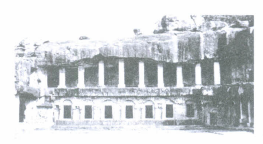
(i) Where is the Jaina monastery in the picture situated?
(ii) What were the rooms of the building used for?
18.
What was the ashvamedha?
19.
Explain the main features of Arikamedu settlement.
20.
Describe the traces of bones from the sites of Mehrgarh.
1.
()
The Vedas are composition of hymns called sukta. These hymns are in praise of various gods and goddesses.
2.
()
The two departments of Municipal Corporation are:
(i) The garbage collection department
(ii) Water department
3.
()
It was earlier considered as an obstruction to traffic and to people talking.
4.
()
The movement of air from high pressure to low pressure is called wind.
5.
()
Mandapa was a hall where people could assemble. It was built in most of the temples.
6.
()
Ajatasattu wanted to attack the Vajjis, so he sent his minister to the Buddha to get his advice on the matter.
7.
()
Drass and Kargil
8.
()
On 22nd December, the tropic of Capricorn receives direct sun rays.
9.
()
People living in Mathura were goldsmiths, blacksmiths, weavers, basket makers, garland makers and perfumers.
10.
()
A dockyard has been found at Lothal, Gujarat, where a huge tank may have been a dockyard, where the boats and ships came in from the sea and through the river channel.
11.
()
Hand written scripts on palm leaf or on the birch a long ago are called manuscripts.
12.
Elected representative of a ward is the Municipal Councillor.
13.
The problems faced by non-permanent workers are as follow:
(i) If workers complain about their pay or working conditions, they are asked to leave.
(ii) There is no job security or protection if there is ill treatment.
(iii) They are also expected to work very long hours.
14.
In the meeting of the Gram Sabha sofar, several problems have been discussed:
(i) Repairing of roads.
(ii) Water and water shortages.
(iii) Finalisation of list of People Below the Poverty Line (BPL)
The solutions that are being suggested are:
(i) Piping water from the Sum river and making an overhead tank in the villages.
(ii) Deepening the handpumps and cleaning the wells.
(iii) Conserving water and recharging it.
(iv) Name of Om Prakash should be in the BPL list.
15.
The major physical division of India are- The Himalayas; The Northern Indian Plains; The Great Indian Desert; The Peninsular Plateau; The Coastal Plains; and Group of Islands.
16.
Generally, the archaeologists study the remains of buildings made of stone and brick, paintings and sculptures. They also explore and excavate to find out the objects of daily use such as tools, weapons, pots, pans, ornaments and coins.
17.
(i)The Jaina monastery in the picture is situated In Odisha.
(ii)Jaina monks lived and meditated In these rooms.
18.
The ashvamedha or horse sacrifice was one such ritual. A horse was let loose to wander freely and it was guarded by the raja's men. If the horse wandered into the kingdoms of other rajas and they stopped it, they had to fight. If they allowed the horse to pass, it meant that they accepted that the raja who wanted to perform the sacrifice was stronger than them. These rajas were then invited to the sacrifice, which was performed by specially trained priests, who were rewarded with gifts. The raja who organised the sacrifice was recognised as being very powerful, and all those who came brought gifts for him to show respect.
19.
(i) Arikamedu is located in Pondicherry. Between 2200 and 1900 years ago, this site was a coastal settlement where ships unloaded goods from distant lands.
(ii) A massive brick structure, which may have been a warehouse, was found at the site.
(iii) Other finds of Arikamedu included pottery from the Mediterranean region, such as amphorae, stamped red-glazed pottery, local made pottery which used Roman designs.
(iv) Roman lamps, glassware and gems have also been found at the site.
(vi) Small tanks have been found that were probably used to dye cloth.
(vii) There is plenty of evidence for the making of beads from semi-precious stones and glass.
20.
Traces of bones of various animals have been found at the site of Mehrgarh.
(i) It was probably one of the places where women and men learnt to grow barley and wheat, and rear sheep and goats for the first time in this area. It is one of the earliest villages that we know about.
(ii) The evidence of many kinds of animal bones from c the earliest levels has been found by archaeologists during excavation levels, which included bones of wild animals such as deer and pig.
(iii) In later levels, they found more bones of sheep and goat and in still later levels, cattle bones are most common.
(iii) This implies that sheep, goat and cattle were reared by people in later period.

6th Standard CBSE Syllabus & Materials
6th Standard CBSE
CBSE 6th Social Science Locating Places on the Earth - New Sample Question Papers Study Material - QB365 Set A
NEW6th Standard CBSE
CBSE 6th Science A Journey Through States of Water - New Sample Question Papers Study Material - QB365 Set A
NEW6th Standard CBSE
CBSE 6th Science Temperature and its Measurement - New Sample Question Papers Study Material - QB365 Set A
NEW6th Standard CBSE
CBSE 6th Science Materials Around Us - New Sample Question Papers Study Material - QB365 Set A



NCERT Books

Syllabus

Exam Pattern

Sample Question Papers

Previous year Question Papers

Important Notes

MCQ Practice test

NCERT Exemplers

Case study Questions

Image Based Questions

Passage based Questions

HOT Questions

Value Based Questions

Model Questions Papers
NCERT ( Book Back ) Questions

Assertion and Reason
Important Questions And Answers

CBSE 6th Standard CBSE Subjects
CBSE Standards


