
 100% FREE ACCESS
6th Standard CBSE Syllabus & Materials
6th Standard CBSE
CBSE 6th Social Science The Value of Work - New Sample Question Papers Study Material - QB365 Set A
NEW6th Standard CBSE
CBSE 6th Social Science Family and Community - New Sample Question Papers Study Material - QB365 Set A
NEW6th Standard CBSE
CBSE 6th Social Science India's Cultural Roots - New Sample Question Papers Study Material - QB365 Set A
NEW6th Standard CBSE
CBSE 6th Social Science India,That is Bharat - New Sample Question Papers Study Material - QB365 Set A
NEW6th Standard CBSE
CBSE 6th Social Science Timeline and sources of history - New Sample Question Papers Study Material - QB365 Set A
NEW6th Standard CBSE
CBSE 6th Social Science Oceans and Continents - New Sample Question Papers Study Material - QB365 Set A

Published on: 25/10/2025
Download CBSE Class 6th Standard CBSE Social Science question papers, sample papers, important questions, and previous year solved papers in PDF format. Get free study materials, NCERT solutions, and exam preparation resources for Class 6th Standard CBSE Social Science
Questions + Answers key
Take MCQ Social Science Test
1.
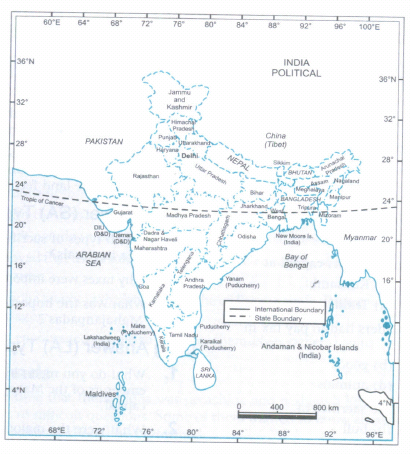
Find the state in which you live in the political map on page 136. Were there any janapada in your state? If yes, name them.
If not, name the janapadas that would have been the closest to your state, and mention whether they
were to the East, West, North or South.
2.
What was the ashvamedha?
3.
Answers the questions based on the given picture below.
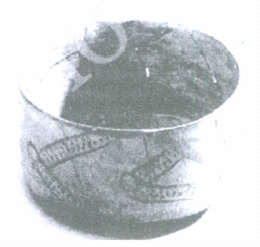
(i) From which metal these bowls were made?
(ii) When were these bowls used?
4.
______ were paid reqularsalaries and maintained by ________ throughout the year.
5.
The ________ were expected to fight battles and protect people.
6.
The _________ was a central figure in all the rituals.
7.
Why did people oppose the system of varna?
8.
What do you think would have been provided by hunters and gatherers?
9.
In what ways are present-day elections different from the ways in which rulers were chosen in janapadas?
10.
You are peeping through a crack in the walls of the assembly of Vaishali, where a meeting is in progress to discuss ways to deal with an attack by the king of Magadha. Describe what you might hear.
11.
What were the characteristics of the earthen pots used by the people in janapadas?
12.
What do the archaeological excavations tell about the janapadas settlements?
13.
When Ajatasattu wanted to attack the Vajjis, whom did he send to seek the advice of the Buddha?
14.
Who could not participate in the assemblies of gana or sangha?
15.
Who was Mahapadma Nanda?
16.
What were mahajanapadas?
17.
Citizens of Athens were expected to serve in the
politics
army and navy
foreign country
civil society
18.
Who were expected to be farmers, herders and traders?
Vaishyas
Charioteers
Rajas
Brahmins
19.
Mahajanapada Vajji had its capital at
Kaushambi
Ujjain
Vaishali
Taxila
20.
The priests divided people into four groups called
priest
varnas
kshatriya
shudra
21.
Vedic books were composed by
priests
charioteers
kshatriyas
shudras
22.
The present name of Rajagriha is
Rajgir
Rajgir
Gaya
Rajkot
23.
Who was the central figure in Ashvamedha rituals?
Men
Women
Raja
Brahmin
1.
Hints for students
(i) Name and location of your state or Union Territory, write the name of your region.
(ii) Look carefully in the map, is any janapada site in your state/UTs.
(iii) If yes, name that janapadas.
(iv] If not, look all directions of your state (East, West, North, South).
(v) See the map
2.
The ashvamedha or horse sacrifice was one such ritual. A horse was let loose to wander freely and it was guarded by the raja's men. If the horse wandered into the kingdoms of other rajas and they stopped it, they had to fight. If they allowed the horse to pass, it meant that they accepted that the raja who wanted to perform the sacrifice was stronger than them. These rajas were then invited to the sacrifice, which was performed by specially trained priests, who were rewarded with gifts. The raja who organised the sacrifice was recognised as being very powerful, and all those who came brought gifts for him to show respect.
3.
(i) Bowls are the earthern pots made out of Painted Grey Ware.
(ii) These bowls were used on special occasions, for important people, and to serve special food.
4.
()
Soldiers, the king
5.
()
kshatriyas
6.
()
raja
7.
(i) The priests divided people into four groups, called varnas. According to them, each varna had a different set of functions.
(ii) The priests also said that these groups were decided on the basis of birth. Many people did not accept the system of varna laid down by the brahmins.
(iii) Some people felt that there should be no differences amongst people based on occupation.
(iv) Some felt that everybody had the right to perform rituals. Many opposed the concept of untouchability. In this way, people opposed the system of varna.
8.
The hunters may have brought fresh meat everyday for the king. Gatherers brought forest produce like honey and nuts for the king.
9.
Present-day elections are different from the ways in which rulers were chosen in janapadas:
(i) Present-day elections are conducted by Election Commission. In janapadas, we did not have Election Commission.
Some of the rajas were probably chosen by the jana i.e. the people. But around 3000 years ago, we find some changes taking place in the ways in which rajas were chosen. Some men now became recognised as rajas by performing very big sacrifices.
(ii) In present-day elections, all adult citizens of 18 years participate in election process. But in janapadas, all men were recognised as full citizens. In janapadas, women and slaves were not considered equal free citizens.
10.
The jana or assembly in Vaishali is holding a meeting to discuss how to deal with an attack by the king of Magadha.
The ongoing discussion may include these types of questions:
(i) Who is going to lead the army?
(ii) Who is in the total control of the army?
(iii) Who will lead the elephants, horses and chariots, the different wings of the army?
(iv) What strategy will be adopted in the direct combat?
(v) Will the leaders meet during the battle to discuss the situation?
11.
The characteristics of the earthen pots are:
(i) In janapadas, people made earthen pots, some of these were grey in colour and others were red.
(ii) One special type of pottery found at these sites is known as Painted Grey Ware, and such pots had painted designs, usually simple lines and geometric patterns.
12.
Archaeologists have excavated a number of settlements in janapadas, such as Purana Qila in Delhi, Hastinapur near Meerut and Atranjikhera near Etah (the last two are in Uttar Pradesh)
(i) Archaeologists found that people lived in huts and kept cattle as well as other animals.
(ii) They also grew a variety of crops - rice, wheat, barley, pulses, sugarcane, sesame and mustard.
13.
()
Ajatasattu sent his minister named Vassakara to the Buddha to get his advice on the matter.
14.
()
Women, dasas and kammakaras could not participate in the assemblies of gana or sangha.
15.
()
Mahapadma Nanda was one of the important rulers of Magadha who extended his control upto the North-West part of the sub-continent.
16.
()
About 2500 years ago, some janapadas became more important than others and were known as mahajanapadas.
17.
(b)
army and navy
18.
(a)
Vaishyas
19.
(c)
Vaishali
20.
(b)
varnas
21.
(a)
priests
22.
(a)
Rajgir
23.
(c)
Raja

6th Standard CBSE Syllabus & Materials
6th Standard CBSE
CBSE 6th Social Science Locating Places on the Earth - New Sample Question Papers Study Material - QB365 Set A
NEW6th Standard CBSE
CBSE 6th Science A Journey Through States of Water - New Sample Question Papers Study Material - QB365 Set A
NEW6th Standard CBSE
CBSE 6th Science Temperature and its Measurement - New Sample Question Papers Study Material - QB365 Set A
NEW6th Standard CBSE
CBSE 6th Science Materials Around Us - New Sample Question Papers Study Material - QB365 Set A



NCERT Books

Syllabus

Exam Pattern

Sample Question Papers

Previous year Question Papers

Important Notes

MCQ Practice test

NCERT Exemplers

Case study Questions

Image Based Questions

Passage based Questions

HOT Questions

Value Based Questions

Model Questions Papers
NCERT ( Book Back ) Questions

Assertion and Reason
Important Questions And Answers

CBSE 6th Standard CBSE Subjects
CBSE Standards


