
 100% FREE ACCESS
6th Standard CBSE Syllabus & Materials
6th Standard CBSE
CBSE 6th Social Science The Value of Work - New Sample Question Papers Study Material - QB365 Set A
NEW6th Standard CBSE
CBSE 6th Social Science Family and Community - New Sample Question Papers Study Material - QB365 Set A
NEW6th Standard CBSE
CBSE 6th Social Science India's Cultural Roots - New Sample Question Papers Study Material - QB365 Set A
NEW6th Standard CBSE
CBSE 6th Social Science India,That is Bharat - New Sample Question Papers Study Material - QB365 Set A
NEW6th Standard CBSE
CBSE 6th Social Science Timeline and sources of history - New Sample Question Papers Study Material - QB365 Set A
NEW6th Standard CBSE
CBSE 6th Social Science Oceans and Continents - New Sample Question Papers Study Material - QB365 Set A

Published on: 24/10/2025
Download CBSE Class 6th Standard CBSE Social Science question papers, sample papers, important questions, and previous year solved papers in PDF format. Get free study materials, NCERT solutions, and exam preparation resources for Class 6th Standard CBSE Social Science
Questions + Answers key
Take MCQ Social Science Test
1.
Describe the functions of urban administration.
2.
What is horsts and graben?
3.
What is Upanishad? Name some important thinkers of Upanishad.
4.
Giving an example, state how the three domains of the Earth interact with each other.
5.
Discuss why land records are compulsory.
6.
The empire was a vast territory. How did the emperors run the empire?
7.
Name the book where rules made for the Buddhist Sanghas were written down.
8.
List any two departments of the Municipal Corporation.
9.
Why the lava plateaus are good for cultivation?
10.
what are the important needs of villages?
11.
What are the water bodies that bind Arctic Circle?
12.
Kalinga is the ancient name of
Coastal Karnataka
Coastal Odisha
Coastal Goa
Coastal Maharashtra
13.
A woman Upanishad thinker was:
Urmila
Jabali
Bhairavi
Gargi
14.
Buddha has referred to our actions as :
Viharas
Tanha
Karma
Vyavhara
15.
On an outline map of the world, mark the following:
(i) Mountain ranges: Himalayas, Rockies and Andes.
(ii) Plateau Tibet
16.
At the village level, the _____________ maintains the land records.
17.
PWD means ____________
18.
Property taxes however form only 20-30 percent of the money that a .......... earns.
1.
The functions of urban administration are the following:
(i) Collection of house tax and water taxes.
(ii) Cleaning of city drainage system
(iii) Maintenance of parks and markets.
(iv) Regulating the urban development and local management of civic facilities.
2.
The horsts and graben are related with plateau. The uplifted blocks of plateau are termed as horsts while the lower blocks of plateau on the steep are called graben.
3.
Upanishad is later Vedic text. It literally means 'approaching and sitting near' and often ideas are presented through simple conversations between teachers and students. Upanishadic thinkers are mainly men, i.e. branmins and rajas \/ery few women thinkers, like Gargi are mentioned.
Poor people, like Satyakama Jabala is a famous thinker of that period. Upanishads are later developed by the great thinker Shankaracharya.
4.
(i) All living organisms including humans are linked to each other and to the biosphere for survival.
(ii) The organisms in biosphere may be broadly divided into the plant kingdom and animal kingdom.
(iii) The three domains of the Earth interact with each other and affect each other in some way or the other.
For example, cutting of forests for fulfilling our needs of wood or clearing land for agriculture may lead to fast removal of soil from slopes. Similarly, the earth's surface may be changed due to natural calamities like earthquakes.
5.
There are several reasons for which land records are compulsory. Suppose a farmer wants to buy a plot or field. Then, he needs to authenticate it. This can be done through the land records. If a farmer wants a loan from banks to dig a well in his land, he has to show the land records to prove that the land belongs to him. Moreover, these records are also essential for buying and selling of their properties. If the farmer wants to divide his property among his children, then the land records are essential.
6.
The emperors run the empire as:
• The ruling pattern was varying in empires due to the largeness of the empire.
• The area around Pataliputra was under the direct control of the emperor meant that officials were appointed to collect taxes from farmers, herders, craftspersons and traders, who lived in villages and towns in the area.
• Many of these officials were given salaries and these officials punished those who disobeyed the ruler's orders.
• Messengers went to and fro, and spies kept a watch on the officials and of course the emperor supervised them all, with the help of members of the royal family, and senior ministers.
• The other areas or provinces were ruled from a provincial capital such as Taxila or Ujjain although there was some amount of control from Pataliputra.
• The royal princes were often sent as governors, local customs and rules were probably followed.
7.
()
The rules made for the Buddhist Sangha were written down in a book called the Vinaya Pitaka
8.
()
The two departments of Municipal Corporation are:
(i) The garbage collection department
(ii) Water department
9.
()
Lava plateaus are rich in black soil that is fertile and good for cultivation.
10.
()
The important needs of villages are water, electricity, sanitation, road connections.
11.
()
The water bodies that bind Arctic Circle are Atlantic ocean, Pacific ocean and Arctic ocean.
12.
(b)
Coastal Odisha
13.
(d)
Gargi
14.
(c)
Karma
15.
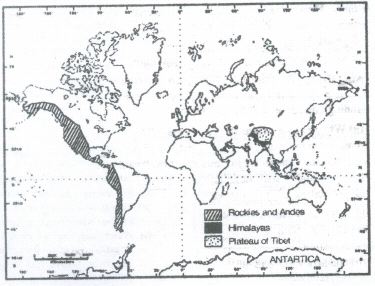
16.
()
Patwari
17.
()
Public Works Department
18.
()
Municipal Corporation

6th Standard CBSE Syllabus & Materials
6th Standard CBSE
CBSE 6th Social Science Locating Places on the Earth - New Sample Question Papers Study Material - QB365 Set A
NEW6th Standard CBSE
CBSE 6th Science A Journey Through States of Water - New Sample Question Papers Study Material - QB365 Set A
NEW6th Standard CBSE
CBSE 6th Science Temperature and its Measurement - New Sample Question Papers Study Material - QB365 Set A
NEW6th Standard CBSE
CBSE 6th Science Materials Around Us - New Sample Question Papers Study Material - QB365 Set A



NCERT Books

Syllabus

Exam Pattern

Sample Question Papers

Previous year Question Papers

Important Notes

MCQ Practice test

NCERT Exemplers

Case study Questions

Image Based Questions

Passage based Questions

HOT Questions

Value Based Questions

Model Questions Papers
NCERT ( Book Back ) Questions

Assertion and Reason
Important Questions And Answers

CBSE 6th Standard CBSE Subjects
CBSE Standards


