
 100% FREE ACCESS
6th Standard CBSE Syllabus & Materials
6th Standard CBSE
CBSE 6th Social Science The Value of Work - New Sample Question Papers Study Material - QB365 Set A
NEW6th Standard CBSE
CBSE 6th Social Science Family and Community - New Sample Question Papers Study Material - QB365 Set A
NEW6th Standard CBSE
CBSE 6th Social Science India's Cultural Roots - New Sample Question Papers Study Material - QB365 Set A
NEW6th Standard CBSE
CBSE 6th Social Science India,That is Bharat - New Sample Question Papers Study Material - QB365 Set A
NEW6th Standard CBSE
CBSE 6th Social Science Timeline and sources of history - New Sample Question Papers Study Material - QB365 Set A
NEW6th Standard CBSE
CBSE 6th Social Science Oceans and Continents - New Sample Question Papers Study Material - QB365 Set A

Published on: 24/10/2025
Download CBSE Class 6th Standard CBSE Social Science question papers, sample papers, important questions, and previous year solved papers in PDF format. Get free study materials, NCERT solutions, and exam preparation resources for Class 6th Standard CBSE Social Science
Questions + Answers key
Take MCQ Social Science Test
1.
Mention the archaeological sources which tell us about man's life in the early period.
2.
Did division of labour exist during the prehistoric times?
3.
When people couldn't travel from one place to another, did they spend their entire lives wherever they were born?
4.
What do you think the beads could have been used for?
5.
What do you think the term Neolithic means?
6.
Stone tools found during Mesolithic period are called
microliths
spears
arrows
None of these
7.
Traces of ash have been found in
Hunsgi
Mumbai
Kurnool
Bhimbetka
8.
Most of the rock shelters were close to
Shivalik
Himalaya
River
Narmada valley
9.
Edible plants are
poisonous
non-poisonous
tool making plants
used in making huts
10.
The hunter-gatherers lived in the subcontinent as early as
1 million years ago
2 million years ago
3 million years ago
4 million years ago
11.
Which period witnessed environmental changes like the melting of glaciers and their replacement by thick forests ? What else do you know about this period ?
12.
What are the important features of the paintings drawn on the rock shelters of Bhimbetka ?
13.
Answer the questions based on the picture given below:
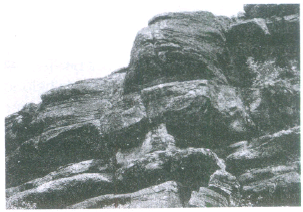
(i) Where are the above sites located?
(ii) Bhimbetka is located in which state?
(iii) Which valley is closer to these rock shelters?
14.
How were the 'habitation-cum-factory' sites different from factory sites?
15.
Where were traces of ash found?
16.
When did the Neolithic period begin ?
17.
When did the grasslands develop?
18.
How long would it take you if you took a bus or rode a bicycle?
19.
How long would it take you to walk from your home to school?
1.
Archeological sources such as tools, caves and rock paintings tell us about the eating habits of early man, materials used by him during that time and the activities performed:
(i) Tools: The earliest tools were made of stone, bone and wood. They were used to cut meat and bones, scrape barks from trees, for hunting, for stitching clothes, etc.
(ii) Caves: People lived in caves and rock shelters as they provided them with shelter from the rain, heat and wind.
(iii) Rock paintings: The early man made paintings in the caves and rock shelters. These paintings were drawn with great accuracy and skill.
2.
The early man was a hunter and a gatherer. He also made stone tools and painted on cave walls. Till now, it is not really known about the division of labour as it existed during those times. However, there are at least two presumptions:
(i) It is presumed that both men and women might have done many tasks together.
(ii) At the same time, it is also possible that women did some tasks, while others were done only by men.
Moreover, different parts of the sub-continent must have followed different practices.
3.
These people couldn't go to far-off places, but they moved Significant distances in search of food to sustain their living.
4.
The beads could have been used for making ornaments and jewelleries.
5.
The term Neolithic means a New Stone Age, which was period in the development of human technology, beginning about 10,000 years ago.
6.
(a)
microliths
7.
(c)
Kurnool
8.
(d)
Narmada valley
9.
(b)
non-poisonous
10.
(b)
2 million years ago
11.
(i) The Mesolithic period, also referred to as the Middle Stone Age, witnessed environmental changes like the melting of glaciers and their replacement by thick forests.
(ii) This period stretches from 12,000 years ago till about 10,000 years ago.
(iii) The people of this period used small tools called microliths, such as spearheads and arrow heads.
(iv) Probably, agriculture was also practiced to some extent.
(v) Domestication of animals, most importantly of dogs, started.
12.
(i) The rock shelters of Bhimbetka are decorated with picture writings, depicting the life and times of pre-historic cave dwellers.
(ii) These paintings mirror the difficulties of the native man's struggle with life and also his accomplishments.
(iii)These paintings also show wild animals drawn with great accuracy.
(iv) Religious symbols those were popular with these pre-historic artists also adorn the walls of these shelters.
(v) The paintings are often superimposed, which reveal that the surfaces were used by different people at different times.
13.
(i) These sites are located in Bhimbetka.
(ii) Bhimbetka is located in Madhya Pradesh.
(iii) The Narmada Valley is close to these rock shelters.
14.
The habitation-cum-factory sites were different from factory sites in these ways:
(i) As stone tools were important, people tried to find places where good quality stone was easily available.
(ii) The places where stone was found and where people made tools are known as factory sites.
(iii) Archaeologists found blocks of stone, tools, that were made and discarded because they were not perfect, and chips of waste stone left behind at these sites.
(iv) Sometimes people lived in such sites for longer spells of time. These sites are called habitation-cum-factory sites.
15.
()
Traces of ash were found in the Kurnool caves
16.
()
The word 'Neolithic' has been derived from two Greek words, 'neo' meaning 'new' and 'lithos' meaning stone. The Neolithic period began 10,000 years ago.
17.
()
Around 12,000 years ago, due to relatively warm conditions, there was a major change in the climate of the world. This led to the development of the grasslands.
18.
()
If I took a bus it would be just 40 minutes. But if I rode on a bicycle it would take around 60 minutes.
19.
()
If I walked from my home to school, it would take me 2 hours.

6th Standard CBSE Syllabus & Materials
6th Standard CBSE
CBSE 6th Social Science Locating Places on the Earth - New Sample Question Papers Study Material - QB365 Set A
NEW6th Standard CBSE
CBSE 6th Science A Journey Through States of Water - New Sample Question Papers Study Material - QB365 Set A
NEW6th Standard CBSE
CBSE 6th Science Temperature and its Measurement - New Sample Question Papers Study Material - QB365 Set A
NEW6th Standard CBSE
CBSE 6th Science Materials Around Us - New Sample Question Papers Study Material - QB365 Set A



NCERT Books

Syllabus

Exam Pattern

Sample Question Papers

Previous year Question Papers

Important Notes

MCQ Practice test

NCERT Exemplers

Case study Questions

Image Based Questions

Passage based Questions

HOT Questions

Value Based Questions

Model Questions Papers
NCERT ( Book Back ) Questions

Assertion and Reason
Important Questions And Answers

CBSE 6th Standard CBSE Subjects
CBSE Standards


