
 100% FREE ACCESS
6th Standard CBSE Syllabus & Materials
6th Standard CBSE
CBSE 6th Social Science The Value of Work - New Sample Question Papers Study Material - QB365 Set A
NEW6th Standard CBSE
CBSE 6th Social Science Family and Community - New Sample Question Papers Study Material - QB365 Set A
NEW6th Standard CBSE
CBSE 6th Social Science India's Cultural Roots - New Sample Question Papers Study Material - QB365 Set A
NEW6th Standard CBSE
CBSE 6th Social Science India,That is Bharat - New Sample Question Papers Study Material - QB365 Set A
NEW6th Standard CBSE
CBSE 6th Social Science Timeline and sources of history - New Sample Question Papers Study Material - QB365 Set A
NEW6th Standard CBSE
CBSE 6th Social Science Oceans and Continents - New Sample Question Papers Study Material - QB365 Set A

Published on: 15/09/2018
Model Question 1
Download CBSE Class 6th Standard CBSE Social Science question papers, sample papers, important questions, and previous year solved papers in PDF format. Get free study materials, NCERT solutions, and exam preparation resources for Class 6th Standard CBSE Social Science
Questions + Answers key
Take MCQ Social Science Test
1.
The world's highest plateau is
Deccan plateau
Tibet plateau
Chhotanagpur plateau
African plateau
2.
Where was the image of the chief deity placed?
Bhitargaon
Garbhagriha
Shikhara
None of these
3.
How many standard times does Russia have?
10
12
8
11
4.
Sanskrit is a part of a family of languages which is known as
Indo-Dravin
Indo-European
Indo-Russian
Indo-China
5.
The palaces of early cities (2500 years ago) did not survive because they were made of
wood
iron
mud brick
Both 'a' and 'c'
6.
What does solar mean?
Related to the sun
Related to the moon
Related to the planet
Related to the universe
7.
The evidence of pit houses recovered from which of the sites?
Daojali Hading
Mehrgarh
Burzahom
Koldihwa
8.
Traces of ash gave the indication of
use of metal
use of match box
use of kerosene
use of fire
9.
The hunter-gatherers lived in the subcontinent as early as
1 million years ago
2 million years ago
3 million years ago
4 million years ago
10.
The earliest people lived along the bank of Narmada river are called
farmers
merchants
hunters
skilled gatherers
11.
Some uses of stone tools are given below, make a list of what these tools were used for and try and decide which of these tasks could be performed using a natural pebble. Give reasons for your answers.
12.
List one major difference between manuscripts and inscriptions.
13.
What are longitudes?
14.
How did the people of Inamgaon dispose of their dead?
15.
Why do you think it would have been difficult to use carts along the Silk Route?
16.
Why do you think he (Gautamiputra Shri Satakarni) wanted to control the coasts?
17.
What are the rings around some planets? Give some examples.
18.
How did ancient people determine direction during night?
19.
Look at the chart, you will find that some of the stages in the construction of irrigation works are mentioned. fill in the rest by using the following phrases:
• Labour is provided by the people.
• Farmers also benefit because crop production is more certain.
• Farmers have to increase production to pay taxes.
• Kings provide money and plan irrigation works.
| 1. Kings need money for armies, palaces, forts. | 2. They demand taxes from farmers. |
| 3. ______________ | 4. This is possible with irrigation. |
| 5. ______________ | 6. __________________ |
| 7.Production increases. | 8. So does revenue. |
| 9._______________ | |
20.
Make a list of the people who lived in the city. Were any of these people listed as living in villages such as Mehrgarh?
21.
What are Puranas? State some of their characteristics.
22.
What is a Stupa ? Mention its features
23.
Describe the architecture of the earliest Hindu temples.
24.
Who was Aryabhatta? What are his achievements?
25.
Why did people choose to travel in the past?
26.
Why do historians and archaeologists use various sources to study about our past?
27.
How did Dalits, women, tribals and peasants strive for equality?
28.
What are the unfortunate situations of the Dalits?
29.
'Each of these pilgrims left an account of his journey'. Discuss.
30.
Look at the picture and answer the questions based on this:
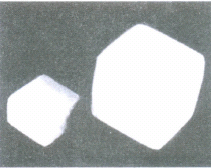
(i) Which type of weights are shown in the picture?
(ii) It was made from which type of stone?
(iii) Mention its use in the past?
31.
What could be the probable reasons as suggested by the archaeologists for the end of Harappa?
32.
Describe the drainage system of the Harappan cities.
1.
(b)
Tibet plateau
2.
(b)
Garbhagriha
3.
(d)
11
4.
(b)
Indo-European
5.
(d)
Both 'a' and 'c'
6.
(a)
Related to the sun
7.
(c)
Burzahom
8.
(d)
use of fire
9.
(b)
2 million years ago
10.
(d)
skilled gatherers
11.
The uses of tool:
(i) To cut meat and bone
(ii) To chop fruits and roots
(iii) To scraps bark and hides
(iv) To chop wood
12.
One major diffirence between manuscripts and inscriptions is:
| Manuscripts | Inscriptions |
|---|---|
| Manuscripts were written on palm leaf or specifically on the birch. | Inscriptions were written on hard surfaces such as stone, metals etc. |
13.
Longitudes are angular distance from the Prime Meridian. Lines joining the North Pole and South Pole are called the lines of longitude.
Longitudes help us in calculating time and locating place as well. The earth has been divided into 360 longitudes. The standard time is also based on longitudes.
14.
The people of Inamgaon disposed of their dead as:
(i) In Inamgaon, adults were generally buried in the ground, laid out straight, with the head towards the North.
(ii) Some burials were within the houses, and vessels that probably contained food and water were placed with the dead.
(iii) In the courtyard of a five roomed house which was in the centre of the settlement, one man was found buried in a large, four legged clay jar
(iv)The body was placed in a cross-legged position.
15.
It would have been difficult to use carts along the Silk Route because, it lays long dangerous route through roads, deserts and mountains. People living along the route often demanded payments for allowing traders to pass through. The traders could be attacked by robbers.
16.
Gautamiputra Shri Satakarni wanted to control the coasts because India had a brisk trade with foreign countries. Chiefs and kings who controlled the river valleys and the coasts became rich and powerful. He sent his army to the Western, Southern and Eastern coasts.
17.
The rings that appear around some planets are belts of small debris. These rings can be seen from the Earth through powerful telescope. The planets with these rings are Uranus, Jupiter and Saturn.
18.
The ancient people determined directions during night with the help of stars. The Pole Star always remains to the same direction and indicates North direction.
19.
| 1. Kings need money for armies, palaces, forts. | 2. They demand taxes from farmers. |
| 3. Farmers have to increase production to pay taxes. | 4. This is possible with irrigation. |
| 5. Kings provide money and plan irrigation works. | 6. Labour is provided by the people |
| 7.Production increases. | 8. So does revenue. |
| 9. Farmers also benefit because crop production is more certain. | |
20.
The people who lived in a Harappan city were:
(i) Rulers (ii) Traders (iii) Scribes (iv) Crafts persons
In Mehrgarh, there were farmers, herders and probably leaders of the tribes.
21.
(i) 'Purana' literally means 'old'. The Puranas contain stories about Gods and Goddesses, such as Vishnu, Shiva, Durga or Parvati.
(ii) They contain details of how Gods and Goddesses were to be worshipped.
(iii) There are accounts about the creation of the world and about kings.
(iv) The Puranas were written in simple Sanskrit and were meant to be heard by everybody, including women and Shudras, who were not allowed to study the Vedas.
(v) They were probably recited in temples by priests, and people came to listen to them.
22.
(i) The word Stupa means a mound. There are several kinds of stupas, round and tall, big and small which can be found.
(ii) There is a small box known as a relic casket, placed at the centre or heart of the Stupa. This may contain bodily remains (such as teeth, bone or ashes) of Buddha or his followers or the things which they used, as well as precious stones and coins. This box was covered with earth. Later, a layer of mud brick or baked brick was added on top. And then, the dome like structure was sometimes covered with carved stone slabs.
(iii) Often, a path known as the Pradakshina Patha was laid around the Stupa. This was surrounded with railings.
(iv) Entrance to the path was through gateways. Devotees walked around the stupa in a clockwise direction, as a mark of devotion.
(v) Both railings and gateways were often decorated with sculptures.
23.
(i) Some of the earliest Hindu temples were also built. Deities such as Vishnu, Shiva, and Durga were worshipped in these shrines.
(ii) The most important part of the temple was the room known as the Garbhagriha, where the image of the chief deity was placed. It was here that priests performed religious rituals, and devotees offered worship to the deity.
(iii)A tower, known as the Shikhara, was built on top of the Garbhagriha, to mark this out as a sacred place
(iv) Most temples also had a space known as the Mandapa. It was a hall where people could assemble.
24.
(i) Aryabhatta was a mathematician and astronomer who wrote a book in Sanskrit known as the Aryabhatiyam.
(ii) He stated that day and night were caused by the rotation of the earth on its axis, even though it seems as if the sun is rising and setting every day.
(iii) He developed a scientific explanation for eclipses as well.
(iv) He also found a way of calculating the circumference of a circle, which is nearly as accurate as the formula we use today.
25.
(i) In the ancient days, people travelled from one continent to the other. Natural barriers like hills and rivers made travelling difficult at times, but never impossible.
(ii) Men and women travelled in search of livelihood and then to escape natural disasters like flood or droughts.
(iii) Men in army travelled to conquer new territories and merchants travelled with caravans to trade goods and services. Holy men travelled from village to village imparting spiritual knowledge among the masses.
(iv) The people who travelled the most were the adventurers who wanted to explore new lands with a spirit of adventure.
(v) All the travelling helped in the intermixing of new ideas and knowledge. People came to know about the new customs and enhanced their knowledge about various communities.
26.
(i) Archaeologists and historians are scholars who study things that are made and used in the past through the process of excavation.
(ii) Manuscripts, inscriptions, tools, coins and monuments are the sources of information used by then to know about the past of the people.
(iii) Once these sources are found, learning about the past becomes an adventure and gradually, history is reconstructed. That is why, historians and archaeologists use various sources to study about our past.
27.
The struggle for freedom from British rule also included within it the struggle of large groups of people who not only fought against the British but also fought to be treated more equally. Dalits, women, tribals and peasants fought against the inequalities they experienced in their lives. Many Dalits organised themselves to gain entry into temples. Women demanded that they should have as much a right to education as men did. Peasants and tribals fought to release themselves from the grasp of the moneylender and the high interest they were charged.
28.
Dalits are those people who are engaged in mean works like scavenging. These people face several unfortunate situations.
These are as follows:
(i) They are forced to pick garbage.
(ii) They remove dead animals from the village.
(iii) They are not allowed to enter the homes of upper castes.
(iv) They cannot take water from the village well or hand pumps.
29.
Each pilgrim left experiences of their journies
• They wrote about the dangers they faced and experiences during their travels to the
countries and the monasteries.
• They wrote about the books they carried back with them
• Xuan Zang went back China through the land route. He carried statues of Buddha made of
gold, silver and sandalwood
• He also took about 600 manuscripts loaded on about 20 horses He spent his life converting the manuscripts from Sanskrit to Chinese.
• Fa Xian also took many manuscripts with him He also gave us detailed description of his journey and contemporary Indian society.
30.
(i) The picture shows stone weights.
(ii) They were made of chert stone.
(iii) They were used to weigh precious stones or metals.
31.
Reasons for the fall of the Harappan cities were:
(i) Till date, no concrete reason has been found out by the scholars, but some of the scholars suggested that the rivers dried up.
(ii) While other scholars have suggested that there was deforestation because large quantity of fuel was required for baking bricks and for smelting copper ores.
(iii) Besides, grazing by large herds of cattle, sheep and goat may have destroyed the green cover. In some areas there were floods.
(iv) But none of these reasons can explain the end of all the cities since the flooding, or a river drying up would have had an effect in only some areas.
(v) Some sites in Sind and West Punjab (present-day Pakistan) were abandoned, while many people moved into newer, smaller settlements to the East and the South, it seems as if the rulers lost control over their subjects.
32.
Many of the Harappan cities had covered drains. These are as follow:
(i) We can notice how carefully these were laid out, in straight lines. However, each drain had a gentle slope so that water could flow through it.
(ii) The drains in houses were connected to those on the streets and smaller drains led into bigger ones.
(iii) As the drains were covered, inspection holes were provided at intervals to clean them. All three - houses, drains and streets - were probably planned and built at the same time.

6th Standard CBSE Syllabus & Materials
6th Standard CBSE
CBSE 6th Social Science Locating Places on the Earth - New Sample Question Papers Study Material - QB365 Set A
NEW6th Standard CBSE
CBSE 6th Science A Journey Through States of Water - New Sample Question Papers Study Material - QB365 Set A
NEW6th Standard CBSE
CBSE 6th Science Temperature and its Measurement - New Sample Question Papers Study Material - QB365 Set A
NEW6th Standard CBSE
CBSE 6th Science Materials Around Us - New Sample Question Papers Study Material - QB365 Set A



CBSE 6th Standard CBSE Subjects
CBSE Standards




