
 100% FREE ACCESS
6th Standard CBSE Syllabus & Materials
6th Standard CBSE
CBSE 6th Social Science The Value of Work - New Sample Question Papers Study Material - QB365 Set A
NEW6th Standard CBSE
CBSE 6th Social Science Family and Community - New Sample Question Papers Study Material - QB365 Set A
NEW6th Standard CBSE
CBSE 6th Social Science India's Cultural Roots - New Sample Question Papers Study Material - QB365 Set A
NEW6th Standard CBSE
CBSE 6th Social Science India,That is Bharat - New Sample Question Papers Study Material - QB365 Set A
NEW6th Standard CBSE
CBSE 6th Social Science Timeline and sources of history - New Sample Question Papers Study Material - QB365 Set A
NEW6th Standard CBSE
CBSE 6th Social Science Oceans and Continents - New Sample Question Papers Study Material - QB365 Set A

Published on: 22/09/2018
Monthly Test
Download CBSE Class 6th Standard CBSE Social Science question papers, sample papers, important questions, and previous year solved papers in PDF format. Get free study materials, NCERT solutions, and exam preparation resources for Class 6th Standard CBSE Social Science
Questions + Answers key
Take MCQ Social Science Test
1.
Which metals were used to make ornaments?
Gold
Silver
Both (a) and (b)
None of these
2.
The arrangement made by the people for the dead was:
funeral pyre
coffins
mummies
burials
3.
Chirand is located in :
Jammu & Kashmir
Bihar
Rajasthan
TamilNadu
4.
The site of Koldihwa is located in :
Pakistan
Uttar Pradesh
Bihar
Andhra Pradesh
5.
What do archaeologists excavate?
Weapons
Pots and pans
Coins and tools
All of these
6.
Which language was earlier used by common people?
Gujarati
Rajasthani
Prakrit
Tamil
7.
Which kingdom was located in the area along Ganga's tributary in the South of Ganga ?
Magadha
Taxila
Burma
Calicut
8.
Which of these is the oldest Veda?
Rigveda
Samaveda
Yajurveda
Atharvaveda
9.
A popular drink __ was prepared from milk and
sura
ghee
butter
soma
10.
The Vedic people are generally referred to as the
Brahmans
Aryans
Dasyu
Vaishyas
11.
Where were traces of ash found?
12.
When did the Neolithic period begin ?
13.
What do you mean by citadel?
14.
What were the main functions of the people of Harappa?
15.
Which was the first animal to be tamed?
16.
For what purposes has wheel used?
17.
What are the different names of our country ?
18.
Who are historians?
19.
What do you mean by inscriptions?
20.
What is the meaning of AD ?
21.
Answer the following questions related to the Great Bath of Mohenjodaro :
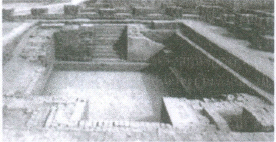
(i) What was the use of the Great Bath ?
(ii) What materials were used in the Great Bath ?
(iii) From where was water brought into the tank?
22.
Answer the following questions related to stone tools used by the early man :
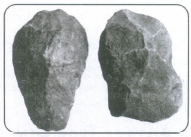
(i) What were these stone tools used for?
(ii) How were the stone tools made?
(iii) What is pressure flaking technique?
23.
Describe the use of metals by the Harappan people.
24.
Discuss the Harappan drainage system.
25.
Which skills helped the early man to obtain mastery over his environment?
26.
Where did the Stone Age man live?
27.
Discuss why it is important to study our past.
28.
What was the advantage of writing on a hard surface?
29.
How do historians study the literary sources?
30.
Why were battles fought in past times?
1.
(c)
Both (a) and (b)
2.
(d)
burials
3.
(b)
Bihar
4.
(b)
Uttar Pradesh
5.
(d)
All of these
6.
(c)
Prakrit
7.
(a)
Magadha
8.
(a)
Rigveda
9.
(d)
soma
10.
(b)
Aryans
11.
()
Traces of ash were found in the Kurnool caves
12.
()
The word 'Neolithic' has been derived from two Greek words, 'neo' meaning 'new' and 'lithos' meaning stone. The Neolithic period began 10,000 years ago.
13.
()
Citadel was the Western part of Harappan cities which was relatively smaller but higher.
14.
()
The people of Harappa collected fruits, caught fish and hunted wild animals like the antelope.
15.
()
Dog was the first animal to be tamed.
16.
()
Wheel was used for carrying loads, drawing water, making pots and spinning thread.
17.
()
India, Bharat, Jambudweep and Hindustan.
18.
()
Historians are the people who generally study about the remains of buildings, made up of stones and bricks, paintings and sculptures. They explore to find tools, weapons, ornaments and coins.
19.
()
Inscriptions are writings on hard surfaces such as stone or metal
20.
()
AD stands for two Latin words 'Anno Domini'. Its meaning is in the year of Lord (i.e., Christ).
21.
(i) Important people (priests, rulers) took ritual baths in this tank.
(ii) The tank was lined with kiln burnt bricks, plaster of gypsum and bitumen was used to make the tank water-resistant.
(iii) Water was probably brought in from a well and drained out after use.
22.
(i) These stone tools were used to cut meat and bone, scrape bark and hides, chop wood for firewood, stitch clothes, dig the ground, etc
(ii) Stone tools were probably made using two different techniques, i.e., stone on stone and pressure flaking.
(iii) In this technique, the core (stone from which the tool was to be made) was placed on a firm surface. Hammer stone was used to strike the core stone to remove flakes that could be shaped into tools.
23.
(i) Most of the things that have been found by archaeologists are made of stone, shell and metal, including copper, bronze, gold and silver.
(ii) Copper and bronze were used to make tools weapons, ornaments and vessels.
(iii) Gold and silver were used to make ornaments and vessels.
24.
(i) Many of the Harappan cities had covered drains which were laid out in straight lines.
(ii) Each drain had a gentle slope, so that water could flow through it.
(iii)Very often, drains in houses were connected to those on the streets and smaller drains led into bigger ones.
25.
The human brain helped to distinguish between edible and non-edible plants, waste land, crop land and forest land. Thus, the early man obtained mastery over his environment.
26.
The Stone Age man lived in hilly areas by the side of rivers or lakes. In the beginning, he took shelter in the caves, rock shelters and later, in mud-huts. He lived by the side of lakes or rivers, to quench his thirst and for food i.e., animal and fish.
27.
It is important to study about our past as it gives a lot of information regarding the political, social, economic and cultural life of the people in the earlier days. By studying about our past:
(i) We can find out about the eating habits, the clothing and housing pattern of the people of the earlier times.
(ii) We can gather information about the lives of hunters, farmers, merchants, priest, craftsmen, musicians, poets and scientists.
(iii) We can learn about the lives of children, the songs they sang, the plays they saw, the games that they played and the kind of toys with which they played.
28.
In the earlier times, writings were done on relatively hard surfaces such as blacked clay, stone or metal. Since, these objects were imperishable, these writings usually survived for a long time.
29.
Historians read the literary sources carefully and take clues from them. On the basis of such information, they try to create an understanding of the socio-cultural political set- up and place it in the right context and time.
30.
Battles were fought to capture land, property and cattle, which was important for pasture. Some battles were fought on the issue of water and to make people slaves.

6th Standard CBSE Syllabus & Materials
6th Standard CBSE
CBSE 6th Social Science Locating Places on the Earth - New Sample Question Papers Study Material - QB365 Set A
NEW6th Standard CBSE
CBSE 6th Science A Journey Through States of Water - New Sample Question Papers Study Material - QB365 Set A
NEW6th Standard CBSE
CBSE 6th Science Temperature and its Measurement - New Sample Question Papers Study Material - QB365 Set A
NEW6th Standard CBSE
CBSE 6th Science Materials Around Us - New Sample Question Papers Study Material - QB365 Set A



CBSE 6th Standard CBSE Subjects
CBSE Standards




