
 100% FREE ACCESS
6th Standard CBSE Syllabus & Materials
6th Standard CBSE
CBSE 6th Social Science The Value of Work - New Sample Question Papers Study Material - QB365 Set A
NEW6th Standard CBSE
CBSE 6th Social Science Family and Community - New Sample Question Papers Study Material - QB365 Set A
NEW6th Standard CBSE
CBSE 6th Social Science India's Cultural Roots - New Sample Question Papers Study Material - QB365 Set A
NEW6th Standard CBSE
CBSE 6th Social Science India,That is Bharat - New Sample Question Papers Study Material - QB365 Set A
NEW6th Standard CBSE
CBSE 6th Social Science Timeline and sources of history - New Sample Question Papers Study Material - QB365 Set A
NEW6th Standard CBSE
CBSE 6th Social Science Oceans and Continents - New Sample Question Papers Study Material - QB365 Set A

Published on: 06/03/2020
6th Standard CBSE Mathematics Annual Exam Model Question 2020
Download CBSE Class 6th Standard CBSE Mathematics question papers, sample papers, important questions, and previous year solved papers in PDF format. Get free study materials, NCERT solutions, and exam preparation resources for Class 6th Standard CBSE Mathematics
Questions + Answers key
Take MCQ Mathematics Test
1.
Perimeter of a regular hexagon will be _______
2.
Draw a circle with radius 5 cm and a chord EF at a distance 3cm from the centre. Measure the length of the chord.
3.
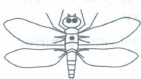
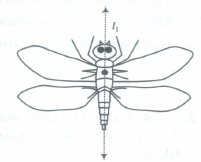
Find the number of lines of symmetry in the following shapes. How will you check your answers?
4.
Find, whether 300 g : 15 kg is in proportion with 450 g : 20 kg.
5.
Which factors are not included in the prime factorisation of a composite number?
6.
Is y = 2 is the solution of the equation 2y+ 4 = 8?
7.
Write the name of triangle, whose all three sides are unequal in length.
8.
Write the name of way in which data is represented using images.
9.
Round off each of the following numbers to nearest ten 4942
10.
Which number in each of the following is greater?
10,50
11.
If a fraction has numerator equal to 1, then what is it called?
12.
Express the following as cm using decimals. 162 mm
13.
A line contain how many points
(a) minimum?
(b) maximum?
14.
Are all whole numbers also natural numbers?
15.
Fill the entries in the blanks left:
| Number | TLakh | Lakh | TTh | Th | H | T | O | Number Name |
| 7,34,543 | - | 7 | 3 | 4 | 5 | 4 | 3 | Seven lakh thirty four thousand five hundred forty three. |
Expansion:
...................
32,75,829
3 x 10,00,000 + 2 x 1,00,000 + 7 x 10,000 + 5 x 1000 + 8 x 100 + 2 x 10 + 9
16.
Construct a circle of radius 6.2 cm.
17.
On a squared paper, sketch the following :
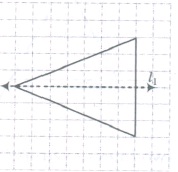
A triangle with a horizontal line of symmetry but no vertical line of symmetry.
(Hint It will be helpful, if you first draw the lines of symmetry and then complete the figures.)
18.
Write as fraction in lowest form. 0.65
19.
On my last birthday, I weighed 40 kg. If increase m kg of weight in one year, what is my present weight?
20.
The birth rate in five countries over a period of time is shown below:
| Country | India | UK | Japan | America | Bhutan |
| Birth rate per thousand | 50 | 40 | 25 | 30 | 60 |
(a) Represent the data by bar graph.
(b) Which country has least birth rate?
21.
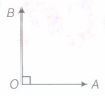
State the type of angle given below.
22.
Cost of a toffee is 50 paise and cost of a chocolate is Rs.10. Find the ratio of the cost of a toffee to the cost of a chocolate.
23.
Sweety runs around a square park of side 75 m. Bulbul runs around a rectangular park with length 60 m and breadth 45 m. Who covers less distance?
24.
Which of the following numbers are co-prime? 18 and 35
25.
Replace \(\Box\) in each of the following by the correct number. \(\frac { 2 }{ 7 } =\frac { 8 }{ \Box } \)
26.
Find 4 x 3, 5 - 3 using the number line.
27.
Use number line and add the following integers
9+ (-6)
28.
Draw a rough diagram, if possible of the following:
(a) An open curve made up entirely of line segment.
(b) A polypon with two sides.
29.
Draw a figure on the ground in the form of a horizontal number line as shown below. Frame questions as given in the above example and ask your friends.

Few questions framed are as follows:
1. Go 4 steps to the right of o.
2. Go 5 steps to the left of o.
3. Go 6 steps to the right of 0 and then go 4 steps further from there to the left.
4. Go 5 steps to the left of 0 and then go 1 step further from there to the left.
5. Go 8 steps to the right of 0 and then go 6 steps further from there to the left.
6. Go 4 steps to the left of 0 and then go 3 steps further from there to the right.
30.
Construct with ruler and compasses, angle of the following measures 30o.
31.
Energy content of different foods are as follows:
| Food | Energy content per kg (in Joules) |
|---|---|
| Wheat | 3.2J |
| Rice | 5.3J |
| Potatoes(Cooked) | 3.7J |
| Milk | 3.0J |
Which food provides the least energy and which provides the maximum? Also, express the least energy as a fraction of the maximum energy.
32.
Find the largest possible number of 5 digits, which exactly divisible by 32, 36 and 40.
33.
Veenu purchased 2 kg 300 g tomatoes, 350 g dhania, 6 kg 400 g onion, 800 g palak and 4 kg 700 g potatoes. Find the total weight of her purchases in kilograms.
34.
The perimeter of a regular hexagon is 72 cm How long is its each side?
35.
Mention the lines of symmetry.

36.
Sumit is x yr old and Amit is 6 yr old. If their ages are multiplied, the result is their grandfather's age. Their father's age is 42 and exactly half of their grandfather's age. Then, find the age of Sumit.
37.
Divide 20 pens between Sheela and Sangeeta In the ratio of 3 : 2.
38.
The sale of electric bulbs on different days of a week is shown below
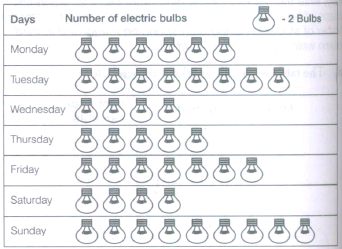
Observe the pictograph and answer the following questions.
(a) How many bulbs were sold on Friday?
(b) On which day, were the maximum number of bulbs sold?
(c) On which of the days, same number of bulbs were sold?
(d) On which of the days, minimum number of bulbs were sold?
(e) If one big carton can hold 9 bulbs. How many cartons were needed in the given week?
39.
Try to construct triangles using matchsticks. Some are shown here.
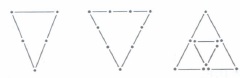
Can you make a triangle with
(a) 3 matchsticks?
(b) 4 matchsticks?
(c) 5 matchsticks?
(d) 6 matchsticks?
40.
An auto driver filled his CNG cylinder with 30 kg of CNG. If the cost of CNG is Rs 38/kg, find the amount spent by the auto driver.
41.
The distance between the park and the house of a student is 2 km 260 m. Every day he walks both ways between the parks and his house. Find the total distance covered by him in a week's time.
42.
Draw a polygon having exactly eight sides.
43.
Which of the following statement is not true?
4 : 7 = 5: 9
Rs. 5 : Rs. 25 = 12 g : 60 g
30 : 80 = 6 : 16
12 : 36 = 14 : 42
44.
3.2 =
\(\cfrac { 16 }{ 5 } \)
\(\cfrac { 8 }{ 5 } \)
\(\cfrac { 32 }{ 5 } \)
\(\cfrac { 24 }{ 5 } \)
45.
The rule, which gives the number of matchsticks required to make the matchstick pattern C, is
2n
3 n
4 n
5 n.
46.
The fraction representing the shaded portion
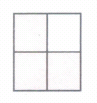
is
\(\frac { 1 }{ 4 } \)
\(\frac { 1 }{ 2 } \)
\(\frac { 3 }{ 4 } \)
none of these
47.
The number of edges of the shape

is
12
6
9
8
48.
How many pairs of adjacent sides are there in a quadrilateral?
1
2
3
4
49.
How many natural numbers are there between 1 and 10?
6
7
8
9
50.
The instrument to draw a circle is
ruler
protractor
divider
compasses
51.
Which of the following letters does not have the vertical line ot symmetry?
M
H
E
V
52.
Which of the following number is divisible by 8?
293
1205
1648
2063
53.
The top of a table is 1 m 20 cm wide and 1 m 50 cm long. The perimeter of this top is
5.30 m
5.40 m
5.50 m
5.60 m
54.
The choices of the fruits of 42 students in a class are as follows.
A, O, B, M, A, G, B, G, A, G, B, M, A, G, M, A, B, G, M, B, A, O, M, O, G, B, O, M, G, A, A, B, M, O, M, G, B, A, M, O, M, O
Where A, B, G, M and O stand for the fruits Apple, Banana, Grapes, Mango and Orange respectively.
Which two fruits are liked by an equal number of students?
A and M
M and B
B and O
B and G
55.
The additive inverse of a negative integer
is always negative
is always positive
is the same integer
zero
56.
The greatest natural number is
1 crore
10 crores
10 lakhs
undefine
1.
Perimeter of a regular hexagon
= 6 x length of a side.
2.
EF = 8 cm.
3.
The number of lines of symmetry for this figure is 1, which is shown below:
4.
No
5.
Factor 1 and that number itself are not included in the prime factorisation of a composite number.
6.
Given, equation is 2y + 4 = 8⇒LHS = 2Y + 4
On putting y = 2 in LHS, we get 2\(\times\)2 + 4 = 4 + 4 = 8
Here, LHS = RHS = 8
So, Y = 2 is the solution of the equation 2y + 4 = 8.
7.
A triangle which has all unequal sides is scalene triangle.
Here, ΔABC is a scalene triangle.
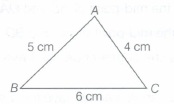
Where, \(AB\neq BC\neq CA\)
8.
Pictograph.
9.
In 4942, ones digit is 2 < 5.
Then, rounded form of 4942 = 4940
10.
50
11.
Unit fraction
12.
162 mm = 16.2 cm
13.
(a) Two
(b) Infinite
14.
No, all whole numbers are not natural numbers because 0 is a whole number but it is not a natural number.
15.
| Number | TLakh | Lakh | TTh | Th | H | T | O |
| 7,34,543 | - | 7 | 3 | 4 | 5 | 4 | 3 |
| Number Name | Expansion |
| Seven lakh thirty four thousand five hundred forty three |
7 x 1,00,000 + 3 x 10,000 + 4 x 1000 + 5 x 100 + 4 x 10 + 3 |
32,75,829 3 2 7 5 8 2 9
Thirty two lakh seventy five thousand eight hundred twenty nine - 3 x 10,00,000 + 2 x 1,00,000 + 7 x 10,000 + 5 x 1000 + 8 x 100 + 2 x 10 + 9.
16.
To construct a circle of radius 6.2 cm, steps of construction are as follows.
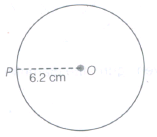
(i) Open the compasses for the required radius 6.2 cm by putting the pointer on O and opening the pencil up to 6.2 cm.
(ii) Place the pointer of the compasses at O.
(iii) Turn the compasses slowly to draw the circle.
17.
An isosceles triangle has only one line of symmetry. On a squared paper, its figure with a horizontal line of symmetry is given below:
18.
Here 0.65=\(\frac { 65 }{ 100 } =\frac { 13 }{ 20 } \)
19.
Present weight = 40 kg + m kg= (40+ m) kg
20.
(a)
.png)
(b) Japan.
21.
In the given figures, we have,
\(\angle AOB\) is a right angle.
22.
Here, cost of a toffee and a chocolate are not in the same unit. So, we have to convert both into the same unit.
\(\because\) Cost of a toffee = 50 paise
and cost of a chocolate = Rs.10 = 10x 100 paise
= 1000 paise [\(\because\) Rs.1= 100 paise]
\(\therefore\) Ratio of the cost of a toffee to the cost of a chocolate \(=\frac{Cost\ of\ a\ toffee}{Cost\ of\ a\ chocolate}=\frac{50}{1000}=\frac{50\div50}{1000\div50}=\frac{1}{20}=1:20\)
[\(\because\) HCF of 50 and 1000 = 50]
Hence, the required ratio is 1 : 20.
23.
Now, distance covered by in one round = Perimeter of the park
∴ Perimeter of square park = 4 \(\times\) Length of a side
= 4 \(\times\) 75 m = 300 m
and distance covered by Bulbul in one round
= Perimeter of rectangle = 2 \(\times\) (Length + Breadth)
= 2 \(\times\) (60 + 45) m = 2 \(\times\) 105 m = 210 m
Since, 300 m > 210 m
Hence, Bulbul covers less distance.
24.
We have, 18 and 35
18 = 1 x 18; 18 = 2 x 9; 18 = 3 x 6
Factors of 18 are 1, 2, 3, 6, 9 and 18 and 35 = 1 x 35; 35 = 5 x 7
Factors of 35 are 1, 5, 7 and 35.
\(\because\) Common factor of 18 and 35 is only 1.
So, 18 and 35 are co-prime numbers.
25.
We have, \(\frac { 2 }{ 7 } ={{8}\over{\Box}}\)
∴ \(2\times \Box =7\times 8\)
So, \(2\times \Box =7\times 2\times 4=28\times 2\) [∵ 8 = 2\(\times\)4]
On comparing we get \(\Box =28\)
Hence \(\frac { 2 }{ 7 } =\frac { 8 }{ \boxed { 28 } } \)
26.
4 x 3 = 12, 5 - 3 = 2
27.
We have, 9 + (- 6)

Firstly,draw a number line, then, wemove 9 steps to the right of 0 and reach at 9. Now,wemove6 steps to thelen of9 [∴ -6 is a negative integer] and reach at 3, as shown in the above figure. Hence, 9 + (-6) = 3
28.
(a)
(b) not possible.
29.
1. +4
2. -5
3. (+ 6) + (- 4) = + 2
4. (-5)+(-1)=-6
5. (+8)+(-6)=+2
6. (-4)+(+3)=-1
30.
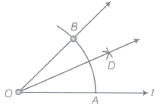
On measuring, \(\angle\)BOD = \(\angle\)AOD = 30o.
31.
In the given table, we see that the minimum value is 3.0 J and maximum value is 5.3 J.
∴ Least energy provide by food = 3.0 J i.e. Milk
Food which provide the maximum energy = 5.3 J i.e. Rice
∴ Required fraction = \(\frac { Least\ energy }{ Maximum\ energy } =\frac { 3.0 }{ 5.3 } =\frac { 30 }{ 53 } \)
32.
99360
33.
We know that, 1 kg =1000 g
Weight of tomatoes = 2 kg 300 gm = 2.300 kg
Weight of dhania = 350 g = 0.350 kg
Weight of onion = 6 kg 400 g = 6.400 kg
Weight of palak = 800 g = 0.800 kg
Weight of potatoes = 4 kg 700 g = + 4.700 kg
__________
\(\therefore\) Total weight = 14.550 kg
__________
Hence, total weight of his purchases is 14.550 kg.
34.
12 cm
35.
4 lines of symmetry
36.
14 yr
37.
Given,ratio is 3 : 2, whose two parts are 3 and 2.
\(\therefore\) Sum of two parts = 3 + 2 = 5
This means, if there are 5 pens, Sheela gets 3 pens and Sangeeta gets 2 pens.
We can say that, Sheela gets 3 parts and Sangeeta gets 2 parts out of every 5 pans.
Now, total number of pens = 20
\(\therefore\) of pens for Sheela \(=\frac{3}{5}\times20=12\) and number of pens for Sangeeta \(=\frac{2}{5}\times20=8\)
Hence,out of 20 pens Sheela gets 12 pens and Sangeeta gets 8 pens.
38.
In the given pictograph, 1 picture = 2 bulbs
Now, number of bulbs sold on Monday = 6 pictures
= 6 x 2 = 12bulbs
Number of bulbs sold on Tuesday = 8 x 2 = 16 bulbs
Number of bulbs sold on Wednesday = 4 x 2 = 8 bulbs
Number of bulbs sold on Thursday = 5 x 2 = 10 bulbs
Number of bulbs sold on Friday = 7 x 2 = 14 bulbs
Number of bulbs sold on Saturday = 4 x 2 = 8 bulbs
Number of bulbs sold on Sunday = 9 x 2 = 18 bulbs
(a) Number of bulbs sold on Friday = 7 x 2 = 14 bulbs
(b) Maximum number of bulbs were sold on Sunday i.e. 18 bulbs.
(c) The same number of bulbs were sold on Wednesday and Saturday i.e. 8 bulbs.
(d) The minimum number of bulbs were sold on Wednesday and Saturday i.e. 8 bulbs.
(e) Total number of bulbs sold in a week
= 12 + 16 + 8 + 10 + 14 + 8 + 18 = 86
Now, number of cartons which can hold 9 bulbs = 1 and number of carton which can hold 1 bulb = \(\frac{1}{9}\)
\(\therefore\) Number of cartons which can hold 86 bulbs = \(\frac{1\times 86}{9}\)
= \(\frac{86}{9}=9\frac{5}{9}=10\)
Hence, 10 cartons were needed in the given week.
39.
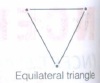
(a) With the help of 3 matchsticks, we can make an equilateral triangle. Since, all three matchsticks are of equal length.
(b) With the help of 4 matchsticks, we cannot make any triangle because in this case, sum of rwo sides is equal to the third side and we know that the sum of the lengths of any rwo sides of a triangle is always greater than the length of the third side
(c) With the help of 5 matchsticks, we can make an isosceles triangle. Since, we get rwo sides equal in this case.

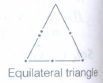
(d) With the help of 6 matchsticks, we can make an equilateral triangle. Since, we get three sides equal in this case.
40.
Rs 1140
41.
31 km 640 m
42.
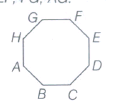
43.
4 : 7 = \(\frac { 4 }{ 7 } \)
5 : 9 = \(\frac { 5 }{ 9 } \)
\(\frac { 4 }{ 7 } \neq \frac { 5 }{ 9 } \)
44.
(a)
\(\cfrac { 16 }{ 5 } \)
45.
(b)
3 n
46.
(c)
\(\frac { 3 }{ 4 } \)
47.
(a)
12
48.
(d)
4
49.
(c)
8
50.
(d)
compasses
51.
(c)
E
52.
(c)
1648
53.
(b)
5.40 m
54.
(d)
B and G
55.
We know that, additive inverse of an integer is obtained by changing the sign of the integer.
\(\therefore\) The additive inverse of a negative integer is always positive.
e.g. The additive inverse of -3 = -(-3) = 3.
56.
(d)
undefine

6th Standard CBSE Syllabus & Materials
6th Standard CBSE
CBSE 6th Social Science Locating Places on the Earth - New Sample Question Papers Study Material - QB365 Set A
NEW6th Standard CBSE
CBSE 6th Science A Journey Through States of Water - New Sample Question Papers Study Material - QB365 Set A
NEW6th Standard CBSE
CBSE 6th Science Temperature and its Measurement - New Sample Question Papers Study Material - QB365 Set A
NEW6th Standard CBSE
CBSE 6th Science Materials Around Us - New Sample Question Papers Study Material - QB365 Set A



CBSE 6th Standard CBSE Subjects
CBSE Standards




