
 100% FREE ACCESS
6th Standard CBSE Syllabus & Materials
6th Standard CBSE
CBSE 6th Social Science The Value of Work - New Sample Question Papers Study Material - QB365 Set A
NEW6th Standard CBSE
CBSE 6th Social Science Family and Community - New Sample Question Papers Study Material - QB365 Set A
NEW6th Standard CBSE
CBSE 6th Social Science India's Cultural Roots - New Sample Question Papers Study Material - QB365 Set A
NEW6th Standard CBSE
CBSE 6th Social Science India,That is Bharat - New Sample Question Papers Study Material - QB365 Set A
NEW6th Standard CBSE
CBSE 6th Social Science Timeline and sources of history - New Sample Question Papers Study Material - QB365 Set A
NEW6th Standard CBSE
CBSE 6th Social Science Oceans and Continents - New Sample Question Papers Study Material - QB365 Set A

Published on: 19/01/2019
Sorting Materials into Groups Important Questions
Download CBSE Class 6th Standard CBSE Science question papers, sample papers, important questions, and previous year solved papers in PDF format. Get free study materials, NCERT solutions, and exam preparation resources for Class 6th Standard CBSE Science
Questions + Answers key
Take MCQ Science Test
1.
A solid is put in a bucket of water. It floats just below the surface of the water. What do you think is the density of the object in relation to the density of water?
2.
Water and starch are mixed in a container. What kind of solution is formed
3.
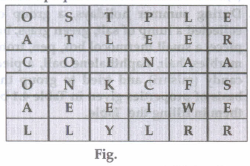
Pick five objects from the word box given in Fig. which are opaque and would sink in water.
4.
What are lustrous materials? Give two examples
5.
What do you mean by the hardness of materials? Explain with an example
6.
It was Paheli's birthday. Her grandmother gave her two gifts made up of metals, one old dull silver spoon and a pair of lustrous gold ear-rings. She was surprised to see the difference in the appearance of the two metals. Can you explain the reason for this difference?
7.
Why are handles of utensils made from wood or plastics?
8.
Why is a tumbler not made with a piece of cloth?
9.
Which among the following materials would you identify as soft materials and why?
Ice, rubber band, leaf, eraser, pencil, pearl, a piece of wooden board, cooked rice, pulses and fresh chapati.
10.
Name five objects which can be made from wood.
11.
How is density of an object related to its floating or sinking?
12.
Name two objects that can float on water and two objects which sink in water
13.
Why don't we use steel handles in utensils?
14.
Why do we need to group materials in everyday life?
15.
Write two objects through which things can be seen clearly.
16.
Take a small cotton ball and place it in a tumbler/bowl filled with water. Observe it for at least 10 minutes. Will it float or sink in water and why?
17.
Why a shopkeeper prefers to keep biscuits and sweets in a glass or plastic container?
18.
On a bright sunny day, Shikha was playing hide and seek with her brother. She hid herself behind a glass door. Do you think her brother will be able to locate her? If yes, why? If no, why not?
19.
By which property, steel and sponge differ from each other?
20.
Name two materials which do not conduct electricity.
21.
Differentiate among opaque, translucent and transparent materials, by giving one example of each.
22.
Chalk, iron nail, wood, aluminium, candle, cotton usually look different from each other. Give some properties by which we can prove that these materials are different.
23.
Why do you think oxygen dissolved in water is important for the survival of aquatic animals and plants.
24.
Sugar, salt, mustard oil, sand, sawdust, honey, chalk powder, petals of flower, soil, copper sulphate crystals, glucose, wheat flour are some substances given to Paheli. She wants to know whether these substances are soluble in water or not. Help her in identifying soluble and insoluble substances in water.
25.
Select the odd one:
Glass
Air
Stone
Water
26.
The property of a substance that decides whether it will float or sink in water is:
Volume
Density
Refractive index
Viscosity
27.
Which of the following materials is not soluble in water?
Salt
Sand
Sugar
Honey
28.
Which of the following materials is hard?
Butter
Pastry
Iron nail
Sponge
29.
Which among the following are commonly used for making a safety pin?
Wood and glass
Plastic and glass
Leather and plastic
Steel and plastic
30.
Which of the following will float on water?
Mud piece
Cotton
Wood piece
Metal
31.
Which type of the following materials is used for making the front glass (wind screen) of a car?
Transparent
Translucent
Opaque
All of these
32.
Which pair of substances among the following would float in a tumbler half-filled with water?
Cotton thread, thermocol
Feather, plastic ball
Pin, oil drops
Rubber band, coin
33.
Boojho found a bag containing the following materials.
(i) Mirror
(ii) Paper stained with oil
(iii) Magnet
(iv) Glass spectacles
Help Boojho in finding out the material(s) which is/are opaque.
Only (i)
Only (iv)
(i) and (iii)
(ii) and (iv)
34.
An iron nail is kept in each of the following liquids. In which case would it lose its shine and appear dull?
Mustard oil
Soft drink
Coconut oil
Kerosene
35.
Materials can be classified as _______ and _________ on the basis of their texture
36.
Substances that are less ________ than water can float on water.
37.
Butter paper is __________
38.
Ice is ________ whereas water is _______
39.
The property which is identified with nose is _________
1.
Solid floats just below the surface of water and it neither sinks nor floats on water due to almost same density of the solid and water.
2.
Excess amount of starch in water forms a suspension
3.
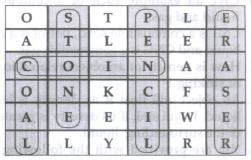
(i) Coal
(ii) Stone
(iii) Coin
(iv) Pencil
(v) Eraser
4.
The materials which have shining surface are called lustrous materials. Gold and silver are examples of lustrous materials.
5.
Hardness is the property of materials that can be found out by pressing the materials. A material may be soft or hard.
Soft materials : The materials which can be compressed easily are known as soft materials.e.g.,-cotton, sponge, etc.
Hard materials: The materials that are difficult to compress are known as hard materials. e.g., - iron, wood, etc.
6.
The silver spoon on long exposure to moist air has lost its shine and appears dull whereas gold does not tarnish.
7.
The handles of utensils are made from wood or plastics because utensils are good conductors of heat whereas wood and plastic are bad conductors of heat. They do not allow the heat transmission through them. So, the handles of utensils are made from wood or plastics so that our hand does not burn while handling these utensils when they are hot.
8.
Because, we generally use a tumbler to keep a liquid. A tumbler made of a piece of cloth cannot be used to keep water. So, a tumbler is made with a material which has a property to hold the liquid.
9.
Materials which can be compressed or scratched easily are called soft materials.
Rubber band, leaf, eraser, cooked rice and fresh chapati are soft materials because they can be compressed or scratched easily.
10.
Five objects which can be made from wood are
(i) Door
(ii) Window
(iii) Table
(iv) Chair
(v) Boat
11.
An object will float if its density is less than the liquid. It will sink if its density is greater than that of the surrounding liquid.
12.
The objects which can float on water are : dried leaves and wood.
The objects which sink in water are : a piece of iron and stone
13.
Steel is a good conductor of heat, so it cannot be used as handle in utensils
14.
We need to group materials for our convenience. Grouping helps us to locate things easily.
15.
Polythene and glass container are the transparent objects through which things can be seen clearly.
16.
Cotton ball initially floats on water but after few minutes (i.e. 10 min), it sinks because it absorbs water.
17.
Due to transparent nature of glass or plastic container, biscuits, sweets, etc., can be seen easily by buyers, so shopkeepers do like this.
18.
Yes, her brother can easily locate her because glass door is a transparent material.
19.
Hardness and softness are the property by which steel and sponge differ from each other.
20.
Plastic and wood do not conduct electricity.
21.
Opaque, translucent and transparent materials can be differentiated as follows
| S.No | Opaque materials | Translucent materials | Transparent materials |
|---|---|---|---|
| (i) | Materials through which things can no be seen are called opaque materials. | Materials through which things can be seen but not clearly are called translucent cent materials | Materials through which things can be seen are called transparent materials. |
| (ii) | e.g., Card board | e.g., Oily paper | e.g., Glass |
22.
There are following properties by which we can prove that these materials are different:
| Material | Lustre | Hardness/softness | Roughness/smoothness |
|---|---|---|---|
| Chalk | - | Soft | Rough |
| Iron nail | Lustrous | Hard | Rough |
| Wood | - | Hard | Rough |
| Aluminium | Lustrous | Hard | Smooth |
| Candle | Candle | Soft | Smooth |
| Cotton | - | Soft | Smooth |
23.
Oxygen gas dissolves in water, i.e. oxygen gas is soluble in water. The plants and animals which live in water use the oxygen dissolved in water for respiration. Thus, oxygen gas dissolved in water is very important for the survival of animals and plants that live in water.
24.
Substances soluble in water are sugar, salt, honey, copper sulphate crystals, glucose. Substances insoluble in water are mustard oil, sand, sawdust, chalk powder, petals of flower, soil, wheat flour.
25.
(c)
Stone
26.
(b)
Density
27.
(b)
Sand
28.
(c)
Iron nail
29.
(d)
Steel and plastic
30.
(c)
Wood piece
31.
(a)
Transparent
32.
(b)
Feather, plastic ball
33.
(c)
(i) and (iii)
34.
(b)
Soft drink
35.
()
smooth, rough
36.
()
dense
37.
()
translucent
38.
()
solid, liquid
39.
()
odour

6th Standard CBSE Syllabus & Materials
6th Standard CBSE
CBSE 6th Social Science Locating Places on the Earth - New Sample Question Papers Study Material - QB365 Set A
NEW6th Standard CBSE
CBSE 6th Science A Journey Through States of Water - New Sample Question Papers Study Material - QB365 Set A
NEW6th Standard CBSE
CBSE 6th Science Temperature and its Measurement - New Sample Question Papers Study Material - QB365 Set A
NEW6th Standard CBSE
CBSE 6th Science Materials Around Us - New Sample Question Papers Study Material - QB365 Set A



CBSE 6th Standard CBSE Subjects
CBSE Standards




