
 100% FREE ACCESS
6th Standard CBSE Syllabus & Materials
6th Standard CBSE
CBSE 6th Social Science The Value of Work - New Sample Question Papers Study Material - QB365 Set A
NEW6th Standard CBSE
CBSE 6th Social Science Family and Community - New Sample Question Papers Study Material - QB365 Set A
NEW6th Standard CBSE
CBSE 6th Social Science India's Cultural Roots - New Sample Question Papers Study Material - QB365 Set A
NEW6th Standard CBSE
CBSE 6th Social Science India,That is Bharat - New Sample Question Papers Study Material - QB365 Set A
NEW6th Standard CBSE
CBSE 6th Social Science Timeline and sources of history - New Sample Question Papers Study Material - QB365 Set A
NEW6th Standard CBSE
CBSE 6th Social Science Oceans and Continents - New Sample Question Papers Study Material - QB365 Set A

Published on: 30/10/2019
CIV - Panchayati Raj
Download CBSE Class 6th Standard CBSE Social Science question papers, sample papers, important questions, and previous year solved papers in PDF format. Get free study materials, NCERT solutions, and exam preparation resources for Class 6th Standard CBSE Social Science
Questions + Answers key
Take MCQ Social Science Test
1.
Write five rules that became effective from April 1993 regarding the Panchayati Raj system.
2.
Which is the third level of the Panchayati Raj system and what are its functions ?
3.
What are the responsibilities of the Sarpanch in a Gram Panchayat ?
4.
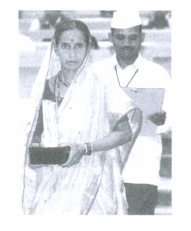
(i) Who are seen in the picture?
(ii) What award were they given?
(iii) When and why was this award given?
5.
Describe the composition of a Village Panchayat.
6.
What was the suggestion made by the Sarpanch?
1.
In 1992, the Parliament amended the Constitution and formulated rules for the Panchayati Raj System. The States and the centre had to follow these rules from April, 1993 onwards. The rules are listed below:
(i) It should be a three-tier system at village level, the intermediate or block level and the district level.
(ii) Direct elections should be conducted for all the seats in the Panchayats.
(iii) The state should ensure representation of the Scheduled Castes and Scheduled Tribes in proportion to their population in the area. Minimum of one-third of the total number of seats is to be reserved forwomen.
(iv) A member of Panchayat should not be less than 21 years of age.
(v) The State Election Commission should hold regular Panchayat elections.
2.
(i) Zila Parishad or District Panchayat is the apex body of the Panchayati Raj System.
(ii) It examines and approves the budget of Panchayat Samitis in the district.
(iii) It issues directions to the Panchayat Samitis for efficient performance of their functions and Coordinates development plans prepared by the Panchayat Samitis.
(iv) It distributes funds allocated by the State government to the Panchayat Samitis in the district.
(v) It collects statistics related to the activities of the local authorities in the district.
3.
Sarpanch has various responsibilities, Some of them are as follows :
(i) Looking after street lights, construction and repair work of the roads in the villages and also, village markets, fairs, festivals and celebrations.
(ii) Keeping a record of births, deaths and marriages in the village.
(iii) Looking after public health and hygiene by providing facilities for sanitation and drinking water.
(iv) Providing education, implementing development schemes for agriculture and animal husbandry.
4.
(i)The village Panchs from Maharashtra are seen in the picture.
(ii)They were awarded with the Nirmal Gram Puruskar.
(iii)This award was given in 2005 for the excellent work done by them in the Panchayat.
5.
A Village Panchayat is divided into wards. Each ward elects a representative who is known as the Ward Member, also called Panch. All the members of the Gram Sabha also elect a Sarpanch who is called Panchayat President. The ward Panchs and the Sarpanch form the Gram Panchayat. The tenure of the Gram Panchayat is five years.
The Gram Panchayat and Gram Sabha have a common secretary. He is a person whom the government appoints. Thus, he is not an elected person. The Secretary is responsible for calling the meeting of the Gram Sabha and Gram Panchayat. He also keeps a record of the proceedings of the meetings.
6.
The members of the Gram Panchayat suggested to deepen two hand pumps and clean at least one well so that the village would not go without water.
The Sarpanch suggested that since the Panchayat had received some funds for maintenance of hand pumps, it could be used for completing this work.
The members of the Panchayat wanted a long-term solution for water shortage.
Some Panchs asked whether the watershed programme would make a substantial difference to the water level.
At last, they decided to approach the Block Development Officer (BDO) and get more information on the scheme.

6th Standard CBSE Syllabus & Materials
6th Standard CBSE
CBSE 6th Social Science Locating Places on the Earth - New Sample Question Papers Study Material - QB365 Set A
NEW6th Standard CBSE
CBSE 6th Science A Journey Through States of Water - New Sample Question Papers Study Material - QB365 Set A
NEW6th Standard CBSE
CBSE 6th Science Temperature and its Measurement - New Sample Question Papers Study Material - QB365 Set A
NEW6th Standard CBSE
CBSE 6th Science Materials Around Us - New Sample Question Papers Study Material - QB365 Set A



CBSE 6th Standard CBSE Subjects
CBSE Standards




