
 100% FREE ACCESS
6th Standard CBSE Syllabus & Materials
6th Standard CBSE
CBSE 6th Social Science The Value of Work - New Sample Question Papers Study Material - QB365 Set A
NEW6th Standard CBSE
CBSE 6th Social Science Family and Community - New Sample Question Papers Study Material - QB365 Set A
NEW6th Standard CBSE
CBSE 6th Social Science India's Cultural Roots - New Sample Question Papers Study Material - QB365 Set A
NEW6th Standard CBSE
CBSE 6th Social Science India,That is Bharat - New Sample Question Papers Study Material - QB365 Set A
NEW6th Standard CBSE
CBSE 6th Social Science Timeline and sources of history - New Sample Question Papers Study Material - QB365 Set A
NEW6th Standard CBSE
CBSE 6th Social Science Oceans and Continents - New Sample Question Papers Study Material - QB365 Set A

Published on: 10/10/2019
HIS - Building, Paintings and Books
Download CBSE Class 6th Standard CBSE Social Science question papers, sample papers, important questions, and previous year solved papers in PDF format. Get free study materials, NCERT solutions, and exam preparation resources for Class 6th Standard CBSE Social Science
Questions + Answers key
Take MCQ Social Science Test
1.
See the picture of an Iron Pillar at Mehrauli and answer the questions related to this picture:
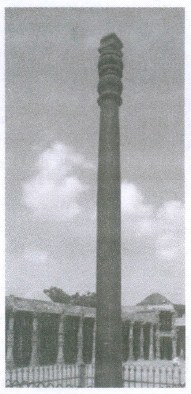
(i) Whose name is mentioned on the inscription written on the pillar?
(ii) How old is this pillar?
(iii) What is an amazing feature of this pillar?
(iv) What is the height and weight of the pillar?
2.
What are Puranas? State some of their characteristics.
3.
Describe the architecture of the earliest Hindu temples.
4.
Describe the different literatures prevailing in the ancient period
5.
Answer the questions based on picture given below:
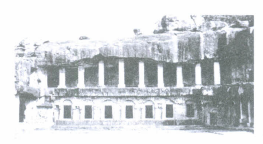
(i) Where is the Jaina monastery in the picture situated?
(ii) What were the rooms of the building used for?
6.
Answer the questions based on picture given below:
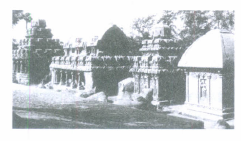
(i) Where are the monolithic temples shown in the picture located?
(ii) Why are they called monoliths?
(iii) What was the difference in the work of stone cutters?
7.
Answer the questions based on picture given below:
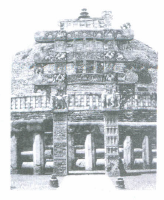
(i) Where is the Great Stupa shown in the picture located?
(ii) When was the brick mound probably built?
(iii) Which parts of the statue were added during the time of later rulers?
8.
Discuss the salient features of the earliest Hindu temples.
1.
(i) An inscription on the pillar mentions a ruler named Chandra, who probably belonged to the Gupta dynasty.
(ii) This pillar was made about 1500 years ago.
(iii) The pillar is very old but it has not been rusted during all these years.
(iv) It is 7.2m high and weighs over 3 tonnes.
2.
(i) 'Purana' literally means 'old'. The Puranas contain stories about Gods and Goddesses, such as Vishnu, Shiva, Durga or Parvati.
(ii) They contain details of how Gods and Goddesses were to be worshipped.
(iii) There are accounts about the creation of the world and about kings.
(iv) The Puranas were written in simple Sanskrit and were meant to be heard by everybody, including women and Shudras, who were not allowed to study the Vedas.
(v) They were probably recited in temples by priests, and people came to listen to them.
3.
(i) Some of the earliest Hindu temples were also built. Deities such as Vishnu, Shiva, and Durga were worshipped in these shrines.
(ii) The most important part of the temple was the room known as the Garbhagriha, where the image of the chief deity was placed. It was here that priests performed religious rituals, and devotees offered worship to the deity.
(iii)A tower, known as the Shikhara, was built on top of the Garbhagriha, to mark this out as a sacred place
(iv) Most temples also had a space known as the Mandapa. It was a hall where people could assemble.
4.
India has a rich and varied culture. Every dynasty that ruled India added something to its heritage
Different Literatures:
(i) The Vedas and associated texts: The Vedas are the earliest literary works that we have. The word 'Veda' means knowledge. There are four Vedas - Rigveda, Samveda, Yajurveda and Atharvaveda. They contain hymns in praise of different Gods and Goddesses. Along with the Vedas, there are a series of texts called the Brahmanas. There are also 108Upanishads:
Puranas are scared literature. There are 18 surviving puranas.
(ii) The Epics: The Mahabharata was composed by sage Ved Vyasa. It is a story of two families of cousins-the Kauravas and the Pandavas. The Mahabharata also includes the Bhagvat Gita. The Ramayana was composed by sage Valmiki. It is the story of Rama, a prince of Ayodhya and his war with Ravana, the king of Lanka.
(iii) Secular literature: The Arthashastra, Indika, Harshachrita, stories from the Jatakas and the Panchtantra, the works of Kalidasa and the accounts of foreign travellers are important secular works written during this period. There are many poems and plays in Sanskrit.
(iv) Foreign travelers: Many travellers and pilgrims came to India. Fa Hein came during the reign of Chandragupta II. He spent six years in India, visiting Buddhist monasteries. When he went back, he wrote an account of his stay. His account gives a detailed description of the life of the people under the Gupta kings.
Two centuries later, Hiuen Tsang came to India. He wrote about the conditions in those times. The ruler in the North was Harshavardhana. I-Tsing was another Chinese traveller who came to India.
(v) The Sangam texts: The Sangam literature was written in Tamil. It mentions about the kingdoms of South India. The Silappadikaram and Manimekalai are the famous Tamil epics.
5.
(i)The Jaina monastery in the picture is situated In Odisha.
(ii)Jaina monks lived and meditated In these rooms.
6.
(i)The monolithic temples shown the picture are located in Mahabalipuram.
(ii)They are called monoliths because each of these was carved out of a huge single piece of stone.
(iii)The stone cutters had to work from top downwards.
7.
(i)The stupa is located at Sanchi, Madhya Pradesh.
(ii)The brick mound was probably built at the time of Ashoka.
(iii)The railings and gateways were added during the time of later rulers.
8.
The earliest Hindu temples were built 2000-1500 years ago. Deities such as Vishnu, Shiva and Durga were worshipped in these temples.
The most important part of the temple was the room known as the garbhagriha, where image of the chief deity was placed. It was here that priests performed religious rituals and devotees offered worship to the deity.
The garbhagriha had a tower, known as the Shikhara which was built on top of the garbhagriha. It is marked as the sacred place. Building shikharas required careful planning. Most temples also had a space known as the mandapa. It was a hall where people could assemble. Some of the finest stone temples were built in Mahabalipuram and Aihole about 1400-1500 years ago.

6th Standard CBSE Syllabus & Materials
6th Standard CBSE
CBSE 6th Social Science Locating Places on the Earth - New Sample Question Papers Study Material - QB365 Set A
NEW6th Standard CBSE
CBSE 6th Science A Journey Through States of Water - New Sample Question Papers Study Material - QB365 Set A
NEW6th Standard CBSE
CBSE 6th Science Temperature and its Measurement - New Sample Question Papers Study Material - QB365 Set A
NEW6th Standard CBSE
CBSE 6th Science Materials Around Us - New Sample Question Papers Study Material - QB365 Set A



CBSE 6th Standard CBSE Subjects
CBSE Standards




