
 100% FREE ACCESS
6th Standard CBSE Syllabus & Materials
6th Standard CBSE
CBSE 6th Social Science The Value of Work - New Sample Question Papers Study Material - QB365 Set A
NEW6th Standard CBSE
CBSE 6th Social Science Family and Community - New Sample Question Papers Study Material - QB365 Set A
NEW6th Standard CBSE
CBSE 6th Social Science India's Cultural Roots - New Sample Question Papers Study Material - QB365 Set A
NEW6th Standard CBSE
CBSE 6th Social Science India,That is Bharat - New Sample Question Papers Study Material - QB365 Set A
NEW6th Standard CBSE
CBSE 6th Social Science Timeline and sources of history - New Sample Question Papers Study Material - QB365 Set A
NEW6th Standard CBSE
CBSE 6th Social Science Oceans and Continents - New Sample Question Papers Study Material - QB365 Set A

Published on: 19/01/2019
Key Elements of a Democratic Government Study Material
Download CBSE Class 6th Standard CBSE Social Science question papers, sample papers, important questions, and previous year solved papers in PDF format. Get free study materials, NCERT solutions, and exam preparation resources for Class 6th Standard CBSE Social Science
Questions + Answers key
Take MCQ Social Science Test
1.
Who was Nelson Mandela ?
2.
Define 'Apartheid'.
3.
What are the means through which people show their disapproval to the governmental policies?
4.
What was the result of Hector and his classmate's protests ?
5.
How do people sense their power in a democracy in India?
6.
"Religious processions and celebrations can sometimes lead to conflicts." Discuss.
7.
What are the actions of the people to make government understand that its decisions are wrong?
8.
Why was Hector Pieterson shot by the police?
9.
Read through the chapter and discuss some of the key ideas ofa democratic government. Make a list. For example, all people are equal.
10.
Why do you think we need the government to find solutions to many disputes or conflicts?
11.
How would Maya's life be different in South Africa today?
12.
What did you have to say to convince others that what you did was fair?
13.
Can you think of any experience from your life in which you have helped someone out of a situation which you thought was unfair?
14.
In Maya's story did the government support the idea that people are equal ?
15.
What were Hector and his classmates protesting about?
16.
Which of the following are key ideas of a democratic government?
(i) Commitment to equality
(ii) Commitment to justice
(iii) Commitment towards governance
(iv) Commitment towards discrimination
(i) and (ii)
(i) and (iii)
(i), (ii) and (iii)
All of the above
17.
Which of the following dams is a downstream dam?
Mettur darn
Hirakud dam
Krishnasagar dam
None of the above
18.
Krishnasagar dam is situated in
Karnataka
Tamil Nadu
Kerala
Andhra Pradesh
19.
When did a particular government increase the money people had to pay for electricity?
In 2006
In 2005
In 2010
In 2003
20.
Which of the following languages was spoken by the whites?
Afrikaans
Zulu
Spanish
Latin
21.
What was the name of the black township in South Africa?
Johannesburg
Savvana
Soweta
Durban
22.
Who sounded angry while speaking about life under apartheid?
Maya
Maya's mother
Hector
Nelson Mandela
23.
Which of the following races is/are not allowed to mingle with each other?
Black
Indian
Coloured
All of these
24.
Who was shocked after hearing the story of Hector Pieterson?
Maya
Maya's mother
Nelson Mandela
All of these
25.
How many years old was Maya Naidoo?
12 year old
11 year old
13 year old
14 year old
26.
What do you understand by the term 'participation'? Why do conflicts arise? Give an example of conflict in India.
27.
What is the importance of public opinion? Name the agencies which are helpful in the formation of public opinion.
28.
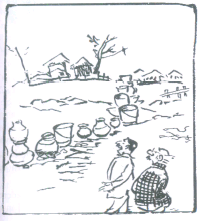
Look at the cartoon carefully and answer the question.
(i) What approval or disapproval is being expressed here?
29.
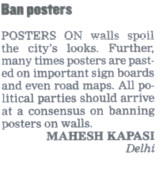
Look at the newspapers and discuss some elections that you may have read about. Why do you think elections are required after a fixed period?
30.
"Besides voting there are other ways of participating in the process of government." Discuss how it gives us a sense of works of government.
31.
Write a short note on the Cauvery water dispute between Karnataka and Tamil
Nadu.
32.
______________ lived in soweto and he and his classmates joined the protest against learning the ______________ language in the school.
33.
South African people were divided into _____________ Indian and races.
34.
_________ are considered essential for the well-being of the citizens.
35.
In India, elections are held once in _______ years
36.
Quiet flows the Cauvery despite being at the centre of heated conflict between two states for the last ________ .
37.
The Central Government has to step in and see that a fair distribution of water is worked out.
38.
Equality and justice are separable.
39.
Ganga water dispute is between Karnataka and Tamil Nadu.
40.
Blacks and coloured people were not considered to be equal to whites.
41.
In India, the period of government is 6 years.
1.
Nelson Rolihlahla Mandela was the leading member of the African National Congress which (ANC) opposed South Africa's White minority government and its policy of racial segregation known as Apartheid.
2.
Apartheid laws were prevalent in South Africa. People were divided into Whites, Blacks, Indians and coloured races and they were strictly prohibited to mingle with each other.
3.
Dharnas, strikes, taking out rallies and organising signature campaigns are some of the means through which people show their disapproval of government's policies.
4.
Hector and his classmate were beaten up by the South African Police and shot at. One of their bullets killed Hector. This happened on 30th April, 1976.
5.
In India, governments are elected for a fixed term of 5 years. If governments want to continue to be in power, then they have to be re-elected by the people. Thus, this is a moment when people can sense their power in a democracy.
6.
The route a religious procession takes may lead to a conflict. The police and the government play an important role in getting representatives of concerned communities to meet and try and arrive at a solution. Violence may erupt, with people throwing stones or trying to disrupt the procession. The police is responsible for ensuring that violence does not take place.
7.
There are many ways in which people express their views and make governments understand what actions they should take. These include:
(i) Dharnas, rallies, strikes, etc.
(ii) Discussing and criticising government's actions through newspapers, TV, magazines etc.
(iii) Not choosing a government for second term.
8.
Hector Pieterson was shot by the police because he and his classmates joined a protest against learning the Afrikaans language in school. Hector and other school students were being forced to learn this language, but they wanted to learn their language Zulu. The South African police beat up the protestors mercilessly and shot at the crowd. One of their bullets killed Hector.
9.
Some of the key ideas of a democratic government are:
(i) Regular elections.
(ii) People's participation in governance.
(iii) Resolution of conflicts by the government through constitutional procedures.
(iv) All people above the age of 18 have the right to vote and choose their representatives.
10.
The government is a constitutional body formed by elected representatives of the people. The government has the resources and the responsibility to settle disputes between two citizens or two groups of citizens in a fair and equitable manner. That is why we need the government to find solutions to disputes and conflicts. In doing so, it is assumed that they will keep the voices and interests of the people in mind.
11.
Maya's life would be different in South Africa today in the following manner:
(i) She can use buses, train etc without any discrimination.
(ii) She can enter any hotel or restaurant.
(iii) She has no fear of the police.
12.
As my intention was just, all the people around me were convinced by my action. They termed my action as fair.
13.
I helped a poor old man who was ill-clad in winter by providing him woollen clothes.
14.
In Maya's story, the government did not support the idea that people are equal. Sharp differences were seen between the whites and non-whites. The whites availed all privileges while the non-whites had to face hardships. They had no voting rights like the whites.
15.
They were protesting against learning the Afrikaans language in school. This language was spoken by the whites. Hector and his classmates were being forced to learn this language. But they had their own language (Zulu) which they wanted to learn.
16.
(a)
(i) and (ii)
17.
(a)
Mettur darn
18.
(a)
Karnataka
19.
(b)
In 2005
20.
(a)
Afrikaans
21.
(c)
Soweta
22.
(b)
Maya's mother
23.
(d)
All of these
24.
(a)
Maya
25.
(b)
11 year old
26.
(i) People's participation can be understood as the participation of people in governance through elections and other means such as rallies, processions, signature campaigns, etc.
(ii) People participate by taking an interest in the working of the government and criticising it as and when required.
(iii) By participating, people express their opinions and public opinion thus created is very essential in a democracy.'
(iv) Conflicts arise when the interest of the people of different cultures, religions, regions or economic background contradict.
(v) For example, river can be a source of conflict, like the Cauvery River Dispute between Karnataka and Tamil Nadu.
27.
(i) Public opinion contributes a lot to the development of social life. It does not allow the government to be absolute.
(ii) The views, interests and aspirations of the people constitute the core of a democratic system.
(iii) Public opinion ensures democratic communications.
(iv) The following agencies are helpful in the formation of public opinion press, radio, television, cinema, political parties and elections.
(v) Mass media plays a crucial role in reflecting public opinion.
(vi) Freedom of expression can be exerted by all classes of people, whether rich or poor through these agencies.
28.
Approval and disapproval are being expressed here as:
Approval The two persons express approval for presence of water in a tap.
Disapproval The condition of distribution of drinking water is not good. It should be condemned as it may give rise to aversion to the system and governance.
29.
We have read about recent elections held in the country for State Legislatures in Maharashtra, Jharkhand, Haryana and jammu and Kashmir (2014).
(i) Congress led government in Haryana defeated and BJP formed the government.
(ii) In Jammu and Kashmir, PDP won majoriry seas followed by BJP.
(iii) In Maharashtra, BJP formed the government.
(iv) In Jharkhand, BJP emerged as the single majority party and formed the government with its alliances.
I think elections are required after afixed period because:
(i) People's voice gets heard.
(ii) The power of the government gets limited
30.
Besides voting, there are other ways of participating in the process of government.
(i) People participate by taking an interest in the working of the government and by criticising it when required.
(ii) Sometimes people take out rallies and also organise signature campaign. Things that are unfair and unjust are also brought forward through rallies, dharnas, strikes etc.
(iii) Now, magazines, newspapers and TV also play a role in discussing government issues and responsibilities.
(iv) Another way for people to participate is by organising themselves into social movements that seek to challenge the government and its functioning. Members of the minority community, dalits, adivasis, women and others are often able to participate in this manner.
If we see a rally winding through the streets ot our cities and towns or villages, we should pause to find out what the rally is about, who is participating in it, and what they are protesting about.Thus, this will help to give us a sense of how our government works.
31.
Cauvery Water Dispute
• River Cauvery flows through Karnataka and Tamil Nadu.
Two dams have been constructed on this river:
(i) Krishnasagar dam has been constructed on Cauvery in Karnataka.
(a) It stores water which is used in irrigation in several districts of Karnataka.
(b) It also meets the water needs of Bangalore city.
(ii) Mettur dam has been constructed in Tamil Nadu.
(a) Its water is used in crop irrigation in the delta regions of Tamil Nadu.
(iii) Downstream dam of Mettur can be filled up only if water from upstream dam Krishnasagar is released.
(iv) Neither of the two states gets as much water as per their requirement.
(v) Due to these two dams being on the same river, a conflict has arisen.
32.
()
Hector Ndlovu, Afrikanas
33.
()
White, Black Coloured
34.
()
Fundamental Rights
35.
()
five
36.
()
30 years
37.
(a)
38.
(b)
39.
(b)
40.
(a)
41.
(b)

6th Standard CBSE Syllabus & Materials
6th Standard CBSE
CBSE 6th Social Science Locating Places on the Earth - New Sample Question Papers Study Material - QB365 Set A
NEW6th Standard CBSE
CBSE 6th Science A Journey Through States of Water - New Sample Question Papers Study Material - QB365 Set A
NEW6th Standard CBSE
CBSE 6th Science Temperature and its Measurement - New Sample Question Papers Study Material - QB365 Set A
NEW6th Standard CBSE
CBSE 6th Science Materials Around Us - New Sample Question Papers Study Material - QB365 Set A



CBSE 6th Standard CBSE Subjects
CBSE Standards




