
 100% FREE ACCESS
6th Standard CBSE Syllabus & Materials
6th Standard CBSE
CBSE 6th Social Science The Value of Work - New Sample Question Papers Study Material - QB365 Set A
NEW6th Standard CBSE
CBSE 6th Social Science Family and Community - New Sample Question Papers Study Material - QB365 Set A
NEW6th Standard CBSE
CBSE 6th Social Science India's Cultural Roots - New Sample Question Papers Study Material - QB365 Set A
NEW6th Standard CBSE
CBSE 6th Social Science India,That is Bharat - New Sample Question Papers Study Material - QB365 Set A
NEW6th Standard CBSE
CBSE 6th Social Science Timeline and sources of history - New Sample Question Papers Study Material - QB365 Set A
NEW6th Standard CBSE
CBSE 6th Social Science Oceans and Continents - New Sample Question Papers Study Material - QB365 Set A

Published on: 19/01/2019
Kingdoms, Kings and An Early Republic Study Material
Download CBSE Class 6th Standard CBSE Social Science question papers, sample papers, important questions, and previous year solved papers in PDF format. Get free study materials, NCERT solutions, and exam preparation resources for Class 6th Standard CBSE Social Science
Questions + Answers key
Take MCQ Social Science Test
1.
Describe the kind of democracy that flourished in Greece and Athens.
2.
What was the ashvamedha?
3.
Discuss the varna system, which was made by the priests.
4.
Answers the questions based on the given picture below.
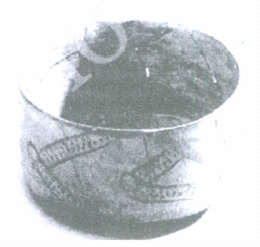
(i) From which metal these bowls were made?
(ii) When were these bowls used?
5.
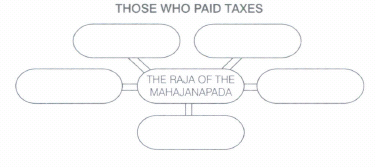
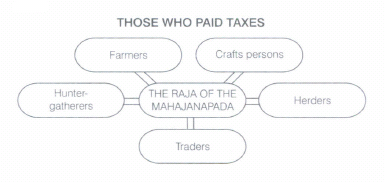
Fill in the chart given below with the terms: hunter-gatherers, farmers, traders, crafts persons, herders.
6.
Anwers the questions based on the given picture below.
(i) Where is this fortification wall located?
(ii) How many years ago a part of this wall is built?
7.
The sprinkling of sacred water on the king was done by the' shudras'.
8.
Many cities in mahajanapadas were fortified.
9.
Pots to store grain were made out of Painted Grey Ware.
10.
Archaeologists have found palaces in the settlements of the janapadas.
11.
The charioteer sprinkled sacred water on the king.
12.
Rajas who let the ashvamedha horse pass through their lands were invited to the sacrifice.
13.
Many rivers such as the Ganga and Son flowed through Vajji.
14.
Forests also provided wood for building houses, carts and chariots.
15.
There were also taxes on goods that were bought and sold, through trade.
16.
Farmers were also expected to pay taxes in the form of animals and animal produce.
17.
______ were paid reqularsalaries and maintained by ________ throughout the year.
18.
The ________ were expected to fight battles and protect people.
19.
The ordinary people, the ________ also brought gifts for the king.
20.
The _________ was a central figure in all the rituals.
21.
The first varna was that of the ________ who were expected to study (and teach) the Vedas.
22.
List two ways in which rajas of the Mahajanapadas were different from those mentioned in the Rigveda
23.
Why did people oppose the system of varna?
24.
Make a list of all those who would be present at the sacrifice. Which are the categories that are described in terms of their occupation?
25.
List two ways in which rajas of the mahajanapadas were different from those mentioned in the Rigveda.
26.
What do you think would have been provided by hunters and gatherers?
27.
Can you think why kings would encourage these changes?
28.
In what ways were these armies different from those described in the Rigveda?
29.
Find out whether the groups mentioned in answer 3 have voting rights at present.
30.
Find out whether any of the groups mentioned in answer 2 pay taxes today.
31.
In what ways are present-day elections different from the ways in which rulers were chosen in janapadas?
32.
Why did the rajas of mahajanapadas build forts?
33.
Who were the groups who could not participate in the assemblies of the ganas?
34.
Do you think it was a true democracy?
35.
In what ways was the Vajji sangha different from the other mahajanapadas? Try and list at least three differences.
36.
What were the characteristics of the earthen pots used by the people in janapadas?
37.
How was the varna system justified by the priests?
38.
What were the two major changes in agriculture that occurred at the time of mahajanapadas?
39.
Why was the capital city of mahajanapadas fortified?
40.
Who were the most powerful rulers of Magadha?
41.
What do the archaeological excavations tell about the janapadas settlements?
42.
Rajagriha (present day Rajgir) is in:
Bihar
Maharashtra
Uttar Pradesh
Jammu & Kashmir
43.
Hastinapur and Atranjikhera are situated in
Bihar
Maharashtra
Rajasthan
Uttar Pradesh
44.
Ashvamedh was
Cow sacrifice
Horse sacrifice
Rat sacrifice
Elephant sacrifice
45.
Jana refers to
Raja
Shudras
People
Army
46.
Citizens of Athens were expected to serve in the
politics
army and navy
foreign country
civil society
47.
One special type of pottery found at these sites is known as
Pol
Dish pot
Painted Grey ware
None of these
48.
According to the priests, groups were decided on the basis of
population
region
colour
birth
49.
Who were expected to be farmers, herders and traders?
Vaishyas
Charioteers
Rajas
Brahmins
50.
Who were expected to study (and teach) the vedas?
Ordinary men
Charioteers
Rajas
Brahmins
51.
Mahajanapada Vajji had its capital at
Kaushambi
Ujjain
Vaishali
Taxila
52.
Vedic books were composed by
priests
charioteers
kshatriyas
shudras
53.
Who were excluded from many rituals?
Priests
Charioteers
Kshatriyas
Shudras
54.
The present name of Rajagriha is
Rajgir
Rajgir
Gaya
Rajkot
55.
Who was the companion of raja in the battlefield?
Men
Charioteer
Raja
Brahmin
56.
Who was the central figure in Ashvamedha rituals?
Men
Women
Raja
Brahmin
1.
The democracy of Greece and Athens existed 2500 years ago and lasted for 200 years. The democratic set up is as follows:
(i) All free men over 30 years were citizens.
(ii) They could attend important meetings.
(iii) There was an assembly that met 40 times a year to decide on important matters.
(iv) Appointments for important positions were held through lottery.
(v) All citizens were expected to serve in the army and navy.
(vi) Women, foreigners who lived and worked in Athens as merchants and slaves were not considered as citizens.
2.
The ashvamedha or horse sacrifice was one such ritual. A horse was let loose to wander freely and it was guarded by the raja's men. If the horse wandered into the kingdoms of other rajas and they stopped it, they had to fight. If they allowed the horse to pass, it meant that they accepted that the raja who wanted to perform the sacrifice was stronger than them. These rajas were then invited to the sacrifice, which was performed by specially trained priests, who were rewarded with gifts. The raja who organised the sacrifice was recognised as being very powerful, and all those who came brought gifts for him to show respect.
3.
The priests divided people into four groups, called varnas. According to them, each varna had a different set of functions. The priests also said that these groups were decided on the basis of birth. The groups were as follow:
(i) The first varna was Brahmin. Brahmins were expected to study and teach the Vedas, perform sacrifices and receive gifts.
(ii) In the second varna, there were rulers, also known as kshatriyas. They were expected to fight battles and protect people.
(iii) The third varna was vaishyas or vish. They were expected to be farmers, herders and traders. Both the kshatriyas and the vaishyas could perform sacrifices.
4.
(i) Bowls are the earthern pots made out of Painted Grey Ware.
(ii) These bowls were used on special occasions, for important people, and to serve special food.
5.
6.
(i) This fortification wall is located at Kaushambi.
(ii) A part of this wall was probably built about 2500 years ago.
7.
(b)
8.
(a)
9.
(b)
10.
(b)
11.
(b)
12.
(a)
13.
(b)
14.
(a)
15.
(a)
16.
(b)
17.
()
Soldiers, the king
18.
()
kshatriyas
19.
()
vish or vaishya
20.
()
raja
21.
()
brahmins
22.
| S.No | Rajas in Rigvedic Time |
Rajas of Mahajanapadas |
| i. | The Rajas of Rigvedas did not have a capital city, palaces or armies nor did they collect taxes. |
They had capital city. So they had large armies. |
| ii. | The rulers were chosen by the [Jana i.e., the people. |
They became rajas by performing very big sacrifices where people accepted their supremacy. |
23.
(i) The priests divided people into four groups, called varnas. According to them, each varna had a different set of functions.
(ii) The priests also said that these groups were decided on the basis of birth. Many people did not accept the system of varna laid down by the brahmins.
(iii) Some people felt that there should be no differences amongst people based on occupation.
(iv) Some felt that everybody had the right to perform rituals. Many opposed the concept of untouchability. In this way, people opposed the system of varna.
24.
The people who would be present at the sacrifice are:
(i) The king, his wives, sons and relatives
(ii) The charioteer of the king
(iii) The priests
(iv) The ordinary people, the vish or vaishya
(v) The other rajas
The categories of people who are described in terms of their occupation are:
(i) The king. who protected the people and looked after their welfare.
(ii) The charioteer, who was his companion in his exploits.
(iii) The priest, who performed the religious ceremony.
25.
Rajas of Mahajanapadas
(i) They became rajas by performing very big sacrifices where people accepted their supremacy.
(ii) They had capital cities, which were fortified. They also had large armies.
Rajas in Rigveda
(i) The rulers were chosen by the jana i.e. the people.
(ii) They did not have capital city, palaces and armies. Also, they did not collect taxes.
26.
The hunters may have brought fresh meat everyday for the king. Gatherers brought forest produce like honey and nuts for the king.
27.
The kings of these times encouraged these changes i.e. use of iron ploughshare and transplantation of paddy. It was because these two activities would led to the increased agricultural production.
As a result of this, kings would be able to get more tax from their men. In this way, they could be able to maintain large army that would be utilised in acquiring more lands for agriculture.
28.
In the Rigvedic period, there was no regular army. Most of the men took part in the war, whenever required. In the later period, the kings had vast armies of foot soldiers, chariots and elephants.
29.
Yes, the groups mentioned in answer 3 i.e. women have voting rights at present. All the citizens of a country of age 18 or above including men, women, ere have equal right to vote.
30.
Yes, traders and crafts persons pay taxes even today.
31.
Present-day elections are different from the ways in which rulers were chosen in janapadas:
(i) Present-day elections are conducted by Election Commission. In janapadas, we did not have Election Commission.
Some of the rajas were probably chosen by the jana i.e. the people. But around 3000 years ago, we find some changes taking place in the ways in which rajas were chosen. Some men now became recognised as rajas by performing very big sacrifices.
(ii) In present-day elections, all adult citizens of 18 years participate in election process. But in janapadas, all men were recognised as full citizens. In janapadas, women and slaves were not considered equal free citizens.
32.
(i) The rajas of mahajanapadas built forts to protect their capital city.
(ii) Huge walls of wood, brick or stone were built around the cities.
(iii) Forts were probably built because people were afraid of attacks from other kings and needed protection.
(iv) Some rulers wanted to show their wealth and strength by building really large, tall and impressive walls around their cities.
(v) Also in this way, the land and the people living inside the fortified area could be controlled more easily by the king.
33.
Shudras, women and dasas could not participate in the assemblies of the ganas.
34.
In Athens, it was not a true democracy, as the right of women was ignored, slaves were ill-treated and not given citizenship.
35.
The Vajji sangha was different from the other mahajanapadas in these ways:
| Vajji Sangha | other Mahajanapadas |
| Vajji sangha was under a different form of government known as gana or sangha. |
They were governed by strong rulers. |
|
In the sangha. there were many rulers, |
There was a single powerful ruler. |
| If Vajji was attacked by an enemy, the different rulers met to discuss what should be done and how. Jointly they fought against the enemy. There was no big army. |
The rulers maintained big armies. For this, they collected different taxes. |
36.
The characteristics of the earthen pots are:
(i) In janapadas, people made earthen pots, some of these were grey in colour and others were red.
(ii) One special type of pottery found at these sites is known as Painted Grey Ware, and such pots had painted designs, usually simple lines and geometric patterns.
37.
(i) The priests divided people in four groups or varnas, i.e. Brahmin, Kshatriya, Vaishya and Shudra.
(ii) They said that the groups in the society were decided on the basis of birth. For example if one's father and mother were brahmins, one would automatically become a brahmin and so on. Later, they classified some people as untouchable.
(iii) These included some crafts persons, hunters and gatherers, as well as people who helped perform burials and cremations. The priests said that contact with these groups was polluting.
38.
The two major changes were:
(i) One was the growing use of iron ploughshares instead of wooden ploughshares so that more grain could be produced.
(ii) Second - instead of scattering seed on the ground, from which sprout, saplings were grown and then planted in the fields; people began transplanting paddy which lead to increase in production.
39.
The capital city of mahajanapadas was fortified because:
(i) Most mahajanapadas had a capital city, many of these were fortified which means that huge walls of wood, brick or stone were built around them. Some rulers wanted to show their wealth and strength by building huge impressive walls.
(ii) Forts were probably built because people were afraid of attacks from other kings and they needed protection. The king could easily control the land and people inside the fortified area.
40.
The most powerful rulers of Magadha were:
(i) Bimbisara and Ajatasattu were two very powerful rulers who used all possible means to conquer other janapadas.
(ii) Mahapadma Nanda was another important ruler. He extended his control upto the North-West part of the sub-continent.
41.
Archaeologists have excavated a number of settlements in janapadas, such as Purana Qila in Delhi, Hastinapur near Meerut and Atranjikhera near Etah (the last two are in Uttar Pradesh)
(i) Archaeologists found that people lived in huts and kept cattle as well as other animals.
(ii) They also grew a variety of crops - rice, wheat, barley, pulses, sugarcane, sesame and mustard.
42.
43.
(d)
Uttar Pradesh
44.
(b)
Horse sacrifice
45.
(c)
People
46.
(b)
army and navy
47.
(c)
Painted Grey ware
48.
(d)
birth
49.
(a)
Vaishyas
50.
(d)
Brahmins
51.
(c)
Vaishali
52.
(a)
priests
53.
(d)
Shudras
54.
(a)
Rajgir
55.
(b)
Charioteer
56.
(c)
Raja

6th Standard CBSE Syllabus & Materials
6th Standard CBSE
CBSE 6th Social Science Locating Places on the Earth - New Sample Question Papers Study Material - QB365 Set A
NEW6th Standard CBSE
CBSE 6th Science A Journey Through States of Water - New Sample Question Papers Study Material - QB365 Set A
NEW6th Standard CBSE
CBSE 6th Science Temperature and its Measurement - New Sample Question Papers Study Material - QB365 Set A
NEW6th Standard CBSE
CBSE 6th Science Materials Around Us - New Sample Question Papers Study Material - QB365 Set A



CBSE 6th Standard CBSE Subjects
CBSE Standards




