
 100% FREE ACCESS
6th Standard CBSE Syllabus & Materials
6th Standard CBSE
CBSE 6th Social Science The Value of Work - New Sample Question Papers Study Material - QB365 Set A
NEW6th Standard CBSE
CBSE 6th Social Science Family and Community - New Sample Question Papers Study Material - QB365 Set A
NEW6th Standard CBSE
CBSE 6th Social Science India's Cultural Roots - New Sample Question Papers Study Material - QB365 Set A
NEW6th Standard CBSE
CBSE 6th Social Science India,That is Bharat - New Sample Question Papers Study Material - QB365 Set A
NEW6th Standard CBSE
CBSE 6th Social Science Timeline and sources of history - New Sample Question Papers Study Material - QB365 Set A
NEW6th Standard CBSE
CBSE 6th Social Science Oceans and Continents - New Sample Question Papers Study Material - QB365 Set A

Published on: 01/10/2019
New Questions and Ideas
Download CBSE Class 6th Standard CBSE Social Science question papers, sample papers, important questions, and previous year solved papers in PDF format. Get free study materials, NCERT solutions, and exam preparation resources for Class 6th Standard CBSE Social Science
Questions + Answers key
Take MCQ Social Science Test
1.
This is a cave in Karle. Answer the following questions related to the picture:
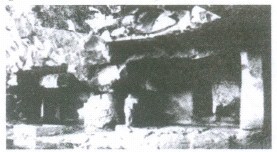
(i) Who lived in these shelters?
(ii) In which season were these caves used the most and why?
(iii)Where is this cave situated in the present day?
2.
Read the following passage and answer the questions given below:
"Around the time when Jainism and Buddhism were becoming popular, the brahmins developed the system of Ashramas. Here, the word' ashrama'
does not mean a place where people live and meditate. It is used instead to refer to a stage of life. Four Ashramas were recognised-brahmacharya,
grihastha, vanaprastha, and sanyasa."
(i) When did the system of Ashramas develop?
(ii) What does the word' Ashrama' mean?
(iii) How many Ashramas were there? Name them.
3.
Explain the system of Ashramas.
4.
What were the teachings of Mahavira?
5.
What were the teachings of Buddha?
6.
Who are Jains? State some features of their lives.
7.
Answer the questions based on the picture given below:
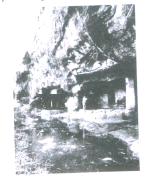

(i) The cave above in the picture are located in which state?
(ii) What was the purpose of these caves?
8.
Answer the questions based on the picture given below:
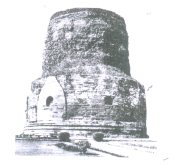
(i) Which type of monument is in the picture?
(ii) Why the monument was built?
9.
What were the main teachings of the Buddha?
10.
Discuss the story of the wise beggar in your own words.
1.
(i) Buddhist monks and nuns lived and meditated in these shelters.
(ii) These raves were used by the monks and nuns in tile rainy season because during this season it was very difficult to travel.
(iii) This cave is in Karle, which is in present day Maharashtra.
2.
(i) The system of Ashramas developed around the 6th century B.C.This was the time when Jainism and Buddhism became popular.
(ii) The word' Ashrama' means' a stage of life'.
(iii) There were four Ashramas. They were brahmacharya, grihastha, vanaprastha and sanyasa.
3.
(i) Around the time when Jainism and Buddhism were becoming popular, Brahmins developed the system of Ashramas, The word 'ashrama' means' a stage of life'
(ii) Four Ashramas were recognised brahmacharya, grihastha, vanaprastha, and sanyasa.
(iii) Brahmacharya: Brahmin, Kshatriya and vaishya men were expected to lead simple lives and study the Vedas during the early years of their lives.
(iv) Grihastha: Then they had to marry and live as householders.
(v) Vanaprastha: Then they had to live in the forest and meditate. Finally, they had to give up everything and become Sanyasis. The system of Ashramas allowed men to spend some part of their lives in meditation. Generally, women were not allowed to study the Vedas and they had to follow the Ashramas chosen by their husbands.
4.
Mahavira taught the following:
(i) He taught a simple doctrine: men and women who wished to know the truth must leave their homes
(ii) They must follow very strictly the rules of ahimsa, which means not hurting or killing living beings. "All beings," said Mahavira, "long to live. To all things, life is dear."
(iii) Followers of Mahavira, who were known as Jains had to lead very simple lives by begging for food.
(iv) They had to be absolutely honest and were specially asked not to steal.
(v) They had to observe celibacy and men had to give up everything, including their clothes.
5.
Buddha taught that:
(i) Life is full of sufferings and unhappiness. This is caused because we have cravings and desires (which often cannot be fulfilled).
(ii) Sometimes, even if we get what we want, we are not satisfied and want even more (or want other things). Buddha described it as 'thirst' or 'tanha'. He taught that this constant craving could be removed by following moderation in everything.
(iii)He also taught people to be kind and to respect the lives of others, including animals.
(iv) He believed that the results of our actions (called karma), whether good or bad, affect us both in this life and the next.
(v) He also encouraged people to think for themselves rather than to simply accept what he said.
6.
The followers of Mahavira are known as Jains.
Some of the features of the Jains are :
(i) They had to lead very simple lives, begging for food.
(ii) They have to be absolutely honest and are especially asked not to steal.
(iii) They have to observe celibacy.
(iv) Men had to give up everything, including their clothes.
7.
(i)Karle, present-day Maharashtra
(ii)Monks and nuns lived and meditated in these caves or shelters.
8.
(i)The monument in the picture is Buddhist Stupa at Sarnath.
(ii)Stupa was built to mark the place where the Buddha first taught his message.
9.
The main teachings of the Buddha are:
(i) The Buddha taught that life is full of suffering and unhappiness. This is caused because we have cravings and desires (which cannot be fulfilled).
(ii) Sometimes, even if we get what we desire, we are not satisfied (permanently) and want (or desire) ever more and more (or other things). The Buddha described this as thirst or tanha.
(iii) The Buddha taught that thirst or tanha or constant craving could be removed by following moderation everything.
(iv) He also taught people to be kind and to respect the lives of others, including animals.
(v) The Buddha believed that the results of our actions (called karma), whether good or bad, affect us both in this life and the next.
(vi) He also encouraged people to think for themselves rather than to simply what he (the Buddha) said.
(vii) The Buddha taught in Prakrit, which was the language of the ordinary people, so that everybody could understand his message.
10.
The story of the wise beggar is taken from the Chhandogya Upanishad. There were two sages named Shaunaka and Abhipratarin, who worshipped the universal soul.
One day when they started to eat, a beggar came and asked for some foods But they refused him to give Then the beggar told them that the universal soul fills the whole world, everybody is a part of it. God is also a universal soul. Thus, by denying food to the beggar, actually they are denying food to the universal so Hearing the beggar's view, the sages realised the truth and shared their food with him.

6th Standard CBSE Syllabus & Materials
6th Standard CBSE
CBSE 6th Social Science Locating Places on the Earth - New Sample Question Papers Study Material - QB365 Set A
NEW6th Standard CBSE
CBSE 6th Science A Journey Through States of Water - New Sample Question Papers Study Material - QB365 Set A
NEW6th Standard CBSE
CBSE 6th Science Temperature and its Measurement - New Sample Question Papers Study Material - QB365 Set A
NEW6th Standard CBSE
CBSE 6th Science Materials Around Us - New Sample Question Papers Study Material - QB365 Set A



CBSE 6th Standard CBSE Subjects
CBSE Standards




