
 100% FREE ACCESS
6th Standard CBSE Syllabus & Materials
6th Standard CBSE
CBSE 6th Social Science The Value of Work - New Sample Question Papers Study Material - QB365 Set A
NEW6th Standard CBSE
CBSE 6th Social Science Family and Community - New Sample Question Papers Study Material - QB365 Set A
NEW6th Standard CBSE
CBSE 6th Social Science India's Cultural Roots - New Sample Question Papers Study Material - QB365 Set A
NEW6th Standard CBSE
CBSE 6th Social Science India,That is Bharat - New Sample Question Papers Study Material - QB365 Set A
NEW6th Standard CBSE
CBSE 6th Social Science Timeline and sources of history - New Sample Question Papers Study Material - QB365 Set A
NEW6th Standard CBSE
CBSE 6th Social Science Oceans and Continents - New Sample Question Papers Study Material - QB365 Set A

Published on: 19/01/2019
On the Trail of the Earliest People Short Answers
Download CBSE Class 6th Standard CBSE Social Science question papers, sample papers, important questions, and previous year solved papers in PDF format. Get free study materials, NCERT solutions, and exam preparation resources for Class 6th Standard CBSE Social Science
Questions + Answers key
Take MCQ Social Science Test
1.
Answer the following questions related to stone tools used by the early man :
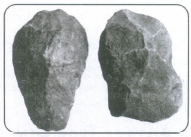
(i) What were these stone tools used for?
(ii) How were the stone tools made?
(iii) What is pressure flaking technique?
2.
This is a rock and cave shelter of Bhimbetka in the Deccan Plateau. Answer the following questions related to the cave shelter:
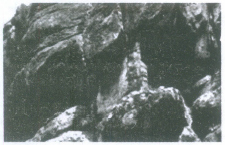
(i) What are habitation sites?
(ii) Why did people use these cave shelters as habitation sites?
(iii) In which mountain range are these rock and cave shelters found ?
(iv) Which valley is close to these rock shelters ?
3.
What are Microliths? How did the Mesolithic man use Microliths ?
4.
Mention the archaeological sources which tell us about man's life in the early period.
5.
Why was it difficult to hunt animals and gather plant produce in the early times?
6.
What were the uses of the stone tools invented by humans?
7.
Did division of labour exist during the prehistoric times?
8.
Which skills helped the early man to obtain mastery over his environment?
9.
Write about the inventions of the early man.
10.
If you had a natural pebble like ones, what would you use it for?
11.
Can you think of a term for the second type of sites?
12.
What are the purposes, stone tools were used for?
13.
What do you think the beads could have been used for?
14.
How did the early man learn herding and rearing animals?
15.
Where were Ostrich egg shells found in India?
16.
Where were traces of ash found?
17.
When did the Neolithic period begin ?
18.
When did the grasslands develop?
19.
What are sites? Where are they located?
20.
What is the Mesolithic period?
1.
(i) These stone tools were used to cut meat and bone, scrape bark and hides, chop wood for firewood, stitch clothes, dig the ground, etc
(ii) Stone tools were probably made using two different techniques, i.e., stone on stone and pressure flaking.
(iii) In this technique, the core (stone from which the tool was to be made) was placed on a firm surface. Hammer stone was used to strike the core stone to remove flakes that could be shaped into tools.
2.
(i) Habitation sites were the places where people lived. For example, rock and cave shelters.
(ii) People choose these natural caves for habitation because they provided protection from rain, sun and wind.
(iii) These rock and cave shelters are found in the Vindhyas.
(iv) These rock shelters are close to the Narmada valley.
3.
Stone tools found during the Mesolithic period are called Microliths. They were generally tiny in size. The Mesolithic man probably stuck these stones on to the handles of bones or wood to make tools such as saws and sickles. These tools were used for digging the ground and stitching clothes.
4.
Archeological sources such as tools, caves and rock paintings tell us about the eating habits of early man, materials used by him during that time and the activities performed:
(i) Tools: The earliest tools were made of stone, bone and wood. They were used to cut meat and bones, scrape barks from trees, for hunting, for stitching clothes, etc.
(ii) Caves: People lived in caves and rock shelters as they provided them with shelter from the rain, heat and wind.
(iii) Rock paintings: The early man made paintings in the caves and rock shelters. These paintings were drawn with great accuracy and skill.
5.
The early man faced a lot of problems while hunting animals and gathering plant produce. Some of them are as follows :
(i) Many of the animals that were hunted were strong and ran faster than man. To hunt these animals or catch fish and birds, the early man had to be alert and swift.
(ii) To collect plant produce, complete knowledge of plants was essential. The early man had to have the basic knowledge about which plants or parts of plants were edible and which were poisonous.
(iii) They were required to find out about the seasons when the fruits would ripen.
6.
Humans invented stone tools to assist them in their day to day activities.
(i) These tools were used to cut meat and bones from the dead body of an animal and also to scrape bark and animal skin.
(ii) They were also used as weapons (arrowheads and spears), made after sharpening stones into desired shapes.
(iii) Stone tools were handy in chopping wood which was used as firewood, and also to make huts.
7.
The early man was a hunter and a gatherer. He also made stone tools and painted on cave walls. Till now, it is not really known about the division of labour as it existed during those times. However, there are at least two presumptions:
(i) It is presumed that both men and women might have done many tasks together.
(ii) At the same time, it is also possible that women did some tasks, while others were done only by men.
Moreover, different parts of the sub-continent must have followed different practices.
8.
The human brain helped to distinguish between edible and non-edible plants, waste land, crop land and forest land. Thus, the early man obtained mastery over his environment.
9.
The greatest invention of the early man was perhaps the stone tools. They had sharp edges on one side and later, these tools had wooden handles.
10.
The natural pebbles can be used to play games like (girls play the game gittas). The boys also play games (e.g., a group of boys keep dropping pebbles at different places and another group of boys keep trying to find them). The natural pebbles can be used to decorate the flower pots.
11.
The second type of sites were habitation-cumfactory sites where a large number of tools were found.
12.
For various purposes, stone tools were used like:
(i) To cut meat and bone.
(ii) To scrape bark from trees.
(iii) To scrape hides (animal skins).
(iv) To chop fruit and roots.
(v) To make spears and arrows for hunting.
(vi) To chop wood for firewood and to make huts.
13.
The beads could have been used for making ornaments and jewelleries.
14.
()
When the hunters followed animals for hunting, they might have learnt about their food habits and their breeding seasons. It is likely that this helped people to start thinking about herding and rearing these animals themselves.
15.
()
Large quantities of Ostrich egg shells were found at Pune in Maharashtra.
16.
()
Traces of ash were found in the Kurnool caves
17.
()
The word 'Neolithic' has been derived from two Greek words, 'neo' meaning 'new' and 'lithos' meaning stone. The Neolithic period began 10,000 years ago.
18.
()
Around 12,000 years ago, due to relatively warm conditions, there was a major change in the climate of the world. This led to the development of the grasslands.
19.
()
Sites are places where the remains of past cultures (tools, pots, rock paintings, buildings, etc.) are found. These spots could be the surface of the earth, under the earth or sometimes, even under water.
20.
()
It was period between 10,000 to 8,000 B.C.

6th Standard CBSE Syllabus & Materials
6th Standard CBSE
CBSE 6th Social Science Locating Places on the Earth - New Sample Question Papers Study Material - QB365 Set A
NEW6th Standard CBSE
CBSE 6th Science A Journey Through States of Water - New Sample Question Papers Study Material - QB365 Set A
NEW6th Standard CBSE
CBSE 6th Science Temperature and its Measurement - New Sample Question Papers Study Material - QB365 Set A
NEW6th Standard CBSE
CBSE 6th Science Materials Around Us - New Sample Question Papers Study Material - QB365 Set A



CBSE 6th Standard CBSE Subjects
CBSE Standards




