
 100% FREE ACCESS
6th Standard CBSE Syllabus & Materials
6th Standard CBSE
CBSE 6th Social Science The Value of Work - New Sample Question Papers Study Material - QB365 Set A
NEW6th Standard CBSE
CBSE 6th Social Science Family and Community - New Sample Question Papers Study Material - QB365 Set A
NEW6th Standard CBSE
CBSE 6th Social Science India's Cultural Roots - New Sample Question Papers Study Material - QB365 Set A
NEW6th Standard CBSE
CBSE 6th Social Science India,That is Bharat - New Sample Question Papers Study Material - QB365 Set A
NEW6th Standard CBSE
CBSE 6th Social Science Timeline and sources of history - New Sample Question Papers Study Material - QB365 Set A
NEW6th Standard CBSE
CBSE 6th Social Science Oceans and Continents - New Sample Question Papers Study Material - QB365 Set A

Published on: 06/03/2020
6th Standard CBSE Social Science Public Exam Important Question 2019-2020
Download CBSE Class 6th Standard CBSE Social Science question papers, sample papers, important questions, and previous year solved papers in PDF format. Get free study materials, NCERT solutions, and exam preparation resources for Class 6th Standard CBSE Social Science
Questions + Answers key
Take MCQ Social Science Test
1.
What are the functions of a Patwari ?
2.
Explain the contribution of Dr. Ambedkar in the upliftment of the Dalits.
3.
How is the continent of North America different from that of South America?
4.
How are the members of the Lok Sabha elected?
5.
How are Block Mountains formed?
6.
Which longitude is taken as the International Date Line and why?
7.
What do the following colours represent on map?
8.
Describe the composition and function of each Varna in the Varna system.
9.
Explain the policies adopted by Samudragupta regarding different rulers.
10.
Name the Chinese visitors who came to India. What was their aim of visit?
11.
Write about the administration of Ashoka
12.
Explain the system of Ashramas.
13.
Make a list of all the animals mentioned in the table. For each one describe what they may have been used for.
14.
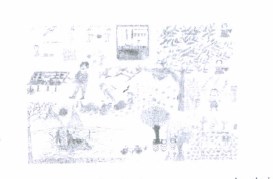
(i) Describe the works that you see people doing in the above picture.
(ii) Identify the different types of work that are related to farming and those that are not. List these in a table.
(iii) In your notebook draw some pictures of work that you have seen people do in rural areas and write a few sentences that describe the work.
15.
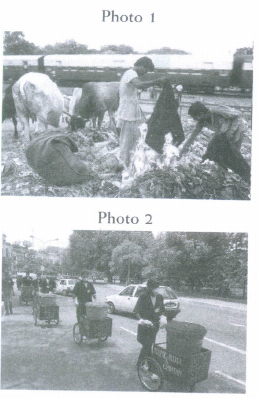
In the two photographs you see different ways of collecting and disposing garbage.
(i) Which way do you think provides safety to the person disposing garbage?
(ii) What are the dangers of collecting garbage in the manner shown in the first photograph?
(iii) Why do you think that proper ways of disposing garbage are not available to those who work in municipalities?
16.
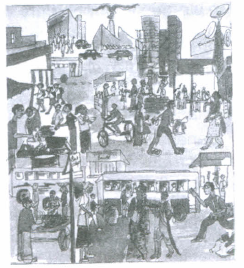
What do you see in this illustration?
17.
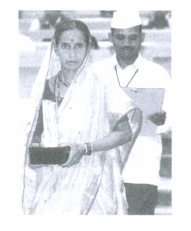
(i) Who are seen in the picture?
(ii) What award were they given?
(iii) When and why was this award given?
18.
How does Jallianwala Bagh Massacre reflect unity in diversity?
19.
Answer the questions based on picture given below:
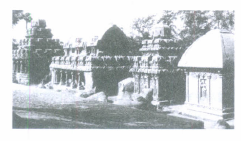
(i) Where are the monolithic temples shown in the picture located?
(ii) Why are they called monoliths?
(iii) What was the difference in the work of stone cutters?
20.
See the below picture and answer the following questions.
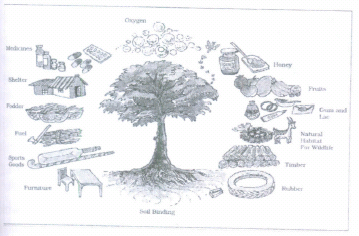
(i) Why are forests called life saver?
(ii) What do we get from forests?
21.
Explain how the earliest forms of governments were not democratic
22.
How are seasons changed on the Earth?
23.
Discuss the geographical extent of India.
24.
How are people described in the Rigveda?
25.
How do we find out about early cities of the sub-continent?
26.
How can we say that asteroids and meteoroids are different from each other? How meteoroids are connected with the Earth?
27.
Describe the architecture and the rituals offered in the Great Bath.
28.
Answer the questions based on the picture given below:
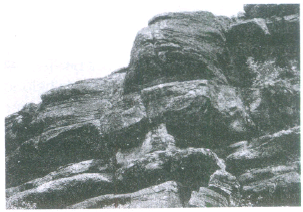
(i) Where are the above sites located?
(ii) Bhimbetka is located in which state?
(iii) Which valley is closer to these rock shelters?
29.
Why were the earlier cities mostly developed over the banks of river?
30.
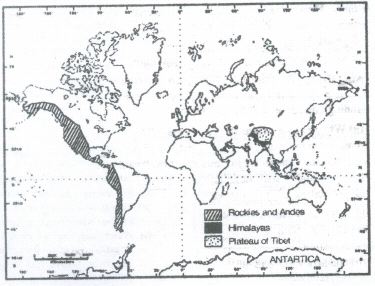
On an outline map of the world, mark the following:
(i) Mountain ranges: Himalayas, Rockies and Andes.
(ii) Plateau Tibet
31.
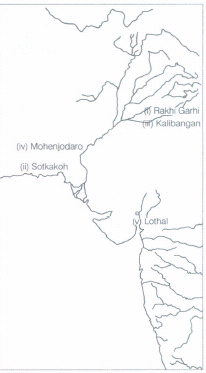
Show the following cities on the outline map of India
(i) Rakhi Garhi
(ii) Sotkakoh
(iii) Kalibangan
(iv) Mohenjodaro
(v) Lothal
32.
On the outline map of the world, mark the following?
Europe, Asia, Antarctica, South America, Australia, Indian Ocean, Pacific ocean, Atlantic ocean and Ural mountains.
33.
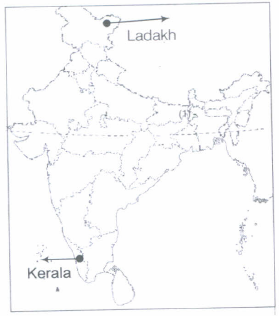
Look at the map of India in an Atlas and locate Kerala and Ladakh. Can you list three ways in which the different geographical location of these two regions would influence the following?
(i) The food people eat
(ii) The clothes they wear
(iii) The work they do.
34.
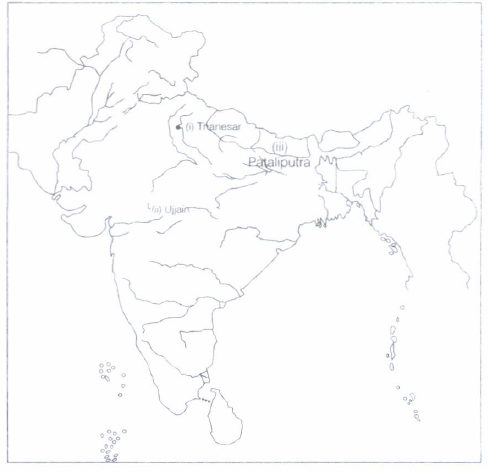
Mark the following important cities and kingdoms on the outline map of India:
(i) Thanesar (ii) Ujjain (iii) Pataliputra
35.
On an outline map of India, mark the following
(a) Tropic of Cancer
(b) Standard Meridian of India
(c) Andaman Islands and Lakshadweep Islands
(d) Western Ghat and Eastern Ghats.
36.
Mark the following Janapadas and Mahajanapadas on the outline map of India:
(i) Taxila (ii) Ujjain (iii) Vaishali (iv) Magadha (v) Gandhara (vi) Avanti
37.
Mark the following places on the outline map of India:
(i) Pataliputra
(ii) Ujjain
(iii) Rampurwa
(iv) Kaushambi
38.
Locate the following of the outline physical map of India.
(i) Tapi river
(ii) Brahmaputra river
(iii) Godavari river
39.
Glaciers are found in
the mountains
the plains
the plateaus
40.
Which is a new from of employment for people in big cities?
Shops
rickshaw pulling
Call centres
Kiosk
41.
Which of the following stations in India has an equable climate
Delhi
Nagpur
Bikaner
Kanyakumari
42.
Which river (s) drain into the Bay of Bengal?
Mahanadi and Godavari
Krishna
Kaveri
All of these
43.
Which of the following alternatives is an incorrect reason for diversity in India?
Caste
Language
Religion
Culture
44.
The highest court of appeal in India is the :
District Court
High Court
Session Court
Supreme Court
45.
If we show 10 km distance by 2 cm on a map the 1 cm on the map will show how much distance on the ground:
5 km
10 km
15 km
2 km
46.
Cotton was probably grown in Mehrgarh around:
2000 years ago
4000 years ago
7000 years ago
12000 years ago
47.
Rajagriha (present day Rajgir) is in:
Bihar
Maharashtra
Uttar Pradesh
Jammu & Kashmir
48.
Which crop was first grown to the North of the Vindhyas?
Wheat
Rubber
Sugarcane
Rice
49.
What is the height of the iron pillar located in Delhi?
8.2 m
9.2 m
7.2 m
12 m
50.
Kalpattu village is surrounded by which of the following land features?
High hills
Mountain ranges
Plain land
Low hills
51.
The uncollected garbage attracts dogs, rats and flies, so we should
cover them.
keep them open.
throw them on to the roads.
throw them here and there.
52.
Raghu's uncle was
a postman
SHO
a Sarpanch
a constable
53.
At which level does Zila Parish ad actually make development plans?
District level
Village level
Block level
Central level
54.
Which is the domain of the earth consisting of gaseous portion?
Biosphere
Lithosphere
Atmosphere
Hydrosphere
55.
The final decisions remain in the hands of the king/queen. This is related with
representative government
democratic government
monarchical government
All of the above
56.
Harishena was the court poet of
Harsha
Samudragupta
Chandragupta
Banabhatta
57.
Direct rays of the sun fall on the equator on
21st March
21st June
22nd December
58.
Which of the following means to judge other people negatively or see them as inferior?
Stereotypes
Discrimination
Dalits
Prejudice
59.
The Frigid zone lies near
the poles
the equator
the tropic of Cancer
60.
Technique of making silk was first invented in
China
South India
Sri Lanka
None of these
61.
The word __ means big stone.
chalcolith
neolith
microlith
megalith
62.
Which of the following religions is related to Jataka?
Jaina
Buddhism
Hindu
Christian
63.
Which one of the following is considered as dwarf planet?
Mercury
Uranus
Pluto
Neptune
64.
Who was the grandfather of Ashoka?
Chandragupta
Ashoka
Balwan
Samudragupta
65.
Which of the following is not a way of storing food grains in the past?
Large boxes
Woven baskets
Pits in the ground
Clay pots
66.
When was Gautama Buddha born?
About 3000 years ago
About 2500 years ago
About 1500 years ago
About 1000 years ago
67.
Bhimbetka site was the
factory site
habitation site
habitation-cum-factory site
None of the above
68.
Why is it important for people to abide by laws?
69.
Briefly describe consumer market.
70.
What is the difference between weather and climate?
71.
How many days did the Constituent Assemblies take to complete the Constitution? Name any four prominent members of the Constituent Assembly?
72.
What are the three organs of Village Panchayat ?
73.
What is the difference between Councillors and Administrative Officers?
74.
List three ways through which the non-whites were discriminated against in South Africa.
75.
Write a note on 2003UB313 or Eris.
76.
Describe the general layour of the Harappan cities?
77.
How were forts build by the Rajas?
78.
What do you know about Prashasti?
79.
Some uses of stone tools are given below, make a list of what these tools were used for and try and decide which of these tasks could be performed using a natural pebble. Give reasons for your answers.
80.
Where did the Stone Age man live?
81.
Why did Buddha use Prakrit language for teaching?
82.
Find the word crafts persons from textbook. List at least five different crafts that you know about today. Who are the crafts persons-tal men (b) women (c) both men and women
83.
In what ways would her way of earning a living have been different if Thulasi owned some farmland? Discuss.
84.
Why do less people live in mountain areas?
85.
Why was Mohan worried about picking a quarrel with Raghu?
86.
Name the major continents of the earth.
87.
Look around you in the classroom: do you see anyone who looks exactly like you do?
88.
Discuss the story of Tamil epic, the Silappadikaram.
89.
How do symbols help in reading maps?
90.
Meridians are vertical lines on the globe. Write some major features of meridians.
91.
What is an equinox?
92.
If we divide the world into Eastern and Western hemispheres which hemisphere would India belong to?
93.
Write a short note on the Rigveda.
94.
List the reasons why Xuan Zang wanted to study in Nalanda
95.
List the evidence that indicates that there was contact with Rome.
96.
Why do you think slaves and servants were ill-treated? Do you think the orders of the emperor would have improved their condition? Give reasons for your answer.
1.
(i) The Patwari is responsible for measuring lands and keeping land records in villages.
(ii) The Patwari is responsible for organising the collection of land revenues from the farmers and providing information to the government about the crops grown in the area.
(iii) The Patwari is the kingpin of the land record system in the villages.
2.
Dr. Ambedkar encouraged Dalits to send their children to schools and colleges. He also urged Dalits to take on different kinds of government jobs in order to move out of the caste system. He led many Movements for the Dalits to gain entry into temples. He also believed that the Dalits must fight against caste system and work towards the establishment of a society based on respect for all persons.
3.
North America:
(i) North America is the third largest continent of the world.
(ii) It is linked to South America by a very narrow strip of land called the Isthmus of Panama.
(iii) The continent lies completely in the Northern and Western Hemisphere.
(iv) Three oceans which surround this continent are the Pacific Ocean, Atlantic Ocean and Arctic Ocean.
South America:
(i) South America lies mostly in the Southern Hemisphere.
(ii) The Andes, world's longest mountain range runs through its length from North to South.
(iii) South America has the world's largest river, the Amazon River.
4.
(i) The members of the Lok Sabha are elected directly by the people.
(ii) Territorial areas called Parliamentary Constituencies are set up in each State and Union territory for the purpose of elections.
(iii) Seats are allotted to various States on the basis of their respective population.
(iv) Any number of candidates may contest an election from the same constituency.
(v) The candidate who secures majority of vote is declared elected to the Lok Sabha.
5.
(i) Block Mountains are formed when large areas of bedrock are widely broken up by faults creating large vertical displacements of continental crust.
(ii) Vertical motion of the resulting blocks, sometimes accompanied by tilting, can then lead to high escarpments.
(iii) These mountains are formed by the Earth's crust being stretched and extended by tensional forces.
(iv) Fault block mountains commonly accompany rifting, another indicator of tensional tectonic forces.
(v) The uplifted blocks are called block mountains or Horsts. The intervening dropped blocks are termed as graben.
(vi) These can be small and form extensive rift valley systems. This form of landscape can be seen in East Africa, the Vosges, the Basin and Range province of Western North America, in South-Central New England and the Rhine Valley.
(vii) Volcanic eruptions often occur when the regional stress is extensional and the crust is thinned.
6.
The International Date Line (IDL) is an imaginary line on the surface of the Earth opposite the Prime Meridian, where the date changes as one travel across the East or West. Roughly along 180° longitude, it almost corresponds to the time zone boundary separating -12 and +12 hours, Greenwich Mean Time (GMT). Crossing the IDL, travelling east results in a day or 24 hours being added and crossing west results in a day being subtracted. The exact number of hours depends on the time zones.
7.
Blue-lakes, rivers, streams, oceans, reservoirs, etc.
Red-major highways, roads, urban areas, airports, special interest sites, military sites, place names, buildings, borders.
Yellow-built-up or urban areas.
Green-parks, golf courses, forest, orchards, highways.
Brown-deserts, historical sites, national park", military reservations or bases, contour (elevation) lines.
Black-railways, highways, bridges, place names, buildings, borders.
8.
(i) The first Varna was that of the Brahmin. Brahmins were expected to study (and teach) the Vedas, perform sacrifices and receive gifts.
(ii) In the second place were the rulers, also known as Kshatriyas. They were expected to fight battles and protect people.
(iii) Third were the Vish or the Vaishyas. They were expected to be farmers, herders, and traders. Both the Kshatriyas and Vaishyas could perform sacrifices.
(iv) Last were the Shudras, who had to serve the other three groups and could not perform any rituals. Often, women were also grouped with the Shudras. Both women and Shudras were not allowed to study the Vedas.
9.
Harishena, Samudragupta's court poet described four different kinds of rulers, and the policies followed by him towards them.
(i) The rulers of Aryavarta: Here there were nine rulers who were uprooted and their kingdoms were made a part of Samudragupta's empire.
(ii) The rulers of Dakshinapatha: There were twelve rulers and they surrendered to Samudragupta after being defeated and he then allowed them to rule again.
(iii) The inner circle of the neighbouring states, including Assam, coastal Bengal, Nepal, and a number of gana sanghas in the North-West, brought tribute, followed his orders, and attended his court.
(iv) The rulers of the outlying areas, the descendants of the Kushanas and Shakas, and the ruler of Sri Lanka, who submitted to him and offered daughters in marriage.
10.
The Chinese Buddhist pilgrims who visited India were:
(i) Fa Xian, who Came to the sub-continent about 1600years ago,
(ii) Xuan Zang who came around 1400 years ago, and
(iii) I-Qing, who came about 50 years after Xuan Zang.
Their aim was to visit places associated with the life of Buddha as well as the famous monasteries.
11.
(i) Administration: During Ashoka's time, the king was the head of the state and was assisted by 'rnantriparishad' -the council of ministers. His empire was divided into provinces and the provinces were divided into districts. Villages were the smallest units. City was the basic trade centre.
(ii) Pataliputra: The capital city was administrated by the Chief-Nagarika with the City Council of 30 members, who, in turn, had 6 boards, each board incharge of various functions. All the cities were administered like Pataliputra.
(iii) Education: It was fairly widespread and teaching was mainly the job of the Brahmins. Buddhist monasteries were the educational institutions. Famous educational centers were established in Taxila, Ujjain, and Varanasi.
(iv) Revenue: The income for the empire came through taxes which were both in cash and kind, levied on land holding and trade. Tax collection was hardly very strict.
(v) Army: The army was very huge and functioned under Senapati who directly reported to the king. The Soldiers were well equipped with swords, bows and arrows and spears and were looked after very well. Army was divided into six branches. They were: Cavalry, Infantry, Chariots, Elephants, Transport and Navy.
(vi) Economy: The administrators helped villagers by clearing forest area and starting new settlements. They also helped people start agriculture and animal husbandry.
12.
(i) Around the time when Jainism and Buddhism were becoming popular, Brahmins developed the system of Ashramas, The word 'ashrama' means' a stage of life'
(ii) Four Ashramas were recognised brahmacharya, grihastha, vanaprastha, and sanyasa.
(iii) Brahmacharya: Brahmin, Kshatriya and vaishya men were expected to lead simple lives and study the Vedas during the early years of their lives.
(iv) Grihastha: Then they had to marry and live as householders.
(v) Vanaprastha: Then they had to live in the forest and meditate. Finally, they had to give up everything and become Sanyasis. The system of Ashramas allowed men to spend some part of their lives in meditation. Generally, women were not allowed to study the Vedas and they had to follow the Ashramas chosen by their husbands.
13.
(i) Pig \(\rightarrow\) for meat.
(ii) Buffalo \(\rightarrow\) milk-giving animal.
(iii) Sheep\(\rightarrow\) meat and wool.
(iv) Dog \(\rightarrow\) to look after the house and fields.
(v) Cattle\(\rightarrow\) for dairy and milk products.
(vi) Ox\(\rightarrow\) for ploughing the fields and pulling the carts.
(vii) Goat \(\rightarrow\) milk and meat.
14.
(i)The works that people are doing:
(a) Hawker
(b) Fishing
(c) Labourers carrying goods
(d) Labourers working in the fields
(e) Plucking fruits and vegetables
(f) Shopkeeper
Works related to farming are:
(a) Labourers working in the fields
(b) Plucking fruits and vegetables
Works not related to farming are:
(a) Hawker
(b) Fishing
(c) Labourers carrying goods
(d) Mansions
(e) Shopkeeper
15.
(i) In photo 2, the proper way of handling (disposing) garbage have shown, which provide protection for workers.
(ii) The dangers of colLecting garbage in the manner shown in the first photograph are:
(a) Poisonour gas infection
(b) Falling sick
(c) Breathing problem
(d) Falling victim to epidemic
(e) Skin disease
(iii) Proper ways of disposing garbage are not available to those who work in municipalities because of
(a) Little fund for municipal corporations.
(b) Workers Unawareness of their health.
(c) Poor economic condition of the municipalities.
16.
It is a busy street in a city with hawkers and vendors. Various types of vehicles like cycles, buses, cars are plying on the roads.
Some of the people are trying to board the bus.
Many other people are buying goods from various shops. Some children are going to school. Also some people are taking their meals at dhaba.
17.
(i)The village Panchs from Maharashtra are seen in the picture.
(ii)They were awarded with the Nirmal Gram Puruskar.
(iii)This award was given in 2005 for the excellent work done by them in the Panchayat.
18.
Jallianwala Bagh Massacre happened in Amritsar in which a British General opened fire on a large group of unarmed, peaceful people killing many and wounding even more.
Men and women, Hindus, Sikhs and Muslims, rich and poor had gathered to protest against the British.
After this incident, a song was sung which included a line that said "The blood of Hindus and Muslims flow together today". Thousands of people were killed.
This shows how Indians proved that, whatever caste, creed, religions, culture we belong to, we are one and united to do anything for our motherland.
19.
(i)The monolithic temples shown the picture are located in Mahabalipuram.
(ii)They are called monoliths because each of these was carved out of a huge single piece of stone.
(iii)The stone cutters had to work from top downwards.
20.
(i) Forest gives us oxygen to breathe, and absorbs carbon dioxide.
(ii) We get medicine, wood, fuel etc from forests.
21.
The earliest forms of government were basically a monarchy. So, the people's participation was absent. In this kind of government, a small group of people led by the monarch made decisions for the people. The final decision-making power remained with the monarch. The King or Queen did not have to explain his/her actions or defend the decisions they took. In UK and America, the government did not allow women and the poor to participate in elections.
They allowed only men who owned property and were educated, to vote. The two countries were governed by the rules and regulations that these few men made. Thus, the earliest forms of governments were not the democratic government.
22.
The seasons are changed on the Earth because of the inclination of the Earth's axis in a fixed direction and due to the change in the position of the Earth around the sun.
On 21st June, the Northern hemisphere is tilted towards the sun. These areas receive more heat because the sun rays fall directly on the tropic of Cancer.
The tropic of Capricorn receives direct sun rays due to tilting of South Pole towards the sun on 22nd December.
The Northern hemisphere experiences autumn season while Southern hemisphere spring season on 23rd September. On 21st March, itIS spring in Northern hemisphere and autumn in Southern hemisphere.
23.
India is a country of vast geographical expanse. In the North, it is bound by the lofty Himalayas.
The Arabian Sea in the West, the Bay of Bengal in the East and the Indian Ocean in the South, wash the shores of the Indian peninsula. India has an area of about 3.28 million sq. km.
The North-South extent from Kashmir to Kanyakumari is about 3,200 km. The East-West extent from Arunachal Pradesh to Kuchchh is about 2,900 km.
The lofty mountains, the Great Indian Desert, the Northern Plains, the uneven plateau surface and the coasts and islands present a diversity of landforms.
24.
In the Rigveda, there are two groups who are described in terms of their work - the priests, sometimes called brahmins, who performed various rituals, and the rajas.
(i) At that time, rajas did not have capital cities, palaces or armies, nor did they collect taxes. Generally, sons did not automatically succeed fathers as rajas.
(ii) In the Rigveda, to describe the people or the community as a whole, the words - 'jana' and 'vish' were used.
(iii) Several vish or jana are mentioned, for example, the Puru jana or vish, the Bharata jana or vish, the Yadu jana or vish, and so on.
(iv) The people who composed the hymns described themselves as Aryas and called their opponents as Dasas or Dasyus.
25.
We find out about early cities of the sub-continent through the following sources:
(i) Stories The Jatakas were stories that were probably composed by ordinary people and then written down and preserved by Buddhist monks. The Jatakas throw sufficient light on the lives of the people who used to live there.
(ii) Accounts of travellers and sailors Another way of finding out about early cities is from the accounts of sailors and travellers who visited them.
(iii) Sculptures We can use other kinds of evidences to find out about life in some of these early cities. Sculptors carved scenes depicting peoples lives in towns and villages, as well as in the forest.
(iv) Archaeological findings In many early cities, archaeologists have found rows of pots or ceramic rings arranged one on top of the other. They have also found many silver and copper coins. From all these findings, many important facts about the early cities can be known.
26.
Apart from the planets, asteroids are the tiny celestial bodies which also move around the sun. These bodies are found in large number between the orbits of Mars and Jupiter, These are believed to be the part of a planet that exploded many years ago.
Meteoroids are the small pieces of rocks that move around the sun, These meteoroids sometimes come close to the Earth and tend to drop upon Earth.
During their drop on the Earth, they get heated up and burnt due to friction with air and cause flash of light. Sometimes, it creates a hollow on the Earth if it is not burnt completely.
27.
In some cities, special buildings were constructed on the citadel. In Mohenjodaro, a very special tank, which archaeologists call the Great Bath, was built. This was lined with bricks, coated with plaster and made water-tight with a layer of natural tar.
There were steps leading down to it from two sides, while there were rooms on all sides. Water was probably brought in from a well and drained out after use. Perhaps important people took a dip in this tank on special occasions.
28.
(i) These sites are located in Bhimbetka.
(ii) Bhimbetka is located in Madhya Pradesh.
(iii) The Narmada Valley is close to these rock shelters.
29.
It is evident from the past that the earlier cities were mostly developed over the banks of river because of the following reasons:
(i) Thousand years ago, people lived along the banks of the Narmada river.
(ii) About 4700 years ago, some of the earliest cities flourished on the banks of river Indus and its tributaries.
(iii) Along the banks of the rivers, the necessary conditions for the living of human beings exist.
(iv) The necessities of living such as water, forest are easily available which fulfil the basic needs of the people.
(v) At that time, waterways were the most important means of transportation and communication.
30.
31.
32.
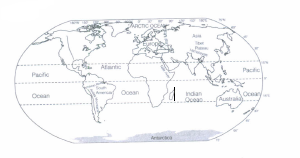
(A) Europe
(B) Asia
(C) Antarctica
(D) Sourh America
(E) Australia
(F) Indian ocean
(G) Pacific ocean
(H) Atlantic ocean
(I) Ural mountains
33.
Yes, we can list three ways in which the different geographical location of these regions (Kerala and Ladakh) would be influence:
| Kerala | ladakh | |
|---|---|---|
| Food | Rice, fish, vegetables | Meat and milk. |
| Clothes | Cotton and synthetic cloths. Loose cotton. No woollen clothes | Woolen and fur clothes. |
| Work | Fishing, agriculture | Sheep rearing, wool collection, trading |
34.
35.
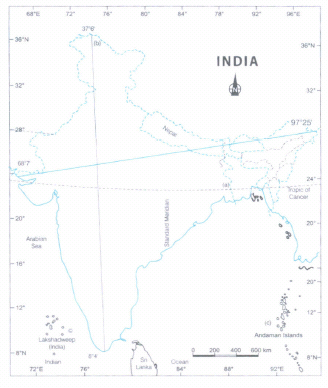
36.
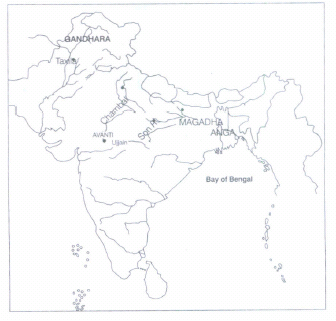
37.
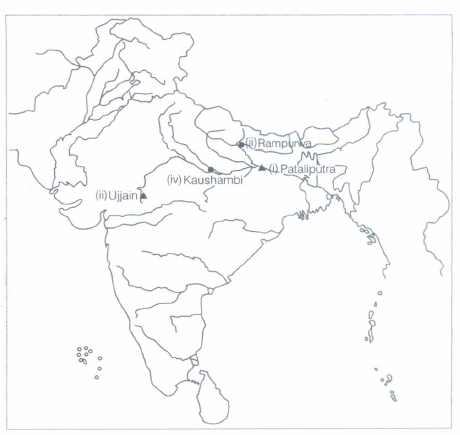
38.
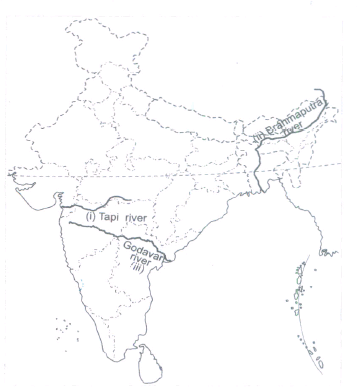
39.
(a)
the mountains
40.
(c)
Call centres
41.
(d)
Kanyakumari
42.
(d)
All of these
43.
(a)
Caste
44.
(d)
Supreme Court
45.
(a)
5 km
46.
(c)
7000 years ago
47.
48.
(d)
Rice
49.
(c)
7.2 m
50.
(d)
Low hills
51.
(a)
cover them.
52.
(c)
a Sarpanch
53.
(a)
District level
54.
(c)
Atmosphere
55.
(c)
monarchical government
56.
(b)
Samudragupta
57.
(a)
21st March
58.
(d)
Prejudice
59.
(a)
the poles
60.
(a)
China
61.
(d)
megalith
62.
(b)
Buddhism
63.
(c)
Pluto
64.
(a)
Chandragupta
65.
(a)
Large boxes
66.
(b)
About 2500 years ago
67.
(b)
habitation site
68.
Laws are meant for the safety and welfare of the people. In the absence of laws, there will be inequality in the society as the rich, influential and powerful would get their way out.
69.
Markets initially started as market-places usually in the hub of villages and towns for the sale or barter of farm produce, clothing and day-to-day items. These kinds of street markets developed into a whole variety of consumer-oriented markets, such as shopping centers, supermarkets or even online markets. (internet).
70.
Weather is the day-to-day changes in the atmosphere. It includes changes in temperature, rainfall and sunshine, etc.
Climate is the average weather conditions, which have been measured over many years.
71.
The Constituent Assembly took two years, eleven months and seven days to complete its historic task of drafting the Constitution of independent India. The Constituent Assembly consisted of 299 members. All the prominent leaders of the freedom movement were members of the Assembly. Some of the major ones were Dr Rajendra Prasad, Jawaharlal Nehru, K.M. Munshi and Sardar Patel.
72.
The three organs of Village Panchayat are Gram Sabha, Gram Panchayat and Nyaya Panchayat.
73.
Councillors are elected by the people and hold . Their positions only if they are re-elected. Officials are appointed on the bases of merit by the council Management to specified jobs within the municipal administration and they are like any other employee in a job. Officials possess the knowledge and skills on the technical and specialised aspects of municipal affairs. Councillors who don't have this knowledge have to rely on the reports of the officials to help them make decisions. Both the Councillors and officials decide the policies and directions of the Municipality. Once the Council has reached a decision then officials are expected to carry these out in the most efficient and cost-effective manner.
74.
The three ways in which non-whites were discriminated are:
(i) Non-whites were prohibited from running businesses or professional practices in the white areas without permits.
(ii) Non-whites had separate amenities like beaches, buses, schools, benches, drinking fountains, restrooms etc.
(iii) Non-whites received inferior education, medical care and other public services.
75.
In a meeting of the International Astronomical Union, a decision was taken that Pluto like other celestial objects (Ceres, 2003 UB313) discovered in recent past may be called 'dwarf planets'.
76.
(i) Many of the Harappan cities were divided into two or more parts.
(ii) Usually, the part to the west was smaller but higher. Archaeologists describe it as the Citadel.
(iii) Generally, the part to the East was larger but lower. It is called the lower town.
77.
(i) Building huge walls of the fort required great deal of planning. Thousands of bricks or stone had to be prepared.
(ii) Thousands of men, women and children of the kingdom provided enormous labour for this task.
78.
The 'Prashasti' word comes from Sanskrit and it means 'in praise of'. Court poets often wrote accounts in which they listed the achievements of the king and praised him. they engraved such accounts on pillars so that the people could read them.
79.
The uses of tool:
(i) To cut meat and bone
(ii) To chop fruits and roots
(iii) To scraps bark and hides
(iv) To chop wood
80.
The Stone Age man lived in hilly areas by the side of rivers or lakes. In the beginning, he took shelter in the caves, rock shelters and later, in mud-huts. He lived by the side of lakes or rivers, to quench his thirst and for food i.e., animal and fish.
81.
The Buddha taught in the language of the ordinary people, Prakrit, so that everybody could understand his message.
82.
Crafts persons are those who have skills in their occupation and can do better than any other unskilled person. The crafts persons are artists. musicians. scientists. merchants and architects. In today's phenomena. both the categories of men and women have the above skills.
83.
If Thulasi had owned some farmland, she would have cultivated her field. The whole produce and the money she got after selling would have belonged to her. If she had purchased fertilisers and seeds from the traders on loan, she would have to pay it back.
84.
Life is difficult in mountainous areas. Plains provide much better conditions. It is tough to grow crops, build a house or a road in a mountain. That's why people live there in less amount.
85.
Mohan was worried about picking a quarrel with Raghu because Raghu's family owned many fields and besides, his uncle was also the Sarpanch of the village.
86.
The major continents of the earth are Asia, Africa, North America, South America, Australia, Europe and Antarctica.
87.
No, no one around me in the classroom looks exactly like me.
88.
The famous Tamil epic, the Silappadikaram was composed by IIango around 1800 years ago. It is the story of a merchant named Kovalan, Who lived in puhar and fell in love with a courtesan named Madhavi, neglecting his wife Kannagi.
Later, he and Kannagi left Puhar and went to Madurai, where he was wrongly accused of theft by the court jeweller of the Pandya king. The king sentenced Kovalan to death.
Kannagi, who still loved him, was full of grief and anger at this injustice and destroyed the entire city of Madurai.
89.
Symbols give a lot of information in a limited space. Maps have a universal language (symbol) so that any person speaking any language can understand it. We can collect information from maps with the help of symbols.
90.
The major features of meridians are as follows:
(i) Meridians are equal in length.
(ii) It divides the Earth into Eastern and Western hemispheres.
(iii) These are semi-circles.
(iv) These are 360 in total and divided into 180 in the East and 180 in the West of Prime Meridian.
91.
On 21st March and 23rd September, the whole Earth experiences equal days and equal nights because neither of the poles is tilted towards the sun and the equator receives direct sun rays, this is called an equinox.
92.
India belongs to Eastern hemisphere.
93.
The Rigveda is the oldest Veda, composed about 3500 years ago. It includes more than a thousand hymns called sukta or "well-said". These hymns are in praise of various Gods and Goddesses. Three Gods are especially important:Agni, the God of fire; Indra, a warrior God, and Soma, a plant from which a special drink was prepared.
94.
Nalanda was a unique centre of Buddhist learning and the most famous Buddhist monastery of that period
Xuan Zang wanted to study in Nalanda as:
• The teachers are men of the highest ability and talent. They follow the teachings of the Buddha in all sincerity.
• The rules of the monastery are strict and everyone has to follow them.
95.
Roman lamps, glassware and gems have been found at the site of Arikamedu (in Pondicherry), it indicates that there was contact with Rome.
96.
Yes, we think that the slaves and the servants were ill-treated in the society because they have no political rights. The orders of the emperor could have made the slaves free. If the servants were ill-treated, then the master could be punished.

6th Standard CBSE Syllabus & Materials
6th Standard CBSE
CBSE 6th Social Science Locating Places on the Earth - New Sample Question Papers Study Material - QB365 Set A
NEW6th Standard CBSE
CBSE 6th Science A Journey Through States of Water - New Sample Question Papers Study Material - QB365 Set A
NEW6th Standard CBSE
CBSE 6th Science Temperature and its Measurement - New Sample Question Papers Study Material - QB365 Set A
NEW6th Standard CBSE
CBSE 6th Science Materials Around Us - New Sample Question Papers Study Material - QB365 Set A



CBSE 6th Standard CBSE Subjects
CBSE Standards




