
 100% FREE ACCESS
6th Standard CBSE Syllabus & Materials
6th Standard CBSE
CBSE 6th Social Science The Value of Work - New Sample Question Papers Study Material - QB365 Set A
NEW6th Standard CBSE
CBSE 6th Social Science Family and Community - New Sample Question Papers Study Material - QB365 Set A
NEW6th Standard CBSE
CBSE 6th Social Science India's Cultural Roots - New Sample Question Papers Study Material - QB365 Set A
NEW6th Standard CBSE
CBSE 6th Social Science India,That is Bharat - New Sample Question Papers Study Material - QB365 Set A
NEW6th Standard CBSE
CBSE 6th Social Science Timeline and sources of history - New Sample Question Papers Study Material - QB365 Set A
NEW6th Standard CBSE
CBSE 6th Social Science Oceans and Continents - New Sample Question Papers Study Material - QB365 Set A

Published on: 03/08/2019
Kingdoms, Kings and An Early Republic
Download CBSE Class 6th Standard CBSE Social Science question papers, sample papers, important questions, and previous year solved papers in PDF format. Get free study materials, NCERT solutions, and exam preparation resources for Class 6th Standard CBSE Social Science
Questions + Answers key
Take MCQ Social Science Test
1.
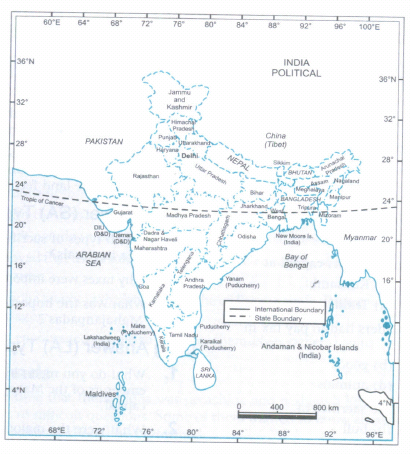
Find the state in which you live in the political map on page 136. Were there any janapada in your state? If yes, name them.
If not, name the janapadas that would have been the closest to your state, and mention whether they
were to the East, West, North or South.
2.
Mention some of the opinions given by the people against Varna system
3.
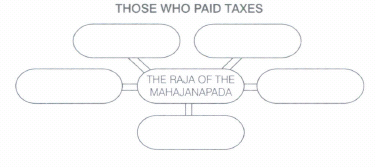
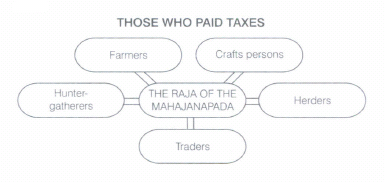
Fill in the chart given below with the terms: hunter-gatherers, farmers, traders, crafts persons, herders.
4.
The iron-ore mines in the region that could be tapped to make strong_____and____
5.
Many rivers such as the____and____flowed through Magadha.
6.
Magadha became the most important______in about two hundred years
7.
______ were paid reqularsalaries and maintained by ________ throughout the year.
8.
The _________ was a central figure in all the rituals.
9.
Which groups of people were involved in transplanting activity in agriculture?
10.
List the functions performed by the Rajas of Mahajanapadas.
11.
How was army maintained by the Rajas?
12.
What were the characteristics of the earthen pots used by the people in janapadas?
13.
How was the varna system justified by the priests?
14.
Name the four groups of Varnas
15.
What are Varnas?
16.
Is there a crop in the list (rice, wheat, barley, pulses, sugarcane sesame and mustard)
17.
What was the use of Painted Grey Ware?
18.
Who was Mahapadma Nanda?
19.
The sprinkling of sacred water on the king was done by the' shudras'.
20.
Alexander was the only person who conquered Magadha.
21.
Capital cities were fortified with huge walls of wood, brick or stone
22.
Archaeologists have found palaces in the settlements of the janapadas.
23.
The charioteer sprinkled sacred water on the king.
24.
Rajagriha (present day Rajgir) is in:
Bihar
Maharashtra
Uttar Pradesh
Jammu & Kashmir
25.
Citizens of Athens were expected to serve in the
politics
army and navy
foreign country
civil society
26.
According to the priests, groups were decided on the basis of
population
region
colour
birth
27.
The priests divided people into four groups called
priest
varnas
kshatriya
shudra
28.
Vedic books were composed by
priests
charioteers
kshatriyas
shudras
1.
Hints for students
(i) Name and location of your state or Union Territory, write the name of your region.
(ii) Look carefully in the map, is any janapada site in your state/UTs.
(iii) If yes, name that janapadas.
(iv] If not, look all directions of your state (East, West, North, South).
(v) See the map
2.
Many people did not accept the system of Varna laid down by the Brahmins.
(i) Some kings thought they were superior to the priests.
(ii) Others felt that birth could not be a basis for deciding which varna people belonged to
(iii) Some people felt that there should be no differences amongst people based on occupation.
(iv) Others felt that everybody should be able to perform rituals.
(v) Some condemned the practice of untouchability.
(vi) Also, there were many areas in the subcontinent, such as the northeast, where social and economic differences were not very sharp, and where the influence of the priests was limited.
3.
4.
()
tools, weapons
5.
()
Ganga, Son
6.
()
mahajanapada
7.
()
Soldiers, the king
8.
()
raja
9.
(i) Slave men and women, (dasas and dasis), and
(ii) Landless agricultural labourers (kammakaras) were involved is transplanting activity.
10.
(i) Building huge forts.
(ii) Maintaining big armies
11.
Soldiers were paid regular salaries and maintained by the king throughout the year. Some payments were probably made using punch marked coins
12.
The characteristics of the earthen pots are:
(i) In janapadas, people made earthen pots, some of these were grey in colour and others were red.
(ii) One special type of pottery found at these sites is known as Painted Grey Ware, and such pots had painted designs, usually simple lines and geometric patterns.
13.
(i) The priests divided people in four groups or varnas, i.e. Brahmin, Kshatriya, Vaishya and Shudra.
(ii) They said that the groups in the society were decided on the basis of birth. For example if one's father and mother were brahmins, one would automatically become a brahmin and so on. Later, they classified some people as untouchable.
(iii) These included some crafts persons, hunters and gatherers, as well as people who helped perform burials and cremations. The priests said that contact with these groups was polluting.
14.
()
Brahmins, Kshatriyas, Vaishyas and Shudras.
15.
()
The priests divided people into four groups called Vamas.
16.
()
The Harappan grew wheat, barley, pulses, peas, rice, sesame, linseed and mustard.people grew rice, wheat, barley, pulses, sugarcane, sesame and mustard.
17.
()
Perhaps Painted Grey Ware was used on special occasions, for important people and to serve special food.
18.
()
Mahapadma Nanda was one of the important rulers of Magadha who extended his control upto the North-West part of the sub-continent.
19.
(b)
20.
(b)
21.
(a)
22.
(b)
23.
(b)
24.
25.
(b)
army and navy
26.
(d)
birth
27.
(b)
varnas
28.
(a)
priests

6th Standard CBSE Syllabus & Materials
6th Standard CBSE
CBSE 6th Social Science Locating Places on the Earth - New Sample Question Papers Study Material - QB365 Set A
NEW6th Standard CBSE
CBSE 6th Science A Journey Through States of Water - New Sample Question Papers Study Material - QB365 Set A
NEW6th Standard CBSE
CBSE 6th Science Temperature and its Measurement - New Sample Question Papers Study Material - QB365 Set A
NEW6th Standard CBSE
CBSE 6th Science Materials Around Us - New Sample Question Papers Study Material - QB365 Set A



CBSE 6th Standard CBSE Subjects
CBSE Standards




