
 100% FREE ACCESS
6th Standard CBSE Syllabus & Materials
6th Standard CBSE
CBSE 6th Social Science The Value of Work - New Sample Question Papers Study Material - QB365 Set A
NEW6th Standard CBSE
CBSE 6th Social Science Family and Community - New Sample Question Papers Study Material - QB365 Set A
NEW6th Standard CBSE
CBSE 6th Social Science India's Cultural Roots - New Sample Question Papers Study Material - QB365 Set A
NEW6th Standard CBSE
CBSE 6th Social Science India,That is Bharat - New Sample Question Papers Study Material - QB365 Set A
NEW6th Standard CBSE
CBSE 6th Social Science Timeline and sources of history - New Sample Question Papers Study Material - QB365 Set A
NEW6th Standard CBSE
CBSE 6th Social Science Oceans and Continents - New Sample Question Papers Study Material - QB365 Set A

Published on: 05/09/2019
New Questions and Ideas
Download CBSE Class 6th Standard CBSE Social Science question papers, sample papers, important questions, and previous year solved papers in PDF format. Get free study materials, NCERT solutions, and exam preparation resources for Class 6th Standard CBSE Social Science
Questions + Answers key
Take MCQ Social Science Test
1.
What was the social condition when Buddha was born?
2.
What was the language in which Buddha taught and why?
3.
Make a list of at least five ideas and questions mentioned in this lesson. Choose three from the list and discuss why you think they are important even today.
4.
Why do you think Anagha's mother wanted her to know the story of the Buddha?
5.
What were the questions that Upanishadic thinkers wanted to answer?
6.
All men could join the sangha without taking permission from anybody.
7.
Some Zoroastrians migrated from Iran and settled down in the coastal towns of Bihar and Jharkhand.
8.
The teachings of Mahavira were written down in the form in which they are presently available at a place called Valabhi, in Gujarat.
9.
Upanishadic thinkers believed that the atman and brahman were ultimately one.
10.
The Buddha attained enlightenment at Bodh Gaya.
11.
Who prepared a grammar for Sanskrit?
Buddha
Mahavira
Kisagotami
Panini
12.
In which language Buddha taught ordinary people?
Sanskrit
Pali
Hindi
Prakrit
13.
Gautama Buddha passed away at
Gaya
Bodh Gaya
Sarnath
Kusinara
14.
What was the early name of Buddha?
Ramananda
Mahavira
Rahul
Siddhartha
15.
When was Gautama Buddha born?
About 3000 years ago
About 2500 years ago
About 1500 years ago
About 1000 years ago
16.
The ____________spoken in Magadha was known as____________
17.
The Buddha belonged to a small gana known as the _____________and was a_____________
18.
How did Buddha connect to everyone in the society?
19.
What was the name of the book in which the rules of the Buddhist sangha were written down?
20.
How was Anagha going to Varanasi?
21.
Answer the questions based on the picture given below:
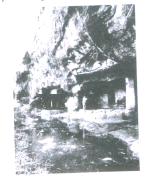

(i) The cave above in the picture are located in which state?
(ii) What was the purpose of these caves?
22.
Answer the questions based on the picture given below:
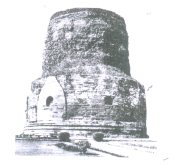
(i) Which type of monument is in the picture?
(ii) Why the monument was built?
23.
What were the main teachings of the Buddha?
24.
Vardhaman Mahavira
25.
Bhikkhus
26.
Karle
27.
Vinaya Pitaka
28.
Avesta
1.
Buddha was born about 2500 years ago.
The social conditions were as follow:
• This was a time of rapid change in the lives of people.
• Some kings in the mahajanapadas were growing more powerful. New cities were developing and life was changing in the viI/ages as well.
2.
The Buddha taught in Prakrit language because:
• Prakrit was the language of ordinary people, so people could understand the teachings of the Buddha and his followers.
• There were several forms of Prakrit, used in different parts of the country and named after the regions in which they were used.
3.
The list of five ideas and questions mentioned in this lesson is given below:
(i) What was the language used to compose Vedas?
(ii) What do the Buddhist texts tell us?
(iii) What was Buddha trying to teach the sorrowing Kisagotami?
(iv) What are the varnas mentioned in the ashrama system ? Were all four varnas allowed to participate in the ashramas?
(v) How did the beggar convince the sages to share their food?
Discussion
(i) The language used to compose Vedas was Sanskrit. Sanskrit is the main language of all ancient languages.
(ii) The Buddhist texts tell us that the varna, rank and family will be forgotten if the followers of Buddha will join the order of monks.
(iii) Buddha was trying to teach the sorrowing Kisagotami that death is the part of life and there is life after death.
4.
Anagha's mother wanted her to know the story of the Buddha because Anagha was going on school trip. They boarded the train from Pune to go all the way to Varanasi. Anagha's mother especially told the teacher to take them to see Sarnath and tell the children about the great religious leader, Buddha.
5.
The questions which Upanishadic thinkers wanted to answer were:
(i) They wanted to know why sacrifices should be performed.
(ii) They believed that there was something permanent in the universe that would last even after death. They described this as 'atman' or individual soul.
(iii)They wanted to know about life after death.
(iv) They believed that ultimately both the atman and the brahman were one.
6.
(a)
7.
(b)
8.
(a)
9.
(a)
10.
(a)
11.
(d)
Panini
12.
(d)
Prakrit
13.
(d)
Kusinara
14.
(d)
Siddhartha
15.
(b)
About 2500 years ago
16.
()
Prakrit, Magadhi
17.
()
Sakya gana, kshatriya
18.
()
The Buddha used Prakrit so that everyone could understand his teachings.
19.
()
The rules made for the Buddhist sangha were written down in a book called the Vinaya Pitaka.
20.
()
Anagha was going to Varanasi by train.
21.
(i)Karle, present-day Maharashtra
(ii)Monks and nuns lived and meditated in these caves or shelters.
22.
(i)The monument in the picture is Buddhist Stupa at Sarnath.
(ii)Stupa was built to mark the place where the Buddha first taught his message.
23.
The main teachings of the Buddha are:
(i) The Buddha taught that life is full of suffering and unhappiness. This is caused because we have cravings and desires (which cannot be fulfilled).
(ii) Sometimes, even if we get what we desire, we are not satisfied (permanently) and want (or desire) ever more and more (or other things). The Buddha described this as thirst or tanha.
(iii) The Buddha taught that thirst or tanha or constant craving could be removed by following moderation everything.
(iv) He also taught people to be kind and to respect the lives of others, including animals.
(v) The Buddha believed that the results of our actions (called karma), whether good or bad, affect us both in this life and the next.
(vi) He also encouraged people to think for themselves rather than to simply what he (the Buddha) said.
(vii) The Buddha taught in Prakrit, which was the language of the ordinary people, so that everybody could understand his message.
24.
()
Kshatriya prince of the Lichchhavis
25.
()
The Prakrit word for beggar
26.
()
Maharashtra
27.
()
Rules for Buddhist Sangha
28.
()
Teachings of Zoroaster

6th Standard CBSE Syllabus & Materials
6th Standard CBSE
CBSE 6th Social Science Locating Places on the Earth - New Sample Question Papers Study Material - QB365 Set A
NEW6th Standard CBSE
CBSE 6th Science A Journey Through States of Water - New Sample Question Papers Study Material - QB365 Set A
NEW6th Standard CBSE
CBSE 6th Science Temperature and its Measurement - New Sample Question Papers Study Material - QB365 Set A
NEW6th Standard CBSE
CBSE 6th Science Materials Around Us - New Sample Question Papers Study Material - QB365 Set A



CBSE 6th Standard CBSE Subjects
CBSE Standards




