
 100% FREE ACCESS
6th Standard CBSE Syllabus & Materials
6th Standard CBSE
CBSE 6th Social Science The Value of Work - New Sample Question Papers Study Material - QB365 Set A
NEW6th Standard CBSE
CBSE 6th Social Science Family and Community - New Sample Question Papers Study Material - QB365 Set A
NEW6th Standard CBSE
CBSE 6th Social Science India's Cultural Roots - New Sample Question Papers Study Material - QB365 Set A
NEW6th Standard CBSE
CBSE 6th Social Science India,That is Bharat - New Sample Question Papers Study Material - QB365 Set A
NEW6th Standard CBSE
CBSE 6th Social Science Timeline and sources of history - New Sample Question Papers Study Material - QB365 Set A
NEW6th Standard CBSE
CBSE 6th Social Science Oceans and Continents - New Sample Question Papers Study Material - QB365 Set A

Published on: 12/08/2019
New Questions and Ideas
Download CBSE Class 6th Standard CBSE Social Science question papers, sample papers, important questions, and previous year solved papers in PDF format. Get free study materials, NCERT solutions, and exam preparation resources for Class 6th Standard CBSE Social Science
Questions + Answers key
Take MCQ Social Science Test
1.
Who was Satyakama Jabala?
2.
What was Magadhi?
3.
What was the language in which Buddha taught and why?
4.
What were the main teachings of the Mahavira?
5.
Describe the ways in which the Buddha tried to spread his message to the people.
6.
What was the language used to compose the Vedas?
7.
The Buddha believed 'tanha' could be removed by following moderation in everything
8.
Both Jaina and Buddhist monks went from place to place throughout the year and taught people
9.
All men could join the sangha without taking permission from anybody.
10.
The Buddha attained enlightenment at Bodh Gaya.
11.
The Buddha encouraged animal sacrifices.
12.
The universal soul has been referred to as
Tanha
Karma
Atman
All of these
13.
Buddha has referred to our actions as :
Viharas
Tanha
Karma
Vyavhara
14.
What did the term bhikkhus mean?
Gainer
Achiever
Beggar
Loser
15.
Where did Buddha attain his enlightenment?
Gaya
Rajgir
Banaras
Ayodhya
16.
When was Gautama Buddha born?
About 3000 years ago
About 2500 years ago
About 1500 years ago
About 1000 years ago
17.
Cave in Karle is in present-day ____________________
18.
_________________was the most famous thinker of the Jainas.
19.
The ____________spoken in Magadha was known as____________
20.
Who supported Jainism?
21.
Why was the stupa at Sarnath built?
22.
Death of Buddha
23.
First sermon of Buddha
24.
Vardhaman Mahavira
25.
Karle
26.
Avesta
27.
Who are Jains? State some features of their lives.
28.
Answer the questions based on the picture given below:
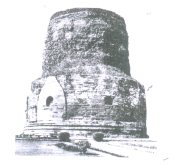
(i) Which type of monument is in the picture?
(ii) Why the monument was built?
29.
What are Viharas?
30.
Where did Buddha rest in peace?
31.
Where did Buddha gain enlightenment?
32.
Who was Panini?
33.
What was the original name of Lord Buddha?
1.
Satyakama Jabala was named after his mother, the slave woman Jabali. He had a deep desire to learn about reality and was accepted as a student by a brahmin teacher named Gautama, and eventually, he became one of the best-known thinkers of that time.
2.
The Prakrit spoken in Magadha was known as Magadhi. Ordinary people could understand the teachings of Mahavira and his followers, because they used Prakrit. There were several forms of Prakrit, used in different parts of the country and named after the regions in which they were used.
3.
The Buddha taught in Prakrit language because:
• Prakrit was the language of ordinary people, so people could understand the teachings of the Buddha and his followers.
• There were several forms of Prakrit, used in different parts of the country and named after the regions in which they were used.
4.
The main teachings of the Mahavira were:
(a) Men and women who wished to know the truth must leave their homes.
(b) Men and women must follow very strictly the rules of ahimsa, which means not hurting or killing living beings.
(e) "All beings" said Mahavira "long to live. To all things life is dear".
(d) Right faith, Right knowledge and Right action can help one to get rid of diseases.
(e) All ceremonies are baseless.
(f) Men had to be absolutely honest, were asked not to Steal.
(g) Men had to give up everything, including their clothes and they had to observe celibacy.
5.
Buddha tried to spread his message of being kind and to respect the lives of people in the following ways:
(i) He spent his life travelling on foot, going from place to place, teaching people, till he passed away at Kusinara.
(ii) He also encouraged people to think for themselves, rather than to simply accept what he said.
(iii) Buddha taught in the language of the people, in Prakrit, so that everyone could understand his message.
6.
'Vedic-Sanskrit' was the language used to compose the Vedas.
7.
(a)
8.
(a)
9.
(a)
10.
(a)
11.
(b)
12.
(c)
Atman
13.
(c)
Karma
14.
(c)
Beggar
15.
(a)
Gaya
16.
(b)
About 2500 years ago
17.
()
Maharashtra
18.
()
Vardhamana Mahavira
19.
()
Prakrit, Magadhi
20.
()
Jainism was supported mainly by traders.
21.
()
The stupa at Sarnath was built to mark the place where the Buddha first taught his message.
22.
()
Kushinara
23.
()
Sarnath
24.
()
Kshatriya prince of the Lichchhavis
25.
()
Maharashtra
26.
()
Teachings of Zoroaster
27.
The followers of Mahavira are known as Jains.
Some of the features of the Jains are :
(i) They had to lead very simple lives, begging for food.
(ii) They have to be absolutely honest and are especially asked not to steal.
(iii) They have to observe celibacy.
(iv) Men had to give up everything, including their clothes.
28.
(i)The monument in the picture is Buddhist Stupa at Sarnath.
(ii)Stupa was built to mark the place where the Buddha first taught his message.
29.
()
Many monks and nuns in the later years felt the need for more permanent shelters, and so, monasteries were built. These are known as Viharas.
30.
()
Buddha passed away at Kusinara
31.
()
Buddha gained enlightenment under a peepal tree at Bodh Gaya in Bihar
32.
()
Panini was a great grammarian. He prepared the grammar for Sanskrit. He arranged the vowels and consonants in a special order and then used these to create formulae like those found in algebra.
33.
()
Siddhartha was the original name of Lord Buddha.

6th Standard CBSE Syllabus & Materials
6th Standard CBSE
CBSE 6th Social Science Locating Places on the Earth - New Sample Question Papers Study Material - QB365 Set A
NEW6th Standard CBSE
CBSE 6th Science A Journey Through States of Water - New Sample Question Papers Study Material - QB365 Set A
NEW6th Standard CBSE
CBSE 6th Science Temperature and its Measurement - New Sample Question Papers Study Material - QB365 Set A
NEW6th Standard CBSE
CBSE 6th Science Materials Around Us - New Sample Question Papers Study Material - QB365 Set A



CBSE 6th Standard CBSE Subjects
CBSE Standards




