
 100% FREE ACCESS
6th Standard CBSE Syllabus & Materials
6th Standard CBSE
CBSE 6th Social Science The Value of Work - New Sample Question Papers Study Material - QB365 Set A
NEW6th Standard CBSE
CBSE 6th Social Science Family and Community - New Sample Question Papers Study Material - QB365 Set A
NEW6th Standard CBSE
CBSE 6th Social Science India's Cultural Roots - New Sample Question Papers Study Material - QB365 Set A
NEW6th Standard CBSE
CBSE 6th Social Science India,That is Bharat - New Sample Question Papers Study Material - QB365 Set A
NEW6th Standard CBSE
CBSE 6th Social Science Timeline and sources of history - New Sample Question Papers Study Material - QB365 Set A
NEW6th Standard CBSE
CBSE 6th Social Science Oceans and Continents - New Sample Question Papers Study Material - QB365 Set A

Published on: 12/08/2019
Ashoka, the Emperor Who Gave Up War
Download CBSE Class 6th Standard CBSE Social Science question papers, sample papers, important questions, and previous year solved papers in PDF format. Get free study materials, NCERT solutions, and exam preparation resources for Class 6th Standard CBSE Social Science
Questions + Answers key
Take MCQ Social Science Test
1.
Discuss the Great Wall of China.
2.
Which area was under the direct control of the emperor?
3.
Suppose you had the power to inscribe your orders, what four commands would you like to issue?
4.
What were the problems that Ashoka wanted to solve by introducing dhamma?
5.
How did the Kalinga war bring about a change in Ashoka's attitude towards war?
6.
_____________is the Prakrit word for the Sanskrit term Dharma.
7.
The most famous ___________ruler was Ashoka
8.
The capital of Mauryan empire was __________________
9.
Royal princes often went to the provinces as___________________
10.
Officials collected_______________from the area under the direct control of the ruler.
11.
The 'dhamma' also reached other countries.
12.
'Dhamma' is the Prakrit word for the Sanskrit term 'Dharma'.
13.
Officials also punished those who disobeyed the ruler's orders.
14.
Many of Chanakya's ideas were written down in a book called the Dharmashastra.
15.
Ujjain was the gateway to the North-West.
16.
Kalinga is the ancient name of
Coastal Karnataka
Coastal Odisha
Coastal Goa
Coastal Maharashtra
17.
Arthashastra was written by
Ashoka
Kautilya
Chandragupta
Vishvamitra
18.
At present, where the Rampurwa bull has been placed?
Bihar Bhavan Bhavan
Rashtrapati
Parliament
India Gate
19.
Who was the grandfather of Ashoka?
Chandragupta
Ashoka
Balwan
Samudragupta
20.
Who was the son of Chandragupta Maurya?
Bindusara
Ashoka
Bimbisara
Samudragupta
21.
Answer the questions based on the picture given below:
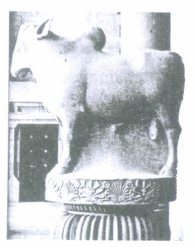
(i) Which type of bull is shown in the picture?
(ii) Above picture belongs to which dynasty?
(iii) Where it has been found?
22.
The empire was a vast territory. How did the emperors run the empire?
23.
Brahmi
24.
Founder of Mauryan Empire
25.
Arthashastra
26.
Taxila
27.
Kalinga
28.
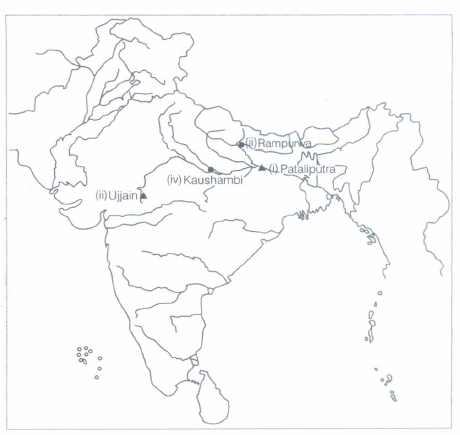
Mark the following places on the outline map of India:
(i) Pataliputra
(ii) Ujjain
(iii) Rampurwa
(iv) Kaushambi
29.
Explain the term Tribute.
30.
Who was Megasthenes?
31.
What do you mean by an empire?
1.
Somewhat before the time of the Mauryan empire, about 2400 years ago, emperors in China began building the Great Wall to protect the northern frontier of the empire from pastoral people. Additions to the wall were made over a period of 2000 years because the frontiers of the empire kept shifting. The wall is about 6400 km long, and is made of stone and brick, with a road along the top. Several thousand people worked to build the wall. There are watch towers all along, at distances of about 100-200 m.
2.
The area around Pataliputra was under the direct control of the emperor. This meant that officials were appointed to collect taxes from farmers, herders, craftspersons and traders, who lived in villages and towns in the area.
3.
If I had the power to inscribe my order, the following four commands, I would like to issue:
• Respect your teachers, parents and elders.
• Obey the orders of your elders and love all your young ones.
• All children, whether boys or girls, should be sent to school.
• There should be no difference on the basis of caste and creed.
4.
There were a number of problems that troubled Ashoka. He wanted that the slaves should be treated like all other human beings and there should be no religious conflicts. There were quarrels in the family and among the neighbours. Slaves and servants were ill-treated. He decided to overcome this problem and try to solve such other problems with the introduction of his dhamma.
5.
When Ashoka became the king, Kalinga was not the part of Maury an empire. He decided to conquer Kalinga. He invaded Kalinga and conquered it. But both the armies suffered heavy losses. According to Ashoka, 1,00,000 people were killed in this war, and 1,50,000 were taken prisoners. Ashoka saw the wounded and dying soldiers, and the widows, orphans and the misery and sufferings that war had brought to the people. This caused Ashoka much grief and remorse. So, he decided that he would not fight any more wars in future.
6.
()
Dhamma
7.
()
Mauryan
8.
()
Pataliputra
9.
()
Governors
10.
()
taxes
11.
(a)
12.
(a)
13.
(a)
14.
(b)
15.
(b)
16.
(b)
Coastal Odisha
17.
(b)
Kautilya
18.
(b)
Rashtrapati
19.
(a)
Chandragupta
20.
(a)
Bindusara
21.
(i)Rampurwa bull is shown in the picture.
(ii)The picture belongs to the Mauryan dynasty.
(iii) Mauryan Pillar has been found in Rampurwa, Bihar
22.
The emperors run the empire as:
• The ruling pattern was varying in empires due to the largeness of the empire.
• The area around Pataliputra was under the direct control of the emperor meant that officials were appointed to collect taxes from farmers, herders, craftspersons and traders, who lived in villages and towns in the area.
• Many of these officials were given salaries and these officials punished those who disobeyed the ruler's orders.
• Messengers went to and fro, and spies kept a watch on the officials and of course the emperor supervised them all, with the help of members of the royal family, and senior ministers.
• The other areas or provinces were ruled from a provincial capital such as Taxila or Ujjain although there was some amount of control from Pataliputra.
• The royal princes were often sent as governors, local customs and rules were probably followed.
23.
()
Script used for inscription
24.
()
Chandragupta
25.
()
Chanakya
26.
()
a gateway to the North-West
27.
()
ancient name of coastal Orissa
28.
29.
()
Tributes were the payments that were not collected regularly, but at times, when it was possible. Tribute could be in the form of a variety of things.
30.
()
Megasthenes was an ambassador who was sent to the Court of Chandragupta by the Greek ruler Seleucus Nicator.
31.
()
Large kingdom where different types of people live in different parts of the kingdom is known as an empire.

6th Standard CBSE Syllabus & Materials
6th Standard CBSE
CBSE 6th Social Science Locating Places on the Earth - New Sample Question Papers Study Material - QB365 Set A
NEW6th Standard CBSE
CBSE 6th Science A Journey Through States of Water - New Sample Question Papers Study Material - QB365 Set A
NEW6th Standard CBSE
CBSE 6th Science Temperature and its Measurement - New Sample Question Papers Study Material - QB365 Set A
NEW6th Standard CBSE
CBSE 6th Science Materials Around Us - New Sample Question Papers Study Material - QB365 Set A



CBSE 6th Standard CBSE Subjects
CBSE Standards




