
 100% FREE ACCESS
6th Standard CBSE Syllabus & Materials
6th Standard CBSE
CBSE 6th Social Science The Value of Work - New Sample Question Papers Study Material - QB365 Set A
NEW6th Standard CBSE
CBSE 6th Social Science Family and Community - New Sample Question Papers Study Material - QB365 Set A
NEW6th Standard CBSE
CBSE 6th Social Science India's Cultural Roots - New Sample Question Papers Study Material - QB365 Set A
NEW6th Standard CBSE
CBSE 6th Social Science India,That is Bharat - New Sample Question Papers Study Material - QB365 Set A
NEW6th Standard CBSE
CBSE 6th Social Science Timeline and sources of history - New Sample Question Papers Study Material - QB365 Set A
NEW6th Standard CBSE
CBSE 6th Social Science Oceans and Continents - New Sample Question Papers Study Material - QB365 Set A

Published on: 19/01/2019
What, Where, How and When? Important Question
Download CBSE Class 6th Standard CBSE Social Science question papers, sample papers, important questions, and previous year solved papers in PDF format. Get free study materials, NCERT solutions, and exam preparation resources for Class 6th Standard CBSE Social Science
Questions + Answers key
Take MCQ Social Science Test
1.
What do archaeologists excavate?
Weapons
Pots and pans
Coins and tools
All of these
2.
Which language was earlier used by common people?
Gujarati
Rajasthani
Prakrit
Tamil
3.
Which crop was first grown to the North of the Vindhyas?
Wheat
Rubber
Sugarcane
Rice
4.
Which kingdom was located in the area along Ganga's tributary in the South of Ganga ?
Magadha
Taxila
Burma
Calicut
5.
Skilled gatherers were people who:
Gathered wood
Gathered food
Gathered ornaments
None of these
6.
'About 4700 years ago'-also can be written as
4700 BC
2687 BC
2687 AD
4700 AD
7.
Which one is the tributary of the Ganga river?
Son
Gandak
Tapti
Narmada
8.
Which crops began to grow by men and women to the region of Sulaiman and Kirthar hills?
Rice and wheat
Wheat and pulses
Pulses and barley
Wheat and barley
9.
Where is Sulaiman hills located?
India
China
Pakistan
Afghanistan
10.
The earliest people lived along the bank of Narmada river are called
farmers
merchants
hunters
skilled gatherers
11.
Locate the following of the outline physical map of India.
(i) Tapi river
(ii) Brahmaputra river
(iii) Godavari river
12.
Historian and archaeologists are like ______________
13.
Jesus Christ was the founder of _____________
14.
_____________ explore and excavate to find various things.
15.
____________ were books written by hand.
16.
Some of the earliest cities developed on the banks of river _____________ and its tributaries
17.
People who gathered their food were called hunters.
18.
The first crops were grown almost 8000 years ago.
19.
Garo hills are situated in the South of India.
20.
Years are counted with reference to the birth of Christ.
21.
Hindi was used in earlier books.
22.
How did archeologists find out about the eating habits of the people in the past?
23.
What is source? What is its importance to the historians?
24.
What was the occupation of the people who lived on the banks of the river Narmada?
25.
Discuss why it is important to study our past.
26.
What was the advantage of writing on a hard surface?
27.
What do AD and BC stand for?
28.
Why were the earliest people known as skilled gatherers ?
29.
Where did the earliest cities flourish?
30.
Where did the word 'India' originate from?
31.
What did the manuscripts contain ?
32.
Why did people choose to travel in the past?
33.
Why do historians and archaeologists use various sources to study about our past?
1.
(d)
All of these
2.
(c)
Prakrit
3.
(d)
Rice
4.
(a)
Magadha
5.
(b)
Gathered food
6.
(a)
4700 BC
7.
8.
(d)
Wheat and barley
9.
10.
(d)
skilled gatherers
11.
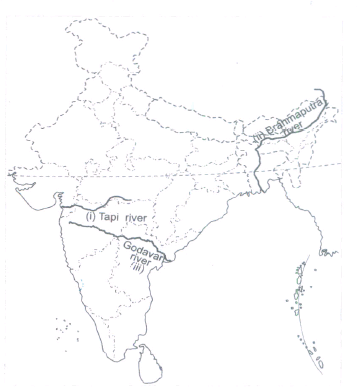
12.
()
Detectives
13.
()
Christianity
14.
()
Archaeologists
15.
()
Manuscripts
16.
()
Indus
17.
(b)
18.
(a)
19.
(b)
20.
(a)
21.
(b)
22.
Archaeologists studied the bones of animals, birds and fish to identify the eating habits of the people in the past. Although plant remains survive far more rarely, but if seeds of grains or pieces ofwoods would have been burnt, they would have survived in a charred form. So, finding charred seeds gave information that they ate plant produce also.
23.
The word 'source' refers to the information found from the manuscripts, inscriptions, coins and monuments. It helps the historians in the reconstruction of our past. These sources give a lot of information about the kings, their coronation, the extent of their empires, the battles they fought, their welfare measures, etc. because they kept records of all what they did.
24.
(i) The People who lived on the bank of the river Narmada were skilled gatherers. They were aware of the vast wealth of the forest around them. They collected roots, fruits and other forest products for their food from these surrounding forests.
(ii) They also hunted animals.
25.
It is important to study about our past as it gives a lot of information regarding the political, social, economic and cultural life of the people in the earlier days. By studying about our past:
(i) We can find out about the eating habits, the clothing and housing pattern of the people of the earlier times.
(ii) We can gather information about the lives of hunters, farmers, merchants, priest, craftsmen, musicians, poets and scientists.
(iii) We can learn about the lives of children, the songs they sang, the plays they saw, the games that they played and the kind of toys with which they played.
26.
In the earlier times, writings were done on relatively hard surfaces such as blacked clay, stone or metal. Since, these objects were imperishable, these writings usually survived for a long time.
27.
(i) AD stands for two Latin words, 'Anno Domini', meaning 'in the year of the Lord' (i.e., Christ). The year 2007, also written as AD 2007, means 2007 years after the birth of Christ.
(ii) BC stands for 'Before Christ', meaning before the birth of Christ. For example, a time period written as 200 BC means 200 years before the birth of Christ. BC runs into countdown format as 10..,9..,8..,7.., 1.. upto the time of Jesus Christ's birth and after his birth it started to run in today's date format, i.e., 1..,2..,3...., onwards.
28.
As the earliest people gathered food, collected roots and fruits from the forest, and also hunted animals they were called skilled gatherers.
29.
(i) About 4700 years ago, some of the earliest cities flourished near the Indus river.
(ii) About 2500 years ago, cities were found on the banks of the Ganga and along the sea coast.
30.
It comes from the word 'Indus', called 'Sindhu' in Sanskrit. The Greeks and Iranians called it 'Hindos' or 'Indos' meaning the land to the east of the river called India.
The name Bharat was used by the people who lived in the North-West. Later, it was used for the country India.
31.
Manuscripts contained all kinds of subjects like religious beliefs and practices, the lives of kings, medicine and science. It also contained poems, epics and plays. These were written in Sanskrit, Prakrit and Tamil.
32.
(i) In the ancient days, people travelled from one continent to the other. Natural barriers like hills and rivers made travelling difficult at times, but never impossible.
(ii) Men and women travelled in search of livelihood and then to escape natural disasters like flood or droughts.
(iii) Men in army travelled to conquer new territories and merchants travelled with caravans to trade goods and services. Holy men travelled from village to village imparting spiritual knowledge among the masses.
(iv) The people who travelled the most were the adventurers who wanted to explore new lands with a spirit of adventure.
(v) All the travelling helped in the intermixing of new ideas and knowledge. People came to know about the new customs and enhanced their knowledge about various communities.
33.
(i) Archaeologists and historians are scholars who study things that are made and used in the past through the process of excavation.
(ii) Manuscripts, inscriptions, tools, coins and monuments are the sources of information used by then to know about the past of the people.
(iii) Once these sources are found, learning about the past becomes an adventure and gradually, history is reconstructed. That is why, historians and archaeologists use various sources to study about our past.

6th Standard CBSE Syllabus & Materials
6th Standard CBSE
CBSE 6th Social Science Locating Places on the Earth - New Sample Question Papers Study Material - QB365 Set A
NEW6th Standard CBSE
CBSE 6th Science A Journey Through States of Water - New Sample Question Papers Study Material - QB365 Set A
NEW6th Standard CBSE
CBSE 6th Science Temperature and its Measurement - New Sample Question Papers Study Material - QB365 Set A
NEW6th Standard CBSE
CBSE 6th Science Materials Around Us - New Sample Question Papers Study Material - QB365 Set A



CBSE 6th Standard CBSE Subjects
CBSE Standards




