
 100% FREE ACCESS
6th Standard CBSE Syllabus & Materials
6th Standard CBSE
CBSE 6th Social Science The Value of Work - New Sample Question Papers Study Material - QB365 Set A
NEW6th Standard CBSE
CBSE 6th Social Science Family and Community - New Sample Question Papers Study Material - QB365 Set A
NEW6th Standard CBSE
CBSE 6th Social Science India's Cultural Roots - New Sample Question Papers Study Material - QB365 Set A
NEW6th Standard CBSE
CBSE 6th Social Science India,That is Bharat - New Sample Question Papers Study Material - QB365 Set A
NEW6th Standard CBSE
CBSE 6th Social Science Timeline and sources of history - New Sample Question Papers Study Material - QB365 Set A
NEW6th Standard CBSE
CBSE 6th Social Science Oceans and Continents - New Sample Question Papers Study Material - QB365 Set A

Published on: 21/11/2019
What, Where, How and When
Download CBSE Class 6th Standard CBSE Social Science question papers, sample papers, important questions, and previous year solved papers in PDF format. Get free study materials, NCERT solutions, and exam preparation resources for Class 6th Standard CBSE Social Science
Questions + Answers key
Take MCQ Social Science Test
1.
How do scholars understand what is written in the inscriptions ?
2.
What do AD and BC stand for?
3.
Describe at least two ways in which you think the lives of kings would have been different from those farmers.
4.
What are the evidences of the past we can analyse today?
5.
Can you think of the advantages of writing on a hard surface? And what could have been the difficulties?
6.
What do archaeologists excavate?
Weapons
Pots and pans
Coins and tools
All of these
7.
Which language was earlier used by common people?
Gujarati
Rajasthani
Prakrit
Tamil
8.
Which kingdom was located in the area along Ganga's tributary in the South of Ganga ?
Magadha
Taxila
Burma
Calicut
9.
The hand written books a long ago were called
inscriptions
epics
manuscripts
holy books
10.
The earliest people lived along the bank of Narmada river are called
farmers
merchants
hunters
skilled gatherers
11.
What were the occupations of the people in early days?
12.
How did the word Bharata come in use?
13.
What is the meaning of AD ?
14.
What do you mean by the term 'manuscript'?
15.
What are manuscripts?
16.
Why do historians and archaeologists use various sources to study about our past?
17.
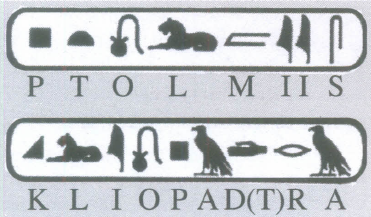
The following picture is an inscription from Egypt. Answer the following questions related to this inscription:
(i) Where has this inscription been found?
(ii) In how many languages was this inscription written?
(iii) In the inscription, what does the letter A stand for?
18.
Answer the questions based on the picture given below:
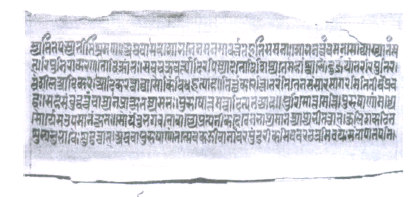
(i) How many years ago this manuscript was written?
(ii) How were books made from palm leaves?
(iii) What type of manuscripts is shown in the picture?
19.
Why were the earlier cities mostly developed over the banks of river?
20.
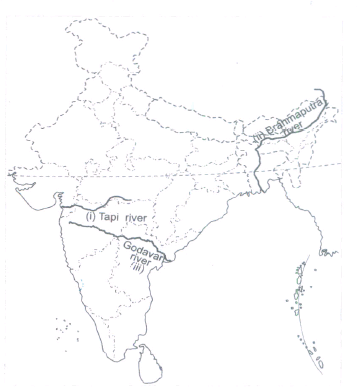
Locate the following of the outline physical map of India.
(i) Tapi river
(ii) Brahmaputra river
(iii) Godavari river
1.
The scholars understand what is written in the inscriptions through the process called decipherment. Most of these inscriptions were written several hundred years ago, and languages and the script used in the inscriptions have changed with time. One good example of decipherment is of the Rosetta stone found in Egypt which was used to decipher ancient Egyptians using Greek language.
2.
(i) AD stands for two Latin words, 'Anno Domini', meaning 'in the year of the Lord' (i.e., Christ). The year 2007, also written as AD 2007, means 2007 years after the birth of Christ.
(ii) BC stands for 'Before Christ', meaning before the birth of Christ. For example, a time period written as 200 BC means 200 years before the birth of Christ. BC runs into countdown format as 10..,9..,8..,7.., 1.. upto the time of Jesus Christ's birth and after his birth it started to run in today's date format, i.e., 1..,2..,3...., onwards.
3.
The Lives of kings and the Lives offormers were different in this manner:
(i) The kings usually lived in urban areas in their palaces. forts while the farmers lived in rural areas in their small houses or huts.
(ii) The kings were depended on others for the supplies offood while the farmers produced food for
themselves and for others also.
4.
There are several things we can find out-what people ate, the kinds of clothes they wore, the houses in which they lived. Also we can find out about the lives of hunters, herders, farmers, rulers, merchants, priests, crafts persons, artists, musicians and scientists.
5.
The advantages of writing on a hard surface are as follow:
(i) The hard surfaces are long-lasting.
(ii) They overcome all chances of destruction from all objects of nature i.e. wind, rain, sun etc.
(iii) They are preserved for future generations to know about our rich past and culture.
(iv) The insects could not eat such materials as they destroyed the manuscripts of the past.
The disadvantages of writing on hard surface are as follow:
(i) It is not easily portable.
(ii) Writing on hard surface is a very difficult task.
(iii) It needs much hard metal to write on the hard surface.
(iv) It requires a lot of time to complete the writing.
6.
(d)
All of these
7.
(c)
Prakrit
8.
(a)
Magadha
9.
(c)
manuscripts
10.
(d)
skilled gatherers
11.
()
People in early days were hunters, herders, farmers, rulers, musicians, merchants, priests, craftsmen, artists and scientists.
12.
()
The name Bharata was used for a group of people who lived in the north-west and who are mentioned in Rigveda. Later, it was used for the country.
13.
()
AD stands for two Latin words 'Anno Domini'. Its meaning is in the year of Lord (i.e., Christ).
14.
()
The word 'manu' means hand and 'script' means writing. So, manuscript means hand written.
15.
()
Hand written scripts on palm leaf or on the birch a long ago are called manuscripts.
16.
(i) Archaeologists and historians are scholars who study things that are made and used in the past through the process of excavation.
(ii) Manuscripts, inscriptions, tools, coins and monuments are the sources of information used by then to know about the past of the people.
(iii) Once these sources are found, learning about the past becomes an adventure and gradually, history is reconstructed. That is why, historians and archaeologists use various sources to study about our past.
17.
(i) This inscription has been found in Rosetta, a town on the north coast of Egypt.
(ii) This inscription was written in three different kinds of languages and scripts, i.e., Greek and two forms of Egyptian.
(iii) In the inscription, the letter 'A' stands for a bird.
18.
(i) This manuscript was written about a thousand years ago.
(ii) The palm leaves were cut into pages and tied together to make books.
(iii) A palm leaf manuscript.
19.
It is evident from the past that the earlier cities were mostly developed over the banks of river because of the following reasons:
(i) Thousand years ago, people lived along the banks of the Narmada river.
(ii) About 4700 years ago, some of the earliest cities flourished on the banks of river Indus and its tributaries.
(iii) Along the banks of the rivers, the necessary conditions for the living of human beings exist.
(iv) The necessities of living such as water, forest are easily available which fulfil the basic needs of the people.
(v) At that time, waterways were the most important means of transportation and communication.
20.

6th Standard CBSE Syllabus & Materials
6th Standard CBSE
CBSE 6th Social Science Locating Places on the Earth - New Sample Question Papers Study Material - QB365 Set A
NEW6th Standard CBSE
CBSE 6th Science A Journey Through States of Water - New Sample Question Papers Study Material - QB365 Set A
NEW6th Standard CBSE
CBSE 6th Science Temperature and its Measurement - New Sample Question Papers Study Material - QB365 Set A
NEW6th Standard CBSE
CBSE 6th Science Materials Around Us - New Sample Question Papers Study Material - QB365 Set A



CBSE 6th Standard CBSE Subjects
CBSE Standards




