
 100% FREE ACCESS
6th Standard Syllabus & Materials
6th Standard
TN 6th Tamil பருவம் 1 - இயல் 1 - மொழி -தமிழ்த்தேன் - இன்பத்தமிழ் Sample Question Papers Study Material - QB365 Set A
NEW6th Standard
TN 6th English T1 - Supplementary - The Apple Tree and The Farmer Sample Question Papers Study Material - QB365 Set A
NEW6th Standard
TN 6th English T1 - Prose - When The Trees Walked Sample Question Papers Study Material - QB365 Set A
NEW6th Standard
TN 6th Social Science T3 - CIV - Road Safety Sample Question Papers Study Material - QB365 Set A
NEW6th Standard
TN 6th Social Science T3 - CIV - Local Bodies - Rural and Urban Sample Question Papers Study Material - QB365 Set A
NEW6th Standard
TN 6th Social Science T3 - CIV - Democracy Sample Question Papers Study Material - QB365 Set A

Published on: 18/06/2021
QB365 provides detailed and simple solution for every book back questions in class 6 Maths subject.It will helps to get more idea about question pattern in every book back questions with solution.
Download Tamil Nadu 6th Standard Maths question papers, model tests, one-mark questions, important questions, and public exam papers in PDF format. Free study materials and answer keys for TN State Board students.
Questions + Answers key
Take MCQ Maths Test1.
The sum of any two successive odd numbers is always divisible by 4. Justify this statement with an example
2.
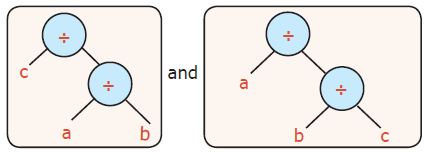
Check whether the Tree diagrams are equal or not.
3.
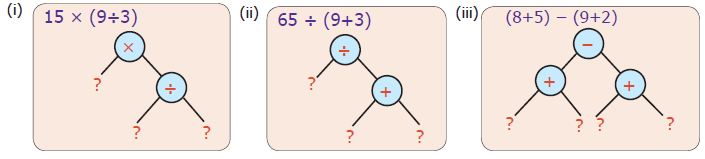
Write the missing numbers in the trees.
4.
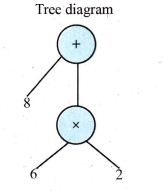
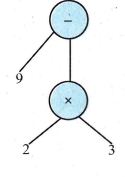
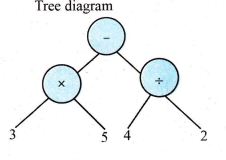
Convert the following numerical expressions into Tree diagrams.
(i) 8 + (6 \(\times\) 2)
(ii) 9 − (2 \(\times\) 3)
(iii) (3 \(\times\) 5) − (4 \(\div \) 2)
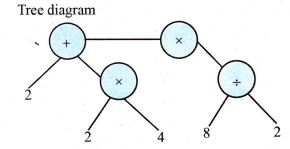
(iv) [(2 \(\times\) 4)+2] \(\times\) (8 \(\div \) 2)
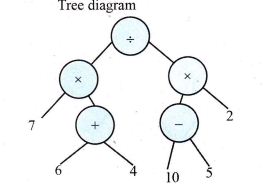
(v) [(6 +4) \(\times\) 7] \(\div \) [2 \(\times\) (10 −5)]
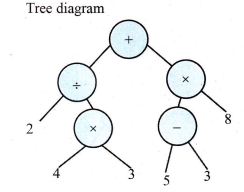
(vi) [(4 \(\times\) 3) \(\div \) 2] + [8 \(\times\) (5 − 3)]
5.
Convert '5a' into Tree diagram
6.
Convert the Tree diagram into a numerical expression.
7.
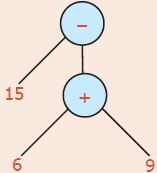
Convert the tree diagram into numerical expression.
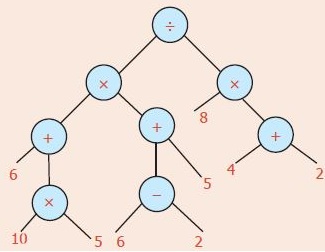
8.
Convert into a Tree diagram {[(10 \(\times\) 5)+6]\(\times\)[5+(6−2)]}\(\div \)[8\(\times\)(4+2)].
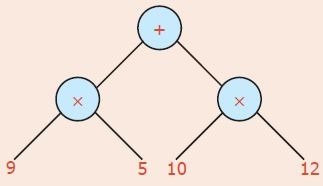
9.
Convert into a Tree diagram (9\(\times\)5) + (10\(\times\)12)
10.
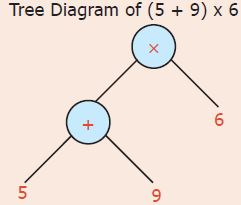
Vani and Kala along with three other friends went to a butter milk shop. The cost of one butter milk is Rs. 6. If 9 more friends joined them, then how much money did they have to pay? Vani said they had to pay Rs. 84 whereas Kala said they had to pay Rs. 59. Who is correct?
11.
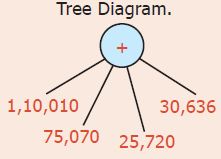
In the flower exhibition conducted at Ooty for 4 days the number of tickets sold on the first, second, third and fourth days are 1,10,010; 75,070; 25,720 and 30,636 respectively. Find the total number of tickets sold.
12.
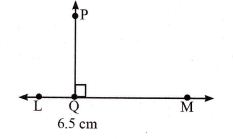
Draw a line segment LM = 6.5 cm and take a point P not lying on it. Using a set square construct a line perpendicular to LM through P.
13.
Can a triangle be formed with the angles 80°, 30°, 40°?
14.
Muthu has a car worth Rs. 8,50,000 and he wants to sell it at a profit of Rs. 25,000. What should be the selling price of the car?
15.
Fill up the appropriate boxes in the following table.
| C.P. in Rs | S.P. in Rs | Profit in Rs | Loss in Rs | |
| (i) | 100 | 120 | ||
| (ii) | 110 | 120 | ||
| (iii) | 120 | 20 | ||
| (iv) | 100 | 90 | ||
| (v) | 120 | 25 |
16.
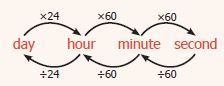
Convert the following:
(i) 20 minutes into seconds
(ii) 5 hours 35 minutes 40 seconds into seconds
(iii) 3 ½ hours into minutes
(iv) 580 minutes into hours
(v) 25200 seconds into hours
17.
Mala's date of birth is 20-11-1999. What is her age on 05-10-2018?
18.
A farmer ploughed the paddy field for 3 hours 35 minutes. How many minutes did he plough?
19.
In a school, 200 litres of lemon juice is prepared. If 250 ml lemon juice is given to each student, how many students get the juice?
20.
Thenmozhi’s height is 1.25 m now. She grows 5 cm every year. What would be her height after 6 years?
21.
Convert into higher units :
(i) 13000 mm (km, m, cm)
(ii) 8257 ml (kl, l)
22.
Find A as required:
(i) The greatest 2 digit number 9A is divisible by 2.
(ii) The least number 567A is divisible by 3.
(iii) The greatest 3 digit number 9A6 is divisible by 6.
(iv) The number A08 is divisible by 4 and 9.
(v) The number 225A85 is divisible by 11.
23.
The LCM of two numbers is 432 and their HCF is 36. If one of the numbers is 108, then find the other number.
24.
Find the smallest number that can be divided by 254 and 508 which leaves the remainder 4.
25.
A book seller has 175 English books, 245 Science books and 385 Mathematics books. He wants to sell the books in a box, subject-wise in equal numbers. What will be the greatest number of the boxes required? Also find the number of books for each subject in a box.
1.
Given statement
The sum of any two successive odd numbers is always divisible by 4.
Example:
Let any two successive odd numbers are
(i) 13, 15 (ii) 17, 19
(i) Sum = 13 + 15 = 28 is divisible by 4.
(ii) Sum = 17 + 19 = 36 is divisible by 4.
Therefore given statment is true.
2.
From the tree diagrams, algebraic expressions are
c / (a / b) and a / (b / c)
c / (a / b) \(\neq\) a / (b / c)
No, they are not equal.
3.
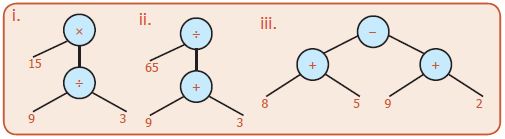
4.
(i) 8 + (6 \(\times\) 2)
(ii) 9 − (2 \(\times\) 3)
(iii) (3 \(\times\) 5) − (4 \(\div \) 2)
(iv) [(2 \(\times\) 4)+2] \(\times\) (8 \(\div \) 2)
(v) [(6 +4) \(\times\) 7] \(\div \) [2 \(\times\) (10 −5)]
(vi) [(4 \(\times\) 3) \(\div \) 2] + [8 \(\times\) (5 − 3)]
5.
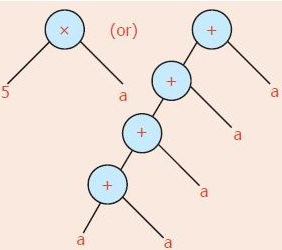
6.
Tree diagram
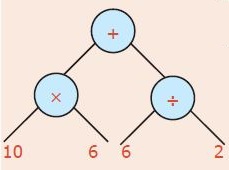
Numerical Expression (10\(\times\)6) + (6 \(\div \)2)
7.
Tree diagram
Numerical Expression 15-(6+9).
8.
9.
10.
This confusion can be resolved by using the brackets in the correct places like (5 + 9) \(\times\) 6.
It is further clear from the tree diagram.
Therefore Vani is correct
11.
| Number of tickets sold on the first day | = 1,10,010 |
| Number of tickets sold on the second day | = 75,070 |
| Number of tickets sold on the third day | = 25,720 |
| Number of tickets sold on the fourth day | = 30,636 |
| Total | = 2,41,436 |
Total number of tickets sold = 2,41,436
12.
Given LM = 6.5 cm (using set square)
Construction:
1. Draw a line segment LM = 6.5 cm. Take a point P anywhere above the line LM.
2. Place the set square on the line LM.
3. Draw a line through the point P meeting LM at Q.
4. The line PQ is perpendicular to the line LM at Q. That is, PQ \(\perp\) LM
13.
The sum of three angles = 80°+ 30°+ 40° = 150° (not equal to 180°)
In a triangle, the sum of three angles is 180°.
So, a triangle cannot be formed with the given angles.
14.
Given
Muthu has a car worth = Rs. 8,50,000
Profit = Rs. 25,000
s.p = c.p + profit
= 8,50,000 + 25,000
Therefore = Rs. 8,75,000
15.
(i) c.p = Rs.100
s.p = Rs.120
Here, s.p > c.p
Profit = s.p - c.p = 120 - 100
= Rs. 20
(ii) Given
c.p = Rs. 110
s.p = Rs. 120
Here, s.p > c.p
Profit = s.p - c.p = 120 - 110
= Rs. 10
(iii) Given
c.p = Rs. 120
profit = Rs. 20
Here; s.p = c.p + profit
= 120 + 20
= Rs. 140
(iv) Given
c.p = Rs. 100
s.p = Rs. 90
Here, c.p > s.p
Loss = c.p - s.p = 100 - 90
= 10
(v) Given
c.p = Rs. 120
profit = Rs. 25
Here, s.p = c.p + profit
= 120 + 25
= Rs. 145
16.
(i) 20 minutes into seconds
1 min = 60 seconds
Therefore 20 min = 60 \(\times\) 20 = 1200 seconds
(ii) 5 hours 35 minutes 40 seconds into seconds.
1 hour = 3600 seconds
5 hour = 5 \(\times\) 3600 = 18000 sec.
1 min = 60 see
35 min = 35 \(\times\) 60 = 2100 see
Therefore 5 hours 35 minutes 40 seconds
= (18000 + 2100 + 40) sec
= 20140 seconds
(iii) 3 1/2 hours into minutes
1 hour = 60 min
7 1/2 hours = 60 \(\times\) 7/2 = 210 minutes
(iv) 580 minutes into hours
60 min = 1 hour
580 min = 1/60 \(\times\) 580
= 58/6 = 9 4/6
= 9 hours 40 min (4 / 6 = 40 min)
(v) 25200 seconds into hours.
3600 sec = 1 hour
25200 sec = 1 /3600 \(\times\) 25200 = 252 / 36 = 7 hours
17.
Convert in the format : YYYY/MM/DD
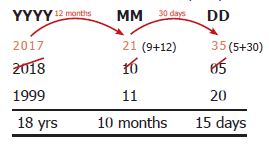
Mala's age : 18 yrs 10 months 15 days
18.
Time for which the farmer ploughed the paddy field = 3 hours and 35 minutes
= 3 \(\times\) 60 minutes + 35 minutes
= 180 minutes + 35 minutes
= 215 minutes
19.
Total Quantity of Lemon Juice
= 200 l - 200000 ml
Each student get = 250 ml
No. of students get the juice
= 200000 ml
250ml
= 800 ml
800 students got the juice
20.
Thenmozhi's height 1m 25 cm Therefore 1 student = 15ml of oil
= 125 cm
She grows in 1year = 5 cm
Therefore 6 years = 5 \(\times\) 6 = 30 cm
After 6 years,
Thenmozhi's height = (125 + 30) cm needed.
= 155 cm
21.
10 mm = 1 cm
100 cm = 1 m
1000 cm = 1 km
Therefore 10 mm = 1cm
i) 13000 mm = 1 / 10 \(\times\) 13000 = 1300 cm
100 cm = 1 m
1300 cm = 1 / 100 \(\times\) 1300 = 13 m
1000 m = 1 km
13 m = 1 / 1000 \(\times\) 13
= 0.013 km
= 13000 mm
= (0.013 km, 13m, 1300 cm)
(ii) 8257 ml (kl, I)
= 1000 ml = 1l
1000 l= 1 kl
1000 ml = 11
8257 ml = 1 / 1000 \(\times\) 8257
= 8.257 I
1000 1= 1 kl
8.257 I = 1 / 1000 \(\times\) 8.257
= 0.008257 kl
8257 ml (0.008257 kl, 8.257 I)
22.
i) The greatest 2 digit number 9A is divisible by 2.
Greatest two digit number = 99.
But, given 9A is divisible by 2,
So, two digit number = 98
Therefore A = 8
ii) The least number 567A is divisible by 3.
The least number = 5670
Sum of the digits = 5 + 6 + 7 + 0 = 18 is divisible by 3.
Therefore A = 0
iii) The greatest 3 digit number 9A6 is divisible by 6
The greatest 3 digit number = 999.
But, given 9A6 is divisible by 6.
Therefore 9A6 = 996.
Therefore A = 9
iv) The number A08 is divisible by 4 & 9
Given number = A08
A08 is divisible by 4 means 108.
A08 is divisible by 9 means 108.
Therefore 108 is divisible by both 4 & 9.
Therefore A = 1
v) The number 225A85 is divisible by H.
Given number = 225A85
Also given 225A85 is divisible by 11.
Difference between the sum of alternative digits = (2 + 5 + 8) - (2 + A + 5) = 15 - (2 + 8 + 5) = 15 - 15 = 0
Therefore 225A85 = 225885
Therefore A = 8
23.
We know that, the product of the two numbers = LCM \(\times\) HCF
108 \(\times\) (the other number) = 432 \(\times\) 36
The other number = (432 \(\times\) 36) \(\div \) 108 = 144
24.
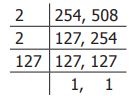
All common multiples of 254 and 508 will be divisible by both the numbers. Let us find the LCM of 254 and 508 (by division method).
LCM of 254, 508 = 2 \(\times\) 2 \(\times\) 127 = 508
Thus, 508 is the smallest common number that is divisible by 254 and 508. Now, as we need remainder 4 while dividing, the required number is 4 more than the LCM and so, the required number is 508 + 4 =512.
25.
This is a HCF related problem. So, we need to find the HCF of 175, 245 and 385.
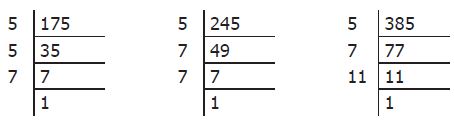
175 = 5 \(\times\) 5 \(\times\) 7; 245 = 5 \(\times\) 7 \(\times\) 7; 385 = 5 \(\times\) 7 \(\times\) 11
The HCF of 175, 245 and 385 is the product of the common factors 5 and 7 i.e, 5 \(\times\) 7=35
Since each box contains equal number of books, the greatest possible number of boxes = 35
The number of English books in each box = 175 \(\div \) 35 = 5
The number of Science books in each box = 245 \(\div \) 35 = 7
The number of Maths books in each box = 385 \(\div \) 35 = 11
Hence, the total number of books in each box is 5+7+11 = 23.

6th Standard Syllabus & Materials
6th Standard
TN 6th Social Science T3 - GEO - Understanding Disaster Sample Question Papers Study Material - QB365 Set A
NEW6th Standard
TN 6th Social Science T3 - GEO - Globe Sample Question Papers Study Material - QB365 Set A
NEW6th Standard
TN 6th Social Science T3 - GEO - Asia and Europe Sample Question Papers Study Material - QB365 Set A
NEW6th Standard
TN 6th Social Science T3 - HIS - South Indian Kingdoms Sample Question Papers Study Material - QB365 Set A



Tamilnadu Stateboard 6th Standard Subjects
Tamilnadu Stateboard Standards




