
 100% FREE ACCESS
6th Standard Syllabus & Materials
6th Standard
TN 6th Tamil பருவம் 1 - இயல் 1 - மொழி -தமிழ்த்தேன் - இன்பத்தமிழ் Sample Question Papers Study Material - QB365 Set A
NEW6th Standard
TN 6th English T1 - Supplementary - The Apple Tree and The Farmer Sample Question Papers Study Material - QB365 Set A
NEW6th Standard
TN 6th English T1 - Prose - When The Trees Walked Sample Question Papers Study Material - QB365 Set A
NEW6th Standard
TN 6th Social Science T3 - CIV - Road Safety Sample Question Papers Study Material - QB365 Set A
NEW6th Standard
TN 6th Social Science T3 - CIV - Local Bodies - Rural and Urban Sample Question Papers Study Material - QB365 Set A
NEW6th Standard
TN 6th Social Science T3 - CIV - Democracy Sample Question Papers Study Material - QB365 Set A

Published on: 13/05/2022
QB365 provides detailed and simple solution for every book back questions in class 6 Maths subject.It will helps to get more idea about question pattern in every book back questions with solution.
latest Book back QuestionsDownload Tamil Nadu 6th Standard Maths question papers, model tests, one-mark questions, important questions, and public exam papers in PDF format. Free study materials and answer keys for TN State Board students.
Questions + Answers key
Take MCQ Maths Test1.
Represent the following situations as integers.
(i) A loss of Rs. 2000
(ii) 2018 CE (AD)
(iii) Fishes found at 60m below the sea level.
(iv) 18° C below 0° C
(v) Gaining 13 points
2.
(i) How many 6s are there in 18 ?
(ii) How many \(\frac{1}{4}\)'s are there in 5 ?
(iii) \(\cfrac { 1 }{ 3 } \div 5=?\)
3.
(i) Convert \(3\frac { 1 }{ 3 } \) into improper fraction.
(ii) Convert \(\cfrac { 45 }{ 7 } \) into improper fraction.
4.
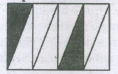
Find the fractions of the shaded and unshaded portions in the following.
5.
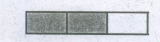
Write the fraction of shaded part in the following:
(i)
(ii)
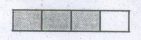
(iii)
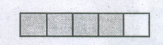
6.
Observe the following and represent the shaded parts as fraction:
(i)
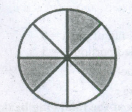
(ii)
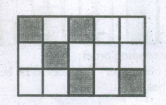
(iii)
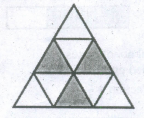
(iv)
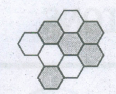
7.
Thendral, Tharani and Thanam are given a thread piece each of length 12 cm. They are asked to make a rectangle, a square and a triangle respectively with the thread for their Math activity. In how many ways, can they make the respective shapes?
8.
Is there the smallest and the largest number in the set of integers? Give reason
9.
Put the appropriate signs as <, > or = in the box.
i) −7\(\boxed\ \) 8
ii) −8 \(\boxed\ \) −7
iii) −999 \(\boxed\ \) −1000
iv) −111 \(\boxed\ \) −111
v) 0 \(\boxed\ \) −200
10.
Find the predecessor and successor of
i) 0 and
ii) −8 on a number line.
11.
Using the number line, write the integer which is 5 more than −6.
12.
Draw a number line and mark the integers 6, –5, –1, 4 and –7 on it.
13.
The sum of two fractions is \(5{3\over9}\). If one of the fractions is \(2{3\over4}\) find the other fraction.
14.
Ravi bought a curtain of length \(15{3\over4}\)m. If he cut the curtain into small pieces each of length \(2{1\over4}\) m, then how many small curtains will he get?
15.
An oil tin contains \(3{3\over4}\) litres of oil of which \(2{1\over2}\) litres of oil is used. How much oil is left over?
16.
A rod of length 6m is cut into small rods of length \(1{1\over2}\) each. How many small rods can be cut?
17.
Divide \(4{1\over2}\) by \(3{1\over2}\)
18.
In a juice shop, if a man prepared \(1{1\over2}\) litres of juice from 1 kg of oranges, then how many litres of juice can be prepared from \(12{3\over4}\)kg of oranges?
19.
Maruthu, a milk man has 4 bottles of milk each containing \(1{1\over2}\) litres. How much milk does he have in all?
20.
Saravanan’s father bought \(2{3\over4}m,2{1\over2}m\) and \(1{1\over4}m\) of cloth. Find the total length of the cloth bought by him?
21.
Convert \(5{3\over7}\)into an improper fraction.
22.
Simplify: \({3\over4}-{1\over2}\)
23.
Add \(2\over3\)and\(3\over5\)
24.
Arrange \({2\over 3},{1\over 6},{4\over 9}\) in ascending order
25.
Madhu ate \(2\over 5\) of the chocolate bar and Nandhini ate \(1\over3\) of the chocolate bar. Who has eaten more?
1.
(i) Integer = Rs. - 2000
(ii) Integer = + 2018
(iii) Integer = - 60m
(iv) Integer = - 18 ° C
(v) Integer = + 13 points,
2.
(i) To find : 18 + 6 = 18 x \(\cfrac { 1 }{ 6 } \)= 3
\(\therefore \) 3 times 6s are therein 18.
(ii) To find \(\cfrac { 5 }{ \frac { 1 }{ 4 } } \)
= \(5\times \cfrac { 4 }{ 1 } 5\times 4=20\)
\(\therefore \) 20 times \(\cfrac { 1 }{ 4 } \) are there in 5.
(iii) \(\cfrac { 1 }{ 3 } \div 5\)
\(\Rightarrow \cfrac { 1 }{ 3 } \times \cfrac { 1 }{ 5 } =\cfrac { 1\times 1 }{ 3\times 5 } =\cfrac { 1 }{ 15 } \)
3.
Given : \(3\frac { 1 }{ 3 } \)
Improper fraction = \(\cfrac { (Whole\ number\ X\ Deno\ minator)+Numerator }{ Deominator } \)
= \(\cfrac { \left( 3\times 3 \right) +1 }{ 3 } =\cfrac { 9+1 }{ 3 } \)
(\(\therefore\) W.no = 3, D = 3, N = 1)
= \(\cfrac { 10 }{ 3 } \)
(ii) Given :\(\cfrac { 45 }{ 7 } \)
Mixed fraction = Quotilent + \(\cfrac { Remainder }{ Divisor } \)
= \(6+\cfrac { 3 }{ 7 } \)
= \(6\cfrac { 3 }{ 7 } \)
4.
Given:
Total no. of triangles = 8
Shaded portion = 2
unshaded portion = 6
\(\therefore\) Fraction of (i) shaded portion = \(\cfrac { 2 }{ 8 } =\cfrac { 1 }{ 4 } \)
(ii) unshaded portion = \(\cfrac { 6 }{ 8 } =\cfrac { 3 }{ 4 } \)
5.
(i) Total no. of boxes = 3
shaded portion = 2
\(\therefore\) Fraction = \(\cfrac { 2 }{ 3 } \)
(ii) Total no. of boxes = 4
shaded portion' = 3
\(\therefore\) Fraction = \(\cfrac { 3 }{ 4 } \)
(iii) Total no. of boxes = 5
shaded portion = 4
\(\therefore\) Fraction = \(\cfrac { 4 }{ 5 } \)
6.
(i) Total parts = 8
Shaded paris of portion = 3
Fraction = \(\cfrac { 3 }{ 8 } \)
(ii) Shaded portion:
Total no. parts = 15
Shaded portion = 5
\(\therefore \) Fraction \(\cfrac { 5 }{ 15 } =\cfrac { 1 }{ 3 } \)
(iii) Shaded portion = 3
\(\therefore \) Fraction = \(\cfrac { 3 }{ 9 } =\cfrac { 1 }{ 3 } \)
(iv) Total no. of parts = 9
Shaded portion = 5
\(\therefore\) Fraction = \(\cfrac { 5 }{ 9 } \)
7.
Thendral
Perimeter of the rectangle, P = 12 cm
2 ( l + b ) = 12
l + b = \({12\over6}=6cm\)
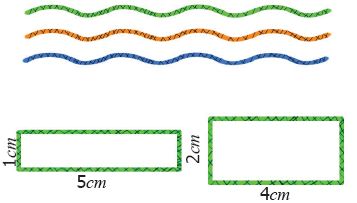
The possible pairs of measures whose sum is 6 are (5, 1) and (4, 2).
Hence, Thendral can make a rectangle in 2 ways. She can make a rectangle of length 5 cm and breadth 1 cm and another one with length 4 cm and breadth 2 cm.
Tharani
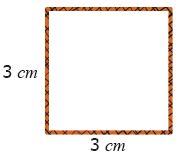
Perimeter of the square, P = 12 cm
4 \(\times\) s = 12
\(s={12\over4}=3 \ cm\)
Hence, Tharani can make only one square of side 3 cm.
Thanam
Perimeter of the triangle, P = 12 cm
a + b + c = 12 cm
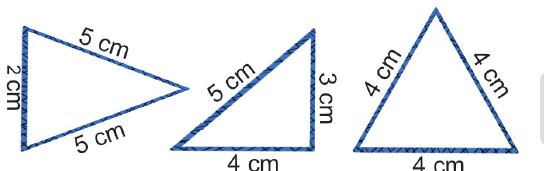
The possible triplets of measures whose sum is 12 and also satisfying the triangle inequality are (2, 5, 5); (3, 4, 5); (4, 4, 4).
Hence, Thanam can make 3 triangles of sides 2 cm, 5 cm & 5 cm; 3 cm, 4 cm & 5 cm and 4 cm, 4 cm & 4 cm.
8.
No, as the number line number extends on both sides without any end, we cannot find the smallest (−) and the largest (+) number
9.
i) −7 < 8
ii) −8 < −7
iii) −999 >−1000
iv) −111 = −111
v) 0 > −200
10.
Place the given numbers on the number line then move one unit to their right and left to get the successor and the predecessor respectively.

We can see that the successor of 0 is +1 and the predecessor of 0 is −1 and the successor of −8 is −7 and the predecessor of −8 is −9.
11.
From −6, we can move 5 units to its right to reach −1 as shown in the figure

12.

13.
Given:
Sum of two fractions = \(5\cfrac { 3 }{ 9 } =\cfrac { 48 }{ 9 } \)
One fraction = \(2\cfrac { 3 }{ 4 } =\cfrac { 11 }{ 4 } \)
To find: Other fraction
One fraction + Other fraction = \(5\cfrac { 3 }{ 9 } =\cfrac { 48 }{ 9 } \)
\(\cfrac { 11 }{ 4 } \)+Other fraction = \(\cfrac { 48 }{ 9 } \)
Other fraction = \(\cfrac { 48 }{ 9 } -\cfrac { 11 }{ 4 } \)
LCM of 9 and 4 is 36
= \(\cfrac { (48\times 4)-(11\times 9) }{ 36 } =\cfrac { 192-99 }{ 36 } \)
= \(\cfrac { 93 }{ 31 } =\cfrac { 31 }{ 12 } =2\cfrac { 7 }{ 12 } \)
\(\therefore \) Other fraction = \(2\cfrac { 7 }{ 12 } \)
14.
Ravi bought a curtain of length = \(15\cfrac { 3 }{ 4 } m=\cfrac { 63 }{ 4 } m\)
Small piece each of length = \(2\cfrac { 1 }{ 4 } m=\cfrac { 9 }{ 4 } m\)
No. of small curtains = \(\cfrac { 63 }{ \frac { 4 }{ 9 } } \)
= \(\cfrac { 63 }{ 9 } =7\)
\(\therefore\) 7 small curtains will he get
15.
Oil is contains = \(3\cfrac { 3 }{ 4 } l=\cfrac { 15 }{ 4 } l\)
Oil is used = \(2\cfrac { 1 }{ 2 } l=\cfrac { 5 }{ 2 } l\)
Remaininig oil contains = \(\left( \cfrac { 15 }{ 4 } -\cfrac { 5 }{ 2 } \right) \)
= \(\cfrac { 15-(5\times 2) }{ 4 } =\cfrac { 15-10 }{ 4 } \)
= \(\cfrac { 5 }{ 4 } =1\cfrac { 1 }{ 4 } l\)
\(\therefore 1\cfrac { 1 }{ 4 } \) oil is left over
16.
The number of small rods \(={6\div}1{1\over2}\)
\(={6\div}{3\over2}\)
\(=6\times{2\over3}\) (reciprocal of \(\frac{3}{2} \text { is } \frac{2}{3}\))
= 4 rods
17.
\(4{1\over2}\div 3{1\over2}={9\over2}\div {7\over 2}\)
\(={9\over2}\times{2\over7}\) (reciprocal of \(\frac{7}{2} \text { is } \frac{2}{7}\))
\(={9\over7}\)
18.
The quantity of juice prepared from 1kg of oranges = \(1{1\over2}\) litres
The quantity of juice prepared from \(12{3\over4}\)kg of oranges = \(12{3\over4}\times1{1\over2}\)
\(={51\over 4}\times{3\over2}={153\over 8}\)
\(=19{1\over8}\) litres
19.
Since Maruthu has 4 bottles of milk and each containing \(1{1\over2}\) litres, he has 4 times of \(1{1\over2}\) litres of milk.
\(1{1\over2}\times4=\left(1+{1\over 2}\right)\times4=4+{4\over2}\)
= 4 + 2 = 6 litres
20.
Total length of the cloth \(\left(2{3\over4},+2{1\over2}+1{1\over4}\right)m\)
First we add whole numbers: 2 + 2 + 1 = 5 m
Then, add the fractions: \(\left({3\over4}+{1\over2}+{1\over4}\right)={3\over4}+{2\over4}+{1\over4}={3+2+1\over4}={6\over4}={3\times2̶\over2\times2̶}={3\over2}=1{1\over2}m\)
Therefore, the total length of the cloth bought \(=5+1+{1\over2}=6{1\over2}m\)
21.
\(Improper\ fraction={(Whole\ number\times Denominator)+Numerator\over Denominator}\)
\(5{3\over7}={(5\times7)+3\over 7}\)
\(={35+3\over7}={38\over7}\)
22.
Common multiple of 2 and 4 is 4
Equivalent fraction of \(1\over2\) is
\({1\over2}={1\times2\over 2\times2}={2\over4}\)
Now
\({3\over 4}-{1\over2}={3\over4}-{2\over4}={3-2\over4}={1\over 4}\)
Therefore, Vani has \(1\over4\) amount of water in the bottle. This can be verified by the following diagram

23.
These are unlike fractions, aren’t they ? So first we need to convert them into like fractions ? Is it possible ? Yes, always. How do we do so ? The common multiple of 3 and 5 is 15. Hence, we find the equivalent fractions of \(2\over 3\)and \(3\over5\) with denominator 15.
\({2\over3}={2\times5\over 3\times5}={10\over 15}\)
\({3\over5}={3\times3\over 5\times3}={9\over 15}\)
\({2\over 3}+{3\over5}={10\over 15}+{9\over 15}={19\over 15}\)
24.
Equivalent fractions of \(2\over 3\)are \({4\over 6},{6\over 9},{8\over 12},{10\over 15},{12\over 18},.....\)
Equivalent fractions of \(1\over 6\) are \({2\over12},{3\over 18}\) ,...
Equivalent fractions of \(4\over9\) is \({8\over18},....\)
Therefore \({3\over 18}<{8\over18}<{12\over 18}\)
The ascending order of given fractions is \({1\over 6},{4\over 9},{2\over3}\)
25.
The portion of the chocolate eaten by Madhu = \(2\over 5\)
The portion of the chocolate eaten by Nandhini = \(1\over3\)
Here the portions of the chocolates eaten by both differ
To make it same, their equivalent fractions are to be found.
Finding the equivalent fractions of \(2\over 5\)and \(1\over 3\) having common denominators are the same as finding the least common multiple of the denominators of the given fractions.
Hence \({2\over 5}={2\times3\over 5\times3}={6\over15}\)and \({1\over 3}={1\times5\over 3\times5}={5\over 15}\)So, \({6\over 15}>{5\over 15}\)
Therefore, we can conclude that Madhu has eaten more chocolates.

6th Standard Syllabus & Materials
6th Standard
TN 6th Social Science T3 - GEO - Understanding Disaster Sample Question Papers Study Material - QB365 Set A
NEW6th Standard
TN 6th Social Science T3 - GEO - Globe Sample Question Papers Study Material - QB365 Set A
NEW6th Standard
TN 6th Social Science T3 - GEO - Asia and Europe Sample Question Papers Study Material - QB365 Set A
NEW6th Standard
TN 6th Social Science T3 - HIS - South Indian Kingdoms Sample Question Papers Study Material - QB365 Set A



Tamilnadu Stateboard 6th Standard Subjects
Tamilnadu Stateboard Standards




