 100% FREE ACCESS
6th Standard Syllabus & Materials
6th Standard
TN 6th Tamil பருவம் 1 - இயல் 1 - மொழி -தமிழ்த்தேன் - இன்பத்தமிழ் Sample Question Papers Study Material - QB365 Set A
NEW6th Standard
TN 6th English T1 - Supplementary - The Apple Tree and The Farmer Sample Question Papers Study Material - QB365 Set A
NEW6th Standard
TN 6th English T1 - Prose - When The Trees Walked Sample Question Papers Study Material - QB365 Set A
NEW6th Standard
TN 6th Social Science T3 - CIV - Road Safety Sample Question Papers Study Material - QB365 Set A
NEW6th Standard
TN 6th Social Science T3 - CIV - Local Bodies - Rural and Urban Sample Question Papers Study Material - QB365 Set A
NEW6th Standard
TN 6th Social Science T3 - CIV - Democracy Sample Question Papers Study Material - QB365 Set A

Published on: 18/06/2021
QB365 provides detailed and simple solution for every book back questions in class 6 Maths subject.It will helps to get more idea about question pattern in every book back questions with solution.
Download Tamil Nadu 6th Standard Maths question papers, model tests, one-mark questions, important questions, and public exam papers in PDF format. Free study materials and answer keys for TN State Board students.
Questions + Answers key
Take MCQ Maths Test1.
Arrange the fractions in descending order \(\cfrac { 9 }{ 20 } ,\cfrac { 3 }{ 4 } ,\cfrac { 7 }{ 12 } \)
(i) \(\cfrac { 2 }{ 3 } +\cfrac { 5 }{ 7 } \)
(ii) \(\cfrac { 3 }{ 5 } -\cfrac { 3 }{ 8 } \)
2.
Arrange the fractions in ascending order.\(\cfrac { 3 }{ 5 } ,\cfrac { 9 }{ 10 } ,\cfrac { 11 }{ 15 } \)
3.
Shade the rectangle for the given pair of fractions and say which is greater among them.
(i) \(\cfrac { 1 }{ 3 } and\cfrac { 1 }{ 5 } \)
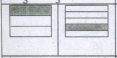
(ii) \(\cfrac { 2 }{ 5 } and\cfrac { 5 }{ 8 } \)
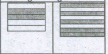
4.
Mangai bought \(6{3\over4}\) kg of apples. If Kalai bought \(1{1\over2}\) times as Mangai bought, then how many kilograms of apples did Kalai buy?
5.
From his office, a person wants to reach his house on foot which is at a distance of \(5{3\over4}\)km. If he had walked \(2{1\over 2}km\) how much distance still he has to walk to reach his house?
1.
Given:\(\cfrac { 9 }{ 20 } ,\cfrac { 3 }{ 4 } ,\cfrac { 7 }{ 12 } \)
LCM of 20, 4, 12 is 60
\(\cfrac { 9 }{ 30 } \times \cfrac { 3 }{ 3 } =\cfrac { 27 }{ 60 } ,\cfrac { 3 }{ 4 } \times \cfrac { 15 }{ 15 } =\cfrac { 45 }{ 60 } ,\cfrac { 7 }{ 12 } \times \cfrac { 5 }{ 5 } =\cfrac { 35 }{ 60 } \)
\(\Rightarrow \cfrac { 27 }{ 60 } <\cfrac { 35 }{ 60 } <\cfrac { 45 }{ 60 } \Rightarrow \cfrac { 45 }{ 60 } >\cfrac { 35 }{ 60 } >\cfrac { 27 }{ 60 } \)
\(\therefore\) Descending order is \(\cfrac { 3 }{ 4 } ,\cfrac { 7 }{ 12 } ,\cfrac { 9 }{ 20 } \)
(i) LCM of 3 and 7 is 21
\(\Rightarrow \cfrac { 2 }{ 3 } \times \cfrac { 7 }{ 7 } +\cfrac { 5 }{ 7 } \times \cfrac { 3 }{ 3 } \)
\(\cfrac { 14 }{ 21 } +\cfrac { 15 }{ 21 } =\cfrac { 14+15 }{ 21 } =\cfrac { 29 }{ 21 } \)
(ii) LCM of5 and 8 is 40
\(\Rightarrow \cfrac { 3 }{ 5 } \times \cfrac { 8 }{ 8 } -\cfrac { 3 }{ 8 } \times \cfrac { 5 }{ 5 } \)
= \(\cfrac { 24 }{ 60 } -\cfrac { 15 }{ 40 } =\cfrac { 24-15 }{ 40 } =\cfrac { 9 }{ 40 } \)
2.
Given: \(\cfrac { 3 }{ 5 } ,\cfrac { 9 }{ 10 } ,\cfrac { 11 }{ 15 } \)
LCM of 5; 10 and 15 is 30.
\(\cfrac { 3 }{ 5 } \cfrac { 6 }{ 6 } \times \cfrac { 18 }{ 30 } ,\cfrac { 9 }{ 10 } \times \cfrac { 3 }{ 3 } =\cfrac { 27 }{ 30 } ,\cfrac { 11 }{ 15 } \times \cfrac { 2 }{ 2 } =\cfrac { 22 }{ 30 } \)
\(\Rightarrow \cfrac { 18 }{ 30 } <\cfrac { 22 }{ 30 } <\cfrac { 27 }{ 30 } \)
\(\therefore\) Ascending order :\(\cfrac { 3 }{ 5 } ,\cfrac { 11 }{ 15 } ,\cfrac { 9 }{ 10 } \)
3.
(i) \(\cfrac { 1 }{ 3 } \) is greater than \(\cfrac { 1 }{ 5 } \)
That is \(\cfrac { 1 }{ 3 } \ge \cfrac { 1 }{ 5 } \)
(ii) \(\cfrac { 2 }{ 5 } \) is smaller \(\cfrac { 5 }{ 8 } \)
That is \(\cfrac { 2 }{ 5 } \le \cfrac { 1 }{ 5 } \)
4.
Mangai bought = \(6\cfrac { 3 }{ 4 } kg\) of apple
Kalai bought = \(1\cfrac { 1 }{ 2 } \) times as Mangai bought
= \(\left[ 1\cfrac { 1 }{ 2 } \times 6\cfrac { 3 }{ 4 } \right] kg\) of apples
= \(\cfrac { 3 }{ 2 } \times \cfrac { 27 }{ 4 } \)
= \(\cfrac { 81 }{ 8 } \)
\(\therefore \) Kalai bought = \(10\cfrac { 1 }{ 8 } \) kg of apples.
5.
Total distance = \(5\cfrac { 3 }{ 4 } km=\cfrac { 23 }{ 4 } km\)
He had walked = \(2\cfrac { 1 }{ 2 } km=\cfrac { 5 }{ 2 } km\)
Difference = \(\left( \cfrac { 23 }{ 4 } -\cfrac { 5 }{ 2 } \right) km\)
= \(\cfrac { 23-\left( 5\times 2 \right) }{ 4 } =\cfrac { 23-10 }{ 4 } =\cfrac { 13 }{ 4 } km\)
\(\therefore 3\cfrac { 1 }{ 4 } km\) distance still he has to walk to reach his house

6th Standard Syllabus & Materials
6th Standard
TN 6th Social Science T3 - GEO - Understanding Disaster Sample Question Papers Study Material - QB365 Set A
NEW6th Standard
TN 6th Social Science T3 - GEO - Globe Sample Question Papers Study Material - QB365 Set A
NEW6th Standard
TN 6th Social Science T3 - GEO - Asia and Europe Sample Question Papers Study Material - QB365 Set A
NEW6th Standard
TN 6th Social Science T3 - HIS - South Indian Kingdoms Sample Question Papers Study Material - QB365 Set A



Tamilnadu Stateboard 6th Standard Subjects
Tamilnadu Stateboard Standards