
 100% FREE ACCESS
6th Standard Syllabus & Materials
6th Standard
TN 6th Tamil பருவம் 1 - இயல் 1 - மொழி -தமிழ்த்தேன் - இன்பத்தமிழ் Sample Question Papers Study Material - QB365 Set A
NEW6th Standard
TN 6th English T1 - Supplementary - The Apple Tree and The Farmer Sample Question Papers Study Material - QB365 Set A
NEW6th Standard
TN 6th English T1 - Prose - When The Trees Walked Sample Question Papers Study Material - QB365 Set A
NEW6th Standard
TN 6th Social Science T3 - CIV - Road Safety Sample Question Papers Study Material - QB365 Set A
NEW6th Standard
TN 6th Social Science T3 - CIV - Local Bodies - Rural and Urban Sample Question Papers Study Material - QB365 Set A
NEW6th Standard
TN 6th Social Science T3 - CIV - Democracy Sample Question Papers Study Material - QB365 Set A

Published on: 22/09/2018
Monthly Test
Download Tamil Nadu 6th Standard Science question papers, model tests, one-mark questions, important questions, and public exam papers in PDF format. Free study materials and answer keys for TN State Board students.
Questions + Answers key
Take MCQ Science Test1.
Complete the map by filling the blanks
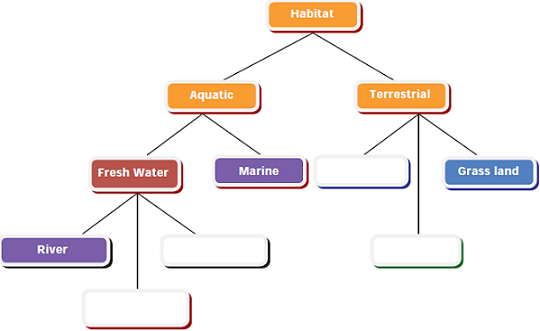
2.
Fill with examples:
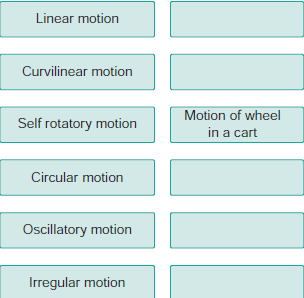
3.
What is motion? Classify different types of motion with examples.
4.
Explain two methods that you can use to measure the length of a curved line.
5.
Among the following which one is Bird Sanctuary located in Tamilnadu___________.
Vayanad
Guindy Park
Vedanthangal
All
6.
A cheetah running with an average speed of_____________
112 kmIh
121 km/h
211 km/h
122 km/h
7.
We mix rice, dal, salt, chillies, pepper, ghee and other ingredients to make pongal. So pongal is also a ___________
Mixture
Compound
Element
Matter
8.
__________is a smallest particle
Molecule
Element
Atom
Substance
9.
A standard sheet of paper is about___________ atoms thick.
Thousands
Crores
Lakhs
Million
10.
The first land plants are____________
Neem tree
hibiscus'
banyan tree
mosses and liver worts
11.
Volume of liquid is usually measured___________
litres
grams
nano
kilo
12.
Kangaroo rat lives in
Aquatic habitat
Desert habitat
Grass land habitat
Mountain habitat
13.
The habitat of water hyacinth is
Aquatic
Terrestrial
Desert
Mountain
14.
The correct relation among the following is
Speed = distance × time
Speed = distance / time
Speed = time / distance
Speed = 1 / (distance × time)
15.
Complete the web chart.
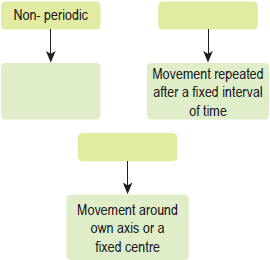
16.
Given below is the distance-travelled by an elephant across a forest with uniform speed. Complete the data of the table given below with the idea of uniform speed.
| Distance (m) | 0 | 4 | 12 | 20 | ||
| Time (s) | 0 | 2 | 4 | 8 | 10 |
17.
Name the locomotory organ of Amoeba.
18.
Where can we see camels in India?
19.
How can husk or fine dust particles be separated from rice before cooking?
20.
Mention few desert plants.
21.
Rotation of the earth is a periodic motion. Justify.
22.
If you are sitting in a moving car, will you be at rest or motion with respect your friend sitting next to you?
23.
1 Metre, 1 centimetre, 1 kilometre, and 1 millimetre.
1.
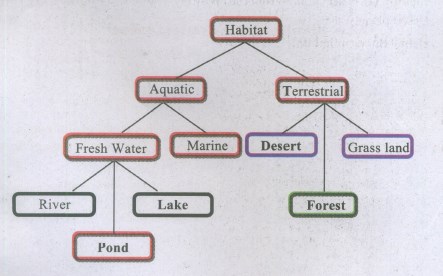
2.
Linear motion - A coconut falling from a tree
Curvilinear motion - A car driving around a curve
Self rotatory motion - Motion of the wheel in a cart
Circular motion - Athlete running around a track
Oscillatory motion - Swinging of a pendulum
Irregular motion - Movement of people in a bazaar
3.
When there is a change of position of an object with respect to time then it is called motion.
Types of motion:
a) Based on path:
i) Linear motion - a person walking on a straight path
ii) Curvilinear motion - throwing ball
iii) Circular motion - swirling stone tied to the rope
iv) Rotatory motion - a rotating top
v) Oscillatory motion - pendulum of clock
vi) Zig zag (or) Irregular motion - the motion of a bee
b) Based on duration:
i) period motion - movement of hour hand of a clock
ii) Non-periodic - motion flapping of a flag in wind
c) Based on speed:
9) Uniform motion - motion of a train at a constant speed
ii) Non-uniform motion - a vehicle moves in different speed
4.
Method 1:
(i) Place a string along the curved line, Make sure that the stringcovers every bit of the curved line.
(ii) Mark the points where the curved line begins and ends on the string.
(iii) Now, stretch the string along the length of a meter scale and measure the distance between the two markings of the string.
(iv) This will give us the length of a curved line.
Method 2:
(i) Draw a curved line AB on a piece of paper.
(ii) Separate the legs of the divider by 0.5 cm or 1 cm using a ruler.
(iii) Place it on the curved line starting from one end. Mark the position of the other end. Move it along the line again and again cutting the line into number of segments of equal lengths. The remaining parts of the line can be measured using a scale.
(iv) Count the number of segments.
(v) Therefore, the length of the line = (number of segments x length of each segment) + length of the left over part.
5.
(c)
Vedanthangal
6.
(a)
112 kmIh
7.
(a)
Mixture
8.
(c)
Atom
9.
(d)
Million
10.
(d)
mosses and liver worts
11.
(a)
litres
12.
(b)
Desert habitat
13.
(a)
Aquatic
14.
(b)
Speed = distance / time
15.
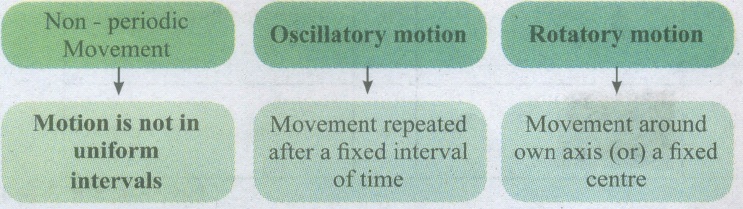
16.
| Distance (m) | 0 | 4 | 8 | 12 | 16 | 20 |
| Time (s) | 0 | 2 | 4 | 6 | 8 | 10 |
(i) Distance/ Time = \(\frac { 4 }{ 2 } { \times }{ 4 }=\frac { 16 }{ 2 } =8\)
(ii) Distance/ Time = \(\frac { 4 }{ 2 } { \times }{ 8 }=\frac { 32 }{ 2 } =16\)
(iii) Time/ Distance =\(\frac { 1\emptyset }{ 2\emptyset } { \times }{ 12 }=\frac { 12 }{ 2 } =6\)
17.
The locomotory organ of Amoeba is pseudopodia.
18.
We can see camels in Thar Desert,in Rajasthan State.
19.
Husk or fine dust particles cdnbe separated from rice by the method 'winnowing"
20.
Cactus, Agave, Aloe, Bryophyllum
21.
Rotation of the Earth about its axis repeats its motion after a fixed interval of time of 24 hours. So the rotation of the earth is a periodic motion
22.
I will be at rest with respect to my friend sitting next to me.
23.
1 millimetre < 1 centimetre < 1 Metre < 1 kilometre.

6th Standard Syllabus & Materials
6th Standard
TN 6th Social Science T3 - GEO - Understanding Disaster Sample Question Papers Study Material - QB365 Set A
NEW6th Standard
TN 6th Social Science T3 - GEO - Globe Sample Question Papers Study Material - QB365 Set A
NEW6th Standard
TN 6th Social Science T3 - GEO - Asia and Europe Sample Question Papers Study Material - QB365 Set A
NEW6th Standard
TN 6th Social Science T3 - HIS - South Indian Kingdoms Sample Question Papers Study Material - QB365 Set A



Tamilnadu Stateboard 6th Standard Subjects
Tamilnadu Stateboard Standards




