
 100% FREE ACCESS
6th Standard Syllabus & Materials
6th Standard
TN 6th Tamil பருவம் 1 - இயல் 1 - மொழி -தமிழ்த்தேன் - இன்பத்தமிழ் Sample Question Papers Study Material - QB365 Set A
NEW6th Standard
TN 6th English T1 - Supplementary - The Apple Tree and The Farmer Sample Question Papers Study Material - QB365 Set A
NEW6th Standard
TN 6th English T1 - Prose - When The Trees Walked Sample Question Papers Study Material - QB365 Set A
NEW6th Standard
TN 6th Social Science T3 - CIV - Road Safety Sample Question Papers Study Material - QB365 Set A
NEW6th Standard
TN 6th Social Science T3 - CIV - Local Bodies - Rural and Urban Sample Question Papers Study Material - QB365 Set A
NEW6th Standard
TN 6th Social Science T3 - CIV - Democracy Sample Question Papers Study Material - QB365 Set A

Published on: 17/06/2021
QB365 provides detailed and simple solution for every Book back Questions in class 6 Science Subject. It
will helps to get more idea about question pattern in every book back questions with solution.
Download Tamil Nadu 6th Standard Science question papers, model tests, one-mark questions, important questions, and public exam papers in PDF format. Free study materials and answer keys for TN State Board students.
Questions + Answers key
Take MCQ Science Test1.
What is potable water? List down its characteristics.
2.
You are provided with an iron needle. How will you magnetize it ?
3.
List out the functions of Endocrine system and Nervous system.
4.
Tabulate any five cell organelles and their function.
5.
Why is atmosphere essential for life on earth?
6.
Give one example for each case that happens around you.
a. Slow and fast change
b. Reversible and irreversible change
c. Physical and chemical change
d. Natural and man-made change
e. Desirable and undesirable change
7.
Tabulate the different components of an electric circuit and their respective symbols.
8.
Explain in detail above the applications of computer.
9.
Tabulate the vitamins and their corresponding deficiency diseases.
10.
Describe the various features which help Camel dwell well in the desert.
11.
Make a list of the functions of root and stem.
12.
What is motion? Classify different types of motion with examples.
13.
How will you measure the volume of irregular objects?
14.
When a window is accidentally left open on a winter night, will you feel uncomfortable because the cold is getting in, or because the heat is escaping from the room?
15.
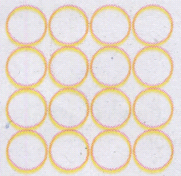
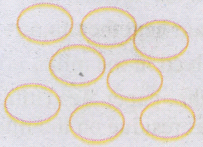
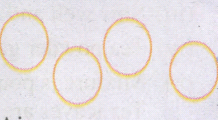
Distinguish the properties of solid, liquid and gas. Draw a suitable diagram.
1.
(i) Potable water is the water which is safe to drink. On an average the human body requires 2-3 liters of water per day for proper functioning.
(ii) It is transparent.
(iii) It is odourless and colourless.
(iv) Cleaned of harmful contaminants.
(v) It is harmless or free from disease causing bacteria.
2.
i) Place the iron needle on a table. Now take a bar magnet and place one of its poles near one edge of iron needle and rub from one end to another end without changing the direction of the pole of the magnet. Repeat the process for 30 to 40 times.
ii) Bring a pin or some iron filings near the iron needle to check whether it has become a magnet. Does the iron needle attract the pin / Iron filing? If not continue the same process for some more time.
3.
Endocrine system:
(i) Endocrine glands are present in the body produce chemical substances called hormonds.
(ii) It regulates various fundions of the body and maintains the internal environment.
Nervous system:
(i) Nervous system is well developed by neurons or nerve cells.
(ii) Nervous system along with the endocrine system doing conduction and co-ordination in human body.
4.
| Cell Organelles | Main Functions |
|---|---|
| Cell wall | Surrounds and protects the cell. Make the cell stiff and strong. |
| Cell membrane | Holds and protects the cell. Controls the movement of materials in and out of the cell. |
| Cytoplasm | A watery gel - like material in which cell parts move. |
| Mitochondria | Produce and supply most of the energy for the cell. |
| Chloroplasts | Capture the energy from sunlight and use it to produce food for the cell by photosynthesis. |
5.
A huge envelope of air surrounded the earth is called Atmosphere.
(i) This envelope is thicker near the earth's surface.
(ii) As we go higher up, the density and the availabillty of air gradually decreases.
(iii) Movement of wind, Presence of water vapours for cloud formation are the vital roles of atmosphere.
(iv) Troposphere is the responsible layer for the weather we experience on earth.
(v) Stratosphere has the Ozone layer which protects all life on earth from the harmful UV rays of the sun.
6.
(a) Slow and fast change
(i) Slowchange - Changeofseasons
(ii) Fast change - Bursting of fire crackers
(b) Reversible and irreversible change
(i) Reversible change - Stretching of rubber
(ii) Irreversible change - Digestion of food
(c) Physical and chemical change
(i) Physical change - Melting of Ice
(ii) Chemical change - Rusting of Iron
(d) Natural and man-made change
(i) Natural change - Rotation of the earth
(ii) Man-made change - Cooking
(e) Desirable and undesirable change
(i) Desirable change - Milk changing to curd
(ii) Undesirable change - Deforestation
7.
| SI. No. | Electric component | Figure | Symbol | Remarks |
| 1. | Electric cell | .JPG) |
.JPG) |
Longer terminal refers positive and shorter terminal refers negative. |
| 2. | Battery | .JPG) |
.JPG) |
Two or more cells connected in series |
| 3. | Switch-open | .JPG) |
.JPG) |
Switch is in off position |
| 4. | Switch-closed | .JPG) |
.JPG) |
Switch is in on position |
| 5. | Electric bulb | .JPG) |
.JPG) |
The bulb does not glow |
.JPG) |
.JPG) |
The bulb glows | ||
| 6. | Connecting wires | .JPG) |
____________ | Used to connect devices. |
8.
(i) Computers are used in various fields.
(ii) In textile shop it is used for billing.
(iii) Computers are used to control large and small machines.
(iv) Computers are most important educational tools for teachers and learners.
(v) In Railways it is useful to book tickets and for other purposes.
(vi) It is also used in banks, ATM's, Post offices and in many places.
(vii) We can save many data and convert it into information.
9.
| S.no | Property | deficiency disease |
| 1 | vitamin A | Night blindness |
| 2 | vitamin B | Beri beri |
| 3 | vitamin C | Scurvy |
| 4 | vitamin D | Rickets |
| 5 | vitamin E | Nervous weakness, dimming of eyesight |
| 6 | vitamin K | Weakness of the bones, teeth etc. |
10.
(1) The camel has long legs which help it to keep its body away from the hot sand in the desert.
(2) It can store large amount of water in its body.
(3) it loses very little water from its body through excretion.
(4) A camel's hump has fat stored in it. It ups the stored fat when required.
(5) It has large and flat padded feet to walk easily on soft sand.
(6) It has long eye lashes and hairs to protect its eyes and ears from the blowing dust.
(7) It can keep its nostrils closed to avoid dust.
11.
FUNCTIONS OF THE ROOT:
i) The root fixes the plant to the soil.
ii) Absorbs water and minerals from the soil.
iii) Stores food in some plants like Carrot and beetroot
FUNCTIONS OF THE STEM:
i) The stem supports the branches, leaves, flowers and fruits.
ii) Transports Water and minerals from roots to upper aerial plant parts.
iii) Transports the prepared food from leaves to other parts through stem.
iv) Stores food as in the case of sugarcane
12.
When there is a change of position of an object with respect to time then it is called motion.
Types of motion:
a) Based on path:
i) Linear motion - a person walking on a straight path
ii) Curvilinear motion - throwing ball
iii) Circular motion - swirling stone tied to the rope
iv) Rotatory motion - a rotating top
v) Oscillatory motion - pendulum of clock
vi) Zig zag (or) Irregular motion - the motion of a bee
b) Based on duration:
i) period motion - movement of hour hand of a clock
ii) Non-periodic - motion flapping of a flag in wind
c) Based on speed:
9) Uniform motion - motion of a train at a constant speed
ii) Non-uniform motion - a vehicle moves in different speed
13.
Measuring the volume of irregular solid by displacement method.
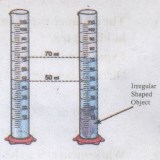
(i) Take a graduated measuring cylinder and a stone.
(ii) Fill with water to certain level and mark it.
(iii) Tie the stone with a piece of fine thread.
(iv) Immerse the stone completely in to the water.
(v) We can observe the water level and mark it.
(vi) The water level is increased.
(vii) Find the increased level of water.
(vii) It would be equal to the space taken by stone.
(viii) This will be the volume of irregular stone.
14.
The heat is escaping from the room because the room temperature is higherthan atmosphere. Heat energy flows from higher temperature to lower temperature.
15.
| PARTTCLES IN A SOLID |
PARTICLES IN A LIQUID | PARTICLES IN GASEOUS |
 |
 |
 |
| S.No. | SOLID STATE | LIQUID STATE | GASEOUS STATE |
| 1. | Definite shape and volume | No definite shape, liquids attain the shape of the vessel in which they are kept. | Gases have neither a definite shape nor a definite volume. |
| 2. | Incompressible | Compressible to a small extent. | Highly compressible |
| 3. | There is little space between the particles of solid. | These particles have a greater space between them. | The space between gas particles is the greatest. |
| 4. | These particles attract each other very strongly. | The force of attraction between liquid particles is lesser than solid particles. | Thd force of attraction is least between gaseous particles. |
| 5. | Particles of solid cannot move freely. | These particles move freely. | Gaseous particles are in a continuous, random motion. |

6th Standard Syllabus & Materials
6th Standard
TN 6th Social Science T3 - GEO - Understanding Disaster Sample Question Papers Study Material - QB365 Set A
NEW6th Standard
TN 6th Social Science T3 - GEO - Globe Sample Question Papers Study Material - QB365 Set A
NEW6th Standard
TN 6th Social Science T3 - GEO - Asia and Europe Sample Question Papers Study Material - QB365 Set A
NEW6th Standard
TN 6th Social Science T3 - HIS - South Indian Kingdoms Sample Question Papers Study Material - QB365 Set A



Tamilnadu Stateboard 6th Standard Subjects
Tamilnadu Stateboard Standards




