
 100% FREE ACCESS
6th Standard Syllabus & Materials
6th Standard
TN 6th Tamil பருவம் 1 - இயல் 1 - மொழி -தமிழ்த்தேன் - இன்பத்தமிழ் Sample Question Papers Study Material - QB365 Set A
NEW6th Standard
TN 6th English T1 - Supplementary - The Apple Tree and The Farmer Sample Question Papers Study Material - QB365 Set A
NEW6th Standard
TN 6th English T1 - Prose - When The Trees Walked Sample Question Papers Study Material - QB365 Set A
NEW6th Standard
TN 6th Social Science T3 - CIV - Road Safety Sample Question Papers Study Material - QB365 Set A
NEW6th Standard
TN 6th Social Science T3 - CIV - Local Bodies - Rural and Urban Sample Question Papers Study Material - QB365 Set A
NEW6th Standard
TN 6th Social Science T3 - CIV - Democracy Sample Question Papers Study Material - QB365 Set A

Published on: 18/06/2021
QB365 provides detailed and simple solution for every Book back Questions in class 6 Social Science Subject. It will helps to get more idea about question pattern in every book back questions with solution.
Download Tamil Nadu 6th Standard Social Science question papers, model tests, one-mark questions, important questions, and public exam papers in PDF format. Free study materials and answer keys for TN State Board students.
Questions + Answers key
Take MCQ Social Science Test
1.
| SI. No. | Picture | Primary/secondary/tertiary | What is this? | Region in which it is found |
| 1. | 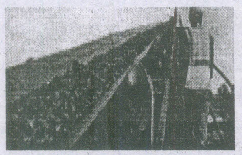 |
|||
| 2. | 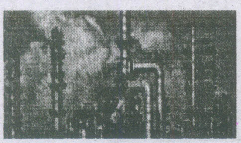 |
|||
| 3. | 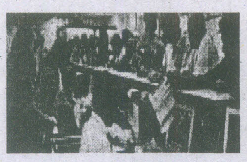 |
|||
| 4. | 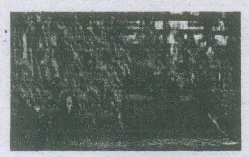 |
2.
Compare national and international resources.
3.
Differentiate universal and localized resources.
4.
Kalinga war became a turning point in Ashoka’s life. How?
5.
What did Ashoka do to spread Buddhism? (Write any three points).
6.
Jainism and Buddhism flourished in Sangam period. Give any two evidences for each.
7.
Narrate four noble truths of Buddha?
8.
Name the eight-fold path of Buddhism?
9.
Difference between Gurukula system of education and Modern system of education.
10.
Write briefly about the archaeological site at Kodumanal.
11.
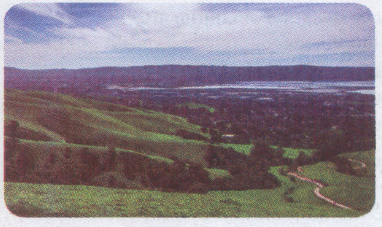
1. Name the landform.
2. What order of a landform is this?
3. Which activity of river is this landform formed by?
12.
Look at the picture and answer the questions given below.
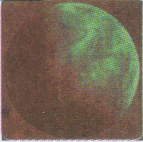
a) Identify the planet
b) What is the colour of the planet?
c) Why is it of this colour?
13.
Write any two types of discrimination?
14.
Kancheepuram was famous for education. Prove this statement.
15.
Write about the accounts given by scholars about Kanchi.
16.
“India is a land of diversity, yet we are all united”. Discuss.
17.
Explain the characteristics of the various spheres of the Earth.
18.
Distinguish between a Mountain and a Plateau
19.
What is Preamble?
20.
What are the fundamental rights?
21.
What is the Constitution of India?
22.
Where is the peacock sanctuary located in Tamil Nadu?
23.
Draw and define the Indian Rupee symbol.
24.
What are the natural national symbols?
25.
Who wrote the National pledge?
1.
| SI. No. | Picture | Primary/secondary/teritary | What is this? | Region in which it is found |
| 1. | |
Mining | Primary activity | Coal mining |
| 2. | |
Refining | Secondary activity |
Oil refining |
| 3. | |
Banking | Tertiary activity | Bank |
| 4. | |
Agriculture | Primary activity | 'Farming |
2.
| S.No | National resources | International resources |
| 1. | National resources are resources within the political boundaries and oceanic area of a country. | International resources are all oceanic resources found in the open ocean. Resources found in this region can be utilized only after an international agreement. |
| 2. | (e.g.) Tropical forest regions of India. | (e.g.) Ambergris |
3.
| S.No | Universal resources | Localised resources |
| 1. | When resources are present in specific regions they are called localized resources. |
Some resources are present everywhere such resources are called universal resources. |
| 2. | Eg: Minerals | Eg: Sunlight and air |
4.
(i) Ashoka fought the Kalinga war in 261 B.C.
(ii) He won the war and captured Kalinga.
(iii) The horror of war was described by the king himself in the Rock Edict XIII.
(iv) After the battle of Kalinga, Ashoka became a Buddhist.
(v) He under took tours to different parts of the country instructing people on policy of Dhamma.
(vi) Ashoka sent his son Mahindra and his daughter Sanghamitra to Srilanka to propagate Buddhism.
(vii) He took importance in the welfare of the people like hospitals, laying roads, irrigation, etc.
(viii) So, Ashoka was considered as a great emperor of ancient India.
5.
(i) Ashoka sent his son Mahinda and Sanghamitra to Srilanka to propagate Buddhism.
(ii) He also sent missionaries to West Asia, Egypt and Eastern Europe to spread the message of Dhamma.
(iii) The Dhamma - mahamattas were a new cadre of officials created by Ashoka.
(iv) Their job was to spread dhamma all over the empire.
(v) Ashoka held the third Buddhist Council at his capital Pataliputra.
6.
Influence of Jainism [Samanam] in Tamil Nadu:
(i) In ancient Tamil literature, Jainism is referred to as Samanam.
(ii) There is a Samanar Hill or Samanar Malai in Keelakuyilkudi village, 15 km away from Madurai. The images of Tirthankaras created by Jain monks are found in the hill. It is a protected monument of Archaelogical Survey of India.
(iii) In Arittapatti, a small village 25 km from Madurai, on one side of Kalinjamalai hill there are Jain caves called Pandvar Padukka Pandavar Padukkai is the bed of Jain saints. This is the influence of Buddhism in Tamil Nadu.
(iv) Manimegalai, one of the epics of the post Sangam age is a Buddhist literature.
(v) Kanchipuram was a famous Buddhist Centre from where Dinnaga, the famous Buddhist logic logician, and Dharmapala, a great scholar of Nalanda University hailed.
7.
Buddha's Four Noble Truths:
(i) Life is full of sorrow and misery.
(ii) Desire is the cause of misery
(iii) Sorrows and sufferings can be removed by giving up one's desire.
(iv) The desire can be overcome by following the right path.
8.
Eight Fold Path:
(i) Right View
(ii) Right Thought
(iii) Right speech
(iv) Right Action
(v) Right Livelihood
(vi) Right Effort
(vii) Right knowledge
(viii) Right Meditation
9.
| S.No | Gurukula system of education | Modern system of education |
| 1 | The shishyas resided with their guru and served them and simultaneously learnt and gained knowledge | The students go to school and they learn and gain knowledge from the teacher. |
| 2 | The students received education through oral tradition meaning, rote learning and were required to memorise everything. |
Students learn from books and they also knowledge gain/through active based learning method from this system. |
| 3 | The main subject of this system included four Vedas and Astrology etc |
Science, Maths, Computer and language are the main subject to study in this system. |
| 4 | The students were also trained llead a disciplined life. |
The students are trained for job oriented skill. |
| 5 | No women could have formal education. | Modern education provides all of them. |
10.
Kodumanal Erode District
(i) It is identified with the Kodumanarn of Pathitrupathu.
(ii) More than 300 pottery inscriptions in Tarnil-Brahmi have been discovered there.
(iii) Archaeologists have also discovered spindles, whorls (used for making thread from cotton) and pieces of cloth, along with tools, weapons, ornaments, beads, particularly carnelian.
(iv) A Menhir found at burial site is assigned tothe Megalithic period.
11.
1. Valley
2. Third Order
3. Erosion
12.
a) Uranus
b) Green
c) Due to the presence of methane
13.
Types of discrimination:
(a) Caste discrimination
(b) Gender discrimination
(c) Religious discrimination
(a) Gaste discrimination:
(i) Caste system is the most dominant reason for inequality and discrimination in India.
(ii) Many people in India have fought against caste oppression.
(iii) The most prominent among them was Dr.B.R.Ambedkar.
(iv) He fought actively for equality among the citizens of India.
(b) Gender discrimination:
(i) Gender discrimination refers to health, education, economic and political inequalities between men and women in India.
(ii) For example a girl is not allowed to go to college after finishing her schooling.
(iii) Most of the girls are not allowed to select a career of their choice, rather they are forced into marriage.
(iv) In some families, girls are not allowed to wear modern dresses while boys in such families often wear modern dresses.
(c) Religious discrimination:
(i) Religions discrimination is unequal treatment of an individual or group based on their beliefs.
(ii) Religious discrimination has been around for a long time.
(iii) There have been problems between people of different religions for thousands of years.
(iv) Some people are not allowed to enter in public places; especially the places of worship, because they belong to another religion.
(v) Some religious people often end up in conflict with each other because of their rituals and way of life.
14.
(i) A place of learning is called school.
(ii) Several schools were established in great numbers for the first time in Kancheepuram.
(iii) Jains studied in Jainapalli, and Buddhists studied in Viharas.
(iv) The greatness of Kanchi as an educational centre can be understand from the fact that the chinese traveller Hieun Tsang who studied at Nalanda University visited Kanchi 'Kadigai' to pursue his further studies.
(v) Poet kalidasa says, "Kanchi is the best of the towns".
(vi) Tamil poet saint Thirunavukarasar praises kanchi as "Kalviyil Karai illatha Kanchi".
15.
(i) Scholars like Dharmabalar, Jothibalar, Sumathi and Bodhi Dharmar were born in Kanchi.
Bodhi Dharmar:
(i) Bodhi Dharmar is considered the found father of zen Buddhism
(ii) He taught martial arts to the Chinese and also how to control the breath to strengthen the blood and immune system energize the brain.
(iii) He passed away around 534 C.E.
Dharmapala:
(i) He lived in patatitta vihara near Kanchi.
(ii) He wrote pali commentaries for some of the Tripitakas.
(iii) He taught at Nalanda University but died young at the age of 32.
16.
(i) Diversities are seen in landscapes, climate, natural vegetation and soil.
(ii) Diversities are seen in languages, races, religion, customs and caste.
(iii) And also diversities are seen in habits and heritage, food and dress, art and architecture.
(iv) Irrespective of differences in all the above, we all take pride in calling ourselves as Indians.
(v) The feeling of oneness and unity among the people of various religious, castes of a country is called unity in diversity.
17.
(i) The earth is the most suitable planet to support life.
(ii) It has thrge major components that we call as the realms of the Earth lithosphere, hydrosphere and atmosphere.
Lithosphere:
(i) The lithosphere is the land on which we live.
(ii) It is the solid outer layer of the earth consisting of rocks and soils.
Hydrosphere:
(i) The hydrosphere consists of water bodies such as oceans, seas, rivers, lakes, ice caps.on mountains and water vapour in the atmosphere.
Atmosphere:
(i) Atmosphere is the envelope of air that surrounds the earth.
(ii) Different types of gases make up the atmosphere.
(iii) The major gases are Nitrogen 78% and Oxygen 21%.
(iv) The other gases like Carbon dioxide, Hydrogen, Helium, Argon and Ozone are present in meager amounts.
Biosphere:
(i) The narrow belt of interaction among the lithosphere, the hydrosphere and the atmosphere, where life exists is known as biosphere.
(ii) Bio means life in Greek.
(iii) It consists of distinct zones.
(iv) Each zone has its own climate, plant and animal life.
(iv) These zones are known as ecosystems.
18.
| S.No | Mountains | Plateaus |
| 1. | A landform that rises over 600 metre above its surroundings and has steep slopes is called a mountain. | Plateaus are the elevated portions of the Earth that have flat surfaces bounded by steep slopes. The elevation of plateaus may be a few hundred metre or several thousand metre. |
| 2. | Example: Himalayas | Example: Chotanagpur Plateau |
19.
(i) The Preamble of our constitution stresses on the justice, liberty, equality and fraternity.
(ii) According to it, India is a Sovereign, Socialist, Secular democratic republic.
20.
(i) Right to Equality,
(ii) Right to freedom,
(iii) Right against exploitation,
(iv) Right to freedom of Religion,
(v) Cultural and Educational Rights and
(vi) Right to Constitutional Remedies
21.
(i) The Constitution is an authentic document containing the basic ideas, principles and laws of a country.
(ii) It also defines the rights and duties of the citizens.
(iii) The laws governing a country originate from the Constitution.
(iv) Every country is ruled on the basis of its Constitution.
22.
There is a Peacock Sanctuary at Viralimalai in the district of Pudukottai (Tamilnadu).
23.
(i) The symbol of rupees is Rs.
(ii) This was designed by D. Udhayakumar from Tamil Nadu in the year 2010.
24.
Tiger, Elephant, River dolphin of Ganges, Peacock, King Cobra, Banyan tree, mango, The Ganges and lotus are the natural national symbols.
25.
The pledge was written by Pydimarri Venkata Subba Rao in Telugu

6th Standard Syllabus & Materials
6th Standard
TN 6th Social Science T3 - GEO - Understanding Disaster Sample Question Papers Study Material - QB365 Set A
NEW6th Standard
TN 6th Social Science T3 - GEO - Globe Sample Question Papers Study Material - QB365 Set A
NEW6th Standard
TN 6th Social Science T3 - GEO - Asia and Europe Sample Question Papers Study Material - QB365 Set A
NEW6th Standard
TN 6th Social Science T3 - HIS - South Indian Kingdoms Sample Question Papers Study Material - QB365 Set A



Tamilnadu Stateboard 6th Standard Subjects
Tamilnadu Stateboard Standards



