
 100% FREE ACCESS
6th Standard Syllabus & Materials
6th Standard
TN 6th Tamil பருவம் 1 - இயல் 1 - மொழி -தமிழ்த்தேன் - இன்பத்தமிழ் Sample Question Papers Study Material - QB365 Set A
NEW6th Standard
TN 6th English T1 - Supplementary - The Apple Tree and The Farmer Sample Question Papers Study Material - QB365 Set A
NEW6th Standard
TN 6th English T1 - Prose - When The Trees Walked Sample Question Papers Study Material - QB365 Set A
NEW6th Standard
TN 6th Social Science T3 - CIV - Road Safety Sample Question Papers Study Material - QB365 Set A
NEW6th Standard
TN 6th Social Science T3 - CIV - Local Bodies - Rural and Urban Sample Question Papers Study Material - QB365 Set A
NEW6th Standard
TN 6th Social Science T3 - CIV - Democracy Sample Question Papers Study Material - QB365 Set A

Published on: 18/06/2021
QB365 provides detailed and simple solution for every Book back Questions in class 6 Social Science Subject. It will helps to get more idea about question pattern in every book back questions with solution.
Download Tamil Nadu 6th Standard Social Science question papers, model tests, one-mark questions, important questions, and public exam papers in PDF format. Free study materials and answer keys for TN State Board students.
Questions + Answers key
Take MCQ Social Science Test
1.
| SI. No. | Picture | Primary/secondary/tertiary | What is this? | Region in which it is found |
| 1. | 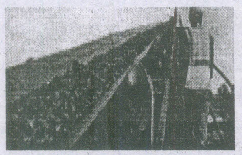 |
|||
| 2. | 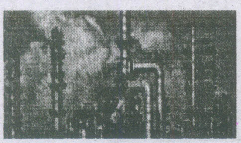 |
|||
| 3. |  |
|||
| 4. |  |
2.
Explain the primary, secondary and tertiary activities.
3.
What is resource planning and why is it necessary?
4.
How can resources be conserved?
5.
How are natural resources classified? Explain any three with examples.
1.
| SI. No. | Picture | Primary/secondary/teritary | What is this? | Region in which it is found |
| 1. | |
Mining | Primary activity | Coal mining |
| 2. | |
Refining | Secondary activity |
Oil refining |
| 3. | |
Banking | Tertiary activity | Bank |
| 4. | |
Agriculture | Primary activity | 'Farming |
2.
Primary Activities:
Collection of resources directly from nature is called primary activities.
(e.g) sun, air
Secondary activities:
The raw materials obtained from the primary activities are converted into finished products through machinery on a large scale. These activities are called secondary activities.
(e.g) Bridges, Houses, Roads
Tertiary Activities:
Tertiary activities are basically concerned with the distribution of primary and secondary products through a system of transport and trade.
(e.g) Banking, Trade and Communications.
3.
Resource planning is a technique or skill of proper utilization of resources. Resource planning is necessary because
(i) Resources are limited, their planning is quite necessary so that we can use them properly and at the same time we can save them for our future generation.
(ii) Resources are not only limited but also they are unevenly distributed over the different parts of the World.
(iii) It is essential for the production of resource to protect them from over exploitation.
4.
Sustainable development can take place when
(i) The reasons of depletion are identified.
(ii) Wastage and excess consumption is prevented.
(iii) Reusable resources are recycled.
(iv) Pollution is prevented.
(v) Environment is protected.
(vi) Natural vegetation and wild life are preserved.
(vii) Alternative resources are used.
5.
Classification of Natural Resources:
Natural resources can be classified into different groups depending on origin, development, renewability, distribution, ownership etc
ON THE BASIS OF ORIGIN:
On the basis of origin, resources can be classified into biotic and abiotic resources.
(i) All living resources are biotic resources, plants, animals and other micro organisms are biotic resources.
(ii) Abiotic resources are non-living things. Land, water, air and minerals are abiotic resources.
ON THE BASIS OF DEVELOPMENT:
Based on the level of development, resources can be divided into actual and potential resources.
(i) Actual resources are resources that are being used and the quantity available is ' known. (e.g.) Coal at Neyveli.
(ii) Potential resources are resources that are not being used in the present and its quantity and location are not known. The technology to extract such resources is also yet to be developed. (e.g.) Marine yeast found in the Bay of Bengal and Arabian Sea.
ON THE BASIS OF EXllAUSTFFILLITY:
On the basis of renewability resources can be classified as renewable resources and nonrenewable resources.
(i) Resources once consumed can be renewed with the passage of time are called renewable resources. (e.g.) Air, Water, Sunlight. Misuse of such resources can also limit its available quantity. So, they have to be used wisely.
(ii) Natural resources which are limited can be called non-renewable resources. They become exhausted after use and the time they take to replace does not match the life cycle. (e.g.) Coal, petroleum, natural gas and other minerals.

6th Standard Syllabus & Materials
6th Standard
TN 6th Social Science T3 - GEO - Understanding Disaster Sample Question Papers Study Material - QB365 Set A
NEW6th Standard
TN 6th Social Science T3 - GEO - Globe Sample Question Papers Study Material - QB365 Set A
NEW6th Standard
TN 6th Social Science T3 - GEO - Asia and Europe Sample Question Papers Study Material - QB365 Set A
NEW6th Standard
TN 6th Social Science T3 - HIS - South Indian Kingdoms Sample Question Papers Study Material - QB365 Set A



Tamilnadu Stateboard 6th Standard Subjects
Tamilnadu Stateboard Standards



