
 100% FREE ACCESS
6th Standard Syllabus & Materials
6th Standard
TN 6th Tamil பருவம் 1 - இயல் 1 - மொழி -தமிழ்த்தேன் - இன்பத்தமிழ் Sample Question Papers Study Material - QB365 Set A
NEW6th Standard
TN 6th English T1 - Supplementary - The Apple Tree and The Farmer Sample Question Papers Study Material - QB365 Set A
NEW6th Standard
TN 6th English T1 - Prose - When The Trees Walked Sample Question Papers Study Material - QB365 Set A
NEW6th Standard
TN 6th Social Science T3 - CIV - Road Safety Sample Question Papers Study Material - QB365 Set A
NEW6th Standard
TN 6th Social Science T3 - CIV - Local Bodies - Rural and Urban Sample Question Papers Study Material - QB365 Set A
NEW6th Standard
TN 6th Social Science T3 - CIV - Democracy Sample Question Papers Study Material - QB365 Set A

Published on: 16/03/2020
6th Standard Mathematics English Medium All Chapter Book Back and Creative Five Marks Questions 2020
Download Tamil Nadu 6th Standard Social Science question papers, model tests, one-mark questions, important questions, and public exam papers in PDF format. Free study materials and answer keys for TN State Board students.
Questions + Answers key
Take MCQ Social Science Test
1.
Prepare a list of your immediate duties?
2.
Why did Agriculture is called as primary oceupatlon?
3.
Write a note on Beating Reteat.
4.
Write a note on Tirupur Kumaran
5.
Explain in detail classification on the basis of ownership?
6.
Write about the resources?
7.
Make a tabular column in the following headings.
| Religion | Name of the founder with picture | Name of their Parents | Key Principle | Sects | Symbol |
8.
Explain: Indian Standard Time.
9.
How are the hemispheres divided on the basis of lines of latitude and longitude? Explain with diagrams.
10.
What is flood? Explain the do’s and don’ts during floods.
11.
Write a note on Elephanta island and Kailasanatha temple at Ellora.
12.
Examine Pallavas’ contributions to architecture.
13.
Name the works of Kalidasa.
14.
Give an account of Samudragupta’s military conquests.
15.
Find out the number of local bodies in your district and list them.
16.
Discuss; If there is a contribution to the improvement of your school by local body representatives
17.
The importance of Gandhara School of Art.
18.
What do you know of Gondopharid dynasty?
19.
Discuss about the merits and demerits of democracy.
20.
Find out your area's representative’s names and write down
a. MP b. MLA 3. Local body member
21.
The period of Kalabhra is not a dark age. Give reasons.
22.
Karikal Valavan is regarded as the greatest Chola king. Justify.
23.
How are the industries classified on the basis of raw materials?
24.
List out the important primary occupations of your district
25.
How are natural resources classified? Explain any three with examples.
26.
Compare national and international resources.
27.
Write any three causes for the rise of Magadha.
28.
What did Ashoka do to spread Buddhism? (Write any three points).
29.
Write any three differences between Hinayana and Mahayana sects of Buddhism?
30.
Difference between Gurukula system of education and Modern system of education.
31.
Write about the Vedic women in a pragraph.
32.
You know the importance of conservation of forests. Do you think conservation of mountains is also equally important?
33.
December 11 International Mountain Day.
34.
Explain the solution to the removal of inequality and discrimination in Indian society?
35.
Write any two types of discrimination?
36.
Write a paragraph about the city Poompuhar with special reference to trade.
37.
“India is a land of diversity, yet we are all united”. Discuss.
38.
Explain Linguistic diversity and cultural diversity.
39.
Give the important features of the Pacific Ocean.
40.
Explain the characteristics of the various spheres of the Earth.
41.
What are the effects of rotation and revolution?
42.
Distinguish between a Mountain and a Plateau
43.
| Poompuhar was located on which river bank? | Name the ancient city which had Tamil Sangam | Name a Sangam literary work |
| Which Greek historian gave accounts about the Pandya kingdom? | To which Tamil kingdom did the southern districts of Tamil Nadu belong to during the Sangam Age? | Name the Chinese traveler who stayed and studied in Nalanda University. |
| Thirunavukarasar mentioned Kanchi as | What is the name of evening market during the Sangam Age? | Name the temple built by Pallava king Rajasimha at Kanchi. |
| Which district is known as the district of lakes? | What is trade? | Name a port located on the shore of Bay of Bengal. |
44.
Name a few countries which enjoy the Mediterranean type of climate
45.
Name the important intermontane plateaus found in Asia
46.
Define: Sovereign.
47.
Where is the peacock sanctuary located in Tamil Nadu?
48.
Draw and define the Indian Rupee symbol.
1.
(i) To abide by the Constitution and.respect its ideals and institutions, the National Flag and the National Anthem.
(ii) To cherish and follow the noble ideals which inspired our national struggle for freedom.
(iii) To uphold and protect the sovereignty, unity and integrity of India.
(iv) To defend the country andTender national service when called upon to do so.
(v) To promote harmony and the spirit of common brotherhood amongst all the people of India transcending religious, linguistic and regional or sectioaal diversities; to renounce practices derogatory to the dignity of omen.
(vi) To value and preserve the rich heritage of our composite culture.
(vii) To protect and improve the natural environment including forests, lakes, rivers and wild life, and to have compassion for living creatures.
(viii) To develop the scientific temper, humanism and the spirit of inquiry and reform.
(ix) To safeguard public property and to abjure violence.
(x) Tstrivetowards excellence in all spheres of individual and collective activity so that the nation constantly rises to higher levels of endeavor and achievement
2.
(i) Agriculture is the primary occupation.
(ii) There won't be any kind of facilities like our cities.
(iii) At the same time, they get their basic needs fulfilled easily.
(iv) There are small shops.
(v) Vegetables are grown in'abundance.just like rice and pulses.
(vi) Though the sugar that isadded in our milk, coffee and tea is produced in sugar mills, the raw material sugarcane is cultivated in villages.
(vii) From chilies to mustard, all those provisions used for food are grown in villages.
3.
• On January 29, the thirddayoftheRepublic day, the celebrations are brought to an end with the"Beating.Reteat" ceremony.
• This is performed by the bands ofIndian Army, Navy and Airforce.
• The President of India is the chief guest of this day.
• Rashtrapati Bhavan will be illuminated at 6pm as apart of the celebration.
4.
• Tirupur Kumaran was born in Chennimalai of Erode district
• As a youth, he actively participated in the freedom struggle for India .
• In 1932, when Gandhiji was arrested, protests were held against the arrest all over the country.
• When protests were held for Gandhiji's release, Tirupur Kumaran took active part in it.
• He lost his life when the police attacked violently.
• He held on to the. tricolor flag even when he died.
• He was honoured with the title, 'Kodi Kaatha Kumaran' ..
• The Government of India has released a postal stamp on his centenary year to remember Tirupur Kumaran's sacrifice and dedication to the nation.
5.
On tile basis of ownership
Based on ownership resources can be classified into Individual resources, Communityowned
resources, National resources and International resources. '
(i) Individual resources are resources privately owned by individuals. (e.g.) Apartments.
(ii) Community-owned resources are resources which can be utilised by all the members of the community. (e.g.) Public parks.
(iii) National resources are resources within the political boundaries and oceanic area of a country. (e.g.) Tropical forest regions of India,
(iv) International resources are all oceanic resources found in the open ocean. Resources found in this region can be utilized only after an international agreement. (e.g.) Ambergris.
6.
Resource is anything that fulfills human needs.
(i) When anything is of some use it becomes valuable.
(ii) All resources have value.
(iii) The value can be either commercial or non-commercial. Commercial resources have great economic value. (e.g.) Petroleum.
(iv) The Non-commercial resources are very abundant in availability (e.g.) Air.
7.
| Religion | Nameof the founder with picture | Name of their Parents | Key Principle | Sects | Symbol |
| Buddhism | Siddhtha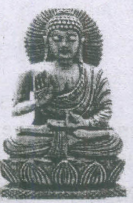 |
Suddhodana, Mayadevi |
Non-Violence |  |
|
| Jainism | Vardhamana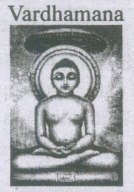 |
Siddharth, Trishala |
Karma 3. Place |
 |
8.
(i) The longitudinal extent of India is from 68°7' E to 97°25' E.
(ii) As many as twenty nine lines of longitude pass through India.
(iii) Having 29 standard time is not logical. Hence 821/2о Eline of longitude is observed as the Prime Meridian to calculate the Indian Standard Time (IST).
9.
Northern Hemisphere:
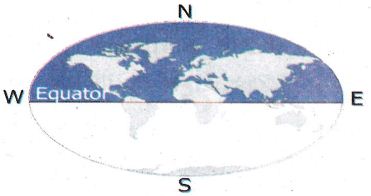
The area of the Earth found. between the Equator [0o] and the North pole [90o] is called the Northern Hemisphere.
Southern Hemisphere:
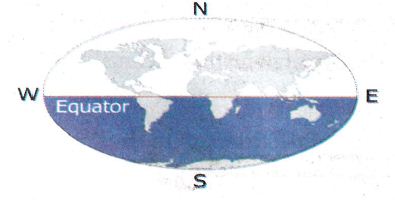
The area of the Earth from the equator to the South pole [90oS] is called the Southern Hemisphere.
Eastern Hemisphere:
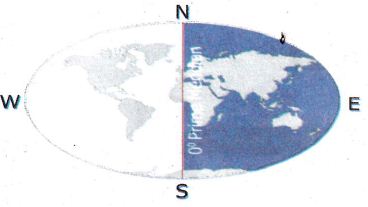
The part of the Earth between the 0o line of longitude and the 180o East line of longitude is known as the Eastern Hemisphere.
Western Hemisphere:
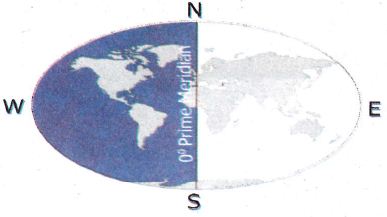
The part of the Earth from 0o line of longitude to 180o West line of longitude is called as Western Hemisphere.
10.
Flood:
An overflow of a large amount of water, beyond its normal limits, especially on the rain fed areas is called a flood.
Do's during flood:
(i) Cut off gas connection and electricity.
(ii) Leave immediately through the prescribed.
(iii) Drink hot water.
Don'ts:
(i) Try to connect electricity once it is cut.
(ii) Operate vehicles.
(iii) Swim against floods.
(iv) Avoid going on excursions.
(v) Neglect flood warning messages.
11.
Elephanta Island:
(i) Originally known as Sripuri and called Gharapuri by the local people, Elephanta is an island near Mumbai.
(ii) The Portuguese named it as Elephanta, after seeing the huge image of an elephant.
(iii) The Trimurthi (three-faced) Siva icon is an illustrative of the sculptural beauty portrayed in the Cave Temple of Elephanta.
(iv) There are impressive images of dwarapalakas (entrance guards) at the entrance of the Temple.
Kailasanatha Temple - Ellora (near Aurangabad, Maharashtra)
(i) Kailasanatha Temple was one of the 30 temples carved out of the hill at Ellora.
(ii) It was built during the reign of Krishna I.
(iii) The temple is known for its architectural grandeur and sculptural splendour.
(iv) The temple covers an area of over 60,000 sq. feet and vimanam (temple tower) rises to a height of 90 feet.
(v) This temple has resemblance to the shore temple at Mamallapuram.
(vi) The Kailasanatha temple portrays typical Dravidian features.
12.
Pallava's Contribution to Architecture:
Pallava Period is known for architectural splendour. Pallava architecture can be classified as
(i) Rock Cut temples - Mahendravarman style
(ii) Monolithic Rathas and Sculptural Mandapas - Mamallan style
(iii) Structural temples - Rajasimhan style and Nandivarman sryle
Mahendra Style:
(i) The best example of Mahendra Varma style monuments are cave temples at Mandagapattu, Mahendravadi, Mamandur, Dalavanur, Tiruchirapalli, Vallam, Tirukazhukkundram and
Siyamangalam.
Mamalla style:
(i) The five rathas popularly called Panchapandavar rathas, signify five different style of temple architecture.
(ii) Each ratha has been carved out of a single rock.
(iii) So they are called monolithic.
(iv) The popular mandapams they built are mahishasuramardhini mandapam, Thirumoorthi mandapam and Varaha mandapam.
Rajasimha style:
(i) Narasimhavarma II, also known as Rajasimha constructed structural temples using stone blocks.
(ii) The best example for the structural temple is Kailasanatha temple at Kanchipuram.
(iii) This temple was built by using sand stones.
Nandivarma style:
(i) The last stage of the Pallava architecture is also represented by structural temples built by the later Pallavas.
(ii) The best example is Vaikunda Perumal temple at Kanchipuram.
13.
1. Sakuntala
2. Malavikagnimitra
3. Vikramaoorvashiyam
4. Megaduta
5. Rahuvamsa
6. Kumarasambava
7. Ritusamhara
14.
(i) When Samaudragupta become emperor, he carried on a Vigorous Compaign all over the Country.
(ii) In the Southern Pallava Kingdom, the king who was defeated by Samudragupta was Vishnugopa.
(iii) He conquered nine Kingdom's in northern India.
(iv) He reduced 12 rulers of the southern India forced them to pay tribute.
(v) He also received homage from the rulers of East Bengal, Assam, Nepal, the eastern part of Punjab and Various tribes of Rajasthan.
15.
| Name of the District | Village Panchayat | Panchyat Union | District Panchayat | Town Panchayat | Municipality | Corporation |
| Kanchipuram | 648 | 13 | 0 | 24 | 10 | 0 |
16.
17.
(i) The Gandhara School of Art flourished during his time.
(ii) The most favourite subject of the Gandhara artists was the carving of sculptures of Buddha.
(iii) Both Sakas and Kushanas were patrons of Gandhara School.
(iv) The art of the Gandhara School was primarily Mahayana.
(v) The Mahayana Buddhist learnt the art of the carving out caves from the Greeks and become skilled in rock cut architecture.
18.
Rulers of Indo - parthians (Pahlavas):
1. Indo-Parthian kingdom or Gondopharid dynasty was founded by Gondophemes.
2. The domain of Indo-Parthians comprised Kabul and Gandhara. The name of Gondophemes is associated with the Christian apostle St.Thomas.
3. According to Christian tradition, St.Thomas visited the court of Gondophemes and converted him to Christianity.
19.
Merits of democracy
(i) In democracy the final decision rest in hand of the ruler elected by people.
(ii) There, is free and fair election held in democracy.
(iii) Democracy enhances dignity of citizen.
(iv) It allows us to correct our mistakes.
(v) It is the form of govenment in which rulers are elected by people.
Demerits:
(i) Leaders keeps on changing this leads to instability
(ii) Democracy is all about political competition and power play there is no scope for morality
(iii) So many people have to be consulted in a democracy that it leads to delays
(iv) Democracy leads to corruption for it is based on electoral competition
(v) Ordinary people don't know what is good for them, they should not decide anything.
20.
21.
(i) Following the sangam Period, the kalabhra had occupied the Tamil country for about two and half centuries.
(ii) We have very little information about kalabhras. They left neither artefacts nor monuments. But there is evidence of their rule in literary texts.
(iii) The literary sources for this period includes Tamil Navalar charithai, yapernkalam and Peria Puranam.
(iv) Seevaka chinthamani and kundalakesi were also written during this period.
(v) In Tamilzhagam, Jainism and Buddhism became prominent during this period.
(vi) Introduction of sanskrit and Prakrit languages had resulted in the development of a new script called vattezhuththu.
(vii) Many works under Pathinenkeezhkanakku were composed.
(viii) Trade and commerce continued to flourish during this period. So the Kalabhra period is not a dark age as it is portrayed.
22.
(i) Karikalvalavan or Karikalan was the most famous of the chola kings.
(ii) He defeated the combined army of the cheras, Pandyas and the eleven velir chieftains who supported them at Venni, a small village in the Thanjavur region.
(iii) He converted forests into cultivable lands. He built kallanai across the river Kaveri to develop agriculture.
(iv) Their port puhar attracted merchants from various regions of the Indian Ocean.
(v) The Pattinapaalai, a poetic work in the Pathinenkeezhkanakku, gives elaborate information of the trading activity during the rule of karikalan.
23.
On the basis of raw materials, industries are classified as
(i) Agro based industries - Cotton textiles, Sugar mills and Food processing.
(ii) Forest based industries - Paper mills, Furniture making, Building Materials.
(iii) Mineral based industries - Cement industry, Iron industry, and Aluminum Industries.
(iv) Marine based industries - Sea food processing.
24.
Primary activities:
(i) Agriculture
(ii) Cattle rearing
(iii) Fishing
(iv) Mining
(v) Collection of fruits, nuts, honey, rubber, resin and medicinal herbs, lumbering.
25.
Classification of Natural Resources:
Natural resources can be classified into different groups depending on origin, development, renewability, distribution, ownership etc
ON THE BASIS OF ORIGIN:
On the basis of origin, resources can be classified into biotic and abiotic resources.
(i) All living resources are biotic resources, plants, animals and other micro organisms are biotic resources.
(ii) Abiotic resources are non-living things. Land, water, air and minerals are abiotic resources.
ON THE BASIS OF DEVELOPMENT:
Based on the level of development, resources can be divided into actual and potential resources.
(i) Actual resources are resources that are being used and the quantity available is ' known. (e.g.) Coal at Neyveli.
(ii) Potential resources are resources that are not being used in the present and its quantity and location are not known. The technology to extract such resources is also yet to be developed. (e.g.) Marine yeast found in the Bay of Bengal and Arabian Sea.
ON THE BASIS OF EXllAUSTFFILLITY:
On the basis of renewability resources can be classified as renewable resources and nonrenewable resources.
(i) Resources once consumed can be renewed with the passage of time are called renewable resources. (e.g.) Air, Water, Sunlight. Misuse of such resources can also limit its available quantity. So, they have to be used wisely.
(ii) Natural resources which are limited can be called non-renewable resources. They become exhausted after use and the time they take to replace does not match the life cycle. (e.g.) Coal, petroleum, natural gas and other minerals.
26.
| S.No | National resources | International resources |
| 1. | National resources are resources within the political boundaries and oceanic area of a country. | International resources are all oceanic resources found in the open ocean. Resources found in this region can be utilized only after an international agreement. |
| 2. | (e.g.) Tropical forest regions of India. | (e.g.) Ambergris |
27.
The Causes for the Rise of Magadha
(i) Magadha was located onthe lower part of the Gangetic plain. The plain was fertile which ensured the rich agricultural yield. This provided regular and substantial income to the state.
(ii) The thick forests supplied timber for construction of buildings and elephants for army.
(iii) Abundance of natural resources especially iron enabled them to equip themselves with weapons made of iron.
(iv) Growing trade and commerce facilitated movement of people as well as settlement of people in centres of arts and crafts.
(v) The outcome was urbanization and emergence of Magadha as an empire.
28.
(i) Ashoka sent his son Mahinda and Sanghamitra to Srilanka to propagate Buddhism.
(ii) He also sent missionaries to West Asia, Egypt and Eastern Europe to spread the message of Dhamma.
(iii) The Dhamma - mahamattas were a new cadre of officials created by Ashoka.
(iv) Their job was to spread dhamma all over the empire.
(v) Ashoka held the third Buddhist Council at his capital Pataliputra.
29.
| S.No | HINAYANA | MAHAYANA |
| 1. | Did not worship idols or images of Buddha. | Worshiped images of Buddha. |
| 2. | Practiced austerity | Observed elaborate rituals. |
| 3. | Believed that salvation of the individual as its goal. | Believed that salvation of all beings as its |
| 4. | Used Prakrit language. | Used Sanskrit language. |
| 5. | Confined to India. | Spread to Central Asia, Ceylon, Burma, Nepal, Tibet China, Japan, where middle path was accepted. |
30.
| S.No | Gurukula system of education | Modern system of education |
| 1 | The shishyas resided with their guru and served them and simultaneously learnt and gained knowledge | The students go to school and they learn and gain knowledge from the teacher. |
| 2 | The students received education through oral tradition meaning, rote learning and were required to memorise everything. |
Students learn from books and they also knowledge gain/through active based learning method from this system. |
| 3 | The main subject of this system included four Vedas and Astrology etc |
Science, Maths, Computer and language are the main subject to study in this system. |
| 4 | The students were also trained llead a disciplined life. |
The students are trained for job oriented skill. |
| 5 | No women could have formal education. | Modern education provides all of them. |
31.
Status of women in Rig Vedic Period:
(i) In Rig Vedic society, women relatively enjoyed some freedom.
(ii) The wife was respected as the mistress of the household.
(iii) She could perform rituals in her house.
(iv) Child marriage and sati were unknown.
(v) There was no bar on the remarriage of widows.
(vi) Nevertheless, the women were denied right.to inherit property from their parents.
(vii) They played no role in public affairs.
Later Vedic period:
(i) In the later Vedic period the role of women in society, as well as their status, even within the family, declined.
(ii) Women could no longer perform rituals in the family.
(iii) The rules of marriage became much more rigid.
(iv) Polygamy became common.
(v) Widow remarriage was not encouraged.
(vi) Education was denied to women.
(vii) lntercaste marriages were spurned.
32.
(i) Mountains make up more than a quarter of the planet's land mass. These surfaces provide resources for nearly 700 million people through out the world.
(ii) Mountains provide energy resources, food and water to people all around the world.
(iii) But climate change could cause mountains to shrink.
(iv) Deforestation has also been a threat while natural disasters often damage many mountains.
(v) Mountains are among the most beautiful land masses in the world. So like conservation of forests, conservation of mountains also equally important.
33.
Prepare slogans, posters and placards to celebrate International Mountain Day.
(i) "Mountains are among the most beautiful land masses in the world."
(ii) "Mountains are beautiful as they rise up above the clouds and show just how grand the world can be."
(iii) "Great things are done when men and mountains meet."
(iv) "How glorious a greeting the Sun gives the mountains."
(v) "Mountains are earth's undecaying monuments."
(vi) "The mountains, forests and seas render men savage, they develop fierce, but yet do not destroy the human. "
(vii) "Men stumble over pebbles, never over mountains."
(viii) "Each fresh peak ascended teaches something."
(ix) "Mountains are the beginning and end of all natural scenery."
(x) "He who climbs upon the highest mountains laughs at all tragedies, real or imaginary.
34.
The remedial measures for abolishing inequality and discrimination in Indian society are as follows.
(i) Wider access to quality based services like healthcare and education for all.
(ii) Be aware of current gender bias.
(iii) Make women more visible in public life and institution to eradicate gender disparity.
(iv) Be open to learning about other religions.
(v) Promoting community dining in the classroom may help the students to sit together without any bias of caste, religion or gender.
(vi) Socialise with people of all types outside home.
(vii) Effective implementation of laws.
35.
Types of discrimination:
(a) Caste discrimination
(b) Gender discrimination
(c) Religious discrimination
(a) Gaste discrimination:
(i) Caste system is the most dominant reason for inequality and discrimination in India.
(ii) Many people in India have fought against caste oppression.
(iii) The most prominent among them was Dr.B.R.Ambedkar.
(iv) He fought actively for equality among the citizens of India.
(b) Gender discrimination:
(i) Gender discrimination refers to health, education, economic and political inequalities between men and women in India.
(ii) For example a girl is not allowed to go to college after finishing her schooling.
(iii) Most of the girls are not allowed to select a career of their choice, rather they are forced into marriage.
(iv) In some families, girls are not allowed to wear modern dresses while boys in such families often wear modern dresses.
(c) Religious discrimination:
(i) Religions discrimination is unequal treatment of an individual or group based on their beliefs.
(ii) Religious discrimination has been around for a long time.
(iii) There have been problems between people of different religions for thousands of years.
(iv) Some people are not allowed to enter in public places; especially the places of worship, because they belong to another religion.
(v) Some religious people often end up in conflict with each other because of their rituals and way of life.
36.
(i) One of the popular sangam Literature, Pattinappaalai and Tamil epics, Silappathikaram and Manimegalai have references to the brisk sea-borne trade that took place in the port city, Puhar.
(ii) Numerous merchants from foreign countries such as Greece and Rome landed Poompuhar. Horses were imported by sea.
(iii) Pepper was procured through the land route.
(iv) Gold that came from Vadamalai.
(v) Sandal from western Ghats.
(vi) Pearls from southern sea
(vii) Corals from eastern sea.
(viii) Food items from Eelam were imported.
37.
(i) Diversities are seen in landscapes, climate, natural vegetation and soil.
(ii) Diversities are seen in languages, races, religion, customs and caste.
(iii) And also diversities are seen in habits and heritage, food and dress, art and architecture.
(iv) Irrespective of differences in all the above, we all take pride in calling ourselves as Indians.
(v) The feeling of oneness and unity among the people of various religious, castes of a country is called unity in diversity.
38.
(i) According to census of India 2001, India has 122 major languages and 1599 other languages.
(ii) Four major Indian language families are Indo-Aryan, Dravidian, Austroasiatic, and Sino Tibetian. Tamil is the oldest Dravidian language.
(iii) Historically, the Portuguese, the Dutch, the British, the Danish and the French came to India for trade and their occupation of India or some parts of it has left behind a certain impact upon the culture and language of the people.
(iv) Because the British ruled over the entire country for over three hundred years before independence in 1947, the English language gained prominence in India. In due course, English has emerged as an important language and a medium of instruction in schools and colleges.
(v) It is widely used in official communication and daily life.
Cultural Diversity :
(i) The term 'culture' refers to customs and practices of people, their language, their dress code, cuisine, religion, social habits, music, art, and architecture.
(ii) The culture of a group of people is reflected in their social behavior and interactions.
(iii) The group identity fostered by social patterns is unique to a group.
(iv) Art and architecture are an integral part of every community.
(v) It develops as a part of culture and tradition of a community.
(vi) Each of the 29 states and 7 Union territories of India has rich traditions and unique ways of artistic expression.
39.
(i) The important features of the pacific ocean:
(ii) The pacific ocean is the largest and deepest ocean on the earth.
(iii) It covers about one-third of the earth's total area and spreads for about 168.72 million sq.km
(iv) This oceans shape is roughly triangular with its apex in the north at the bering strait which connects the pacific ocean with the arctic ocean.
(v) The bering sea, the china sea and the Philippines sea, the sea of Japan and Tasman sea are some of the marginal seas of the pacific ocean.
(vi) Indonesia, philippines, japan, hawaii, newzealand are some of the islands located in this ocean.
(vii) The deepest point mariana trench is 10,994m and is located in the pacific ocean.
(viii) A chain of volcanoes is located around the pacific ocean called the pacific ring of fire.
40.
(i) The earth is the most suitable planet to support life.
(ii) It has thrge major components that we call as the realms of the Earth lithosphere, hydrosphere and atmosphere.
Lithosphere:
(i) The lithosphere is the land on which we live.
(ii) It is the solid outer layer of the earth consisting of rocks and soils.
Hydrosphere:
(i) The hydrosphere consists of water bodies such as oceans, seas, rivers, lakes, ice caps.on mountains and water vapour in the atmosphere.
Atmosphere:
(i) Atmosphere is the envelope of air that surrounds the earth.
(ii) Different types of gases make up the atmosphere.
(iii) The major gases are Nitrogen 78% and Oxygen 21%.
(iv) The other gases like Carbon dioxide, Hydrogen, Helium, Argon and Ozone are present in meager amounts.
Biosphere:
(i) The narrow belt of interaction among the lithosphere, the hydrosphere and the atmosphere, where life exists is known as biosphere.
(ii) Bio means life in Greek.
(iii) It consists of distinct zones.
(iv) Each zone has its own climate, plant and animal life.
(iv) These zones are known as ecosystems.
41.
Rotation:
(i) It is the spinning movement of the earth on its axis.
(ii) The rotation of the earth causes day and night.
(iii) As the earth is spherical in shape, only one half of it is illuminated by the sun at a time.
(iv) The other half remains dark.
(v) The illuminated portion of the earth experiences day, whereas the darkened part of the earth experiences night.
Revolution:
(i) It is the movement of the earth around the sun on its elliptical path.
(ii) The inclination of the earth on its axis and its revolution around the sun cause different seasons.
42.
| S.No | Mountains | Plateaus |
| 1. | A landform that rises over 600 metre above its surroundings and has steep slopes is called a mountain. | Plateaus are the elevated portions of the Earth that have flat surfaces bounded by steep slopes. The elevation of plateaus may be a few hundred metre or several thousand metre. |
| 2. | Example: Himalayas | Example: Chotanagpur Plateau |
43.
| Poompuhar was located on which river bank? Cauvery |
Name the ancient city which had Tamil Sangam Madurai |
Name a Sangam literary work Pattinappallai |
| Which Greek historian gave accounts about the Pandya kingdom? Megasthanese |
To which Tamil kingdom did the southern districts of Tamil Nadu belong to during the Sangam Age? Pandya Nadu |
Name the Chinese traveller who stayed and studied in Nalanda University. Hieun Tsang |
| Thirunavukarasar mentioned Kanchi as Kalviyil Kayaillatha Kanchi |
What is the name of evening market during the Sangam Age? Allangadi |
Name the temple built by Pallava king Rajasimha at Kanchi. Kailasanathar TempIe |
| Which district is known as the district of lakes? Kancheepuram |
What is trade? The action of buying and selling goods and services |
Name a port located on the shore of Bay of Bengal. Poompuhar Port |
44.
(i) Portugal
(ii) Spain
(iii) Italy
(iv) Greece
(v) Monaces
(vi) Vatican city
(vii) San Marino
(viii) Malta
45.
(i) The plateau of Anatolia (Pontine to Taurus)
(ii) The plateau of Iran (Elburz to Zagros mt)
(iii) The plateau of Tibet (Kunlun to Himalayas)
46.
(i) The Constitution has granted the people the right to rule.
(ii) The members of the parliament and the legislative assembly are elected by the people.
(iii) The right to decide is only in the hands of the representatives.
(iv) Sovereignty refers to the ultimate power of the country.
47.
There is a Peacock Sanctuary at Viralimalai in the district of Pudukottai (Tamilnadu).
48.
(i) The symbol of rupees is Rs.
(ii) This was designed by D. Udhayakumar from Tamil Nadu in the year 2010.

6th Standard Syllabus & Materials
6th Standard
TN 6th Social Science T3 - GEO - Understanding Disaster Sample Question Papers Study Material - QB365 Set A
NEW6th Standard
TN 6th Social Science T3 - GEO - Globe Sample Question Papers Study Material - QB365 Set A
NEW6th Standard
TN 6th Social Science T3 - GEO - Asia and Europe Sample Question Papers Study Material - QB365 Set A
NEW6th Standard
TN 6th Social Science T3 - HIS - South Indian Kingdoms Sample Question Papers Study Material - QB365 Set A



Tamilnadu Stateboard 6th Standard Subjects
Tamilnadu Stateboard Standards



