
 100% FREE ACCESS
6th Standard Syllabus & Materials
6th Standard
TN 6th Tamil பருவம் 1 - இயல் 1 - மொழி -தமிழ்த்தேன் - இன்பத்தமிழ் Sample Question Papers Study Material - QB365 Set A
NEW6th Standard
TN 6th English T1 - Supplementary - The Apple Tree and The Farmer Sample Question Papers Study Material - QB365 Set A
NEW6th Standard
TN 6th English T1 - Prose - When The Trees Walked Sample Question Papers Study Material - QB365 Set A
NEW6th Standard
TN 6th Social Science T3 - CIV - Road Safety Sample Question Papers Study Material - QB365 Set A
NEW6th Standard
TN 6th Social Science T3 - CIV - Local Bodies - Rural and Urban Sample Question Papers Study Material - QB365 Set A
NEW6th Standard
TN 6th Social Science T3 - CIV - Democracy Sample Question Papers Study Material - QB365 Set A

Published on: 04/02/2020
6th Standard Science Annual Exam Model Question Paper 2019 - 2020
Download Tamil Nadu 6th Standard Science question papers, model tests, one-mark questions, important questions, and public exam papers in PDF format. Free study materials and answer keys for TN State Board students.
Questions + Answers key
Take MCQ Science Test1.
Differentiate organic and inorganic fertilizers.
2.
What are the reasons for scarcity of water?
3.
Write short notes on – Timber yielding plants.
4.
Tabulate any five cell organelles and their function.
5.
Why is atmosphere essential for life on earth?
6.
Explain in detail above the applications of computer.
7.
Complete the map by filling the blanks
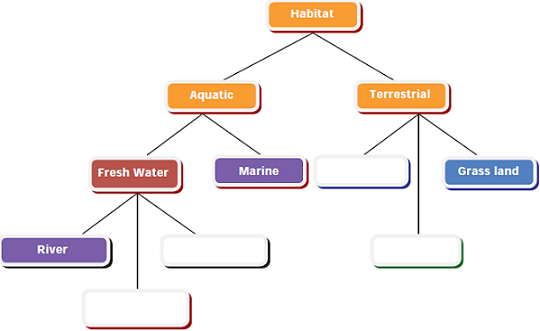
8.
Fill with examples:
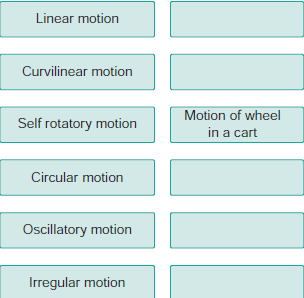
9.
_________is a Operating System.
Android
Chrome
Internet
Pendrive
10.
About 30% of the fresh water is found in?
glaciers
ground water
other sources of water
0.3%
11.
Breakdown of food into smaller molecules in our body is known as
Muscle contraction
Respiration
Digestion
Excretion
12.
Nitrogen is used in the food packaging industry because it ________________
provides colour to the food
provides oxygen to the food
adds proteins and minerals to the food
keeps the food fresh
13.
Formation of curd from milk is
a reversible change
a fast change
an irreversible change
an undesirable change
14.
Among the following which one is Bird Sanctuary located in Tamilnadu___________.
Vayanad
Guindy Park
Vedanthangal
All
15.
Volume of liquid is usually measured___________
litres
grams
nano
kilo
16.
The habitat of water hyacinth is
Aquatic
Terrestrial
Desert
Mountain
17.
Filtration method is effective in separating ___________ mixture
solid-solid
solid-liquid
liquid-liquid
liquid-gas
18.
Name the jute growing places in India.
19.
What is meant by food web?
20.
Write a note on water.
21.
Write about like and unlike poles.
22.
What are the two types of ecosystems?
23.
Why gypsum is used in cement production?
24.
Circle the odd one out. Give reason for your choice.
Switch, Bulb, Battery, Generator.
25.
Bring out any two differences between input and output devices.
26.
Name the five important sense organs.
27.
Give any three examples of eukaryotic cell?
28.
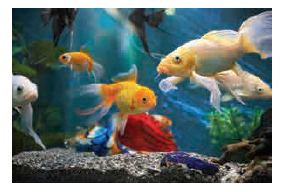
What will happen if we remove the fish from the aquarium and keep it (with green plants) in a dark place?
29.
What kind of a change is associated with decaying of a plants?
30.
Make a list of electrical equipments at home which we get heat from.
31.
Mention any two output devices
32.
Name the locomotory organ of Amoeba.
33.
Why do we separate mixtures?
34.
Classify the plants on the basis of their habitat.
35.
Write a short note on Data.
36.
Mention any two viral diseases.
37.
Pick out the odd one.
a. Calculator
b. Abacus
c. Flash card
d. Laptop
Calculator
Abacus
Flash card
Laptop
38.
1 Metre, 1 centimetre, 1 kilometre, and 1 millimetre.
1.
| Organic fertilizer | Inorganic fertilizer |
| Fertilizers containing only plant or animal-based materials or those synthesized by micro-organisms are called 'organic fertilizers. These fertilizers can be prepared easily. This type of fertilizers are economical. (e.g) Vermi compost, compost. |
The fertilizers prepared by using natural elements by making them undergo chemical changes in the factories are called inorganic fertilizers. (e.g) Urea, Ammonium sulphate and Super phosphate. |
2.
The main reasons for water scarcity
i) Population explosion
ii) Uneven distribution of rainfall
iii) Decline of ground water table
iv) Pollution of water
v) Careless use of water
3.
(i) Timber is used to build houses and in making furniture.
(ii) We use wood for these purposes due to their features like durability, stylish finishing and resistance to temperature changes.
(iii) Commercial timber is classified into hardwood and softwood.
(iv) Hardwood is used in construction work and in making furniture.
(v) Softwoods have a wide range of applications such as making plywood and paper making.
4.
| Cell Organelles | Main Functions |
|---|---|
| Cell wall | Surrounds and protects the cell. Make the cell stiff and strong. |
| Cell membrane | Holds and protects the cell. Controls the movement of materials in and out of the cell. |
| Cytoplasm | A watery gel - like material in which cell parts move. |
| Mitochondria | Produce and supply most of the energy for the cell. |
| Chloroplasts | Capture the energy from sunlight and use it to produce food for the cell by photosynthesis. |
5.
A huge envelope of air surrounded the earth is called Atmosphere.
(i) This envelope is thicker near the earth's surface.
(ii) As we go higher up, the density and the availabillty of air gradually decreases.
(iii) Movement of wind, Presence of water vapours for cloud formation are the vital roles of atmosphere.
(iv) Troposphere is the responsible layer for the weather we experience on earth.
(v) Stratosphere has the Ozone layer which protects all life on earth from the harmful UV rays of the sun.
6.
(i) Computers are used in various fields.
(ii) In textile shop it is used for billing.
(iii) Computers are used to control large and small machines.
(iv) Computers are most important educational tools for teachers and learners.
(v) In Railways it is useful to book tickets and for other purposes.
(vi) It is also used in banks, ATM's, Post offices and in many places.
(vii) We can save many data and convert it into information.
7.
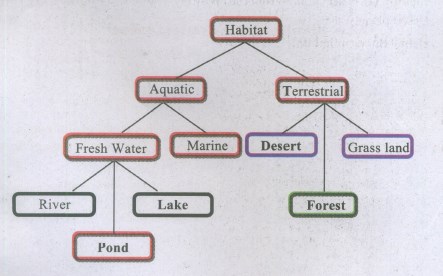
8.
Linear motion - A coconut falling from a tree
Curvilinear motion - A car driving around a curve
Self rotatory motion - Motion of the wheel in a cart
Circular motion - Athlete running around a track
Oscillatory motion - Swinging of a pendulum
Irregular motion - Movement of people in a bazaar
9.
(a)
Android
10.
(b)
ground water
11.
(c)
Digestion
12.
(d)
keeps the food fresh
13.
(c)
an irreversible change
14.
(c)
Vedanthangal
15.
(a)
litres
16.
(a)
Aquatic
17.
(b)
solid-liquid
18.
Jute crop is grown in seven states - West Bengal, Assam, Odisha, Bihar, Uttar Pradesh, Tripura and Meghalaya. West Bengal alone accounts for over '50% of raw jute production.
19.
Consumers have different sources of food in an ecosystem and do not rely on only one species for their food. If we put all the food chains within an ecosystem together, then we end up with many interconnected food chains. This is called a food web.
20.
Water is one of the basic substances present in the earth It plays a vital role in the evolution and survival of life. It is impossible to imagine life on the earth without water. Water helps to regulate the temperature of our planet. It also helps to maintain the temperature in organisms.
21.
i) Unlike poles (S-N, N-S) attract each other.
ii) Like Poles (N-N, S-S) repel each other.
22.
i) Natural ecosystem
ii) Artificial ecosystem are the two types of ecosystem.
23.
(i) Cement becomes hardened when it is mixed with water.
(ii) It is necessary to control the rate of hardening.
(iii) so that, Gypsum is added to cement at the final grinding process.
24.
Switch, Bulb and Battery are the parts of the electric circuit. Generator is the source of electricity.
25.
| S.No. | Input devices | Output device |
| 1. | The devices that enter the information into the computer. | The data that comes out from the computer after some people put some input in it. |
| 2. | An input device c'an send data to another device, but it cannot receive data from another device. Eg: Keyboard, Mouse |
An output device can receive data from another device, but it cannot send data to another device. Eg: Monitor, Printer |
26.
Eyes, Ears, Nose, Tongue and Skin are the sense organs.
27.
Plant cell,Animal cell and most of fungi.
28.
If we remove the fish from the aquarium and keep it in a dark place with green plants,
(i) they can't have sunlight and
(ii) have no CO2 from the water produced by fish as they breathe.
(iii) Simply say, there is no possibility for photosynthesis to make their food.
29.
Plants decaying is a chemical change.
30.
(i) The Water heater
(ii) Iron box
(iii) Electric kettle etc.
31.
Printers and Monitors are output devices.
32.
The locomotory organ of Amoeba is pseudopodia.
33.
We have to separate mixture,
(i) to remoe impurities
(ii) to separate useful components
(iii) to get a highty pure form substance
34.
Based on habitat, plant are classified as
i) aquatic plants
ii) terrestrial plants.
35.
(i) Data is the information that has to be processed.
(ii) They are in the form of numbers, alphabets and images.
36.
i) Common cold
ii) Influenza
37.
c. Flash card
38.
1 millimetre < 1 centimetre < 1 Metre < 1 kilometre.

6th Standard Syllabus & Materials
6th Standard
TN 6th Social Science T3 - GEO - Understanding Disaster Sample Question Papers Study Material - QB365 Set A
NEW6th Standard
TN 6th Social Science T3 - GEO - Globe Sample Question Papers Study Material - QB365 Set A
NEW6th Standard
TN 6th Social Science T3 - GEO - Asia and Europe Sample Question Papers Study Material - QB365 Set A
NEW6th Standard
TN 6th Social Science T3 - HIS - South Indian Kingdoms Sample Question Papers Study Material - QB365 Set A



Tamilnadu Stateboard 6th Standard Subjects
Tamilnadu Stateboard Standards




