
 100% FREE ACCESS
6th Standard Syllabus & Materials
6th Standard
TN 6th Tamil பருவம் 1 - இயல் 1 - மொழி -தமிழ்த்தேன் - இன்பத்தமிழ் Sample Question Papers Study Material - QB365 Set A
NEW6th Standard
TN 6th English T1 - Supplementary - The Apple Tree and The Farmer Sample Question Papers Study Material - QB365 Set A
NEW6th Standard
TN 6th English T1 - Prose - When The Trees Walked Sample Question Papers Study Material - QB365 Set A
NEW6th Standard
TN 6th Social Science T3 - CIV - Road Safety Sample Question Papers Study Material - QB365 Set A
NEW6th Standard
TN 6th Social Science T3 - CIV - Local Bodies - Rural and Urban Sample Question Papers Study Material - QB365 Set A
NEW6th Standard
TN 6th Social Science T3 - CIV - Democracy Sample Question Papers Study Material - QB365 Set A

Published on: 29/02/2020
6th Standard Science Important questions 2019-2020
Download Tamil Nadu 6th Standard Science question papers, model tests, one-mark questions, important questions, and public exam papers in PDF format. Free study materials and answer keys for TN State Board students.
Questions + Answers key
Take MCQ Science Test1.
Pen drive is ___________ device.
Output
Input
Storage
Connecting cable
2.
Which one of the following is an example for wireless connections
Wi-Fi
Electric wires
VGA
USB
3.
Main organ of respiration in human body is
Stomach
Spleen
Heart
Lungs
4.
Most organelles in an eukaryotic cell is found in the
Cell wall
cytoplasm
nucleus
Vacuole
5.
Which one of the following is not an unicellular organism?
Yeast
Amoeba
Spirogyra
Bacteria
6.
The ‘control centre’ of the eukaryotic cell is
Cell wall
Nucleus
Vacuoles
Chloroplast
7.
The constituent of air that supports combustion is _________________
Nitrogen
carbon-di-oxide
Oxygen
water vapour
8.
____________ is the percentage of nitrogen in air.
78%
21%
0.03%
1%
9.
Air pollution leading to Acid rain is a
reversible change
fast change
natural change
human made change
10.
Drying of wet clothes in air is an example of
Chemical change
Undesirable change
irreversible change
physical change
11.
When ice melts to form water, change occurs in its
position
colour
state
composition
12.
__________ is a good conductor
silver
wood
rubber
plastic
13.
Electricity is produced in
transformer
power station
electric wire
television
14.
The unit of heat is
newton
joule
volt
celsius
15.
80% of the world production of Moringa leaves is___________
China
Germany
India
Canada
16.
_________are required for growth as well as for the regulation of normal body function.
Fat
Protein
Carbohydrate
Minerals
17.
____________can live for many days without drinking water.
Dog
Elephant
Cow
Camel
18.
Lizards are walk with four legs and is known as
Bipedal
Tripedal
Monopedal
quadripedal
19.
A___________ is the fastest land animal
Horse
Lion
Cheetah
Tiger
20.
_________________are robots scaled down to microscopic size in order to put them with very small spaces to perform a function
car robots
home robots
game robots
nanobots
21.
Usain Bolt crossed 100 metre in____________seconds and made a world record
9.58
9.83
9.85
9.38
22.
____________has definite shape and volume.
Solid
Liquid
Gas
None
23.
All the matter made of __________
Particles
Atoms
Elements
Mixture
24.
The __________ forest in South America produces half of the world's oxygen supply.
Taiga
Congo rain
Amazon rain
Darin tree
25.
Air spaces in stems and petioles of ___________ plant are useful for floating in water.
lotus
water lily
water hyacinth
Agare
26.
World habitat day is observed on first Monday of________.
October
November
September
December
27.
The moon's gravitational pull is one_____________of the earth's pull.
seventh
sixth
Fifth
Fourth
28.
___________is used to measure the accurate time of the activity.
Clock
Watch
Stop clock
Measuring
29.
Who is the computer’s first programmer?
Lady Wellington
Augusta ado Lovelace
Mary Curie
Mary Comb
30.
When was the first computer introduced?
1980
1947
1946
1985
31.
Scurvy is caused due to the deficiency of______________.
Vitamin A
Vitamin B
Vitamin C
Vitamin D
32.
Which animal has the special organs of breathing called gills?
Earthworm
Fox
Fish
frog
33.
The important function of stomata is __________.
Conduction
Transpiration
Photosynthesis
Absorption
34.
Among the following_________is not a mixture.
Coffee with milk
lemon juice
water
ice cream embedded with nuts.
35.
Unit of speed is__________
m
s
kg
m/s
36.
Choose the correct one
km > mm > cm > m
km > mm > m > cm
km > m > cm > mm
km > cm > m > mm
37.
List out the functions of Endocrine system and Nervous system.
38.
Draw a neat labelled diagram of a prokaryotic cell.
39.
Give one example for each case that happens around you.
a. Slow and fast change
b. Reversible and irreversible change
c. Physical and chemical change
d. Natural and man-made change
e. Desirable and undesirable change
40.
Write short notes on conductors and insulators.
41.
Explain in detail above the applications of computer.
42.
Tabulate the vitamins and their corresponding deficiency diseases.
43.
Make a list of the functions of root and stem.
44.
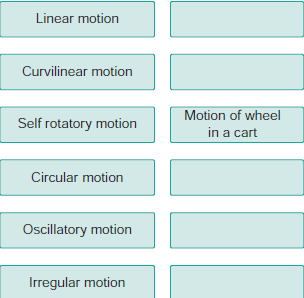
Fill with examples:
45.
What is motion? Classify different types of motion with examples.
46.
Explain two methods that you can use to measure the length of a curved line.
47.
A vehicle covers a distance of 400km in 5 hour. Calculate its speed.
48.
Can you guess why fire extinguishers throw a stream of carbon-di-oxide while putting - off fire?
49.
Suppose your normal body temperature were lower than what it is. How would the sensation of hot and cold change?
50.
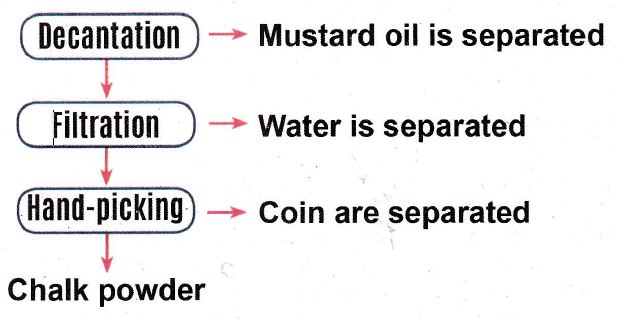
Using suitable apparatus from your laboratory separate the mixture of chalk powder, mustard oil, water and coins. Draw a flow chart to show the separation process
51.
Differentiate between the voluntary muscles and involuntary muscles.
52.
Distinguish between prokaryotic and eukaryotic cells
53.
Why do traffic assistants wear a mask on duty?
54.
Can deforestation be considered a desirable change? Explain.
55.
Silver is a good conductor but it is not preferred for making electric wires. Why?
56.
Distinguish between heat and temperature.
57.
Mention the features that help a bird to fly is the air?
58.
A rubber ball changes its shape on pressing. Can it be called a solid?
59.
List out the plants present in your school garden
60.
Circle the odd one out. Give reason for your choice.
Switch, Bulb, Battery, Generator.
61.
Write any two functions of digestive system.
62.
What are the three types of blood vessels?
63.
Give any three examples of eukaryotic cell?
64.
What are the organelles found only in plant cell?
65.
Who discovered the cell in 1665?
66.
What will happen if you breathe through mouth?
67.
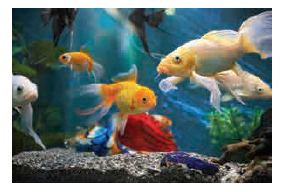
What will happen if we remove the fish from the aquarium and keep it (with green plants) in a dark place?
68.
What happens when cane sugar is strongly heated? Mention any two changes in it.
69.
Define a slow change.
70.
What kind of a change is associated with decaying of a plants?
71.
Can you produce electricity from lemon?
72.
What is temperature?
73.
Which structure helps the bird to change its direction while flying in air?
74.
Give the main difference between a pure substance and an impure substance.
75.
How can husk or fine dust particles be separated from rice before cooking?
76.
Define the term habitat.
77.
Mention few desert plants.
78.
Differentiate hardware and software.
79.
Write a short note on Data.
80.
What are the main features of a microorganism?
81.
Differentiate between carbohydrate and protein.
82.
1 Metre, 1 centimetre, 1 kilometre, and 1 millimetre.
1.
(c)
Storage
2.
(a)
Wi-Fi
3.
(d)
Lungs
4.
(b)
cytoplasm
5.
(c)
Spirogyra
6.
(b)
Nucleus
7.
(c)
Oxygen
8.
(a)
78%
9.
(d)
human made change
10.
(d)
physical change
11.
(c)
state
12.
(a)
silver
13.
(b)
power station
14.
(b)
joule
15.
(c)
India
16.
(d)
Minerals
17.
(d)
Camel
18.
(d)
quadripedal
19.
(c)
Cheetah
20.
(d)
nanobots
21.
(a)
9.58
22.
(a)
Solid
23.
(b)
Atoms
24.
(c)
Amazon rain
25.
(a)
lotus
26.
(a)
October
27.
(b)
sixth
28.
(c)
Stop clock
29.
(b)
Augusta ado Lovelace
30.
(c)
1946
31.
(c)
Vitamin C
32.
(c)
Fish
33.
(c)
Photosynthesis
34.
(c)
water
35.
(d)
m/s
36.
(c)
km > m > cm > mm
37.
Endocrine system:
(i) Endocrine glands are present in the body produce chemical substances called hormonds.
(ii) It regulates various fundions of the body and maintains the internal environment.
Nervous system:
(i) Nervous system is well developed by neurons or nerve cells.
(ii) Nervous system along with the endocrine system doing conduction and co-ordination in human body.
38.
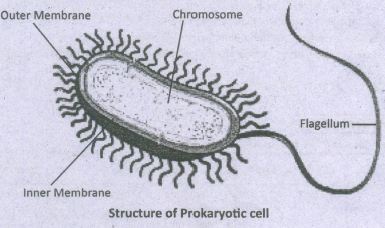
39.
(a) Slow and fast change
(i) Slowchange - Changeofseasons
(ii) Fast change - Bursting of fire crackers
(b) Reversible and irreversible change
(i) Reversible change - Stretching of rubber
(ii) Irreversible change - Digestion of food
(c) Physical and chemical change
(i) Physical change - Melting of Ice
(ii) Chemical change - Rusting of Iron
(d) Natural and man-made change
(i) Natural change - Rotation of the earth
(ii) Man-made change - Cooking
(e) Desirable and undesirable change
(i) Desirable change - Milk changing to curd
(ii) Undesirable change - Deforestation
40.
Conductors:
(i) The rate of flow of electric charges in a circuit is called electric current.
(ii) The materials which allow electric charges to pass through them are called conductors.
(iii) Examples: Copper, iron, aluminium, impure water, eafth etc.
Insulators (Non -Conductors) :
(i) The material which do not allow electric charges to pass through them are called insulators or non- conductors.
(ii) Examples: plastic, glass, wood, rubber, chinna clav, ebonite etc.
41.
(i) Computers are used in various fields.
(ii) In textile shop it is used for billing.
(iii) Computers are used to control large and small machines.
(iv) Computers are most important educational tools for teachers and learners.
(v) In Railways it is useful to book tickets and for other purposes.
(vi) It is also used in banks, ATM's, Post offices and in many places.
(vii) We can save many data and convert it into information.
42.
| S.no | Property | deficiency disease |
| 1 | vitamin A | Night blindness |
| 2 | vitamin B | Beri beri |
| 3 | vitamin C | Scurvy |
| 4 | vitamin D | Rickets |
| 5 | vitamin E | Nervous weakness, dimming of eyesight |
| 6 | vitamin K | Weakness of the bones, teeth etc. |
43.
FUNCTIONS OF THE ROOT:
i) The root fixes the plant to the soil.
ii) Absorbs water and minerals from the soil.
iii) Stores food in some plants like Carrot and beetroot
FUNCTIONS OF THE STEM:
i) The stem supports the branches, leaves, flowers and fruits.
ii) Transports Water and minerals from roots to upper aerial plant parts.
iii) Transports the prepared food from leaves to other parts through stem.
iv) Stores food as in the case of sugarcane
44.
Linear motion - A coconut falling from a tree
Curvilinear motion - A car driving around a curve
Self rotatory motion - Motion of the wheel in a cart
Circular motion - Athlete running around a track
Oscillatory motion - Swinging of a pendulum
Irregular motion - Movement of people in a bazaar
45.
When there is a change of position of an object with respect to time then it is called motion.
Types of motion:
a) Based on path:
i) Linear motion - a person walking on a straight path
ii) Curvilinear motion - throwing ball
iii) Circular motion - swirling stone tied to the rope
iv) Rotatory motion - a rotating top
v) Oscillatory motion - pendulum of clock
vi) Zig zag (or) Irregular motion - the motion of a bee
b) Based on duration:
i) period motion - movement of hour hand of a clock
ii) Non-periodic - motion flapping of a flag in wind
c) Based on speed:
9) Uniform motion - motion of a train at a constant speed
ii) Non-uniform motion - a vehicle moves in different speed
46.
Method 1:
(i) Place a string along the curved line, Make sure that the stringcovers every bit of the curved line.
(ii) Mark the points where the curved line begins and ends on the string.
(iii) Now, stretch the string along the length of a meter scale and measure the distance between the two markings of the string.
(iv) This will give us the length of a curved line.
Method 2:
(i) Draw a curved line AB on a piece of paper.
(ii) Separate the legs of the divider by 0.5 cm or 1 cm using a ruler.
(iii) Place it on the curved line starting from one end. Mark the position of the other end. Move it along the line again and again cutting the line into number of segments of equal lengths. The remaining parts of the line can be measured using a scale.
(iv) Count the number of segments.
(v) Therefore, the length of the line = (number of segments x length of each segment) + length of the left over part.
47.
Distance travelled (d) = 400 km
Time taken (t) = 5 hour
Average Speed (s) = \(\frac{d}{t}=\frac{400}{5}=80\)
Average Speed = 80 kmph (or) Km/hr.
48.
Fire extinguishers throw a stream of carbon-, di-oxide while putting - off fire. Carbon-di-oxide covers the fire and cut-off the supply of fresh air to the burning things and stop burning.
49.
We feel hot because the heat is transferred from atmosphere to your body. Heat energy flows from higher temperature to lower temperature.
50.
(i) Using beakers, the mustard oil is separated by the process of decantation, because oil being lighter than water, floats on water.
(ii) Next filtration is using a funnel and filter paper and thus water gets separated from chalk powder and coins.
(iii) By hand-picking method, the coins are separated frorn chalk powder.
51.
| Voluntary muscles | Involuntary muscles |
| Voluntary muscles of our body are attached to the bones. | Involuntary muscles are found in the walls of digestive tract, and other internal organs. |
| They can be controlled by our will. | They can't controlled by our will. |
52.
| SI.No. | Prokaryotic cell | Eukaryotic cell |
| 1. | It's diameter ranges from 1 to 2 micron | It's diameter ranges from 10 to 100 micron |
| 2. | Absence of membrane bound organelles | Presence of membrane bound organelles |
| 3. | Nucleus consisting of no nuclear membrane | True nucleus consisting of nuclear membrane |
| 4. | Absence of nucleoli | Presence of nucleoli |
53.
They are exposed to harsh weather conditions, dust, pollution, heat and cold. So, they can have an adverse effect on their health. Hence, they weak a mask on duty.
54.
No. Deforestation can be an undesirable change. That is, Deforestation is harmful to our environment and not desired by us.
55.
Silver is not used to make electric wires because it is expensive.
56.
| HEAT | TEMPERATURE |
| i) Heat is an energy | The measurement of warmness or coldness of a substance |
| ii) Heat not only depends on the temperature of the substance but also depends on how many molecules are there in the object | Temperature is related to how fast the atoms or molecules move or vibrate within the substance. |
| iii) Heat measures the total kinetic energy of molecules | Temperature measures the average kinetic energy of molecules |
| iv) SI unit of heat is Joule | SI unit of temperature is kelvin |
57.
i) Birds have streamlined body covered with feathers. This body shape provides minimum resistance to air.
ii) They have a pair of wings to fly in the air.
iii) They have hollow and light bones.
58.
(i) Yes, a rubber ball can be called a solid because it doesn't flow away like liquids or gases.
(ii) But the rigidity of the rubber ball is less than the external force. So it changes its shape.
59.
a) Neem tree
b) Mango tree
c) Croutons
d) Coconut tree
60.
Switch, Bulb and Battery are the parts of the electric circuit. Generator is the source of electricity.
61.
Digestion and absorption of food done by digestive system.
62.
Arteries, Veins and capillaries are the blood vessels.
63.
Plant cell,Animal cell and most of fungi.
64.
Cell wall and chloroplast found only in plant cell
65.
Robert hook discovered the cell in 1665.
66.
If you breathe through mouth,
(i) getting oxygen to our muscles faster
(ii) it will cause crooked teeth for children
(iii) it leads to gum disease in adults
(iv) it may cause stress to the heart and lungs.
67.
If we remove the fish from the aquarium and keep it in a dark place with green plants,
(i) they can't have sunlight and
(ii) have no CO2 from the water produced by fish as they breathe.
(iii) Simply say, there is no possibility for photosynthesis to make their food.
68.
On strong heating, cane sugar chars to almost pure carbon giving the smell of 'Burnt sugar'.
(i) Initial change - Physical change - melting
(ii) Final change - Chemical change - charring
69.
Changes which take place over a long period of time are known as Slow changes.
70.
Plants decaying is a chemical change.
71.
yes, I can produce electricity from lemon. Because lemon juice (Acetic acid) acts like a electrolyte.
72.
(i) The measurement of warmness or coldness of a substance is known as its Temperature.
(ii) SI unit of temperature is kelvin
73.
The tail of the bird helps to change the direction of the movements.
74.
| PURE SUBSTANCE | IMPURE SUBSTANCE |
| A pure substance is made up of only one kind of particulars. | An impure substance contains more than one kind of particulars. |
| The components are mixed chemically in a fixed ratio. | The components are mixed physically in any ratio. |
75.
Husk or fine dust particles cdnbe separated from rice by the method 'winnowing"
76.
The area where a particular organism actually lives is called its habitat.
77.
Cactus, Agave, Aloe, Bryophyllum
78.
| S.No | Hardware | Software |
| 1 | The parts that are available in the computer that helps the software to work is a hardware. | The commands or programs that are used in computer are called software |
| 2 | The two types of hardware are i) Input devices ii) Output devices |
The two types of software are (i) Operating Software (ii) Application Software |
79.
(i) Data is the information that has to be processed.
(ii) They are in the form of numbers, alphabets and images.
80.
(i) Micro organisms are wide spread in nature.
(ii) They are the smallest organisms on Earth.
(iii) Most of them cause diseases.
81.
| CARBOHYDRATES | PROTEINS |
|---|---|
| (i) Carbohydrates are energy giving component of the food. | (i) Proteins are body building foods. |
| (ii) Rice, wheat, potato, fruits whole grains, nuts etc., are some sources of carbohydrates. | (ii) Pulses, eggs, fish, milk soya bean etc are the sources of proteins. |
82.
1 millimetre < 1 centimetre < 1 Metre < 1 kilometre.

6th Standard Syllabus & Materials
6th Standard
TN 6th Social Science T3 - GEO - Understanding Disaster Sample Question Papers Study Material - QB365 Set A
NEW6th Standard
TN 6th Social Science T3 - GEO - Globe Sample Question Papers Study Material - QB365 Set A
NEW6th Standard
TN 6th Social Science T3 - GEO - Asia and Europe Sample Question Papers Study Material - QB365 Set A
NEW6th Standard
TN 6th Social Science T3 - HIS - South Indian Kingdoms Sample Question Papers Study Material - QB365 Set A



Tamilnadu Stateboard 6th Standard Subjects
Tamilnadu Stateboard Standards




