
 100% FREE ACCESS
6th Standard Syllabus & Materials
6th Standard
TN 6th Tamil பருவம் 1 - இயல் 1 - மொழி -தமிழ்த்தேன் - இன்பத்தமிழ் Sample Question Papers Study Material - QB365 Set A
NEW6th Standard
TN 6th English T1 - Supplementary - The Apple Tree and The Farmer Sample Question Papers Study Material - QB365 Set A
NEW6th Standard
TN 6th English T1 - Prose - When The Trees Walked Sample Question Papers Study Material - QB365 Set A
NEW6th Standard
TN 6th Social Science T3 - CIV - Road Safety Sample Question Papers Study Material - QB365 Set A
NEW6th Standard
TN 6th Social Science T3 - CIV - Local Bodies - Rural and Urban Sample Question Papers Study Material - QB365 Set A
NEW6th Standard
TN 6th Social Science T3 - CIV - Democracy Sample Question Papers Study Material - QB365 Set A

Published on: 29/02/2020
6th Standard Science Important questions All Chapter 2020
Download Tamil Nadu 6th Standard Science question papers, model tests, one-mark questions, important questions, and public exam papers in PDF format. Free study materials and answer keys for TN State Board students.
Questions + Answers key
Take MCQ Science Test1.
Which one of the following is an input device?
Speaker
Keyboard
Monitor
Printer
2.
Name the cable that connects CPU to the Monitor
Ethernet
Power Cord
HDMI
USB
3.
Breakdown of food into smaller molecules in our body is known as
Muscle contraction
Respiration
Digestion
Excretion
4.
Most organelles in an eukaryotic cell is found in the
Cell wall
cytoplasm
nucleus
Vacuole
5.
Which one of the following is not an unicellular organism?
Yeast
Amoeba
Spirogyra
Bacteria
6.
The ‘control centre’ of the eukaryotic cell is
Cell wall
Nucleus
Vacuoles
Chloroplast
7.
Nitrogen is used in the food packaging industry because it ________________
provides colour to the food
provides oxygen to the food
adds proteins and minerals to the food
keeps the food fresh
8.
Gas exchange takes place in plants using __________
Stomata
Chlorophyll
Leaves
Flowers
9.
Air pollution leading to Acid rain is a
reversible change
fast change
natural change
human made change
10.
Formation of curd from milk is
a reversible change
a fast change
an irreversible change
an undesirable change
11.
Drying of wet clothes in air is an example of
Chemical change
Undesirable change
irreversible change
physical change
12.
Electricity is produced in
transformer
power station
electric wire
television
13.
The device which converts chemical energy into electrical energy is
fan
solar cell
cell
television
14.
The unit of heat is
newton
joule
volt
celsius
15.
80% of the world production of Moringa leaves is___________
China
Germany
India
Canada
16.
Among the Vitamins which one is the water soluble Vitamin
Vitamin A
Vitamin B
Vitamin D
Vitamin E
17.
Camel passes___________amount of urine.
small
large
moderate
too large
18.
Lizards are walk with four legs and is known as
Bipedal
Tripedal
Monopedal
quadripedal
19.
A cheetah running with an average speed of_____________
112 kmIh
121 km/h
211 km/h
122 km/h
20.
Usain Bolt crossed 100 metre in____________seconds and made a world record
9.58
9.83
9.85
9.38
21.
People walking in a crowded street is example of_________motion
linear
circular
rotatory
zigzag
22.
__________is a smallest particle
Molecule
Element
Atom
Substance
23.
Very tiny insoluble solid separated from a liquid is__________
Winnowing
Churning
Sieving
Filtration
24.
The first land plants are____________
Neem tree
hibiscus'
banyan tree
mosses and liver worts
25.
Main axis of the shoot system is called____________.
stem
root
Leaf
buds
26.
___________ is a natural science concerned with study of life and living organisms.
Chemistry
Biology
Zoology
Physics
27.
Volume of solid is_________
m2
m
m3
none
28.
Five kilometre is equal to_____________
500 cm
500 m
5000 m
5000 cm
29.
Who is the computer’s first programmer?
Lady Wellington
Augusta ado Lovelace
Mary Curie
Mary Comb
30.
Who is the father of computer?
Martin Luther King
Graham Bell
Charlie Chaplin
Charles Babbage
31.
Bacteria are very small _________ microorganism.
Prokaryotic
Eukaryotic
Protozoa
Acellular
32.
The study of living beings or organisms is called
Psychology
Biology
Zoology
Botany
33.
The important function of stomata is __________.
Conduction
Transpiration
Photosynthesis
Absorption
34.
Lighter impurities like dust when mixed with rice or pulses can be removed by __________
filtration
sedimentation
decantation
winnowing
35.
Unit of speed is__________
m
s
kg
m/s
36.
Choose the correct one
km > mm > cm > m
km > mm > m > cm
km > m > cm > mm
km > cm > m > mm
37.
List out the functions of Endocrine system and Nervous system.
38.
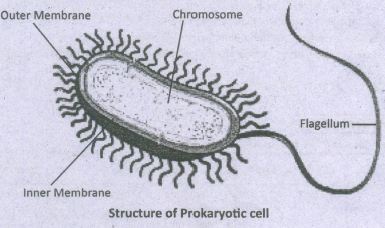
Draw a neat labelled diagram of a prokaryotic cell.
39.
Why is atmosphere essential for life on earth?
40.
Tabulate the different components of an electric circuit and their respective symbols.
41.
Explain in detail above the applications of computer.
42.
Tabulate the vitamins and their corresponding deficiency diseases.
43.
Make a list of the functions of root and stem.
44.
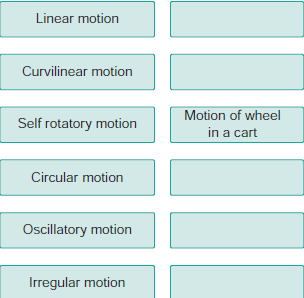
Fill with examples:
45.
What is motion? Classify different types of motion with examples.
46.
Fill up the following chart.
| Property | Definition | Basic unit | Instrument used for measuring |
| Length | |||
| Mass | |||
| Volume | |||
| Time |
47.
A vehicle covers a distance of 400km in 5 hour. Calculate its speed.
48.
When a candle is lit the following changes are observed.
a. Wax melts.
b. Candle keeps burning.
c. The size of the candle decreases.
d. The molten wax solidifies
e. Which of the changes can be reversed? Justify your answer.
49.
When a window is accidentally left open on a winter night, will you feel uncomfortable because the cold is getting in, or because the heat is escaping from the room?
50.
Distinguish the properties of solid, liquid and gas. Draw a suitable diagram.
51.
Differentiate between the voluntary muscles and involuntary muscles.
52.
Write about the contribution of Robert Hooke in cell biology.
53.
Why do traffic assistants wear a mask on duty?
54.
Can deforestation be considered a desirable change? Explain.
55.
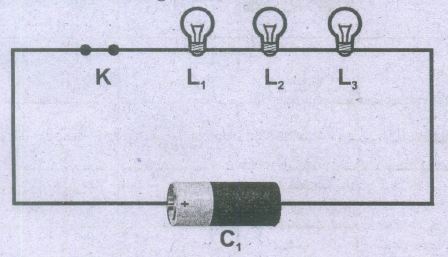
Draw the circuit diagram for series connection.
56.
Distinguish between heat and temperature.
57.
Differentiate between Unicellular and Multicellular organisms.
58.
What method will you employ to separate cheese (paneer) from milk? Explain.
59.
Distinguish between terrestrial and aquatic habitats.
60.
Write any two functions of digestive system.
61.
What are the three types of blood vessels?
62.
Give any three examples of eukaryotic cell?
63.
What are the organelles found only in plant cell?
64.
What type of cells do we have?
65.
What should be done if the clothes of a person catch fire accidentally? Why?
66.
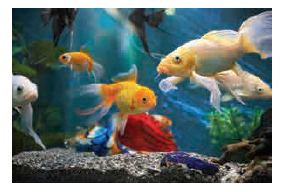
What will happen if we remove the fish from the aquarium and keep it (with green plants) in a dark place?
67.
What happens when cane sugar is strongly heated? Mention any two changes in it.
68.
Define a slow change.
69.
What kind of a change is associated with decaying of a plants?
70.
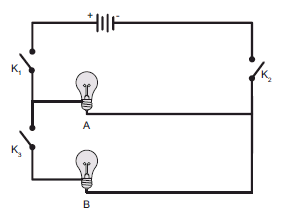
In the given circuit diagram, which of the given switch(s) should be closed. So that only the bulb A glows.
71.
Make a list of electrical equipments at home which we get heat from.
72.
Name the locomotory organ of Amoeba.
73.
Give an example for mixture and justify your answer with reason.
74.
Define the term matter.
75.
Relate the terms leaves and photosynthesis.
76.
Mention few desert plants.
77.
Differentiate hardware and software.
78.
Write a short note on Data.
79.
Mention any two viral diseases.
80.
Write two examples for each of the following.
a) Food items rich in fat.
b) Vitamin deficiency diseases.
81.
1 Metre, 1 centimetre, 1 kilometre, and 1 millimetre.
82.
Assertion (A): It is very easy for our body to receive electric shock.
Reason (R): Human body is a good conductor of electricity.
a. Both A and R are correct and R is the correct explanation for A.
b. A is correct, but R is not the correct explanation for A.
c. A is wrong but R is correct.
d. Both A and R are correct and R is not the correct explanation for A.
1.
(b)
Keyboard
2.
(c)
HDMI
3.
(c)
Digestion
4.
(b)
cytoplasm
5.
(c)
Spirogyra
6.
(b)
Nucleus
7.
(d)
keeps the food fresh
8.
(a)
Stomata
9.
(d)
human made change
10.
(c)
an irreversible change
11.
(d)
physical change
12.
(b)
power station
13.
(c)
cell
14.
(b)
joule
15.
(c)
India
16.
(b)
Vitamin B
17.
(a)
small
18.
(d)
quadripedal
19.
(a)
112 kmIh
20.
(a)
9.58
21.
(d)
zigzag
22.
(c)
Atom
23.
(b)
Churning
24.
(d)
mosses and liver worts
25.
(a)
stem
26.
(b)
Biology
27.
(c)
m3
28.
(c)
5000 m
29.
(b)
Augusta ado Lovelace
30.
(d)
Charles Babbage
31.
(c)
Protozoa
32.
(b)
Biology
33.
(c)
Photosynthesis
34.
(d)
winnowing
35.
(d)
m/s
36.
(c)
km > m > cm > mm
37.
Endocrine system:
(i) Endocrine glands are present in the body produce chemical substances called hormonds.
(ii) It regulates various fundions of the body and maintains the internal environment.
Nervous system:
(i) Nervous system is well developed by neurons or nerve cells.
(ii) Nervous system along with the endocrine system doing conduction and co-ordination in human body.
38.
39.
A huge envelope of air surrounded the earth is called Atmosphere.
(i) This envelope is thicker near the earth's surface.
(ii) As we go higher up, the density and the availabillty of air gradually decreases.
(iii) Movement of wind, Presence of water vapours for cloud formation are the vital roles of atmosphere.
(iv) Troposphere is the responsible layer for the weather we experience on earth.
(v) Stratosphere has the Ozone layer which protects all life on earth from the harmful UV rays of the sun.
40.
| SI. No. | Electric component | Figure | Symbol | Remarks |
| 1. | Electric cell | .JPG) |
.JPG) |
Longer terminal refers positive and shorter terminal refers negative. |
| 2. | Battery | .JPG) |
.JPG) |
Two or more cells connected in series |
| 3. | Switch-open | .JPG) |
.JPG) |
Switch is in off position |
| 4. | Switch-closed | .JPG) |
.JPG) |
Switch is in on position |
| 5. | Electric bulb | .JPG) |
.JPG) |
The bulb does not glow |
.JPG) |
.JPG) |
The bulb glows | ||
| 6. | Connecting wires | .JPG) |
____________ | Used to connect devices. |
41.
(i) Computers are used in various fields.
(ii) In textile shop it is used for billing.
(iii) Computers are used to control large and small machines.
(iv) Computers are most important educational tools for teachers and learners.
(v) In Railways it is useful to book tickets and for other purposes.
(vi) It is also used in banks, ATM's, Post offices and in many places.
(vii) We can save many data and convert it into information.
42.
| S.no | Property | deficiency disease |
| 1 | vitamin A | Night blindness |
| 2 | vitamin B | Beri beri |
| 3 | vitamin C | Scurvy |
| 4 | vitamin D | Rickets |
| 5 | vitamin E | Nervous weakness, dimming of eyesight |
| 6 | vitamin K | Weakness of the bones, teeth etc. |
43.
FUNCTIONS OF THE ROOT:
i) The root fixes the plant to the soil.
ii) Absorbs water and minerals from the soil.
iii) Stores food in some plants like Carrot and beetroot
FUNCTIONS OF THE STEM:
i) The stem supports the branches, leaves, flowers and fruits.
ii) Transports Water and minerals from roots to upper aerial plant parts.
iii) Transports the prepared food from leaves to other parts through stem.
iv) Stores food as in the case of sugarcane
44.
Linear motion - A coconut falling from a tree
Curvilinear motion - A car driving around a curve
Self rotatory motion - Motion of the wheel in a cart
Circular motion - Athlete running around a track
Oscillatory motion - Swinging of a pendulum
Irregular motion - Movement of people in a bazaar
45.
When there is a change of position of an object with respect to time then it is called motion.
Types of motion:
a) Based on path:
i) Linear motion - a person walking on a straight path
ii) Curvilinear motion - throwing ball
iii) Circular motion - swirling stone tied to the rope
iv) Rotatory motion - a rotating top
v) Oscillatory motion - pendulum of clock
vi) Zig zag (or) Irregular motion - the motion of a bee
b) Based on duration:
i) period motion - movement of hour hand of a clock
ii) Non-periodic - motion flapping of a flag in wind
c) Based on speed:
9) Uniform motion - motion of a train at a constant speed
ii) Non-uniform motion - a vehicle moves in different speed
46.
| Property | Definition | Basic unit | Instrument used for measuring |
| Length | The distance between one end and the other desired end. | Metre | Ruler, Measuring tape. |
| Mass | The amount of matter in an object | Kilogram | Beam balance,Electronic balance |
| Volume | The amount of space a substance occupies | cubic metre (or) litre |
measuring jar, Pipetter buret etc |
| Time | Interval between two events | Second | Stop clock Electronic clock; etc |
47.
Distance travelled (d) = 400 km
Time taken (t) = 5 hour
Average Speed (s) = \(\frac{d}{t}=\frac{400}{5}=80\)
Average Speed = 80 kmph (or) Km/hr.
48.
a) melting of wax and
d) Solidification of the molten wax can be reversed.
Burning of candle is a physical / reversible change. That is,
\(\text { Solid wax } \underset{\text { Cooling }}{\stackrel{\text { Heating }}{\rightleftarrows}} \text { molten wax }\)
49.
The heat is escaping from the room because the room temperature is higherthan atmosphere. Heat energy flows from higher temperature to lower temperature.
50.
| PARTTCLES IN A SOLID |
PARTICLES IN A LIQUID | PARTICLES IN GASEOUS |
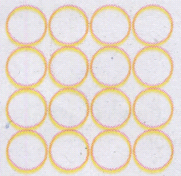 |
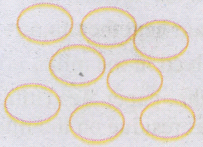 |
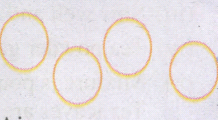 |
| S.No. | SOLID STATE | LIQUID STATE | GASEOUS STATE |
| 1. | Definite shape and volume | No definite shape, liquids attain the shape of the vessel in which they are kept. | Gases have neither a definite shape nor a definite volume. |
| 2. | Incompressible | Compressible to a small extent. | Highly compressible |
| 3. | There is little space between the particles of solid. | These particles have a greater space between them. | The space between gas particles is the greatest. |
| 4. | These particles attract each other very strongly. | The force of attraction between liquid particles is lesser than solid particles. | Thd force of attraction is least between gaseous particles. |
| 5. | Particles of solid cannot move freely. | These particles move freely. | Gaseous particles are in a continuous, random motion. |
51.
| Voluntary muscles | Involuntary muscles |
| Voluntary muscles of our body are attached to the bones. | Involuntary muscles are found in the walls of digestive tract, and other internal organs. |
| They can be controlled by our will. | They can't controlled by our will. |
52.
(i) Robert Hook designed the compound microscope.
(ii) He published a book named "Micrographia" in the year 1665.
(iii) He introduce the term cell, which from the latin word "cellula" means a small chamber.
(iv) He observed many objects like Butterfly's wings, Bee's compound eyes under microscope.
53.
They are exposed to harsh weather conditions, dust, pollution, heat and cold. So, they can have an adverse effect on their health. Hence, they weak a mask on duty.
54.
No. Deforestation can be an undesirable change. That is, Deforestation is harmful to our environment and not desired by us.
55.
56.
| HEAT | TEMPERATURE |
| i) Heat is an energy | The measurement of warmness or coldness of a substance |
| ii) Heat not only depends on the temperature of the substance but also depends on how many molecules are there in the object | Temperature is related to how fast the atoms or molecules move or vibrate within the substance. |
| iii) Heat measures the total kinetic energy of molecules | Temperature measures the average kinetic energy of molecules |
| iv) SI unit of heat is Joule | SI unit of temperature is kelvin |
57.
| S.No. | Unicellular Organisms | Multicellular Organisms |
| 1 | They are made up of single cell. | They are organisms are made up of many cells. |
| 2 | The single cell of the organism can perform all the functions of life. |
Division of labour exists among cells. Different cells are specialized to peform different functions. |
| 3 | These organisms are generally very small (microscopic) in size. |
They are mostly large in size |
| 4 | They lack tissues, organs and organ systems. |
They are composed of tissues, organs and organ system |
| 5. | Growth occurs by an increase in the size of the cell. eg. Amoeba, Paramecium and Euglena. |
Growth occurs by an increase in the number of cells by cell division. eg. Earthworms, Fish, Frogs, Lizard and human beings. |
58.
Cheese canbe separated from milk by
(i) Filtering the mixture through a fine cloth or strainer.
(ii) The solid particles will be retained by the strainer and unwanted liquid will pass through.
59.
| Terrestrial plant | Aquatic plant |
| (i) Terrestrial habitats are the ones that are found on land like forest, grassland and desert. | (i) Aquatic habitat includes area that are permanently covered by water and surrounding areas that are occationally covered by water. |
| (ii) They are classified into three types. 1. Desert habitat 2. Grassland habitat 3. Forest habitat |
(ii) They are two types 1. Fresh water habitat 2. Marine water habitat |
60.
Digestion and absorption of food done by digestive system.
61.
Arteries, Veins and capillaries are the blood vessels.
62.
Plant cell,Animal cell and most of fungi.
63.
Cell wall and chloroplast found only in plant cell
64.
We have eukaryotic cells.
65.
If the clothes of a person catch fire,
(i) STOP him where he is
(ii) DROP to the floor if he stands up
(iii) ROLL him on the floor.
Through this activities, we can save the person without big loss.
66.
If we remove the fish from the aquarium and keep it in a dark place with green plants,
(i) they can't have sunlight and
(ii) have no CO2 from the water produced by fish as they breathe.
(iii) Simply say, there is no possibility for photosynthesis to make their food.
67.
On strong heating, cane sugar chars to almost pure carbon giving the smell of 'Burnt sugar'.
(i) Initial change - Physical change - melting
(ii) Final change - Chemical change - charring
68.
Changes which take place over a long period of time are known as Slow changes.
69.
Plants decaying is a chemical change.
70.
K1, K2 should be closed.
71.
(i) The Water heater
(ii) Iron box
(iii) Electric kettle etc.
72.
The locomotory organ of Amoeba is pseudopodia.
73.
Lemon juice is a mixture because it is a miture of lemon extract, water and sugar. This is a mixture though the amount of sugar and water added is different we know that, in a mixture the components are mixed in any proportion.
74.
Matter is defined as anything that has mass and takes up space.
75.
The green leaves prepare food by the.process of photosynthesis.
76.
Cactus, Agave, Aloe, Bryophyllum
77.
| S.No | Hardware | Software |
| 1 | The parts that are available in the computer that helps the software to work is a hardware. | The commands or programs that are used in computer are called software |
| 2 | The two types of hardware are i) Input devices ii) Output devices |
The two types of software are (i) Operating Software (ii) Application Software |
78.
(i) Data is the information that has to be processed.
(ii) They are in the form of numbers, alphabets and images.
79.
i) Common cold
ii) Influenza
80.
(a) Food items rich in fat - Ex: Butter, Ghee.
(b) vitamin deficiency diseases - Ex: Night blindness, Beri-beri
81.
1 millimetre < 1 centimetre < 1 Metre < 1 kilometre.
82.
Both A and R are correct and R is the correct explanation for A.

6th Standard Syllabus & Materials
6th Standard
TN 6th Social Science T3 - GEO - Understanding Disaster Sample Question Papers Study Material - QB365 Set A
NEW6th Standard
TN 6th Social Science T3 - GEO - Globe Sample Question Papers Study Material - QB365 Set A
NEW6th Standard
TN 6th Social Science T3 - GEO - Asia and Europe Sample Question Papers Study Material - QB365 Set A
NEW6th Standard
TN 6th Social Science T3 - HIS - South Indian Kingdoms Sample Question Papers Study Material - QB365 Set A



Tamilnadu Stateboard 6th Standard Subjects
Tamilnadu Stateboard Standards




