
 100% FREE ACCESS
6th Standard Syllabus & Materials
6th Standard
TN 6th Tamil பருவம் 1 - இயல் 1 - மொழி -தமிழ்த்தேன் - இன்பத்தமிழ் Sample Question Papers Study Material - QB365 Set A
NEW6th Standard
TN 6th English T1 - Supplementary - The Apple Tree and The Farmer Sample Question Papers Study Material - QB365 Set A
NEW6th Standard
TN 6th English T1 - Prose - When The Trees Walked Sample Question Papers Study Material - QB365 Set A
NEW6th Standard
TN 6th Social Science T3 - CIV - Road Safety Sample Question Papers Study Material - QB365 Set A
NEW6th Standard
TN 6th Social Science T3 - CIV - Local Bodies - Rural and Urban Sample Question Papers Study Material - QB365 Set A
NEW6th Standard
TN 6th Social Science T3 - CIV - Democracy Sample Question Papers Study Material - QB365 Set A

Published on: 07/08/2019
Download Tamil Nadu 6th Standard Science question papers, model tests, one-mark questions, important questions, and public exam papers in PDF format. Free study materials and answer keys for TN State Board students.
Questions + Answers key
Take MCQ Science Test1.
The distance between your school and your house is 2250 m. Express this distance in a kilometre.
2.
Explain in detail above the applications of computer.
3.
Tabulate the vitamins and their corresponding deficiency diseases.
4.
Describe the various features which help Camel dwell well in the desert.
5.
Complete the map by filling the blanks
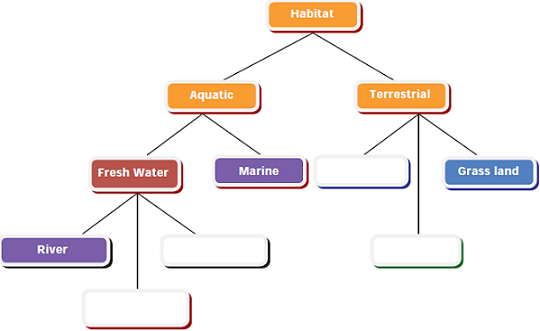
6.
Fill with examples:
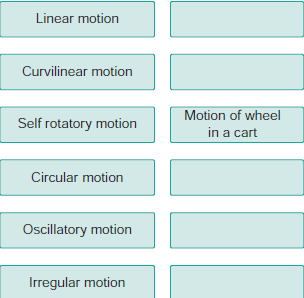
7.
Explain two methods that you can use to measure the length of a curved line.
8.
Distinguish the properties of solid, liquid and gas. Draw a suitable diagram.
1.
1000 m = 1km
\(2250 \mathrm{~m}=\frac{1}{1000} \times 2250\)
= 2.250 km
2.
(i) Computers are used in various fields.
(ii) In textile shop it is used for billing.
(iii) Computers are used to control large and small machines.
(iv) Computers are most important educational tools for teachers and learners.
(v) In Railways it is useful to book tickets and for other purposes.
(vi) It is also used in banks, ATM's, Post offices and in many places.
(vii) We can save many data and convert it into information.
3.
| S.no | Property | deficiency disease |
| 1 | vitamin A | Night blindness |
| 2 | vitamin B | Beri beri |
| 3 | vitamin C | Scurvy |
| 4 | vitamin D | Rickets |
| 5 | vitamin E | Nervous weakness, dimming of eyesight |
| 6 | vitamin K | Weakness of the bones, teeth etc. |
4.
(1) The camel has long legs which help it to keep its body away from the hot sand in the desert.
(2) It can store large amount of water in its body.
(3) it loses very little water from its body through excretion.
(4) A camel's hump has fat stored in it. It ups the stored fat when required.
(5) It has large and flat padded feet to walk easily on soft sand.
(6) It has long eye lashes and hairs to protect its eyes and ears from the blowing dust.
(7) It can keep its nostrils closed to avoid dust.
5.
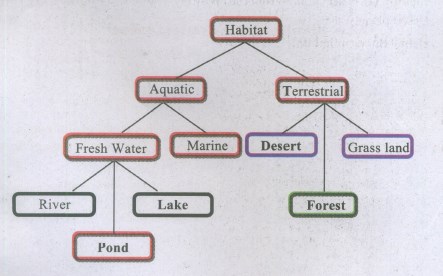
6.
Linear motion - A coconut falling from a tree
Curvilinear motion - A car driving around a curve
Self rotatory motion - Motion of the wheel in a cart
Circular motion - Athlete running around a track
Oscillatory motion - Swinging of a pendulum
Irregular motion - Movement of people in a bazaar
7.
Method 1:
(i) Place a string along the curved line, Make sure that the stringcovers every bit of the curved line.
(ii) Mark the points where the curved line begins and ends on the string.
(iii) Now, stretch the string along the length of a meter scale and measure the distance between the two markings of the string.
(iv) This will give us the length of a curved line.
Method 2:
(i) Draw a curved line AB on a piece of paper.
(ii) Separate the legs of the divider by 0.5 cm or 1 cm using a ruler.
(iii) Place it on the curved line starting from one end. Mark the position of the other end. Move it along the line again and again cutting the line into number of segments of equal lengths. The remaining parts of the line can be measured using a scale.
(iv) Count the number of segments.
(v) Therefore, the length of the line = (number of segments x length of each segment) + length of the left over part.
8.
| PARTTCLES IN A SOLID |
PARTICLES IN A LIQUID | PARTICLES IN GASEOUS |
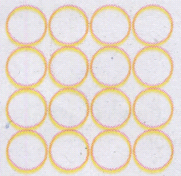 |
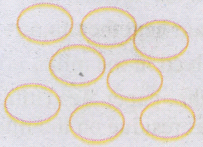 |
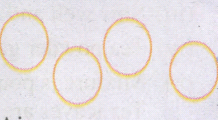 |
| S.No. | SOLID STATE | LIQUID STATE | GASEOUS STATE |
| 1. | Definite shape and volume | No definite shape, liquids attain the shape of the vessel in which they are kept. | Gases have neither a definite shape nor a definite volume. |
| 2. | Incompressible | Compressible to a small extent. | Highly compressible |
| 3. | There is little space between the particles of solid. | These particles have a greater space between them. | The space between gas particles is the greatest. |
| 4. | These particles attract each other very strongly. | The force of attraction between liquid particles is lesser than solid particles. | Thd force of attraction is least between gaseous particles. |
| 5. | Particles of solid cannot move freely. | These particles move freely. | Gaseous particles are in a continuous, random motion. |

6th Standard Syllabus & Materials
6th Standard
TN 6th Social Science T3 - GEO - Understanding Disaster Sample Question Papers Study Material - QB365 Set A
NEW6th Standard
TN 6th Social Science T3 - GEO - Globe Sample Question Papers Study Material - QB365 Set A
NEW6th Standard
TN 6th Social Science T3 - GEO - Asia and Europe Sample Question Papers Study Material - QB365 Set A
NEW6th Standard
TN 6th Social Science T3 - HIS - South Indian Kingdoms Sample Question Papers Study Material - QB365 Set A



Tamilnadu Stateboard 6th Standard Subjects
Tamilnadu Stateboard Standards




