
 100% FREE ACCESS
6th Standard Syllabus & Materials
6th Standard
TN 6th Tamil பருவம் 1 - இயல் 1 - மொழி -தமிழ்த்தேன் - இன்பத்தமிழ் Sample Question Papers Study Material - QB365 Set A
NEW6th Standard
TN 6th English T1 - Supplementary - The Apple Tree and The Farmer Sample Question Papers Study Material - QB365 Set A
NEW6th Standard
TN 6th English T1 - Prose - When The Trees Walked Sample Question Papers Study Material - QB365 Set A
NEW6th Standard
TN 6th Social Science T3 - CIV - Road Safety Sample Question Papers Study Material - QB365 Set A
NEW6th Standard
TN 6th Social Science T3 - CIV - Local Bodies - Rural and Urban Sample Question Papers Study Material - QB365 Set A
NEW6th Standard
TN 6th Social Science T3 - CIV - Democracy Sample Question Papers Study Material - QB365 Set A

Published on: 04/02/2020
6th Standard Social Science Annual Exam Model Question Paper 2019 - 2020
Download Tamil Nadu 6th Standard Social Science question papers, model tests, one-mark questions, important questions, and public exam papers in PDF format. Free study materials and answer keys for TN State Board students.
Questions + Answers key
Take MCQ Social Science Test
1.
People then move to a new piece of land for________
cultivation
industrial
manufactures
2.
Who among the following built the VaikundaPerumal temple?
Narasimhavarma II
Nandivarma II
Dantivarman
Parameshvaravarma
3.
The famous ancient paintings at Ajanta were painted on __________.
walls of caves
ceilings of temples
rocks
papyrus
4.
_________is set up with several village panchayats
Panchayat Union
District Panchayat
Taluk
Revenue village
5.
Who has the right to work in a direct Democracy?
Men
Women
Representatives
All eligible voters
6.
There are ___________ amendments made in the Constitution of India till 2016
101
100
78
46
7.
Bering sea is the marginal sea of the Ocean.
Pacific
Indian
Atlantic
Arctic
8.
The dancing girl statue was made out of
gold
silver
bronze
iron
9.
Recognised official languages of India, as per VIIIth Schedule of Indian Constitution
25
23
22
26
10.
What was the step taken by the early man to collect his food?
Trade
Hunting
Painting
Rearing of animals
11.
How many parts are their in national emblem?
12.
How we can generate the electricity using natral resources?
13.
What did the Aryans do after settling?
14.
How many times would the sun pass overhead a line of longitude?
15.
Define: Direct Democracy
16.
What is called barter system?
17.
Why was January 26 adopted as the Republic Day?
18.
Draw and define the Indian Rupee symbol.
19.
What is sustainable development?
20.
List out the names of continents according to their size.
21.
Why is India called the land of unity in diversity?
22.
Describe the ancient methods of hunting?
23.
What are the sources available to know about the pre-historic period?
24.
Haryanka dynasty was succeeded by the___________
25.
____________is the first state in India to introduce town Panchayat
26.
Collection of honey is a______________ occupation.
27.
______________ is known as the city of temples.
28.
Explain in detail classification on the basis of distribution.
29.
Debate: Is wearing helmet necessary?
30.
Difference between Gurukula system of education and Modern system of education.
31.
December 11 International Mountain Day.
32.
What are the effects of rotation and revolution?
33.
26th January 1930
34.
Bull Fighting
35.
Town Panchayat
36.
Vanavar
37.
Negroids
38.
Mohenjo-Daro
39.
Adichanallur
40.
Equinox
41.
Mark the following in the outline map of India.
1. Neyveli
2. Bay of Bengal
3. Arabian Sea
4. Forest region of Tamil Nadu
5. Indian Ocean
6. Iron mining in Kanjamalai(Salem)
1.
(a)
cultivation
2.
(b)
Nandivarma II
3.
(a)
walls of caves
4.
(a)
Panchayat Union
5.
(d)
All eligible voters
6.
(a)
101
7.
(a)
Pacific
8.
(c)
bronze
9.
(c)
22
10.
(b)
Hunting
11.
The National emblem consists of two parts- the upper and the lower parts.
12.
Sun's energy to generate electricity was made possible after the invention of solar panels (technology).
13.
When Aryans permanently settled in Sindh and the Punjab regions they began to practise agriculture.
14.
The Sun is overhead on a line of longitude only once in a day.
15.
(i) When the people themselves directly express their will on public affairs the type of government is called pure or direct democracy.
(ii) Ex: Switzerland.
16.
(i) A system of exchanging goods for other goods, called barter system.
(ii) For example, exchange a bag of rice for enough clothes.
17.
(i) Our constitution was framed and came into existence from 26th January 1950.
(ii) That is why every year we observe this day as the Republic day.
18.
(i) The symbol of rupees is Rs.
(ii) This was designed by D. Udhayakumar from Tamil Nadu in the year 2010.
19.
The present needs of resources are met and the conserving of resources for the future are balanced, we call it sustainable development.
20.
From the largest to the smallest, they are Asia, Africa, North America, South America, Antartica, Europe and Australia.
21.
The feeling of oneness and unity among the people of various religions, castes of a country is called unity in diversity
22.
(i) Go as a group and hunt the prey.
(ii) Dig a pit and trap the animals and hunt.
23.
(i) Stone tools.
(ii) Excavated materials.
(iii) Rock paintings are the major sources of pre-history
24.
()
Shjshunaga dynasty
25.
()
Tamil Nadu
26.
()
primary
27.
()
Kanchi
28.
ON THE BASIS OF DISTRIBUTION:
On the basis of distribution, resources can be classified into localized resources and universal resources.
(i) When resources are present in specific regions they are called localized resources.
(e.g.) Minerals.
(ii) Some resources are present everywhere Such resources are called universal resources.
(e.g.) Sunlight and air.
(ii) On National resources are resources within the political boundaries and oceanic area of a country.
(e.g.) Tropical forest regions of India.
29.
Moderator: I welcome all of you for the debate on wearing helmet. First I call upon Mr. Mani to talk about the necessities of helmet.
Mani: Good Morning. Helmet wearing is very important for the motor cycle riders. It protects us from any head injury incase of accidents. Even the pillion riders also should wear helmet.
Moderator: Thank you. Now I call upon Mr. Rajesh to tell about the inconveniences of wearing the helmet.
Rajesh: Good Morning. Helmet is too heavy to wear. It increases the sweating. Some times we maynot hear the horn sounds behind.
Moderator: Thank you all. Though there are some inconveniences in wearing helmet we must wear helmet while driving. Ofcourse our life is more precious.
30.
| S.No | Gurukula system of education | Modern system of education |
| 1 | The shishyas resided with their guru and served them and simultaneously learnt and gained knowledge | The students go to school and they learn and gain knowledge from the teacher. |
| 2 | The students received education through oral tradition meaning, rote learning and were required to memorise everything. |
Students learn from books and they also knowledge gain/through active based learning method from this system. |
| 3 | The main subject of this system included four Vedas and Astrology etc |
Science, Maths, Computer and language are the main subject to study in this system. |
| 4 | The students were also trained llead a disciplined life. |
The students are trained for job oriented skill. |
| 5 | No women could have formal education. | Modern education provides all of them. |
31.
Prepare slogans, posters and placards to celebrate International Mountain Day.
(i) "Mountains are among the most beautiful land masses in the world."
(ii) "Mountains are beautiful as they rise up above the clouds and show just how grand the world can be."
(iii) "Great things are done when men and mountains meet."
(iv) "How glorious a greeting the Sun gives the mountains."
(v) "Mountains are earth's undecaying monuments."
(vi) "The mountains, forests and seas render men savage, they develop fierce, but yet do not destroy the human. "
(vii) "Men stumble over pebbles, never over mountains."
(viii) "Each fresh peak ascended teaches something."
(ix) "Mountains are the beginning and end of all natural scenery."
(x) "He who climbs upon the highest mountains laughs at all tragedies, real or imaginary.
32.
Rotation:
(i) It is the spinning movement of the earth on its axis.
(ii) The rotation of the earth causes day and night.
(iii) As the earth is spherical in shape, only one half of it is illuminated by the sun at a time.
(iv) The other half remains dark.
(v) The illuminated portion of the earth experiences day, whereas the darkened part of the earth experiences night.
Revolution:
(i) It is the movement of the earth around the sun on its elliptical path.
(ii) The inclination of the earth on its axis and its revolution around the sun cause different seasons.
33.
Day of Poorna Swaraj
34.
Spain south east
35.
Executive Officer
36.
Cheras
37.
Indian race
38.
red quartz stone
39.
gold ornaments
40.
21st March
41.
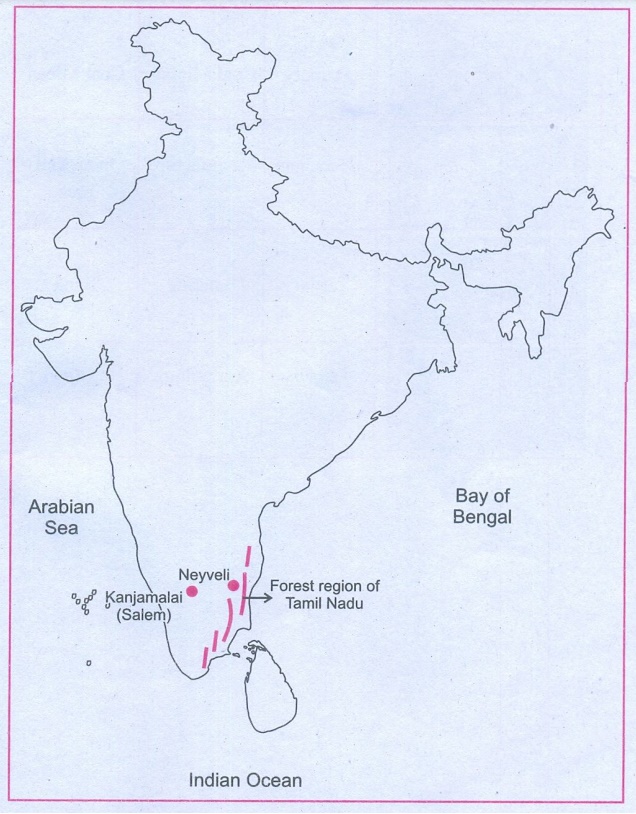

6th Standard Syllabus & Materials
6th Standard
TN 6th Social Science T3 - GEO - Understanding Disaster Sample Question Papers Study Material - QB365 Set A
NEW6th Standard
TN 6th Social Science T3 - GEO - Globe Sample Question Papers Study Material - QB365 Set A
NEW6th Standard
TN 6th Social Science T3 - GEO - Asia and Europe Sample Question Papers Study Material - QB365 Set A
NEW6th Standard
TN 6th Social Science T3 - HIS - South Indian Kingdoms Sample Question Papers Study Material - QB365 Set A



Tamilnadu Stateboard 6th Standard Subjects
Tamilnadu Stateboard Standards



