
 100% FREE ACCESS
6th Standard CBSE Syllabus & Materials
6th Standard CBSE
CBSE 6th Social Science The Value of Work - New Sample Question Papers Study Material - QB365 Set A
NEW6th Standard CBSE
CBSE 6th Social Science Family and Community - New Sample Question Papers Study Material - QB365 Set A
NEW6th Standard CBSE
CBSE 6th Social Science India's Cultural Roots - New Sample Question Papers Study Material - QB365 Set A
NEW6th Standard CBSE
CBSE 6th Social Science India,That is Bharat - New Sample Question Papers Study Material - QB365 Set A
NEW6th Standard CBSE
CBSE 6th Social Science Timeline and sources of history - New Sample Question Papers Study Material - QB365 Set A
NEW6th Standard CBSE
CBSE 6th Social Science Oceans and Continents - New Sample Question Papers Study Material - QB365 Set A

Published on: 06/03/2020
6th Standard Social Science Board Exam Model Question 2019-2020
Download CBSE Class 6th Standard CBSE Social Science question papers, sample papers, important questions, and previous year solved papers in PDF format. Get free study materials, NCERT solutions, and exam preparation resources for Class 6th Standard CBSE Social Science
Questions + Answers key
Take MCQ Social Science Test
1.
The Panchs and Gram Panchayat are answerable to the:
Zila Parishad
Zila Panchayat
Gram Sabha
All of these
2.
Who is considered as the leader of Dalits?
Sardar Vallabhbhai Patel
Dr. Rajendra Prasad
Bhim Rao Ambedkar
Guru Govind Singh
3.
Where is the relationship between neighbours are healthier?
In villages
In Cities
In hospitals
In dispensaries
4.
The Tamil Epic Silappadikaram was composed by:
Ilango
Kalhana
Kalidasa
Bhairavi
5.
One of the techniques employed to make stone tools was:
Stone to stone
Break the stone
Stone on stone
Pressure on stone
6.
The Great Bath has been found in :
Harappa
Mehrgarh
Mohanjodaro
Surat
7.
The universal soul has been referred to as
Tanha
Karma
Atman
All of these
8.
Which of the following shops is not in the main market?
Barber shops
Seed shops
Motorcycle repair shops
A tailor shop
9.
Vendors sell things that are often prepared at which of the following places?
At shops
At homes
At street itself
At neighbouring shops
10.
Hindu Succession Amendment Act came in which year?
2006
2004
2005
2010
11.
The habitation is easy in the area
Plains
Plateaus
Mountains
Valleys
12.
How many years old was Maya Naidoo?
12 year old
11 year old
13 year old
14 year old
13.
Which of the following religions does Samir EK belong to?
Muslim
Sikh
Hindu
Christian
14.
The Andes mountain is located in which of the following continents?
South America
North America
Europe
Australia
15.
Mahajanapada Vajji had its capital at
Kaushambi
Ujjain
Vaishali
Taxila
16.
Who was Aryabhata?
A politician
An astronomer
A teacher
A writer
17.
Hyderabad is the capital city of
Andhra Pradesh
Telangana
Karnataka
Both 'a' and 'b'
18.
A scale is necessary for
a map
a sketch
symbols
19.
Mangrove forests can thrive in
saline water
fresh water
polluted water
20.
Direct rays of the sun fall on the equator on
21st March
21st June
22nd December
21.
The southern most Himalayas are known as
Shivaliks
Himadri
Himachal
22.
What is called a needle fixed through the globe in a tilted manner?
Equator
Poles
Axis
Latitude
23.
South India was famous for
gold
pepper
precious stones
All of these
24.
Horse equipment, axes and a dagger was found from
Palaeolithic age
Mesolithic age
Neolithic age
Megalithic burials
25.
The palaces of early cities (2500 years ago) did not survive because they were made of
wood
iron
mud brick
Both 'a' and 'c'
26.
At what speed does light travel?
300,000 km/sec
400,000 km/sec
200,000 km/sec
100,000 km/sec
27.
At present, where the Rampurwa bull has been placed?
Bihar Bhavan Bhavan
Rashtrapati
Parliament
India Gate
28.
Dry and hilly regions are more suitable to survive for which of the animals?
Horse
Elephant
Tiger
Sheep
29.
Where is Sulaiman hills located?
India
China
Pakistan
Afghanistan
30.
Who makes rules and regulations in a civic life?
31.
Why do we need laws?
32.
(i) Why do poor people stay poor in rural India?
(ii) State any two suggestions to raise agricultural productivity
33.
The concept of diversity encompasses acceptance and respect It means understanding that each individual is unique, and recognising our individual differences. These can be along the dimensions of race, ethnicity, gender, sexual orientation, socio-economic status, age, physical abilities, religious beliefs, political beliefs or other ideologies.
(i) How is India a country with diversity?
(ii) Give an example of inequality.
34.
Distinguish between Galaxy and Universe.
35.
(i) What should we do to use the land and water properly?
(ii) Why are plateaus called storehouse of minerals?
36.
What does an arrow with 'N' at the upper right hand corner of map denote?
37.
This is a rock and cave shelter of Bhimbetka in the Deccan Plateau. Answer the following questions related to the cave shelter:
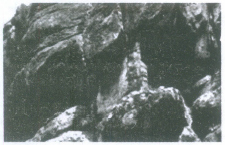
(i) What are habitation sites?
(ii) Why did people use these cave shelters as habitation sites?
(iii) In which mountain range are these rock and cave shelters found ?
(iv) Which valley is close to these rock shelters ?
38.
Read the following passage and answer the questions given below:
Xuan Zang, and other pilgrims spent time studying in Nalanda (Bihar), the most famous Buddhist monastery of the period. This is how he describes it:
The teachers are men of the highest ability and talent. They follow the teachings of Buddha in all sincerity. The rules of the monastery are strict and everyone has to follow them. Discussions are held throughout the day, and the old and the young mutually help one another. Learned men from different cities come here to settle their doubts. The gatekeeper asks new entrants difficult questions. They are allowed to enter only after they have been able to answer these. Seven or eight out of every ten are not able to answer."
(i) Name one foreign travellers who visited the Buddhist monastery at Nalanda.
(ii) Was it easy to enter the Buddhist monastery at Nalanda?
(iii) Who were taught in this monastery?
39.
Who is a specialist? Discuss it in the context of Harappan civilisation.
40.
Why were the cities of Taxila and Ujjain important?
41.
Distinguish between Palaeolithic and Neolithic period.
42.
How do burials help in understanding social differences?
43.
Describe the functions of urban administration.
44.
Write three main functions of a Patwari.
45.
What are the key ideas of a democratic government?
46.
Mention reasons of fast removal of soil from slopes.
47.
What decisions were taken by the Gram Panchayat?
48.
Discuss the small box placed at the centre of the stupa.
49.
Who were the most powerful rulers of Magadha?
50.
What is natural vegetation?
51.
What are heat zones?
52.
Discuss the role of Arvind in the play.
53.
How are people discriminated on the basis of economic inequality?
54.
Why do the poles experience about six months day and six months night?
55.
Find out the names of five hill stations situated in Himachal or Middle Himalaya.
56.
Look at the chart, you will find that some of the stages in the construction of irrigation works are mentioned. fill in the rest by using the following phrases:
• Labour is provided by the people.
• Farmers also benefit because crop production is more certain.
• Farmers have to increase production to pay taxes.
• Kings provide money and plan irrigation works.
| 1. Kings need money for armies, palaces, forts. | 2. They demand taxes from farmers. |
| 3. ______________ | 4. This is possible with irrigation. |
| 5. ______________ | 6. __________________ |
| 7.Production increases. | 8. So does revenue. |
| 9._______________ | |
57.
Write a short note on Panini, the grammarian.
58.
How are the dates counted?
59.
Compare the livelihood challenges faced by rural and urban women.
60.
What are the main features of a democratic country?
61.
Which is the third level of the Panchayati Raj system and what are its functions ?
62.
Explain briefly the caste system in India.
63.
Explain the physical features of India
64.
Giving an example, state how the three domains of the Earth interact with each other.
65.
How are the members of the Lok Sabha elected?
66.
State any five functions of Municipalities.
67.
Why was Ladakh considered to be a good trade route for the ancient traders from China and Europe?
68.
Write a note on Lava Plateau
69.
What are Puranas? State some of their characteristics.
70.
Why did hunter-gatherers move from place to place? Give at least four reasons.
71.
Describe the composition and function of each Varna in the Varna system.
72.
Explain the administrative system adopted by the kings of the earlier times.
73.
Do you think that the life of farmers and herders who supplied food to the Harappan cities was different from that of the farmers and herders. Give reasons for your answer.
74.
This is a picture of an aqueduct in Rome. Answer the following questions related to this picture:
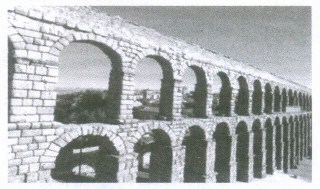
(i) What are aqueducts?
(ii) Why did the Roman emperor build huge aqueducts?
(iii) What are amphitheatres?
(iv) Mention one important emperor of the Roman empire.
75.
Explain the system of Ashramas.
76.
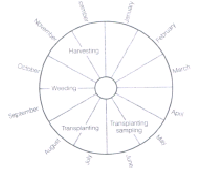
Based on the above diagram would you say that Thulasi earns money throughout the year?
77.
Discuss why land records are compulsory.
78.
See the below picture and answer the following questions.
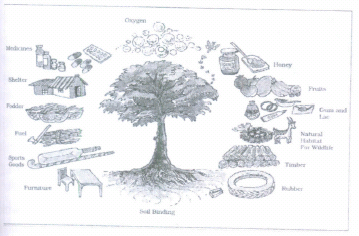
(i) Why are forests called life saver?
(ii) What do we get from forests?
79.
Describe the components of maps and their importance?
80.
How can any place be determined by a grid? Explain it with example.
81.
Differentiate between the summer solstice and the winter solstice and the winter solstice.
82.
Answer the questions based on the picture given below:
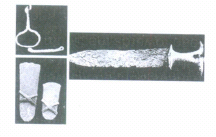
(i) Which metal was used for the preparation of the above equipments?
(ii) These equipments were found from which burials?
83.
Give an account of the beginning of Bhakti.
84.
How can we say that asteroids and meteoroids are different from each other? How meteoroids are connected with the Earth?
85.
The empire was a vast territory. How did the emperors run the empire?
86.
Describe the traces of bones from the sites of Mehrgarh.
87.
Despite of facing difficulties, people travelled from one part of the sub-continent to another. Explain with reasons.
88.
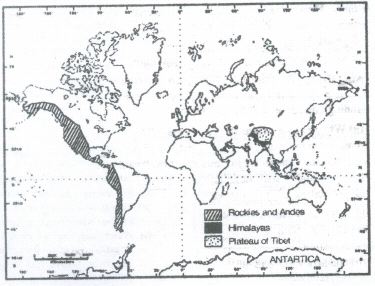
On an outline map of the world, mark the following:
(i) Mountain ranges: Himalayas, Rockies and Andes.
(ii) Plateau Tibet
89.
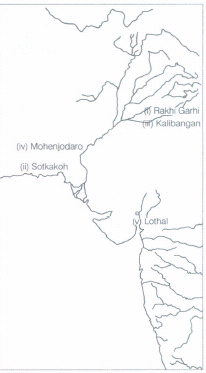
Show the following cities on the outline map of India
(i) Rakhi Garhi
(ii) Sotkakoh
(iii) Kalibangan
(iv) Mohenjodaro
(v) Lothal
90.
On the outline map of the world, mark the following?
Europe, Asia, Antarctica, South America, Australia, Indian Ocean, Pacific ocean, Atlantic ocean and Ural mountains.
91.
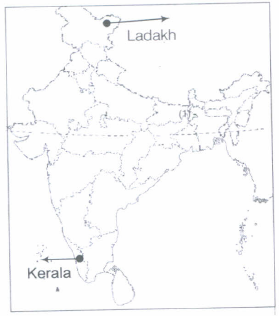
Look at the map of India in an Atlas and locate Kerala and Ladakh. Can you list three ways in which the different geographical location of these two regions would influence the following?
(i) The food people eat
(ii) The clothes they wear
(iii) The work they do.
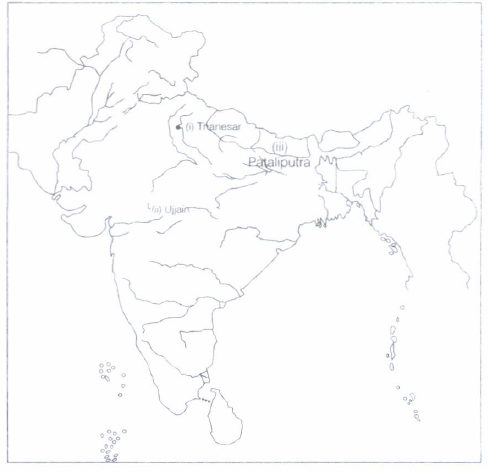
92.
Mark the following important cities and kingdoms on the outline map of India:
(i) Thanesar (ii) Ujjain (iii) Pataliputra
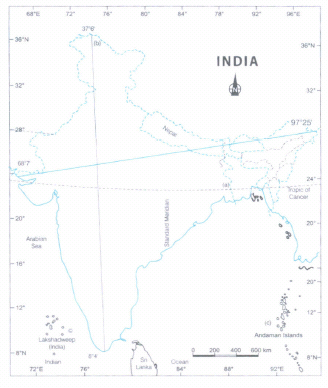
93.
On an outline map of India, mark the following
(a) Tropic of Cancer
(b) Standard Meridian of India
(c) Andaman Islands and Lakshadweep Islands
(d) Western Ghat and Eastern Ghats.
94.
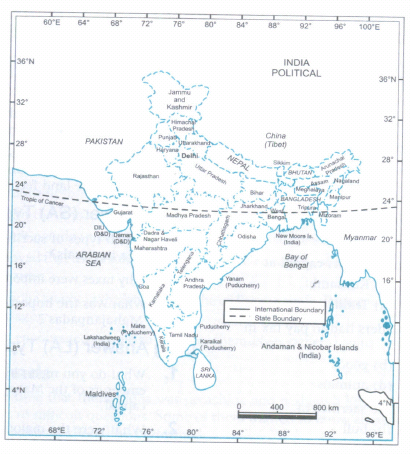
Find the state in which you live in the political map on page 136. Were there any janapada in your state? If yes, name them.
If not, name the janapadas that would have been the closest to your state, and mention whether they
were to the East, West, North or South.
95.
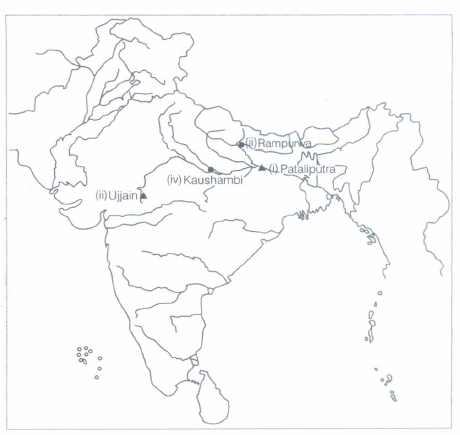
Mark the following places on the outline map of India:
(i) Pataliputra
(ii) Ujjain
(iii) Rampurwa
(iv) Kaushambi
96.
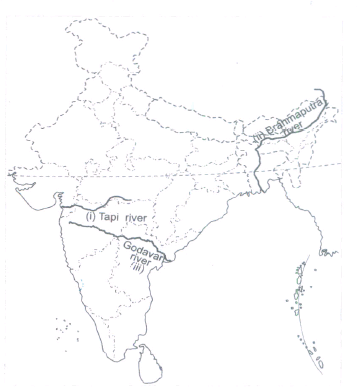
Locate the following of the outline physical map of India.
(i) Tapi river
(ii) Brahmaputra river
(iii) Godavari river
1.
(c)
Gram Sabha
2.
(c)
Bhim Rao Ambedkar
3.
(a)
In villages
4.
(a)
Ilango
5.
(c)
Stone on stone
6.
(c)
Mohanjodaro
7.
(c)
Atman
8.
(c)
Motorcycle repair shops
9.
(b)
At homes
10.
(c)
2005
11.
(a)
Plains
12.
(b)
11 year old
13.
(c)
Hindu
14.
(a)
South America
15.
(c)
Vaishali
16.
(b)
An astronomer
17.
(d)
Both 'a' and 'b'
18.
(a)
a map
19.
(a)
saline water
20.
(a)
21st March
21.
(a)
Shivaliks
22.
(c)
Axis
23.
(d)
All of these
24.
(d)
Megalithic burials
25.
(d)
Both 'a' and 'c'
26.
(a)
300,000 km/sec
27.
(b)
Rashtrapati
28.
(d)
Sheep
29.
30.
The progress of all human beings is the result of living and working together. Cooperation has helped humans march towards progress and becomes more complex, the government becomes more organised. They have made laws to regulate and control the activities of the people. We should co-operate with our government and abide by all the rules and regulations.
31.
Laws are a system of rules and guidelines enforced in a country. They are necessary for smooth functioning and a orderly life. Laws are important to ensure equality and fairness in society. To implement and enforce laws, there are many institutions such as administration, police and judiciary.
32.
(i) The major cause of poverty among India's rural people is the lack of access to productive assets and financial resources. High level of illiteracy and lack of adequate health facilities are also responsible for the poor staying poor in rural India.
(ii) The agricultural productivity can be raised by providing proper marketing facilities, provisions of better irrigational facilities, reduction of population burden on land, development of cottage and small scale industries and encouraging co-operative farming.
33.
(i) There are different religions in India. We speak different languages, have various types of food and celebrate different festivals.
(ii) The Caste system is an example of inequality.
34.
Galaxy: A group or cluster of stars is called a Galaxy, e.g., The Milky Way. Approximately, billions of galaxies are there in the Universe.
Universe: A limitless vacuum having millions of stars, planets, and satellites is called Universe. There is only one Universe.
35.
(i) (a) We should not construct buildings on fertile land.
(b) We should not throw garbage on the land or in water or make them dirty.
(c) We should avoid using the important gifts of nature in a careless manner.
(ii) Most of the minerals in the world are found in the peninsular plateaus. Besides, the extraction of minerals is relatively easier on plateaus. These minerals are indispensable as raw material for our industries. We get gold from the Plateau of Western Australia; copper, diamonds and gold from the Plateaus of Africa; and coal, iron, manganese and mica from the Chota Nagpur Plateau in India.
36.
The arrow 'N' shows the northern direction. It is called the North Line. When we know about the north, we can find out other directions.
37.
(i) Habitation sites were the places where people lived. For example, rock and cave shelters.
(ii) People choose these natural caves for habitation because they provided protection from rain, sun and wind.
(iii) These rock and cave shelters are found in the Vindhyas.
(iv) These rock shelters are close to the Narmada valley.
38.
(i) Xuan Zang visited and studied in the Buddhist monastery at Nalanda.
(ii) No, it was very difficult to enter this Monastery. New entrants were asked difficult questions by the gatekeeper. Only those who gave correct answers were allowed to enter. Mostly seven or eight out of ten were not able to answer the questions asked by him.
(iii) Men of the highest ability and talent taught in this monastery.
39.
(i) A specialist is a person who is trained to do only one specialized kind of work, for example, cutting stone or polishing beads, or carving seals.
(ii) Not everybody can be a specialist. We do not know whether only men were specialists or only women were specialists in the Harappan civilization.
40.
There were several cities in the Mauryan Empire. These included the capital Pataliputra, Taxila and Ujjain. Taxila was the gateway to the North- West, including Central Asia, while Ujjain was on the route from North to South India. Merchants, officials and craftspersons probably lived in these cities.
41.
The Difference between Palaeolithic and Neolithic period are given below;
| S.No. | Palaeolithic Age | Neolithic Age |
|---|---|---|
| 1 | The main tools of this period were hand-axe etc. They were crude It was also known as the Old Stone Age. | The main tools were arrows. The tools of this period were smooth and polished. It was also known as the New Stone Age. |
| 2 | There was no knowledge of wheel in this age. | Wheel was invented |
| 3 | Men was unaware of agriculture. | Men learnt agriculture and began to grow food. |
| 4 | People were nomadic and hunter-gatherers. | Now, there were settled people and knew domestication of animals. |
42.
Archaeologists think that objects found with a skeleton probably belonged to the dead person.
(i) Sometimes, more objects are found in one grave than in another. For example, in Brahmagiri, one skeleton was buried with 33 gold beads, 2 stone beads, 4 copper bangles and one conch shell. Other skeletons had only a few pots.
(ii) These findings suggest that there was some difference in status amongst the people who were buried. Some were rich, others poor, some chiefs, while others were followers.
43.
The functions of urban administration are the following:
(i) Collection of house tax and water taxes.
(ii) Cleaning of city drainage system
(iii) Maintenance of parks and markets.
(iv) Regulating the urban development and local management of civic facilities.
44.
A Patwari is responsible for a group of villages. His major functions include:
(i) The land maps and the corresponding details are kept by the Patwari.
(ii) Maintaining and updating the records of the villages lands.
(iii) Report the serious calamities affecting the land or the crops and the severe outbreaks of diseases amongst men and animals.
45.
The key ideas of a democratic government are as follow:
• Equality and justice.
• Elections.
• Ban on untouchability.
46.
The reasons behind fast removal of soil from slopes are given below:
(i) Cutting of plants for fulfilling our demands.
(ii) Clearing land for agriculture.
47.
The following decisions were taken by the Gram Panchayat:
Two handpumps were to be deepened.
The Sarpanch suggested that since the Panchayat had received some money for maintenance of handpumps, they would clean the wells as soon as possible.
The Gram Panchayat would approach the Block Development Officer and get more information on the scheme.
48.
The small box placed at the center of the stupa contained bodily remains such as teeth, bone or ashes of the Buddha or his followers, or things they used, as well as precious stones and coins.
This box is known as a relic casket. It was covered with earth. Later, a layer of mud brick was added on top.
And then, the dome like structure was sometimes kings. covered with carved stone slabs.
49.
The most powerful rulers of Magadha were:
(i) Bimbisara and Ajatasattu were two very powerful rulers who used all possible means to conquer other janapadas.
(ii) Mahapadma Nanda was another important ruler. He extended his control upto the North-West part of the sub-continent.
50.
The grasses, shrubs and trees, which grow on their own without interference or help from human beings, are called natural vegetation.
51.
Heat zones are the various zones on the Earth, where sun rays fall differently on them. The direct sun rays reach in the area of Torrid zone, while Temperate and Frigid zones receive slanting rays from the sun.
These cause different temperature among different zones.
52.
Arvind played a role of a king. He had expected to march solemnly in splendid robes, to twirl his moustaches and wield the silver-paper wrapped sword with gusto. He also had to play a veena, and recite poetry.
53.
Economic discrimination can be seen when people who are poor do not have the resources or the money to meet their basic needs of food, clothing and shelter. They experience discrimination in offices, hospitals, schools, etc where they are treated badly because they are poor.
54.
The North Pole remains inclined towards the sun for six months due to which places beyond the Arctic circle experience continuous daylight for about six months while South Pole remains away from the sun for six months and experiences night for same period. The same condition reverses for the next six months when South Pole inclines towards the sun and experiences day while North Pole experiences night
55.
Chail, Dalhousie, Dharamsala, Kullu, Manali, Shimla and Kasauli.
56.
| 1. Kings need money for armies, palaces, forts. | 2. They demand taxes from farmers. |
| 3. Farmers have to increase production to pay taxes. | 4. This is possible with irrigation. |
| 5. Kings provide money and plan irrigation works. | 6. Labour is provided by the people |
| 7.Production increases. | 8. So does revenue. |
| 9. Farmers also benefit because crop production is more certain. | |
57.
He was a great scholar, who prepared a grammar for Sanskrit. He arranged the vowels and the consonants in a.special order, and then used these to create formulae like those found in Algebra. He used these to write down the rules of the language in short formulae (around 3000 of them).
58.
The years (say, 2015) are counted from the date generally assigned to the birth of Jesus Christ, the founder of Christianity. So, 2015 means 2015 years after the birth of Christ. All dates before the birth of Christ are counted backwards and usually have the letters BC (Before Christ) added on.
59.
Challenges faced by rural women:
(i) Poor resource base and resource quality (small or no agricultural land and water).
(ii) Illiteracy and lack of skill.
(iii) Lack of awareness on different government schemes and programmes.
(iv) Lack of knowledge of disasters.
Challenges faced by urban women:
(i) Lack of employment and irregular jobs.
(ii) Lack of job security and low wages.
(iii)Lack of sufficient and timely credit support system for petty trades.
(iv) Fear of eviction by police and civic bodies.
(v) Congested and hazardous working conditions
60.
The main features of a democratic country are:
(i) People have the power to elect their representative to form and run the government and also to take decisions on their behalf.
(ii) The competitive elections are held at regular intervals.
(iii) There is aspiration of powers between the three organs of the government, i.e., Legislature, Executive and Judiciary.
(iv) People enjoy Freedom of speech and expression.
(v) Fundamental rights are enjoyed by its citizens.
(vi) There is effective participation of the people in the decision making process.
61.
(i) Zila Parishad or District Panchayat is the apex body of the Panchayati Raj System.
(ii) It examines and approves the budget of Panchayat Samitis in the district.
(iii) It issues directions to the Panchayat Samitis for efficient performance of their functions and Coordinates development plans prepared by the Panchayat Samitis.
(iv) It distributes funds allocated by the State government to the Panchayat Samitis in the district.
(v) It collects statistics related to the activities of the local authorities in the district.
62.
India has a hierarchical caste system in the society. The Indian term for caste is 'jati', which generally designates a group varying in size from a handful to many thousands. There are thousands of such jatis and each has its distinctive rules and customs. Varna (meaning, "colour") refers to the ancient and somewhat ideal fourfold division of the Hindu society: (1) the Brahmins-the priestly and learned class; (2) the Kshatriyas-the warriors and rulers; (3) the Vaisyas- farmers and merchants; and (4) the Shudras, peasants and laborers. The caste system was born and maintained by the Brahmins, the priestly class and they are the ones to get more advantage from it.
63.
India is marked by a diversity of physical features such as mountains, plateaus, plains, coasts and islands.
(i) In the North are the lofty snow-capped Himalayas. 'Him' +'alaya' means 'the abode of snow'.The Himalayan Mountains are divided into three main parallel ranges.
(a) The northernmost is the Great Himalaya or Himadri. The world's highest peaks are located in this range.
(b) The Middle Himalayas or Himachal lies to the South of Himadri. Many popular hill stations are situated here.
(c) The Shiwalik is the southernmost range
(ii) The Northern Indian Plains lie to the South of the Himalayas. They are generally level and flat. These are formed by alluvial deposits laid down by the rivers-the Indus, the Ganga, the Brahmaputra and their tributaries. These river plains provide fertile land for cultivation.
64.
(i) All living organisms including humans are linked to each other and to the biosphere for survival.
(ii) The organisms in biosphere may be broadly divided into the plant kingdom and animal kingdom.
(iii) The three domains of the Earth interact with each other and affect each other in some way or the other.
For example, cutting of forests for fulfilling our needs of wood or clearing land for agriculture may lead to fast removal of soil from slopes. Similarly, the earth's surface may be changed due to natural calamities like earthquakes.
65.
(i) The members of the Lok Sabha are elected directly by the people.
(ii) Territorial areas called Parliamentary Constituencies are set up in each State and Union territory for the purpose of elections.
(iii) Seats are allotted to various States on the basis of their respective population.
(iv) Any number of candidates may contest an election from the same constituency.
(v) The candidate who secures majority of vote is declared elected to the Lok Sabha.
66.
Five functions of the Municipalities are as follows:
(i) Supply of adequate drinking water.
(ii) Providing and maintaining drainage and sewage systems.
(Hi)Maintenance of public street lighting.
(iv) Construction and maintenance of bus terminals, roads and bridges.
(v) Maintenance of birth and death records
67.
Ladakh was a major trading centre on the Silk Route between China and the Mediterranean. It was considered to be a good trade route as it had many passes through which caravans travelled to Tibet. As a result, Ladakh came to be known as the 'Land of Passes'. The caravans carried textiles, spices, raw silk and carpets.
68.
(i) Lava plateaus are formed by highly fluid (runny) basaltic lava during numerous successive eruptions through numerous vents without violent explosions (quiet eruptions).
(ii) These eruptions are quiet because of low viscosity of lava and contains small amount of trapped gases.
(iii) Multiple successive and extensive lava flows cover the original landscape to eventually form a plateau, which may contain lava fields, cinder cones, shield volcanoes and other volcanic landforms.
69.
(i) 'Purana' literally means 'old'. The Puranas contain stories about Gods and Goddesses, such as Vishnu, Shiva, Durga or Parvati.
(ii) They contain details of how Gods and Goddesses were to be worshipped.
(iii) There are accounts about the creation of the world and about kings.
(iv) The Puranas were written in simple Sanskrit and were meant to be heard by everybody, including women and Shudras, who were not allowed to study the Vedas.
(v) They were probably recited in temples by priests, and people came to listen to them.
70.
The reasons behind the movement moving of hunters-gatherers are:
(i) If they stayed at one place for a long time, they would have eaten up all the available plant and animal resources. Therefore, they had to move elsewhere in search of food.
(ii) Animals move from place to place - either in search of smaller prey or in the case of deer and wild cattle, in search of grass and leaves. That is why, those who hunted them had to follow their movements.
(iii) Plants and trees bear fruit in different seasons. So, people may have moved from season to season in search of different kinds of plants.
(iv) People, plants and animals need water to survive. People living on river banks had to go in search of water during the dry seasons as some rivers are seasonal while others are perennial (with water throughout the year).
71.
(i) The first Varna was that of the Brahmin. Brahmins were expected to study (and teach) the Vedas, perform sacrifices and receive gifts.
(ii) In the second place were the rulers, also known as Kshatriyas. They were expected to fight battles and protect people.
(iii) Third were the Vish or the Vaishyas. They were expected to be farmers, herders, and traders. Both the Kshatriyas and Vaishyas could perform sacrifices.
(iv) Last were the Shudras, who had to serve the other three groups and could not perform any rituals. Often, women were also grouped with the Shudras. Both women and Shudras were not allowed to study the Vedas.
72.
(i) Kings adopted a number of steps to win the support of men who were powerful either economically or socially or because of their political and military strength.
(ii) Some important administrative posts were now hereditary.
(iii) Sometimes, one person held many offices. For instance, besides being a Maha-Danda-Nayaka, Harisena was a Kumar-Amartya, Meaning an important minister.
(iv)Besides, some important men had a say in local administration. These included chief bankers or merchants of the city, the leaders of the merchant caravans, the chief craftsmen, and the head of the tribes.
73.
The farmers and herders in the earlier period cultivated the fields themselves and domesticated the animals. The farmers and herders who gave food to the Harappan cities knew about agriculture and domestication of animals. So, they supplied food to the city dwellers and they also provided their own food.
74.
(i) Aqueducts were huge channels to supply water.
(ii) The Roman emperors built these aqueducts to bring water to the city for the baths, fountains and toilets.
(iii) Amphitheatres were open arenas surrounded by tiers of seats where citizens could watch all kinds of shows.
(iv) King Augustus was one of the important emperors of the Roman empire.
75.
(i) Around the time when Jainism and Buddhism were becoming popular, Brahmins developed the system of Ashramas, The word 'ashrama' means' a stage of life'
(ii) Four Ashramas were recognised brahmacharya, grihastha, vanaprastha, and sanyasa.
(iii) Brahmacharya: Brahmin, Kshatriya and vaishya men were expected to lead simple lives and study the Vedas during the early years of their lives.
(iv) Grihastha: Then they had to marry and live as householders.
(v) Vanaprastha: Then they had to live in the forest and meditate. Finally, they had to give up everything and become Sanyasis. The system of Ashramas allowed men to spend some part of their lives in meditation. Generally, women were not allowed to study the Vedas and they had to follow the Ashramas chosen by their husbands.
76.
Thulasi earns money only for SIX months in a year.
Transplanting of paddy : July and
August
Weeding : September and October
Harvesting : November and December
She does not have work throughout the year.
77.
There are several reasons for which land records are compulsory. Suppose a farmer wants to buy a plot or field. Then, he needs to authenticate it. This can be done through the land records. If a farmer wants a loan from banks to dig a well in his land, he has to show the land records to prove that the land belongs to him. Moreover, these records are also essential for buying and selling of their properties. If the farmer wants to divide his property among his children, then the land records are essential.
78.
(i) Forest gives us oxygen to breathe, and absorbs carbon dioxide.
(ii) We get medicine, wood, fuel etc from forests.
79.
There are three components of maps:
(i) Distance A small distance on paper represents a large distance on the ground through a scale.
(ii) Direction Most maps contain an arrow marked with the letter 'N' at the upper right hand corner. This shows the North direction. By knowing one direction, other directions can be found out.
(iii) Symbol: Symbol is the third important component of a map. It is impossible to draw exact size of different features such as buildings, roads, bridges, trees, railway lines or a well on a map, so they are shown by using certain letters, shades, colours, pictures and lines.
80.
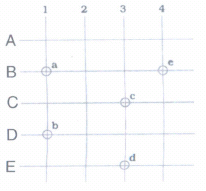
We can determine the position of a place with the help of information about its latitude and longitude. We can determine it by taking the help of a grid in following manner.
First of all, find the point of reference where the two lines cut each other. e.g. if we have to find out the location of point b in grid (as shown along side in figure), then:
The location of point b will be Do N latitude and 1o E longitude. Vertical lines represent East longitudes and horizontal lines as North Latitudes.
81.
The difference between the summer solstice and the winter solstice is as follows:
Summer Solstice In the Northern hemisphere the longest day and the shortest night occur on 21st June. The Sunrays fall directly on the tropic of Cancer. All these conditions are opposite in Southern hemisphere and it is winter there. The nights are longer than the days in Southern hemisphere. This position of the Earth is called the summer solstice.
Winter Solstice The tropic of Capricorn receives direct rays due to tilting of South Pole towards the sun on 22nd December. The vertically falling sun rays at the tropic of Capricorn 23 1/2° provide heat to a larger portion of it. Therefore, it is summer in Southern hemisphere. This position of the Earth is called the winter solstice.
82.
(i) Iron metal was used for the preparation of the above equipments.
(ii) Megalithic equipments were found from burials
83.
The starting of the Bhakti became Central feature of later Hinduism. It was the time when certain deities were worshipped such as Shiva, Vishnu and Goddesses as Durga. Bhakti refers to a persons's devotion to his or her chosen deity. Anybody could follow the path of Bhakti, be it rich or poor, people belonging to 'high' or 'low' caste, man or woman. The concept of Bhakti is also present in sacred book of the Hindus i.e. 'Bhagavad Gita', included in the Mahabharata. This type of worship spread to various parts of the country. The people who followed Bhakti focused on devotion and individual worship of a God or Goddess and not on the performance of elaborate sacrifices.
84.
Apart from the planets, asteroids are the tiny celestial bodies which also move around the sun. These bodies are found in large number between the orbits of Mars and Jupiter, These are believed to be the part of a planet that exploded many years ago.
Meteoroids are the small pieces of rocks that move around the sun, These meteoroids sometimes come close to the Earth and tend to drop upon Earth.
During their drop on the Earth, they get heated up and burnt due to friction with air and cause flash of light. Sometimes, it creates a hollow on the Earth if it is not burnt completely.
85.
The emperors run the empire as:
• The ruling pattern was varying in empires due to the largeness of the empire.
• The area around Pataliputra was under the direct control of the emperor meant that officials were appointed to collect taxes from farmers, herders, craftspersons and traders, who lived in villages and towns in the area.
• Many of these officials were given salaries and these officials punished those who disobeyed the ruler's orders.
• Messengers went to and fro, and spies kept a watch on the officials and of course the emperor supervised them all, with the help of members of the royal family, and senior ministers.
• The other areas or provinces were ruled from a provincial capital such as Taxila or Ujjain although there was some amount of control from Pataliputra.
• The royal princes were often sent as governors, local customs and rules were probably followed.
86.
Traces of bones of various animals have been found at the site of Mehrgarh.
(i) It was probably one of the places where women and men learnt to grow barley and wheat, and rear sheep and goats for the first time in this area. It is one of the earliest villages that we know about.
(ii) The evidence of many kinds of animal bones from c the earliest levels has been found by archaeologists during excavation levels, which included bones of wild animals such as deer and pig.
(iii) In later levels, they found more bones of sheep and goat and in still later levels, cattle bones are most common.
(iii) This implies that sheep, goat and cattle were reared by people in later period.
87.
People travelled from one part of the sub-continent to another due to the following reasons:
(i) People travelled from one place to another in search of livelihood, to escape from natural disasters like floods or droughts.
(ii) Some people also travelled with the spirit of adventure, to find out the interesting facts and to discover new places.
(iii) Caravans or ships were the means of communication and transportation of food material for the merchants.
(iv) Religious teachers moved from one place to another to deliver their religious teachings to the people.
(v) Travelling emerged as a strong aspect of sharing ideas between the diversities.
88.
89.
90.
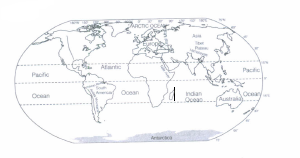
(A) Europe
(B) Asia
(C) Antarctica
(D) Sourh America
(E) Australia
(F) Indian ocean
(G) Pacific ocean
(H) Atlantic ocean
(I) Ural mountains
91.
Yes, we can list three ways in which the different geographical location of these regions (Kerala and Ladakh) would be influence:
| Kerala | ladakh | |
|---|---|---|
| Food | Rice, fish, vegetables | Meat and milk. |
| Clothes | Cotton and synthetic cloths. Loose cotton. No woollen clothes | Woolen and fur clothes. |
| Work | Fishing, agriculture | Sheep rearing, wool collection, trading |
92.
93.
94.
Hints for students
(i) Name and location of your state or Union Territory, write the name of your region.
(ii) Look carefully in the map, is any janapada site in your state/UTs.
(iii) If yes, name that janapadas.
(iv] If not, look all directions of your state (East, West, North, South).
(v) See the map
95.
96.

6th Standard CBSE Syllabus & Materials
6th Standard CBSE
CBSE 6th Social Science Locating Places on the Earth - New Sample Question Papers Study Material - QB365 Set A
NEW6th Standard CBSE
CBSE 6th Science A Journey Through States of Water - New Sample Question Papers Study Material - QB365 Set A
NEW6th Standard CBSE
CBSE 6th Science Temperature and its Measurement - New Sample Question Papers Study Material - QB365 Set A
NEW6th Standard CBSE
CBSE 6th Science Materials Around Us - New Sample Question Papers Study Material - QB365 Set A



CBSE 6th Standard CBSE Subjects
CBSE Standards




