
 100% FREE ACCESS
6th Standard CBSE Syllabus & Materials
6th Standard CBSE
CBSE 6th Social Science The Value of Work - New Sample Question Papers Study Material - QB365 Set A
NEW6th Standard CBSE
CBSE 6th Social Science Family and Community - New Sample Question Papers Study Material - QB365 Set A
NEW6th Standard CBSE
CBSE 6th Social Science India's Cultural Roots - New Sample Question Papers Study Material - QB365 Set A
NEW6th Standard CBSE
CBSE 6th Social Science India,That is Bharat - New Sample Question Papers Study Material - QB365 Set A
NEW6th Standard CBSE
CBSE 6th Social Science Timeline and sources of history - New Sample Question Papers Study Material - QB365 Set A
NEW6th Standard CBSE
CBSE 6th Social Science Oceans and Continents - New Sample Question Papers Study Material - QB365 Set A

Published on: 06/03/2020
6th Standard Social Science Board Exam Sample Question 2020
Download CBSE Class 6th Standard CBSE Social Science question papers, sample papers, important questions, and previous year solved papers in PDF format. Get free study materials, NCERT solutions, and exam preparation resources for Class 6th Standard CBSE Social Science
Questions + Answers key
Take MCQ Social Science Test
1.
American women gained the right to vote in :
1920
1921
1930
1931
2.
Who is considered as the leader of Dalits?
Sardar Vallabhbhai Patel
Dr. Rajendra Prasad
Bhim Rao Ambedkar
Guru Govind Singh
3.
Who prepares budgets and spend the money according to them?
Ward Councillors
Ward Boys
Nurses
Teachers
4.
The National African Congress struggled against:
laws
apartheid
peasants
rights for women
5.
Which metals were used to make ornaments?
Gold
Silver
Both (a) and (b)
None of these
6.
South India was famous for spices, especially:
clove
cardamom
pepper
nutmeg
7.
The site of Koldihwa is located in :
Pakistan
Uttar Pradesh
Bihar
Andhra Pradesh
8.
The technique of making paper was first introduced in which of the following countries?
Korea
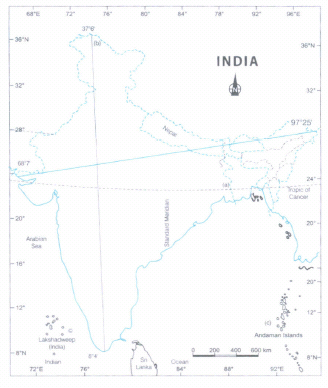
Japan
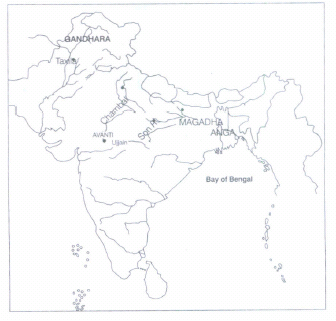
India
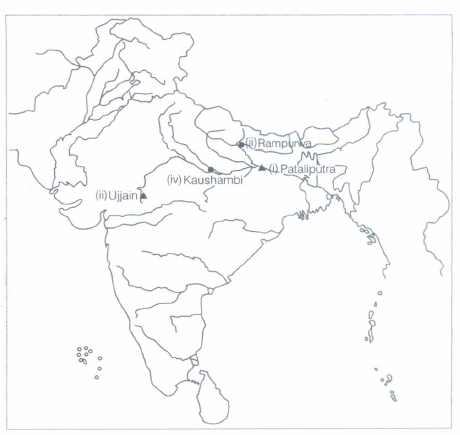
China
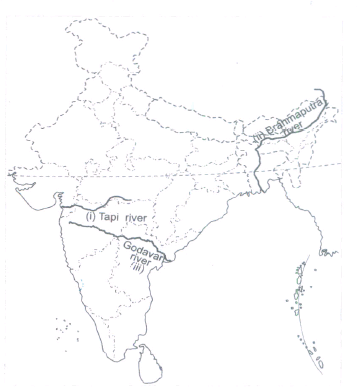
9.
Who does work outside either loading sand from the river or stone from the quarry nearby?
Thulasi
Ramalingam
Paarivelan
Raman
10.
Where does Nirmala work?
In an export garment unit
In a ticket booking centre
In Sudha's office
In a market street
11.
Hindu Succession Amendment Act came in which year?
2006
2004
2005
2010
12.
The habitation is easy in the area
Plains
Plateaus
Mountains
Valleys
13.
Which of the following is the first tier of democratic government?
Gram Panchayat
Panchayati Raj
Zila Parishad
Panchayat Samiti
14.
What is Cheena-vala?
Utensil
Fishing nets
Fishing bowl
None of the above
15.
Which is the largest continent?
Africa
Asia
Australia
16.
Mahajanapada Vajji had its capital at
Kaushambi
Ujjain
Vaishali
Taxila
17.
Which one of the following is not an intermediate direction?
North-West
South-West
West
North- East
18.
Mahogany and rosewood trees are found in
Mangrove forests
Tropical deciduous forests
Tropical evergreen forests
19.
Kalidasa was the court poet of
Samudragupta
Chandragupta
Chandragupta II
Harshavardhana
20.
When do the equinox occur on the Earth?
23rd September
21st March
Both 'a' and 'b'
None of the above
21.
What is the local time of longitude that has been taken as the Indian Standard Time?
82°30'E
23°30'N
68°7'E
97°25'E
22.
The Tropic of Cancer is located at
23 1 / 2°N
24 1 / 2°N
66 1 / 2°S
23 1 / 2°S
23.
The language spoken in Jharkhand and parts of Central India belongs to the
Austro-Asiatic family
Indo-European family
Tibeto-Burman family
Indo-Asiatic family
24.
When did the use of iron begin in the sub-continent?
Around 3000 years ago
Around 2300 years ago
Around 2500 years ago
Around 3500 years ago
25.
The galaxy to which our solar system belong is known as
Milky Path galaxy
Milky Way galaxy
Milky Way orbit galaxy
Milky Galaxy
26.
Who was the son of Chandragupta Maurya?
Bindusara
Ashoka
Bimbisara
Samudragupta
27.
After attaining enlightenment, where did Buddha go to teach for the first time?
Sarnath
Ayodhya
Sanchi
Nepal
28.
The hunter-gatherers lived in the subcontinent as early as
1 million years ago
2 million years ago
3 million years ago
4 million years ago
29.
Which crops began to grow by men and women to the region of Sulaiman and Kirthar hills?
Rice and wheat
Wheat and pulses
Pulses and barley
Wheat and barley
30.
Write a few lines on the wildlife of India
31.
What are the responsibilities of the Sarpanch in a Gram Panchayat ?
32.
What discrimination did Mahatma Gandhi face during his stay in South Africa?
33.
How are the members of the Lok Sabha elected?
34.
Why is Pluto not considered as a planet?
35.
How do the geographical factors of Assam influence the food and culture of the people?
36.
How are Fold Mountains formed?
37.
What are the main components of a map? How do they help us?
38.
Describe the life history of the dominant kings Harshavardhana.
39.
Look at this picture of a house in Mehrgarh and answer the following questions:
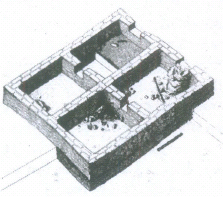
(i) Where is Mehrgarh located?
(ii) What type of houses were found in Mehrgarh?
(iii)Why is it considered as an important site?
40.
Why is the city of Arikamedu historically important?
41.
The following page is from a manuscript of the Rigveda. Answer the following questions related to this manuscript
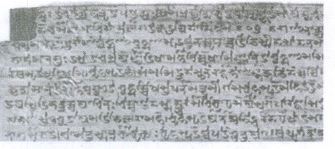
(i) Where is this manuscript preserved now?
(ii) On which material was this manuscript written?
(iii) From where have we found this manuscript?
(iv) What was this manuscript used for?
42.
Give a brief account on rural livelihoods.
43.
Discuss the relationship between Councillors and officials.
44.
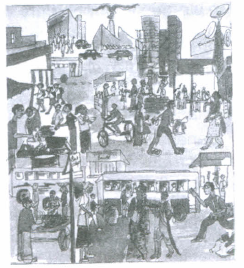
What do you see in this illustration?
45.
Look at the illustration and poem carefully and answer the following questions.
A daughter's wish
Father inherited our house from his father
And everyone says he'll leave it to brother
But what about me and my mother?
To expect a share in my father's home
Is not very womanly, I am told.
But I really want a place of my own
Not dowry of silk and gold.
(Source: Reflections on My Family, Anjali Monteiro, TISS)
(i) What does the above cartoon refer to?
(ii) Explain the right of women in property before and after Hindu Succession Amendment Act, 2005.
46.
Write short notes on the following domains of the earth.
(i) Lithosphere
(ii) Hydrosphere
(iii) Biosphere
47.
Answer the questions based on picture given below:
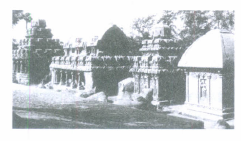
(i) Where are the monolithic temples shown in the picture located?
(ii) Why are they called monoliths?
(iii) What was the difference in the work of stone cutters?
48.
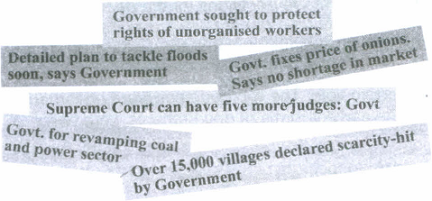
Look at the newspaper headlines above and list the different kinds of activities that the government is reported to be doing in these newspaper headlines.
1. 2. 3. 4.
(a) Isn't this a wide range of activities?
(b) What do you think government is? Discuss in class.
49.
Differentiate between the summer solstice and the winter solstice and the winter solstice.
50.
How can we calculate rate of time difference?
51.
Anwers the questions based on the given picture below.
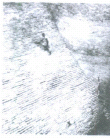
(i) Where is this fortification wall located?
(ii) How many years ago a part of this wall is built?
52.
Discuss the geographical extent of India.
53.
Answer the questions based on picture given below:
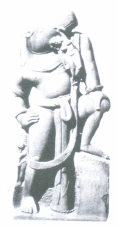
(i) What does statue depict?
(ii) When did Vishnu take the shape of a Boar?
54.
Look at the picture and answer the questions based on this:
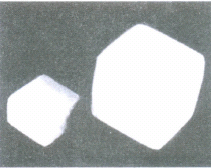
(i) Which type of weights are shown in the picture?
(ii) It was made from which type of stone?
(iii) Mention its use in the past?
55.
Answer the questions based on the picture given below:
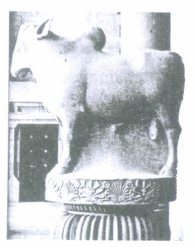
(i) Which type of bull is shown in the picture?
(ii) Above picture belongs to which dynasty?
(iii) Where it has been found?
56.
Answer the questions based on the picture given below:
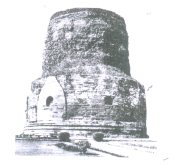
(i) Which type of monument is in the picture?
(ii) Why the monument was built?
57.
What were the major changes in the climate of the world, around 12,000 years ago?
58.
Answer the questions based on the picture given below:
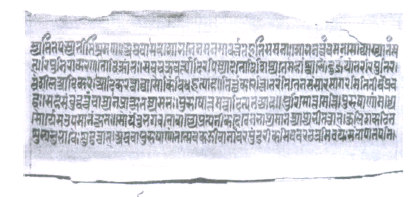
(i) How many years ago this manuscript was written?
(ii) How were books made from palm leaves?
(iii) What type of manuscripts is shown in the picture?
59.
On an outline map of the world, mark the following:
(i) Mountain ranges: Himalayas, Rockies and Andes.
(ii) Plateau Tibet
60.
Show the following cities on the outline map of India
(i) Rakhi Garhi
(ii) Sotkakoh
(iii) Kalibangan
(iv) Mohenjodaro
(v) Lothal
61.
On the outline map of the world, mark the following?
Europe, Asia, Antarctica, South America, Australia, Indian Ocean, Pacific ocean, Atlantic ocean and Ural mountains.
62.
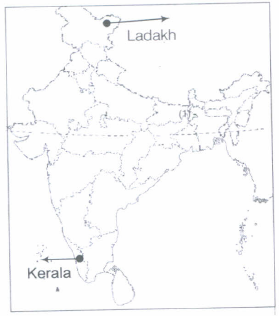
Look at the map of India in an Atlas and locate Kerala and Ladakh. Can you list three ways in which the different geographical location of these two regions would influence the following?
(i) The food people eat
(ii) The clothes they wear
(iii) The work they do.
63.
Mark the following important cities and kingdoms on the outline map of India:
(i) Thanesar (ii) Ujjain (iii) Pataliputra
64.
On an outline map of India, mark the following
(a) Tropic of Cancer
(b) Standard Meridian of India
(c) Andaman Islands and Lakshadweep Islands
(d) Western Ghat and Eastern Ghats.
65.
Mark the following Janapadas and Mahajanapadas on the outline map of India:
(i) Taxila (ii) Ujjain (iii) Vaishali (iv) Magadha (v) Gandhara (vi) Avanti
66.
Mark the following places on the outline map of India:
(i) Pataliputra
(ii) Ujjain
(iii) Rampurwa
(iv) Kaushambi
67.
Locate the following of the outline physical map of India.
(i) Tapi river
(ii) Brahmaputra river
(iii) Godavari river
68.
What role does the government play in our lives?
69.
What is a Khasra number?
70.
Name the major seasons experienced in India.
71.
What work does Shekar's family do? Why do you think that Shekar does not employ labourers for farming?
72.
Who is the head of Gram Panchayat?
73.
Explain the functions of District Civil Surgeon and District Education Officer.
74.
Explain the concept of Universal Adult Franchise.
75.
Name the planets which have rings around them. What are these rings made up of?
76.
What is meant by drought? Mention any two droughts affected states of India.
77.
What are the limitations of latitudes and longitudes?
78.
Can you see how some of the caves may have been hollowed out
79.
Which means were adopted by the traders to transport goods from one place to another?
80.
Name the different types of people who lived in the northern part of the subcontinent in the earlier times.
81.
Return to Rasheeda's question. Can you think of some answer to it ?
82.
In what ways is this house similar to the one in which you live?
83.
Read the paragraph given below very carefully and answer the following questions:
Bachchu Manjhi - A Cycle-Rickshaw Puller
I come from a village in Bihar where I worked as a mason. My wife and three children live in the village. We don't own land. In the village I did not get masonry work regularly. The income that I earned was not enough for our family. After I reached this city, I bought an old cycle-rickshaw and paid for it in instatments. This was many years ago. I come to the bus stop every morning and take the customers wherever they want to go. I work till 8:30 in the evening. I take rides of upto 6 km in the surrounding area.
Each customer gives me Rs 5-10 per trip dependinq on the distance. When I'm ill, I can't do this work. so on those days I don't earn anything. I stay with my friends in a rented room. They work in a nearby factory. I earn between Rs 80-100 every day, out of which I spend Rs 50-60 on food and rent. The rest I save for my family. I visit my village two or three times a year to see my family. Though my family survives on the money I send my wife also earns from agricultural work that she gets once in a while.
(i) Why did Bachchu Manjhi come to the city?
(ii) Why can't Bachchu Manjhi live with his family?
(iii) Bachchu Manjhi has to think twice before taking a day off from work. Why?
84.
What are the major landforms?
85.
Sea level is taken as zero and why it is used to measure height? Explain with reason.
86.
In what ways was the Vajji sangha different from the other mahajanapadas? Try and list at least three differences.
87.
What are the three components of a map?
88.
Why does the whole Earth not get day at the same time?
89.
Write a short note on the Sabha and Nagaram.
90.
Can you list some of the prejudices that you have noticed around you. How do they affect the ways in which people treat each other?
91.
If we divide the world into Eastern and Western hemispheres which hemisphere would India belong to?
92.
Do any of the names like jana or vish sound familiar?
93.
Describe three important buildings in your city or village. Are they located in a special part of the settlement (For example the centre)? What are the activities that take place in these buildings?
94.
Why do you think the king (Chandragupta) had special servants to taste the food he ate?
95.
How did the beggar convince the sages to share their food with him?
96.
Where do we find ostriches today?
1.
(a)
1920
2.
(c)
Bhim Rao Ambedkar
3.
(a)
Ward Councillors
4.
(b)
apartheid
5.
(c)
Both (a) and (b)
6.
(c)
pepper
7.
(b)
Uttar Pradesh
8.
(d)
China
9.
(d)
Raman
10.
(a)
In an export garment unit
11.
(c)
2005
12.
(a)
Plains
13.
(c)
Zila Parishad
14.
(b)
Fishing nets
15.
(b)
Asia
16.
(c)
Vaishali
17.
(c)
West
18.
(c)
Tropical evergreen forests
19.
(c)
Chandragupta II
20.
(c)
Both 'a' and 'b'
21.
22.
(a)
23 1 / 2°N
23.
(a)
Austro-Asiatic family
24.
(a)
Around 3000 years ago
25.
(b)
Milky Way galaxy
26.
(a)
Bindusara
27.
(a)
Sarnath
28.
(b)
2 million years ago
29.
(d)
Wheat and barley
30.
There are thousands of species of animals and a large variety of reptiles, amphibians, mammals, birds, insects and worms which dwell in the forest of India.
(i) The tiger is our national animal. It is found in various parts of the country. Gir forest in Gujarat is the home of Asiatic lions.
(ii) Elephants and one-horned rhinoceroses roam in the forests of Assam. Elephants are also found in Kerala and Karnataka.
(iii) Camels and wild asses are found in the Great Indian desert and the Rann of Kuchchh.
(iv) Wild goats, snow leopards, bears, etc. are found in the Himalayan region.
(v) Besides these, many other animals are found in our country such as monkey, wolf, jackal, nilgai, cheetah, etc.
(vi) There are several hundreds of species of snakes found in India. Cobras and kraits are important among them. India is equally rich in bird life.
(vii) The peacock is our national bird. Other common birds are parrots, pigeons, mynah, geese, bulbul and ducks.
(viii) There are several bird sanctuaries which have been formed to give birds their natural habitat. These provide the birds with protection from hunters.
31.
Sarpanch has various responsibilities, Some of them are as follows :
(i) Looking after street lights, construction and repair work of the roads in the villages and also, village markets, fairs, festivals and celebrations.
(ii) Keeping a record of births, deaths and marriages in the village.
(iii) Looking after public health and hygiene by providing facilities for sanitation and drinking water.
(iv) Providing education, implementing development schemes for agriculture and animal husbandry.
32.
The famous leader who faced discrimination was the Father of India, Mahatma Gandhi. He faced discrimination when he was in South Africa. He faced discrimination directed towards the Black South Africans and Indians. One day, in the court at Durban, he was asked to remove his turban by the Magistrate. Another incident was when he was thrown off a train after his refusal to move from the first class to the third class.
33.
(i) The members of the Lok Sabha are elected directly by the people.
(ii) Territorial areas called Parliamentary Constituencies are set up in each State and Union territory for the purpose of elections.
(iii) Seats are allotted to various States on the basis of their respective population.
(iv) Any number of candidates may contest an election from the same constituency.
(v) The candidate who secures majority of vote is declared elected to the Lok Sabha.
34.
The Sun is the head of the solar family with nine planets revolving around it. But now, Pluto is no longer considered as a planet because of the following reasons :
(i) A planet is a celestial body that revolves the Sun.
(ii) A planet must not be a satellite.
(iii) It must be big enough to dominate its orbit. Pluto does not adhere to the last part of the definition so, it is called a 'dwarf planet'.
35.
Assam is a North-Eastern state of India. It is famous for Assam tea and silk. A land of high rainfall, the place is endowed with lush greenery and the mighty river Brahrnapurta. Major religions of the state are Hinduism and Islam. Bihu is the important festival celebrated in Assam. It is the home of varieties of citrus fruits and leafy vegetables.
36.
(i) Fold mountains are generally formed in the less deformed areas adjacent to areas strongly affected by thrust tectonics.
(ii) Typically, they are found in the foreland region where a major mechanically weak horizon is present.
(iii) The frontal thrust (or thrusts) propagate(s) a long distance along the horizon and subsequent movement on the thrust can give rise to a sequence of folds as the hanging wall of the thrust effectively crumples.
(iv) The anticline crests may be high enough to form mountains.
(v) Most of the fold mountains are likely to be relatively young in geological terms as they will start eroding as soon as they are formed.
37.
The components of maps are:
(i) Symbols: Symbols are used on maps because it is not possible to show all details of an area as they actually are. These symbols make it easier to draw maps and also, to understand them.
(ii) Direction: There are four main directions i.e. East, West, South and North, known as the cardinal directions. Maps easily help us to locate direction on the given surface, because northern direction of a map is always marked as 'N'.
(iii) Distance: With the help of scale, large areas can be shown on a small scale map.
38.
(i) Establishment of Harsha-vardhan Empire: The breakup of the Gupta empire was followed by a period of disorder. Small kingdoms fought against one another. Finally, Harshavardhana conquered these kingdoms and established a powerful empire.
(ii) Military Campaigns: The capital of Harsha's empire was Kannauj. He conquered Punjab, Eastern Rajasthan and the whole of the Ganga valley up to Assam. He attacked the Chalukyan King but was defeated. Harsha did not annex all the territories that he conquered. He allowed some kings whom he defeated, to continue ruling. They accepted Harsha as their overlord and paid him an annual tribute.
(iii) Sources of Information: Banabhatta, a learned man who wrote a biography of Harsha called Harshacharita gives us information about this period.
Another source of information is Hieun Tsang, a Chinese Buddhist scholar who came from China via Central Asia to India. He stayed in India for 15 years. He gave an account of life in Harsha's period in a book called Si-Yu-Ki or records of the Western World.
(iv) Religion: Before embracing Buddhism, Harsha worshipped Shiva and Surya. Later on, he became a Buddhist like Ashoka, Manender and Kanishka. Like them, he was tolerant towards other religions. The Indian government practises this attitude of tolerance towards all religious even today.
(iv) Administration: Just like the Mauryas and Guptas, the king was assisted by a council of ministers. Unlike the Mauryas but similar to the Guptas, power was not centralised. Harsha's empire was also divided into provinces. These were headed by Governors.
39.
(i) Mehrgarh is located on a fertile plain, near the Bolan Pass, one of the most important routes into Iran.
(ii) The remains of square and rectangular houses were found at Mehrgarh. Each house was composed of four or more compartments, some of which may have been used for storage.
(iii) The evidences discovered at Mehrgarh prove that it was probably one of the places where women and men learnt to grow barley and wheat and rear sheep and goats for the first time in human history.
40.
(i) Between 2200 and 1900 years ago, Arikamedu was a coastal settlement where ships unloaded goods from distant lands.
(ii) A massive brick structure, which may have been a warehouse was found at the site.
(iii) Other findings include pottery from the Mediterranean region, such as amphorae (tall double-handled jars that contained liquids such as wine or oil) and stamped red-glazed pottery, known as Arretine Ware which was named after a city in Italy.
(iv) Roman lamps, glassware and gems have also been found at the site.
(v) Small tanks have been found that were probably dyeing vats, used to dye cloth.
41.
(i) This manuscript is now preserved in a library in Pune, Maharashtra
(ii) This manuscript was written on birch bark.
(iii) This manuscript has been found in Kashmir.
(iv) This manuscript was used to prepare one of the earliest printed texts of the Rigveda.
42.
There are several ways to earn a living of rural areas. These are farming and non-farming activities.
The farming activities are:
(i) Preparing the land
(ii) Sowing
(iii) Harvesting
(iv) Weeding
(v) Transplanting
People of rural areas are dependent upon the seasons, sometime they face problem such as failure of crops etc.
Non-farming activities are:
(i) Making baskets
(ii) Making utensils
(iii) Making pots
(iv) Making bricks
(v) Making bullock-carts
(vi) Fishing
(vii) Crafting
Some of the people have shops such as blacksmith's shop, tea shop, grocery shop, barber shop, cycle repair shop etc.
43.
Councillors are elected by the people and they keep their positions only if they are re-elected. Officials are appointed on merit basis by council management to a specified job within the municipal administration and are like any other employee In a Job. Officials possess the knowledge and skills on the technical and specialised aspects of municipal affairs. Councillors who don't have this knowledge have to rely on the reports of officials to help them make decisions.
Both the Councillors and officials decide the policies and direction of the municipality. Once the council has reached a decision, then officials are expected to carry these out in the most efficient and cost-effective manner.
44.
It is a busy street in a city with hawkers and vendors. Various types of vehicles like cycles, buses, cars are plying on the roads.
Some of the people are trying to board the bus.
Many other people are buying goods from various shops. Some children are going to school. Also some people are taking their meals at dhaba.
45.
(i) The above cartoon depicts a daughter who wants her place and says to her father that she doesn't want dowry of silk and gold but a place of her own.
(ii) Women had the following rights in property before the Hindu Succession Amendment Act, 2005:
(a) They did not get a share in the family's agricultural land.
(b) After the death of father, property was divided equally only among his sons.
Women have the following rights after the Hindu Succession Amendment Act, 2005:
(a) In this new law sons, daughters and their mothers can get an equal share in the land.
(b) The women can enjoy their independent status with equal rights.
46.
(i) Lithosphere It is made-up of solid rock surface of the earth's crust and the thin layers of soil, which contain nutrient elements essential for life. There are two main divisions of the earth's surface. The large landmasses are known as the continents and massive water bodies are called ocean basins.
(ii) Hydrosphere The earth is called the blue planet. More than 71 per cent of the earth is covered with water and 29 per cent is with land. Hydrosphere consists of water in all its forms. As running water in oceans and rivers and in lakes, ice in glaciers, underground water and the water vapour in atmosphere, all comprise the hydrosphere.
(iii) Biosphere It is the zone with existing life. There are several organisms found here from microbes to large animals. All the organisms are linked with each other and biosphere as well. The living organisms in biosphere can be broadly divided into plant kingdom and animal kingdom.
47.
(i)The monolithic temples shown the picture are located in Mahabalipuram.
(ii)They are called monoliths because each of these was carved out of a huge single piece of stone.
(iii)The stone cutters had to work from top downwards.
48.
List of the different kinds of activities that the government is reported to be doing in these newspaper headlines is:
(i) The Government protects the rights of unorganised workers.
(ii) The Government fixes the price of onions when they are in short supply.
(iii) The Government plans to tackle natural disasters like floods, earthquake, tsunami, ere as soon as possible.
(iv) Government revamps the coal and power sectors.
(a) Yes, the government has a wide range of activities.
(b) The government is the organisation which makes the decision with regard to:
• building roads and schools
• reducing the prices of essential commodities
• increasing the supply of electricity
• implementing several programmes to help the poor
49.
The difference between the summer solstice and the winter solstice is as follows:
Summer Solstice In the Northern hemisphere the longest day and the shortest night occur on 21st June. The Sunrays fall directly on the tropic of Cancer. All these conditions are opposite in Southern hemisphere and it is winter there. The nights are longer than the days in Southern hemisphere. This position of the Earth is called the summer solstice.
Winter Solstice The tropic of Capricorn receives direct rays due to tilting of South Pole towards the sun on 22nd December. The vertically falling sun rays at the tropic of Capricorn 23 1/2° provide heat to a larger portion of it. Therefore, it is summer in Southern hemisphere. This position of the Earth is called the winter solstice.
50.
The rate of difference of time can be calculated as follows:
The Earth rotates 360o in about 24 hours, i.e. 360/24 = 15o/ hour
15o in1 hour means, 60 minutes/15 = 4 minutes for 1o.
For example (i) When it is 12 noon at Greenwich, what time will be at 15o East of Greenwich?
(i) The time at 15o East of Greenwich (when it is 12 noon at Greenwich) will be 15x4 =60 minutes or 1 hour ahead of Greenwich, it means 1 p.m.
(ii) When it is 12 noon at Greenwich, what time wil be at 15o West of Greenwich? The time at 15o West of Greenwich (when it is 12 noon at Greenwich) will be 15x4 =60 minutes or 1 hour behind, it means 11 a.m.
The time at 180o will be 12 0' clock of mid-night when it is 12 noon at Greenwich.
51.
(i) This fortification wall is located at Kaushambi.
(ii) A part of this wall was probably built about 2500 years ago.
52.
India is a country of vast geographical expanse. In the North, it is bound by the lofty Himalayas.
The Arabian Sea in the West, the Bay of Bengal in the East and the Indian Ocean in the South, wash the shores of the Indian peninsula. India has an area of about 3.28 million sq. km.
The North-South extent from Kashmir to Kanyakumari is about 3,200 km. The East-West extent from Arunachal Pradesh to Kuchchh is about 2,900 km.
The lofty mountains, the Great Indian Desert, the Northern Plains, the uneven plateau surface and the coasts and islands present a diversity of landforms.
53.
(i)Statue depicts Vishnu as Varaha or Boar.
(ii) According to the Puranas, Vishnu took the shape of a boar in order to rescue the earth.
54.
(i) The picture shows stone weights.
(ii) They were made of chert stone.
(iii) They were used to weigh precious stones or metals.
55.
(i)Rampurwa bull is shown in the picture.
(ii)The picture belongs to the Mauryan dynasty.
(iii) Mauryan Pillar has been found in Rampurwa, Bihar
56.
(i)The monument in the picture is Buddhist Stupa at Sarnath.
(ii)Stupa was built to mark the place where the Buddha first taught his message.
57.
There were major changes in the climate of the world. Climate became relatively warm than the past. This warm condition led to some major changes:
(i) There was development of grasslands in many areas. As a result, the number of animals, which survived on grass, was increased. These animals were deer, antelope, goat, sheep and cattle.
(ii) This increasing number of animals helped people to start thinking about herding and rearing of these animals. Fishing became important.
(iii) At that time, several grains bearing grasses like wheat, barley, rice grew naturally and men became aware about where these grew and when they ripened. These grains were collected by men, women and children and they started thinking about growing these plants on their own.
58.
(i) This manuscript was written about a thousand years ago.
(ii) The palm leaves were cut into pages and tied together to make books.
(iii) A palm leaf manuscript.
59.
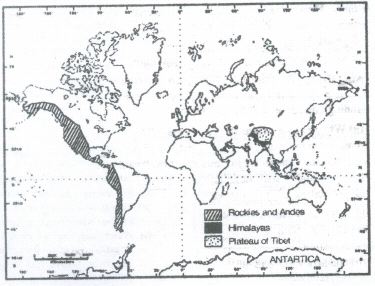
60.
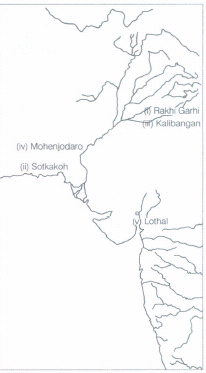
61.
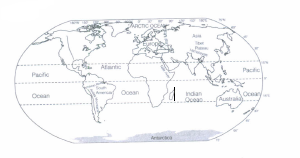
(A) Europe
(B) Asia
(C) Antarctica
(D) Sourh America
(E) Australia
(F) Indian ocean
(G) Pacific ocean
(H) Atlantic ocean
(I) Ural mountains
62.
Yes, we can list three ways in which the different geographical location of these regions (Kerala and Ladakh) would be influence:
| Kerala | ladakh | |
|---|---|---|
| Food | Rice, fish, vegetables | Meat and milk. |
| Clothes | Cotton and synthetic cloths. Loose cotton. No woollen clothes | Woolen and fur clothes. |
| Work | Fishing, agriculture | Sheep rearing, wool collection, trading |
63.
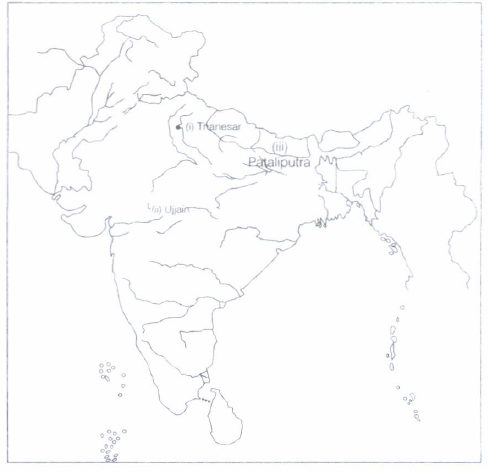
64.
65.
66.
67.
68.
The way our country has to run is determined by the government. At each and every level, the government makes laws that citizens have to comply with. The Government formulates and implements policies and programmes for the socioeconomic development of the nation which directly or indirectly affects our daily life.
69.
Khasra member is the number used for land which is owned by an individual villager or a village community .
70.
The major seasons experienced in India are:
(i) Cold Weather Season (Winter)-December to February.
(ii) Hot Weather Season (Summer)-March to May.
(iii) South-West Monsoon Season (Rainy)-June to September.
(iv) Season of Retreating Monsoon (Autumn)- October and November.
71.
Shekar's family had just finished the harvesting. He is the owner of two acres of land and manages to do all the work in the field with the help of his family members. It is subsistence agriculture for which outside labourers are not required
72.
The Sarpanch is the head of the Gram Panchayat
73.
District Education Officer and the District Civil Surgeon are two important officers. The health services of a district are under the Chief Medical Surgeon. He supervises all the hospitals and dispensaries of the district. Doctors, compounders and nurses assist the CM.O. in his work. The Education department of the district is looked after by the District Inspector of Schools. He makes frequent inspections to the schools and looks after the Education Department.
74.
(i) Right to vote is the bed-rock of a democratic system. It should be equally available to all.
(ii) Citizens cast their vote at regular intervals.
(iii) The Constitution of India has introduced Universal Adult Franchise. All the adults above the age of 18 years, irrespective of their castes, colour and or sex are entitled to participate in the elections.
75.
Jupiter, Saturn, and Uranus have rings around them. A planetary ring is a ring of cosmic dust and other small particles orbiting around a planet in a flat disc-shaped region.
76.
Drought is a dry weather condition that persists long enough to cause problems such as crop damage and water supply shortages. The two states that are severely affected by drought are Rajasthan and Gujarat.
77.
Latitudes and longitudes can locate the exact location of a place, but they are not uniform units of measurement.
(i) If we look at the globe, we will see that longitudes are closer together as we move towards north and south of the Equator.
(ii) Only near the Equator, the distance represented by 1° longitude is equal to the distance represented by 1° latitude
78.
Yes, these caves may have been hollowed out. These caves had been shaped and carved.
79.
Traders carried many goods to Rome in ships, across the sea, and by land in caravans. Traders explored several sea routes and followed the coasts. The sailors took advantage of the monsoon winds to cross the seas more quickly.
80.
In the northern part of the sub-conntinent:
(i) The village headman was known as the Grama Bhojaka.
(ii) The independent farmers were known as grihapatis, most of whom were smaller landowners.
(iii) The other men and women who did not own land, and had to earn their living by working on the fields owned by others, were known as dasa karmakara.
81.
Rasheeda's question was how could anyone know what had happened so many years ago. There are various ways by which the people can know about the past.
(i) By the study of remains left by the early men in the form of tools, weapons, pots, pans, ornaments and coins.
(ii) Various inscriptions written on hard surfaces which contain both scripts and languages and these inscriptions were deciphered.
(iii) By various manuscripts and religious books, epics and poems.
82.
There are many similarities such as its shape, construction and material used in construction.
83.
(i) Bachchu Manjhi came to the city to find work. He did not get masonry work regularly in his village. The income that he earned was not sufficient for his family. Sohe came to the city.
(ii) Bachchu Manjhi cannot live with his family because he lives in a rented room with his friends.
(iii) Bachchu Manjhi is a cycle-rickshaw puller. He earns about Rs 80 to 100 per day, out of which he spend Rs 50 to 60 on food and rent. If he takes leave from work, he will not be able to earn money for himself and his family.
84.
The major landforms are mountains, plateaus and plains.
85.
The level of sea water remains the same everywhere in the world. The elevation of the land is measured from the level of sea, which remains always same and taken as zero.
86.
The Vajji sangha was different from the other mahajanapadas in these ways:
| Vajji Sangha | other Mahajanapadas |
| Vajji sangha was under a different form of government known as gana or sangha. |
They were governed by strong rulers. |
|
In the sangha. there were many rulers, |
There was a single powerful ruler. |
| If Vajji was attacked by an enemy, the different rulers met to discuss what should be done and how. Jointly they fought against the enemy. There was no big army. |
The rulers maintained big armies. For this, they collected different taxes. |
87.
The three components of a map are distance, direction and symbol.
88.
It is because the rays of the sun are slanting due to the Earth's inclined position and movement of the Earth. The Earth is spherical in shape, so only half of it gets light from the sun at a same time. The portion facing sun experiences day while other portion experiences night.
89.
The inscriptions of the Pallavas mention a number of local assemblies. These were:
The Sabha It was an assembly functioned through sub-committees, which looked after irrigation, agricultural operations, making roads, local temples etc.
The Nagaram It is an organisation of merchants. It is likely that these assemblies were controlled by rich and powerful landowners and merchants.
90.
List of some prejudices that I have noticed around me are:
(i) Prejudice against caste, creed
(ii) Prejudice against colour, eating habits and living style.
(iii) Prejudice against gender
They affect how people treat each other in the following ways:
(i) They comment on other people.
(ii) They abuse other people.
(iii) They use dirty languages.
(iv) They laugh at other people.
91.
India belongs to Eastern hemisphere.
92.
The words 'jana' or 'vish' are familiar, which were used to describe people or the community as a whole. The word jana is still used in Hindi and other languages.
93.
The three important buildings in my city (Delhi) are:
(i) Rashtrapati Bhavan It is official residence of the President of India.
(ii) Parliament House In this house, elected Members of Parliament (MPs) meet and discuss all the important issues regarding the country.
(iii) Supreme Court It is the highest court of our country where all the major cases are decided.
All these are located in important areas of our national capital.
94.
The king was afraid that someone might try to kill him, so he had special servants to taste the food before he ate.
95.
The beggar convinced the sages that all people are part of the universal world i.e., God, and he is also a part of the universal soul. If the sages refused food to the beggar, they are refusing it to God. So, the sages shared their food with him.
96.
Now-a-days, in India, it has been rarest, but in the African countries we can find them.

6th Standard CBSE Syllabus & Materials
6th Standard CBSE
CBSE 6th Social Science Locating Places on the Earth - New Sample Question Papers Study Material - QB365 Set A
NEW6th Standard CBSE
CBSE 6th Science A Journey Through States of Water - New Sample Question Papers Study Material - QB365 Set A
NEW6th Standard CBSE
CBSE 6th Science Temperature and its Measurement - New Sample Question Papers Study Material - QB365 Set A
NEW6th Standard CBSE
CBSE 6th Science Materials Around Us - New Sample Question Papers Study Material - QB365 Set A



CBSE 6th Standard CBSE Subjects
CBSE Standards




