
 100% FREE ACCESS
6th Standard Syllabus & Materials
6th Standard
TN 6th Tamil பருவம் 1 - இயல் 1 - மொழி -தமிழ்த்தேன் - இன்பத்தமிழ் Sample Question Papers Study Material - QB365 Set A
NEW6th Standard
TN 6th English T1 - Supplementary - The Apple Tree and The Farmer Sample Question Papers Study Material - QB365 Set A
NEW6th Standard
TN 6th English T1 - Prose - When The Trees Walked Sample Question Papers Study Material - QB365 Set A
NEW6th Standard
TN 6th Social Science T3 - CIV - Road Safety Sample Question Papers Study Material - QB365 Set A
NEW6th Standard
TN 6th Social Science T3 - CIV - Local Bodies - Rural and Urban Sample Question Papers Study Material - QB365 Set A
NEW6th Standard
TN 6th Social Science T3 - CIV - Democracy Sample Question Papers Study Material - QB365 Set A

Published on: 29/02/2020
6th Standard Social Science Book Back and Creative Important questions 2020
Download Tamil Nadu 6th Standard Social Science question papers, model tests, one-mark questions, important questions, and public exam papers in PDF format. Free study materials and answer keys for TN State Board students.
Questions + Answers key
Take MCQ Social Science Test
1.
Ashoka fought the _________war in 261 BC (BCE).
northern India
Kalinga
Janapadas
Magadha
2.
A________ is the one who revealed religious truth at different times
the shower of stars
to sacrificial rites
Tirthankaras
3.
The Upanishads taught as alternative_________ were too philosophical, which a layperson could not understand.
the shower of stars
to sacrificial rites
Tirthankaras
4.
Find the odd one:
Material remains such as iron implements and pottery from the archaeological sites
Punjab
Uttar Pradesh
Bombay
Rajasthan
5.
Find the odd one:
The Kuru and Panchala kingdoms flourished and large cities like
Ayodhya
Indraprastha
Mathura
Harappa
6.
________was headed by Gramani
Gramani
Viz
Grama
7.
Which of the following are the sources of Mauryan period?
Artha Sastra
Indica
Mudrarakshasa
All
8.
The Kingdom which was most powerful among the four Mahajanapadas
Anga
Magadha
Kosala
Vajji
9.
Where did Buddha deliver his first sermon?
Lumbini
Saranath
Taxila
Bodh Gaya
10.
What was the ratio of land revenue collected during Vedic Age
1/3
1/6
1/8
1/9
11.
Our National Motto “Sathyameva Jayate” is taken from ___________
Brahmana
Veda
Aranyaka
Upanishad
12.
Consider the following statements
Statement I: Jupiter is the eighth planet from the Sun.
Statement II: Jupiter is the Gaseous Giant planet.
Which of the following statements is/are time?
I is true, II is wrong
I is wrong, II is true
Both the statements are true
Both the statements are wrong
13.
Apartheiod, the racist policy was brought to an end by
Martin Luther
Nelson Mandela
Mother Theresa
Tagore
14.
The land surrounded by water on three sides is called
Bay
Strait
Peninsula
Trench
15.
The longest mountain range In the world is
Himalayas
Rocky
Andes
Alps
16.
___________is self luminous and gives light on its own
sun
Moon
Star
Earth
17.
Galaxy means the huge cluster of_____________
Planets
Asteroids
Stars
Meteors
18.
I) Madurai was a prominent town of Tamizhagan.
II) n archaeological excavation has been done In Keezhadi near .dural.
III) Wom n purchased thin s from Allangadl without any fear
i) is correct
ii) is correct
iii) is correct
i), ii), iii) all are correct
19.
statement: Kanchi was an educational centre.
Reason: Hieun Tsang pursued his further studies at Kadigai.
Statement and Reason are wrong.
Statement correct but Reason is wrong
Both statements and Reason are correct
Statement is wrong but Reason is correct.
20.
Name the place related to the export of Sandal.
Western Ghats
Southern Sea
Eastern Sea
Elam
21.
Who was the first ruler to give up war after victory
Bimbisar
Raja Raja Chola
Akbar
Ashoka
22.
Where did early man live?
mud house
under tree
caves
river banks
23.
The dancing girl statue was made out of
gold
silver
bronze
iron
24.
These people had a big toe to hold tightly and less protruding face
Homo erectus
Homo habilis
Neanderthal
Homo sapiens
25.
Which article of the Constitution says discrimination against any citizen on grounds only of religion, race, caste, sex, place of birth or any of them is not permitted?
14(1)
15(1)
16(1)
17(1)
26.
Viswanathan Anand became India’s first grandmaster in the year.
1985
1986
1987
1988
27.
Name the book/s written by A.P.J. Abdul Kalam
India 2020
Wings of Fire
Ignited Minds
All of these
28.
‘Discovery of India’ – a book was written by
Rajaji
V.O.C
Nethaji
Jawaharlal Nehru
29.
Which one of the following religion is not practised in India
Sikhism
Islam
Zoarastrianism
Confucianism
30.
India is known as a
Continent
Sub continent
Island
None of these
31.
The Malacca Strait connects
The Pacific and Atlantic Oceans
The Pacific and Southern Oceans
The Pacific and Indian Oceans
The Pacific and Arctic Oceans
32.
The Tropic of Capricorn faces the Sun directly on
March 21
June 21
September 23
December 22
33.
Which is not the oldest city among the following ones?
Madurai
Kancheepuram
Poompuhar
Chennai
34.
Which of the following region has a city more than 6500 years old?
Iraq
Indus Valley
Tamilagam
Thondaimandalam
35.
Indus Civilisation belonged to
Old Stone age
Medieval stone age
New stone age
Metal age
36.
Tanzania is situated in the continent of
Asia
Africa
America
Europe
37.
The process of evolution is _____________ .
direct
indirect
gradual
fast
38.
What was the step taken by the early man to collect his food?
Trade
Hunting
Painting
Rearing of animals
39.
Give an example for the human resources?
40.
What is meant by secondary acitivies?
41.
What makes the changes?
42.
Place the following words in the appropriate column.
Words: Jina, Mahayana, Tirthankaras, Stupas Nirvana, Digambara, Tripitakas, Agama
| Jainism | Buddhism |
43.
Write a short note about Gurukula System of Education?
44.
How did the barter system prevalent?
45.
Name the new animal used by the Aryans?
46.
What are resources?
47.
Renewable resources.
48.
When you arrange the continents in ascending order according to their size, which ranks third?
49.
Complete the given table with the help of an atlas. Follow the example
| S.No | Continent | Plateau | Plains |
| 1. | Asia | Tibetan Plateau | Yangtze Plain |
| 2. | North America | ||
| 3. | South America | ||
| 4. | Australia | ||
| 5. | Europe | ||
| 6. | Africa |
50.
What is discrimination?
51.
What is Prejudice?
52.
Name the oceans which surround North America and South America.
53.
Why is India called a sub continent?
54.
Define diversity.
55.
Name the scholars who were born at Kancheepuram.
56.
What is the difference between Naalangadi and Allangadi.
57.
Write a brief note on ancient cities of India.
58.
Indus Civilisation is called urban civilisation. Give reasons.
59.
Why Indus Civilisation is called Bronze Age civilisation?
60.
Why were axes made?
61.
Name any two artefacts?
62.
Mention the places from where we got pre-historic tools.
63.
Mark the following in the outline map of India.
1. Neyveli
2. Bay of Bengal
3. Arabian Sea
4. Forest region of Tamil Nadu
5. Indian Ocean
6. Iron mining in Kanjamalai(Salem)
64.
Map reading (with the help of atlas )
a. A sea in the east of India
b. Continents in the west of Atlantic Ocean
c. Continents in the south of Arctic Ocean
d. A strait between India and Sri Lanka
e. Oceans which surround Australia
f. Find out the Isthumusses
(Create more questions)
65.
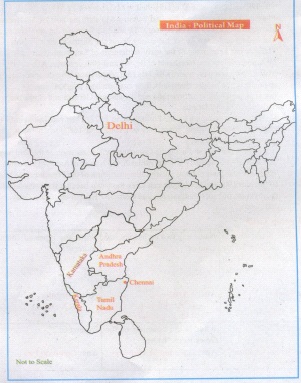
Mark the following places in the political map of India.
a. Delhi
b. Chennai
c. Tamil Nadu
d. Andhra Pradesh
e. Kerala
f. Karnataka
66.
Explain in detail classification on the basis of distribution.
67.
| SI. No. | Picture | Primary/secondary/tertiary | What is this? | Region in which it is found |
| 1. | 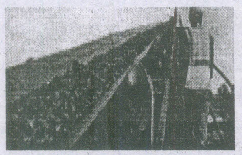 |
|||
| 2. | 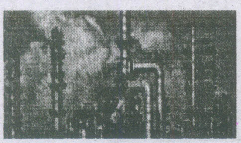 |
|||
| 3. |  |
|||
| 4. |  |
68.
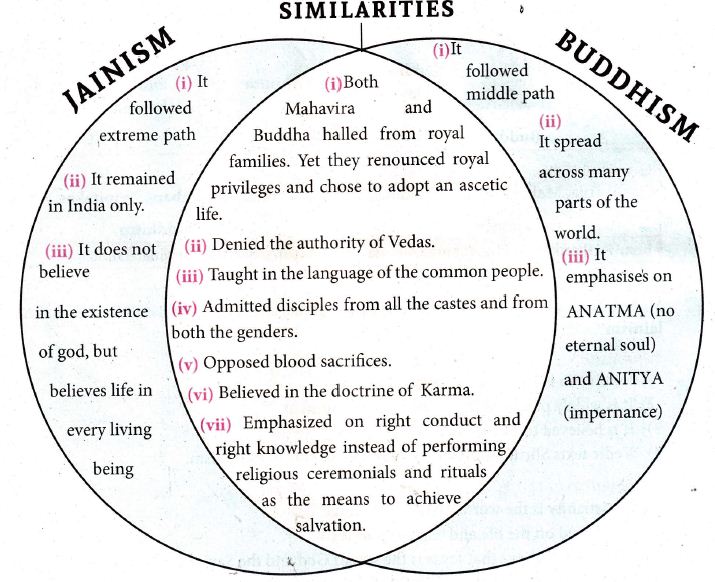
Make a Venn diagram to indicate similarities and dis-similarities of Jainism and Buddhism.
69.
Differentiate universal and localized resources.
70.
Write any five welfare measures you would do if you were a king like Ashoka?
71.
Write any three causes for the rise of Magadha.
72.
Karma – a person’s action. Name any 10 good actions (deeds).
73.
Write about the Vedic women in a pragraph.
74.
You know the importance of conservation of forests. Do you think conservation of mountains is also equally important?
75.
Look at the picture and answer the questions given below.
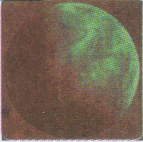
a) Identify the planet
b) What is the colour of the planet?
c) Why is it of this colour?
76.
Study the picture and answer the given questions.
a. Which is the closest planet to the Sun?
b. Which is the largest planet?
c. Which is the fart~est planet from the Sun?
d. Which is the second smallest planet?
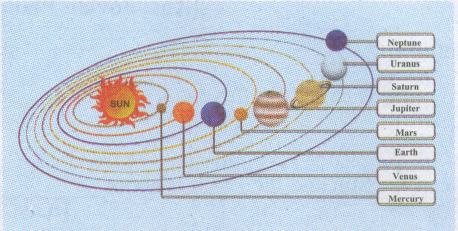
77.
Observe the following features of Indus Civilisation and compare that with the present day.
a. Lamp post
b. Burnt bricks
c. Underground drainage system
d. Weights and measurement
e. Dockyard
78.
What are the causes of Prejudice?
79.
Kancheepuram was famous for education. Prove this statement.
80.
Write about the accounts given by scholars about Kanchi.
81.
Importance of invention of wheel from the ancient period to the modern period.
82.
How were dogs useful to pre historic men?
83.
Explain Linguistic diversity and cultural diversity.
84.
Mention the classification of land forms.
1.
(b)
Kalinga
2.
(c)
Tirthankaras
3.
(b)
to sacrificial rites
4.
(c)
Bombay
5.
(d)
Harappa
6.
(c)
Grama
7.
(d)
All
8.
(b)
Magadha
9.
(b)
Saranath
10.
(a)
1/3
11.
(d)
Upanishad
12.
(b)
I is wrong, II is true
13.
(b)
Nelson Mandela
14.
(c)
Peninsula
15.
(c)
Andes
16.
(a)
sun
17.
(c)
Stars
18.
(d)
i), ii), iii) all are correct
19.
(c)
Both statements and Reason are correct
20.
(a)
Western Ghats
21.
(d)
Ashoka
22.
(c)
caves
23.
(c)
bronze
24.
(b)
Homo habilis
25.
(b)
15(1)
26.
(d)
1988
27.
(d)
All of these
28.
(d)
Jawaharlal Nehru
29.
(d)
Confucianism
30.
(b)
Sub continent
31.
(c)
The Pacific and Indian Oceans
32.
(d)
December 22
33.
(d)
Chennai
34.
(b)
Indus Valley
35.
(d)
Metal age
36.
(b)
Africa
37.
(c)
gradual
38.
(b)
Hunting
39.
People are also referred to as resources
40.
Primary resources transforming of raw materials into finished goods is called Secondary Activities.
41.
According to the ever changing needs, resources keep changing.
42.
| Jainism | Buddhism |
| Jina, Tirthankaras, Digambara,Agama | Mahayana, Stupas Nirvana,Tripitakas, |
43.
(i) The gurukula system is an ancient learning method.
(ii) The word Gurukula is a combination of the Sanskrit Word Guru (teacher or master) and Kula (family or home).
(iii) The shishyas resided with their guru and served them and simultaneously learnt and gained knowledge.
(iv) The students received education through oral tradition meaning rote learning, and were required to memorise everything.
44.
(i) Barter system was prevalent (exchange of goods).
(ii) They used Nishka, Satmana (gold coins) and Krishnala (silver coins) for business transactions.
45.
(i) In the later Vedic period the Aryans tamed elephants, apart from cow, goat, sheep and horse.
46.
(i) Anything that fulfills human needs can be called a resource.
(ii) Resources can be natural, man-made and human resources.
47.
Resources once consumed can be renewed with the passage of time are called renewable resources. (e.g) Air, Water, Sunlight.
48.
Antarctica.
49.
| S.No | Continent | Plateau | Plains |
| 1. | Asia | Tibetan Plateau | Yangtze Plain |
| 2. | North America | Colorado Plateau | Great Plains |
| 3. | South America | Altiplano Plateau | Pampas |
| 4. | Australia | Western Plateau known as Australian shield | Nullarbor |
| 5. | Europe | Hardangervidda | North European Plain |
| 6. | Africa | East African Plateau | Serengeti Plains |
50.
(i) Discrimination can be defined as negative actions towards people.
(ii) Discrimination can happen the basis of colour, class, religion and gender.
51.
Prejudice means to judge other people in a negative or inferior manner, without knowing much about them. It happens when people have false belief and ideas.
52.
1. Pacific Ocean
2. Atlantic Ocean
53.
(i) A continent is a very large area of land with various physical features such as mountains, plateaus, plains, rivers and seas and various types of weather patterns
(ii) India has all of them.
(iii) So, India is known as a sub-continent.
54.
People speak different languages, eat different kinds of food, celebrate their own festivals and different cultures, worship in different ways, yet we live together. This is known as diversity.
55.
Scholars like Dharmabalar, Jothibalar, Sumathi and Bodhi Dharamar where born in Kanchi.
56.
| Naalangadi | Allangadi |
| Day Market of Sangam Age is called Naalangadi. | Evening Market of Sangam Age is called Allangadi |
57.
1. Harappa
2. Mohenjo - Daro
58.
Indus Civilisation is called urban civilisation because
(i) There was well-conceived town planning.
(ii) Astonishing masonry and architecture were found.
(iii) Priority was given for hygiene and public health.
(iv) They used Standardised weights and measures.
(v) They had solid agricultural and artisanal base.
59.
Indus, civilisation is called Bronze Age civilisation because it is a historical period characterised by the use of articles made of bronze.
60.
The axes were made to cut trees, remove barks, dig pits, hunt animals and remove the skin of animals.
61.
(i) Potteries
(ii) Toys
(iii) Tools
(iv) Ornaments
62.
(i) Tamil Nadu - Athirampakkam, Adichanallur, Paiyampalli
(ii) Karnataka - Hunasagi Valley
(iii) Mathya Pradesh - Bimbetka
(iv) Andra Pradesh - Brahmagiri
63.
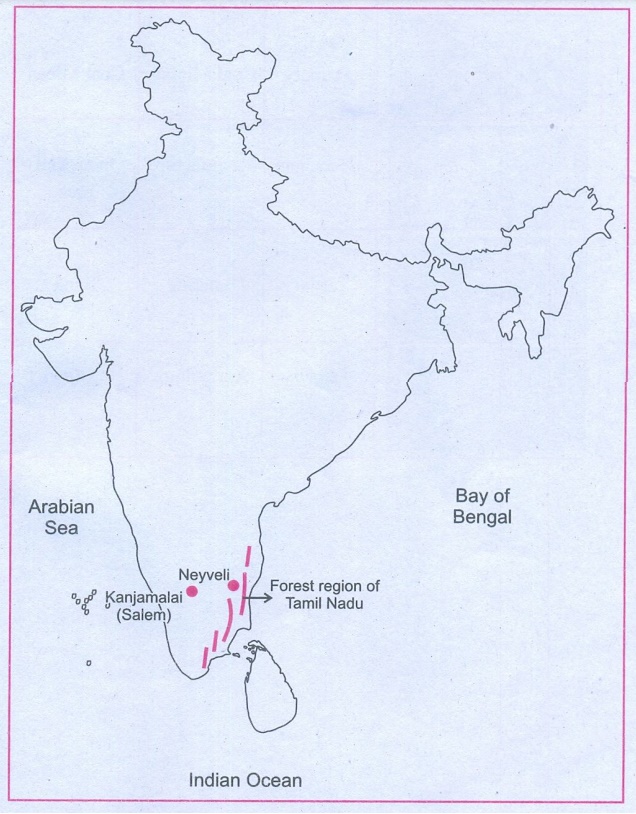
64.
a. Bay of Bangal
b. North America and South America
c. Almost completely surrounded by Eurasia and North America.
d. Palk Strait.
e. Indian Ocean to the west, the South Pacific Ocean to the East and the Southern
Ocean to the South.
f. Isthumusses -ANarrow piece ofland connecting two larger areas across an expanse of water. Isthumus of Panama - Central America.
65.
66.
ON THE BASIS OF DISTRIBUTION:
On the basis of distribution, resources can be classified into localized resources and universal resources.
(i) When resources are present in specific regions they are called localized resources.
(e.g.) Minerals.
(ii) Some resources are present everywhere Such resources are called universal resources.
(e.g.) Sunlight and air.
(ii) On National resources are resources within the political boundaries and oceanic area of a country.
(e.g.) Tropical forest regions of India.
67.
| SI. No. | Picture | Primary/secondary/teritary | What is this? | Region in which it is found |
| 1. | |
Mining | Primary activity | Coal mining |
| 2. | |
Refining | Secondary activity |
Oil refining |
| 3. | |
Banking | Tertiary activity | Bank |
| 4. | |
Agriculture | Primary activity | 'Farming |
68.
69.
| S.No | Universal resources | Localised resources |
| 1. | When resources are present in specific regions they are called localized resources. |
Some resources are present everywhere such resources are called universal resources. |
| 2. | Eg: Minerals | Eg: Sunlight and air |
70.
If I were a King like Ashoka; I will implement some schemes.
Education:
To provide quality and equal free education to all from primary to higher studies.
Medical Aid:
To provide quality and free medical aid to all.
Health:
To provide basic needs like food, shelter, dress to all.
Economics:
To develop the economic status of our country giving importance to agricultural activities.
Employment:
To create employment opportunities for growing population from long term schemes.
Information technology:
Due to up coming technologies in the world I will implement new schemes to modernise the
71.
The Causes for the Rise of Magadha
(i) Magadha was located onthe lower part of the Gangetic plain. The plain was fertile which ensured the rich agricultural yield. This provided regular and substantial income to the state.
(ii) The thick forests supplied timber for construction of buildings and elephants for army.
(iii) Abundance of natural resources especially iron enabled them to equip themselves with weapons made of iron.
(iv) Growing trade and commerce facilitated movement of people as well as settlement of people in centres of arts and crafts.
(v) The outcome was urbanization and emergence of Magadha as an empire.
72.
(i) Not to kill any living things.
(ii) Not to steal in any situation;
(iii) No sexual miscontacts.
(iv) Right speech and thoughts.
(v) Right livelyhood.
(vi) No greed.
(vii) No Anger.
(viii) Good View.
(ix) Right efforts.
(x) Right knowledge.
73.
Status of women in Rig Vedic Period:
(i) In Rig Vedic society, women relatively enjoyed some freedom.
(ii) The wife was respected as the mistress of the household.
(iii) She could perform rituals in her house.
(iv) Child marriage and sati were unknown.
(v) There was no bar on the remarriage of widows.
(vi) Nevertheless, the women were denied right.to inherit property from their parents.
(vii) They played no role in public affairs.
Later Vedic period:
(i) In the later Vedic period the role of women in society, as well as their status, even within the family, declined.
(ii) Women could no longer perform rituals in the family.
(iii) The rules of marriage became much more rigid.
(iv) Polygamy became common.
(v) Widow remarriage was not encouraged.
(vi) Education was denied to women.
(vii) lntercaste marriages were spurned.
74.
(i) Mountains make up more than a quarter of the planet's land mass. These surfaces provide resources for nearly 700 million people through out the world.
(ii) Mountains provide energy resources, food and water to people all around the world.
(iii) But climate change could cause mountains to shrink.
(iv) Deforestation has also been a threat while natural disasters often damage many mountains.
(v) Mountains are among the most beautiful land masses in the world. So like conservation of forests, conservation of mountains also equally important.
75.
a) Uranus
b) Green
c) Due to the presence of methane
76.
a. Mercury
b. Jupiter
c. Uranus
d. Mars
77.
(a) Lamp post
(i) Each house and street had a lamp post in Indus civilisation.
(ii) Now a days there is no electric lamp post in deep rural area.
(b) Burnt bricks
(i) The houses were built using baked bricks and mortar.
(ii) Present days we built varity of houses like concrete house, thatch house, etc....
(c) Underground drainage system
(i) Many of these cities in Indus has covered drains. The drains were covered with slabs or bricks.
(ii) Now a days underground drainage system is functioning only major cities.
(d) Weights and measurement
(i) Indus people had developed a systern of standardised weights and measures.
(ii) Present day we used electronic weighing machine also.
(e) Dockyard
(i) A naval dockyard has been discovered in Lothal in Gujarath. It shows the manitime activities of the Indus people.
(ii) Now a days there are so many seaports spread in all over India.
78.
Some common social factors. that contributes to the rise of prejudice are
(i) Socialisation
(ii) Conforming behaviours
(iii) Economic benefits
(iv) Authorita, rian personality
(v) Ethno-cntrism
(vi) Group losure
(vii) Conflicts
79.
(i) A place of learning is called school.
(ii) Several schools were established in great numbers for the first time in Kancheepuram.
(iii) Jains studied in Jainapalli, and Buddhists studied in Viharas.
(iv) The greatness of Kanchi as an educational centre can be understand from the fact that the chinese traveller Hieun Tsang who studied at Nalanda University visited Kanchi 'Kadigai' to pursue his further studies.
(v) Poet kalidasa says, "Kanchi is the best of the towns".
(vi) Tamil poet saint Thirunavukarasar praises kanchi as "Kalviyil Karai illatha Kanchi".
80.
(i) Scholars like Dharmabalar, Jothibalar, Sumathi and Bodhi Dharmar were born in Kanchi.
Bodhi Dharmar:
(i) Bodhi Dharmar is considered the found father of zen Buddhism
(ii) He taught martial arts to the Chinese and also how to control the breath to strengthen the blood and immune system energize the brain.
(iii) He passed away around 534 C.E.
Dharmapala:
(i) He lived in patatitta vihara near Kanchi.
(ii) He wrote pali commentaries for some of the Tripitakas.
(iii) He taught at Nalanda University but died young at the age of 32.
81.
(i) The invention of wheel by human is considered to be the foremost invention,
(ii) The invention of wheel made pot making easier.
(iii) The wheel helps to man one place to another place.
(iv) It is used to transportation in trading goods.
(v) In modern days the wheel is most significance in Transport facilities.
(vi) It also used in function of machine in several factories
82.
(i) In ancient period, the people lived in caves.
(ii) Hunting was their main occupation.
(iii) Caves did not live in such a safe environment.
(iv) There might have been changes of wild animals entering caves.
(v) But they realised that dogs could help them prevent the entry of such dangerous animal by sniffing skill.
(vi) Hence they started domesticating dog for their protection and hunting activities.
83.
(i) According to census of India 2001, India has 122 major languages and 1599 other languages.
(ii) Four major Indian language families are Indo-Aryan, Dravidian, Austroasiatic, and Sino Tibetian. Tamil is the oldest Dravidian language.
(iii) Historically, the Portuguese, the Dutch, the British, the Danish and the French came to India for trade and their occupation of India or some parts of it has left behind a certain impact upon the culture and language of the people.
(iv) Because the British ruled over the entire country for over three hundred years before independence in 1947, the English language gained prominence in India. In due course, English has emerged as an important language and a medium of instruction in schools and colleges.
(v) It is widely used in official communication and daily life.
Cultural Diversity :
(i) The term 'culture' refers to customs and practices of people, their language, their dress code, cuisine, religion, social habits, music, art, and architecture.
(ii) The culture of a group of people is reflected in their social behavior and interactions.
(iii) The group identity fostered by social patterns is unique to a group.
(iv) Art and architecture are an integral part of every community.
(v) It develops as a part of culture and tradition of a community.
(vi) Each of the 29 states and 7 Union territories of India has rich traditions and unique ways of artistic expression.
84.
CLASSIFICATION OF LAND FORMS:
First Order:
Continents: The vast land masses on earth are called continents.
Oceans: Oceans are vast expanse of water.
Second Order:
Mountains: A landform that rises 600 metre above its surroundings and has steep slopes is called a mountain.
Plateaus: Plateaus are the elevated portions of the earth that have flat surfaces bounded by steep slopes.
Plains: Plains are a flat and relatively low lying lands.
Third Order:
(i) Third order landforms are formed on Mountains, plateaus, and plains mainly by erosional and depositional activities of rivers, glaciers, winds and waves.
(ii) Valleys, beaches and sand dunes are some examples of the third order landforms.

6th Standard Syllabus & Materials
6th Standard
TN 6th Social Science T3 - GEO - Understanding Disaster Sample Question Papers Study Material - QB365 Set A
NEW6th Standard
TN 6th Social Science T3 - GEO - Globe Sample Question Papers Study Material - QB365 Set A
NEW6th Standard
TN 6th Social Science T3 - GEO - Asia and Europe Sample Question Papers Study Material - QB365 Set A
NEW6th Standard
TN 6th Social Science T3 - HIS - South Indian Kingdoms Sample Question Papers Study Material - QB365 Set A



Tamilnadu Stateboard 6th Standard Subjects
Tamilnadu Stateboard Standards



