
 100% FREE ACCESS
6th Standard Syllabus & Materials
6th Standard
TN 6th Tamil பருவம் 1 - இயல் 1 - மொழி -தமிழ்த்தேன் - இன்பத்தமிழ் Sample Question Papers Study Material - QB365 Set A
NEW6th Standard
TN 6th English T1 - Supplementary - The Apple Tree and The Farmer Sample Question Papers Study Material - QB365 Set A
NEW6th Standard
TN 6th English T1 - Prose - When The Trees Walked Sample Question Papers Study Material - QB365 Set A
NEW6th Standard
TN 6th Social Science T3 - CIV - Road Safety Sample Question Papers Study Material - QB365 Set A
NEW6th Standard
TN 6th Social Science T3 - CIV - Local Bodies - Rural and Urban Sample Question Papers Study Material - QB365 Set A
NEW6th Standard
TN 6th Social Science T3 - CIV - Democracy Sample Question Papers Study Material - QB365 Set A

Published on: 04/02/2020
6th Standard Social Science Important Questions
Download Tamil Nadu 6th Standard Social Science question papers, model tests, one-mark questions, important questions, and public exam papers in PDF format. Free study materials and answer keys for TN State Board students.
Questions + Answers key
Take MCQ Social Science Test
1.
Which one is not a secondary sector in Forest based industries?
Paper mills
Furniture making
Aluminium Industries
Building Materials,
2.
Which one is not a secondary sector in Agro based industries?
Cotton textiles
Sugar mills
Food processing
Sea food processing
3.
___________is native to Asia and the only bird which has a tail.
Banyan tree
Lotus
Peacock
Tiger
4.
New intellectual awakening began to develop in._________
northern India
Kalinga
Janapadas
Magadha
5.
A________ is the one who revealed religious truth at different times
the shower of stars
to sacrificial rites
Tirthankaras
6.
The Upanishads taught as alternative_________ were too philosophical, which a layperson could not understand.
the shower of stars
to sacrificial rites
Tirthankaras
7.
Find the odd one:
Material remains such as iron implements and pottery from the archaeological sites
Punjab
Uttar Pradesh
Bombay
Rajasthan
8.
________was headed by Gramani
Gramani
Viz
Grama
9.
People then move to a new piece of land for________
cultivation
industrial
manufactures
10.
Which of the following is not a fundamental right?
Right to freedom
Right to equality
Right to vote
Right to education
11.
The Constitution Day is celebrated on
January 26
August 15
November 26
December 9
12.
The time taken to play the National Anthem is ____________
50 seconds
52 minutes
52 seconds
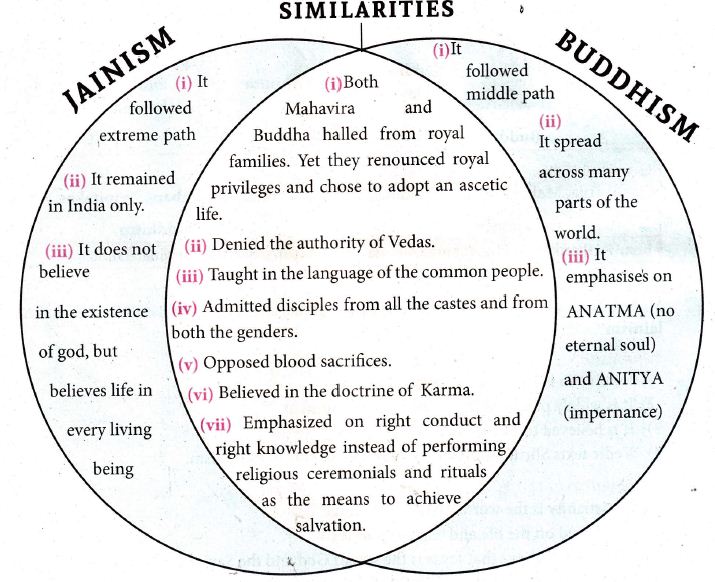
20 seconds
13.
The colour of the Asoka chakra found in our National flag is __________
sky blue
navy blue
blue
green
14.
Who wrote the most famous novel Anand Math?
Akbar
Rabindra Nath Tagore
Bankim Chandra Chatterjee
Jawaharlal Nehru
15.
Who was the last emperor of Mauryan Dynasty?
Chandragupta Maurya
Ashoka
Brihadratha
Bindusara
16.
Among the following who was the contemporary of Gautama Buddha?
Ajatasatru
Bindusara
Padmanabha Nanda
Brihadratha
17.
Where was the third Buddhist Council convened?
Rajagriha
Vaishali
Pataliputra
Kashmir
18.
What was the ratio of land revenue collected during Vedic Age
1/3
1/6
1/8
1/9
19.
Aryans first settled in ___________ region.
Punjab
Middle Gangetic
Kashmir
North east
20.
Consider the following statements
(1) Biosphere consists of Ecosystems.
(2) Atmosphere consists of water bodies.
(3) Lithosphere is the solid outer layer of the Earth
1 and 2
1 and 3
1,2 and 3
2 only
21.
Viswanathan Anand was born in
Chennai
Bengaluru
Tiruvanandapuram
Vishakhapatnam
22.
The Reunion islands are present in ________ Ocean.
Arctic
Antartic
IndianPacific
Pacific
23.
The longest mountain range In the world is
Himalayas
Rocky
Andes
Alps
24.
Solid layer of rocks and soil is found in
Biosphere
Lithosphere
Hydrosphere
Atmosphere
25.
Saturn's largest moon is___________
Europa
Callisto
Titan
Titania
26.
Pearls were found in abundance in
Chozha Nadu
Pandya Nadu
Thondai Nadu
Chera Nadu
27.
Name the place related to the export of Sandal.
Western Ghats
Southern Sea
Eastern Sea
Elam
28.
Which of the following cities, is in Iraq?
Harappa
Mohernjo-Daro
Mesopotamia
Sanchi
29.
Who was the first ruler to give up war after victory
Bimbisar
Raja Raja Chola
Akbar
Ashoka
30.
Where did early man live?
mud house
under tree
caves
river banks
31.
The dancing girl statue was made out of
gold
silver
bronze
iron
32.
Humans with the help of flint made __________.
sharp weapons
vessels
carts
boats
33.
B.R. Ambedkar was conferred Bharat Ratna in the year
1990
1989
1988
1987
34.
Which article of the Constitution says discrimination against any citizen on grounds only of religion, race, caste, sex, place of birth or any of them is not permitted?
14(1)
15(1)
16(1)
17(1)
35.
Viswanathan Anand became India’s first grandmaster in the year.
1985
1986
1987
1988
36.
V.A. Smith called India as _________________
Great Democracy
Unique land of diversities
Ethnological museum
Secular nation
37.
Which one of the following religion is not practised in India
Sikhism
Islam
Zoarastrianism
Confucianism
38.
India consists of____________States and ___________Union territories.
27, 9
29, 7
28, 7
28, 9
39.
Which of the following is the smallest ocean on Earth?
The Pacific Ocean
The Indian Ocean
The Atlantic Ocean
The Arctic Ocean
40.
Which of the following planets can float on water?
Jupiter
Saturn
Uranus
Neptune
41.
Which one of the following is a Tamil city?
Iraq
Harappa
Mohenjo-Daro
Kancheepuram
42.
Which of the following region has a city more than 6500 years old?
Iraq
Indus Valley
Tamilagam
Thondaimandalam
43.
What metals were known to the people of Indus Civilization?
Copper, bronze, silver, gold, but not iron
Copper, silver, iron, but not bronze
Copper, gold, iron, but not silver
Copper, silver, iron, but not gold
44.
Tanzania is situated in the continent of
Asia
Africa
America
Europe
45.
The process of evolution is _____________ .
direct
indirect
gradual
fast
46.
What was the step taken by the early man to collect his food?
Trade
Hunting
Painting
Rearing of animals
47.
Who were the legal experts of the drafting committee?
48.
When did they complete this work?
49.
What is meant by consumer goods?
50.
What do you know about the,upper parts of the national emblem?
51.
What are the uses of natural resources?
52.
How we can generate the electricity using natral resources?
53.
What is meant by primary activities?
54.
Place the following words in the appropriate column.
Words: Jina, Mahayana, Tirthankaras, Stupas Nirvana, Digambara, Tripitakas, Agama
| Jainism | Buddhism |
55.
Write a short note about Gurukula System of Education?
56.
Name the new animal used by the Aryans?
57.
Name the gods that the Rig Vedic Aryans worshipped?
58.
List out the fundamental duties that you would like to fulfil.
59.
What are the fundamental rights?
60.
Name the city centred industries.
61.
What is called barter system?
62.
Where is the peacock sanctuary located in Tamil Nadu?
63.
What are the salient features of the National anthem?
64.
Tertiary activities.
65.
Human resources.
66.
Complete the given table with the help of an atlas. Follow the example.
| S.No | Name of the ocean | Area (million sq.km) | Trenches | Depth (m) |
| 1. | Pacific Ocean | 168.72 | Mariana | 10,994 |
| 2. | Atlantic Ocean | |||
| 3. | Indian Ocean | |||
| 4. | Southern Ocean | |||
| 5. | Arctic Ocean |
67.
Complete the given table with the help of an atlas. Follow the example
| S.No | Continent | Plateau | Plains |
| 1. | Asia | Tibetan Plateau | Yangtze Plain |
| 2. | North America | ||
| 3. | South America | ||
| 4. | Australia | ||
| 5. | Europe | ||
| 6. | Africa |
68.
What is discrimination?
69.
What is a continent?
70.
Why is India called a sub continent?
71.
What are the types of diversity?
72.
Which is known as city of lakes? Why?
73.
Name the scholars who were born at Kancheepuram.
74.
Write a brief note on ancient cities of India.
75.
What do you know about the Great Bath?
76.
Why Indus Civilisation is called Bronze Age civilisation?
77.
Why were axes made?
78.
Why did humans move from place to place?
79.
Mention the places from where we got pre-historic tools.
80.
What do you know about the pre historic period?
81.
Mark the following in the outline map of India.
1. Neyveli
2. Bay of Bengal
3. Arabian Sea
4. Forest region of Tamil Nadu
5. Indian Ocean
6. Iron mining in Kanjamalai(Salem)
82.
On the given outline map of the world, label oceans, seas, isthumus and straits.
83.
Mark the following places in the political map of India.
a. Delhi
b. Chennai
c. Tamil Nadu
d. Andhra Pradesh
e. Kerala
f. Karnataka
84.
Why did Agriculture is called as primary oceupatlon?
85.
Write a note on Beating Reteat.
86.
Explain in detail classification on the basis of distribution.
87.
Make a Venn diagram to indicate similarities and dis-similarities of Jainism and Buddhism.
88.
Make a tabular column in the following headings.
| Religion | Name of the founder with picture | Name of their Parents | Key Principle | Sects | Symbol |
89.
How can resources be conserved?
90.
Compare national and international resources.
91.
Kalinga war became a turning point in Ashoka’s life. How?
92.
Write any three causes for the rise of Magadha.
93.
Write about the Vedic women in a pragraph.
94.
December 11 International Mountain Day.
95.
Study the picture and answer the given questions.
a. Which is the closest planet to the Sun?
b. Which is the largest planet?
c. Which is the fart~est planet from the Sun?
d. Which is the second smallest planet?
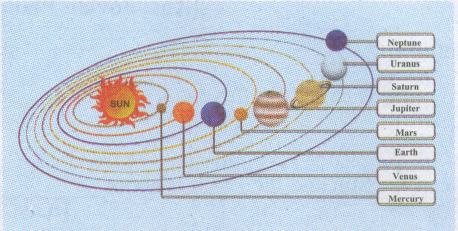
96.
Agriculture was one of their occupations. How can you prove this? (with findings)
97.
What are the causes of Prejudice?
98.
Various discrimination in India. Discuss.
99.
City of temples. Give short notes.
100.
How were dogs useful to pre historic men?
101.
Explain Linguistic diversity and cultural diversity.
102.
Explain the characteristics of the various spheres of the Earth.
103.
Distinguish between an ocean and a sea.
104.
| Poompuhar was located on which river bank? | Name the ancient city which had Tamil Sangam | Name a Sangam literary work |
| Which Greek historian gave accounts about the Pandya kingdom? | To which Tamil kingdom did the southern districts of Tamil Nadu belong to during the Sangam Age? | Name the Chinese traveler who stayed and studied in Nalanda University. |
| Thirunavukarasar mentioned Kanchi as | What is the name of evening market during the Sangam Age? | Name the temple built by Pallava king Rajasimha at Kanchi. |
| Which district is known as the district of lakes? | What is trade? | Name a port located on the shore of Bay of Bengal. |
1.
(c)
Aluminium Industries
2.
(d)
Sea food processing
3.
(c)
Peacock
4.
(a)
northern India
5.
(c)
Tirthankaras
6.
(b)
to sacrificial rites
7.
(c)
Bombay
8.
(c)
Grama
9.
(a)
cultivation
10.
(c)
Right to vote
11.
(c)
November 26
12.
(c)
52 seconds
13.
(b)
navy blue
14.
(c)
Bankim Chandra Chatterjee
15.
(c)
Brihadratha
16.
(a)
Ajatasatru
17.
(c)
Pataliputra
18.
(a)
1/3
19.
(a)
Punjab
20.
(b)
1 and 3
21.
(a)
Chennai
22.
(c)
IndianPacific
23.
(c)
Andes
24.
(b)
Lithosphere
25.
(c)
Titan
26.
(b)
Pandya Nadu
27.
(a)
Western Ghats
28.
(c)
Mesopotamia
29.
(d)
Ashoka
30.
(c)
caves
31.
(c)
bronze
32.
(a)
sharp weapons
33.
(a)
1990
34.
(b)
15(1)
35.
(d)
1988
36.
(c)
Ethnological museum
37.
(d)
Confucianism
38.
(b)
29, 7
39.
(d)
The Arctic Ocean
40.
(b)
Saturn
41.
(d)
Kancheepuram
42.
(b)
Indus Valley
43.
(a)
Copper, bronze, silver, gold, but not iron
44.
(b)
Africa
45.
(c)
gradual
46.
(b)
Hunting
47.
Dr. B.R. Ambedkar, N. Gopalasamy, K.M.Munshi, Syed Ahmed Asadullah, P.L. Mitter, N.Madhava Rao, T.T.K, T.P. Khaitan were the legal experts of the Drafting Committee.
48.
It took a period of 2 years, 11 months, and 17 days. It was completed on 26th November 1949.
49.
The finished goods which are bought from the market to fulfill the daily needs of the consumers is called consumer goods. Example: rice, clothes, bicycles, etc.
50.
The lower part has an elephant, a horse, a bull and a lion. The' Wheel of righteousness'. is placed between them. This emblem is found at the top of the government communication. Indian currency and passport
51.
The use of any natural resource depends on the place it is available, the form in which it is available and the technology necessary to avail it
52.
Sun's energy to generate electricity was made possible after the invention of solar panels (technology).
53.
primary activities such as hunting, food gathering, fishing and forestry
54.
| Jainism | Buddhism |
| Jina, Tirthankaras, Digambara,Agama | Mahayana, Stupas Nirvana,Tripitakas, |
55.
(i) The gurukula system is an ancient learning method.
(ii) The word Gurukula is a combination of the Sanskrit Word Guru (teacher or master) and Kula (family or home).
(iii) The shishyas resided with their guru and served them and simultaneously learnt and gained knowledge.
(iv) The students received education through oral tradition meaning rote learning, and were required to memorise everything.
56.
(i) In the later Vedic period the Aryans tamed elephants, apart from cow, goat, sheep and horse.
57.
The sky gods like Prithvi (Earth), Agni (fire), Vayu (wind), Varona (rain), Indra (Thunder).
58.
(i) There are duties respecting the National flag and National Anthem.
(ii) Respect and protect the Constitution, follow our great leaders who fought for our freedom, to protect our country, readiness to serve our country if necessary, treating everyone as brothers irrespective of their castes, religions, languages, races etc., to conserve our ancient heritage, and conserve natural elements like forests, rivers and lakes and fauna to develop science, humanity and feelings of reformation to avoid non-violence and Protect government property, parents or guardians providing educational opportunities to children between 6-14 years etc., have been added as our duties
59.
(i) Right to Equality,
(ii) Right to freedom,
(iii) Right against exploitation,
(iv) Right to freedom of Religion,
(v) Cultural and Educational Rights and
(vi) Right to Constitutional Remedies
60.
(i) Automobile industry
(ii) Manufacturing industry
(iii) Iron and steel industry
(iv) Textile industry
(v) Banking, etc.
61.
(i) A system of exchanging goods for other goods, called barter system.
(ii) For example, exchange a bag of rice for enough clothes.
62.
There is a Peacock Sanctuary at Viralimalai in the district of Pudukottai (Tamilnadu).
63.
(i) This anthem has to be sung at a duration of 52 seconds.
(ii) Everyone should stand erect while singing the national anthem.
(iii) One should understand the meaning while singing.
64.
Tertiary activities are basically concerned with the distribution of primary and secondary products through a system of transport and trade. (e.g) Banking, Trade and Communications.
65.
Human resources are groups of individuals who use nature to create more resources.
66.
| S.No | Name of the ocean | Area (million sq.km) | Trenches | Depth (m) |
| 1. | Pacific Ocean | 168.72 | Mariana | 10,994 |
| 2. | Atlantic Ocean | 85.13 | Milwaukee Deep | 8,380 |
| 3. | Indian Ocean | 70.56 | Java Trench | 7,725 |
| 4. | Southern Ocean | 21.96 | Sandwich Trench | 7,235 |
| 5. | Arctic Ocean | 15.56 | Eurasian Basin | 5,449 |
67.
| S.No | Continent | Plateau | Plains |
| 1. | Asia | Tibetan Plateau | Yangtze Plain |
| 2. | North America | Colorado Plateau | Great Plains |
| 3. | South America | Altiplano Plateau | Pampas |
| 4. | Australia | Western Plateau known as Australian shield | Nullarbor |
| 5. | Europe | Hardangervidda | North European Plain |
| 6. | Africa | East African Plateau | Serengeti Plains |
68.
(i) Discrimination can be defined as negative actions towards people.
(ii) Discrimination can happen the basis of colour, class, religion and gender.
69.
The vast land masses on Earth are called Continents.
70.
(i) A continent is a very large area of land with various physical features such as mountains, plateaus, plains, rivers and seas and various types of weather patterns
(ii) India has all of them.
(iii) So, India is known as a sub-continent.
71.
The types of diversity are
(i) Land forms and Lifestyle diversity
(ii) Social diversity
(iii) Religions diversity
(iv) Linguistic diversity
(v) Cultural diversity
72.
(i) The city of lakes is known as Kancheepuram.
(ii) Hundreds of lakes were created for storing water around the town of Kanchi.
(iii) Hence, Kanchi came to be known as the district of lakes.
73.
Scholars like Dharmabalar, Jothibalar, Sumathi and Bodhi Dharamar where born in Kanchi.
74.
1. Harappa
2. Mohenjo - Daro
75.
(i) The great bath was a large, rectangular tank in a courtyard. It may be the earliest example of a water-proof structure.
(ii) The bath was lined with bricks, coated with plaster and made water-tight using layers of natural bitumen.
(iii) There were steps on the north and south leading into the tank.
(iv) There were rooms on three sides.
(v) Water was drawn from the well, located in the courtyard and drained out after use.
76.
Indus, civilisation is called Bronze Age civilisation because it is a historical period characterised by the use of articles made of bronze.
77.
The axes were made to cut trees, remove barks, dig pits, hunt animals and remove the skin of animals.
78.
Humans moved to another place in search of food.
79.
(i) Tamil Nadu - Athirampakkam, Adichanallur, Paiyampalli
(ii) Karnataka - Hunasagi Valley
(iii) Mathya Pradesh - Bimbetka
(iv) Andra Pradesh - Brahmagiri
80.
(i) The period between the use of first stone tools and the invention of writing systems is pre-history.
(ii) Stone tools, excavated materials and rock paintings are the major sources of prehistory.
81.
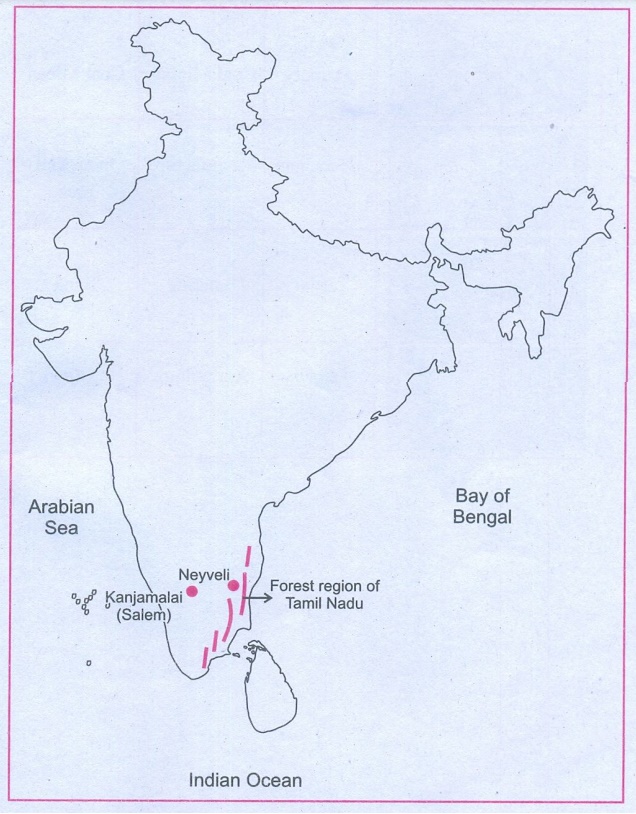
82.
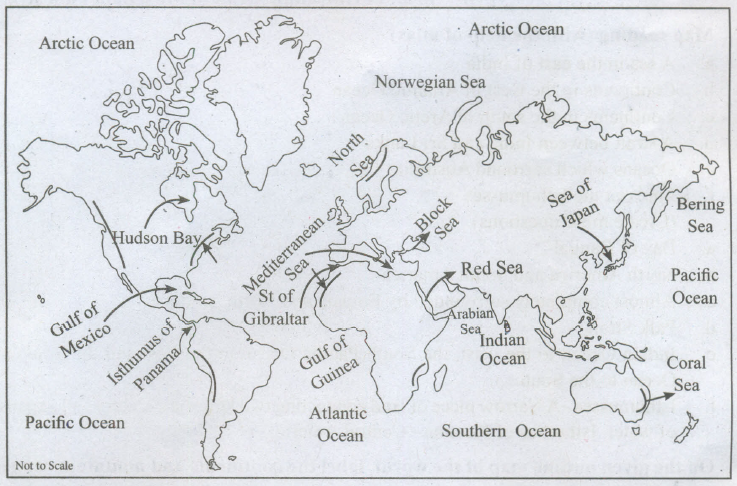
83.
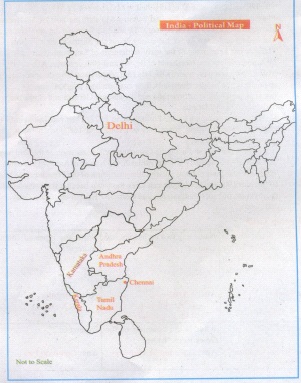
84.
(i) Agriculture is the primary occupation.
(ii) There won't be any kind of facilities like our cities.
(iii) At the same time, they get their basic needs fulfilled easily.
(iv) There are small shops.
(v) Vegetables are grown in'abundance.just like rice and pulses.
(vi) Though the sugar that isadded in our milk, coffee and tea is produced in sugar mills, the raw material sugarcane is cultivated in villages.
(vii) From chilies to mustard, all those provisions used for food are grown in villages.
85.
• On January 29, the thirddayoftheRepublic day, the celebrations are brought to an end with the"Beating.Reteat" ceremony.
• This is performed by the bands ofIndian Army, Navy and Airforce.
• The President of India is the chief guest of this day.
• Rashtrapati Bhavan will be illuminated at 6pm as apart of the celebration.
86.
ON THE BASIS OF DISTRIBUTION:
On the basis of distribution, resources can be classified into localized resources and universal resources.
(i) When resources are present in specific regions they are called localized resources.
(e.g.) Minerals.
(ii) Some resources are present everywhere Such resources are called universal resources.
(e.g.) Sunlight and air.
(ii) On National resources are resources within the political boundaries and oceanic area of a country.
(e.g.) Tropical forest regions of India.
87.
88.
| Religion | Nameof the founder with picture | Name of their Parents | Key Principle | Sects | Symbol |
| Buddhism | Siddhtha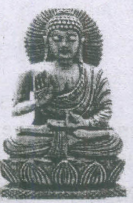 |
Suddhodana, Mayadevi |
Non-Violence | 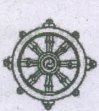 |
|
| Jainism | Vardhamana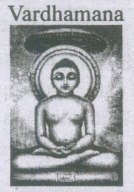 |
Siddharth, Trishala |
Karma 3. Place |
 |
89.
Sustainable development can take place when
(i) The reasons of depletion are identified.
(ii) Wastage and excess consumption is prevented.
(iii) Reusable resources are recycled.
(iv) Pollution is prevented.
(v) Environment is protected.
(vi) Natural vegetation and wild life are preserved.
(vii) Alternative resources are used.
90.
| S.No | National resources | International resources |
| 1. | National resources are resources within the political boundaries and oceanic area of a country. | International resources are all oceanic resources found in the open ocean. Resources found in this region can be utilized only after an international agreement. |
| 2. | (e.g.) Tropical forest regions of India. | (e.g.) Ambergris |
91.
(i) Ashoka fought the Kalinga war in 261 B.C.
(ii) He won the war and captured Kalinga.
(iii) The horror of war was described by the king himself in the Rock Edict XIII.
(iv) After the battle of Kalinga, Ashoka became a Buddhist.
(v) He under took tours to different parts of the country instructing people on policy of Dhamma.
(vi) Ashoka sent his son Mahindra and his daughter Sanghamitra to Srilanka to propagate Buddhism.
(vii) He took importance in the welfare of the people like hospitals, laying roads, irrigation, etc.
(viii) So, Ashoka was considered as a great emperor of ancient India.
92.
The Causes for the Rise of Magadha
(i) Magadha was located onthe lower part of the Gangetic plain. The plain was fertile which ensured the rich agricultural yield. This provided regular and substantial income to the state.
(ii) The thick forests supplied timber for construction of buildings and elephants for army.
(iii) Abundance of natural resources especially iron enabled them to equip themselves with weapons made of iron.
(iv) Growing trade and commerce facilitated movement of people as well as settlement of people in centres of arts and crafts.
(v) The outcome was urbanization and emergence of Magadha as an empire.
93.
Status of women in Rig Vedic Period:
(i) In Rig Vedic society, women relatively enjoyed some freedom.
(ii) The wife was respected as the mistress of the household.
(iii) She could perform rituals in her house.
(iv) Child marriage and sati were unknown.
(v) There was no bar on the remarriage of widows.
(vi) Nevertheless, the women were denied right.to inherit property from their parents.
(vii) They played no role in public affairs.
Later Vedic period:
(i) In the later Vedic period the role of women in society, as well as their status, even within the family, declined.
(ii) Women could no longer perform rituals in the family.
(iii) The rules of marriage became much more rigid.
(iv) Polygamy became common.
(v) Widow remarriage was not encouraged.
(vi) Education was denied to women.
(vii) lntercaste marriages were spurned.
94.
Prepare slogans, posters and placards to celebrate International Mountain Day.
(i) "Mountains are among the most beautiful land masses in the world."
(ii) "Mountains are beautiful as they rise up above the clouds and show just how grand the world can be."
(iii) "Great things are done when men and mountains meet."
(iv) "How glorious a greeting the Sun gives the mountains."
(v) "Mountains are earth's undecaying monuments."
(vi) "The mountains, forests and seas render men savage, they develop fierce, but yet do not destroy the human. "
(vii) "Men stumble over pebbles, never over mountains."
(viii) "Each fresh peak ascended teaches something."
(ix) "Mountains are the beginning and end of all natural scenery."
(x) "He who climbs upon the highest mountains laughs at all tragedies, real or imaginary.
95.
a. Mercury
b. Jupiter
c. Uranus
d. Mars
96.
Agriculture was one of their occupation:
(i) Granaries were used to store food grains.
(ii) The remains of wheat, barley, millets, sesame and pulses have been found there.
(iii) A granary with walls made of mud bricks, which are still in a good condition, has been discovered in Rakhigarhi, a village in Haryana, belonging to mature Harappan phase.
97.
Some common social factors. that contributes to the rise of prejudice are
(i) Socialisation
(ii) Conforming behaviours
(iii) Economic benefits
(iv) Authorita, rian personality
(v) Ethno-cntrism
(vi) Group losure
(vii) Conflicts
98.
(i) The different forms of inequalities such as caste inequality, religious inequality, race inequality or gender inequality give rise to discrimination.
(ii) Discrimination can happen on the basis of colour, class, religion gender etc.
(iii) Treating dark-skinned people differently from fair-skinned people, giving more importance to people of higher than to those of lower caste and thinking boys are smarter than girls are all thoughts of discrimination.
(iv) Article 15(1) of the constitution states that the State not to discriminate against any citizen on grounds only of religion, race, caste, sex, place of birth or any of them.
99.
(i) Kanchi is also known as the temple city.
(ii) The famous temple of great architectural beauty, Kailasanathar temple, was built by later pallava king Rajasimha II at Kanchi.
(iii) During the Pallava period, a large number of cave temples were built.
(iv) Some temples are situated at Kancheepuram like Ekambaranather Temple, Ulaganath Perumal Temple, Varatharaja Perumal Temple.
100.
(i) In ancient period, the people lived in caves.
(ii) Hunting was their main occupation.
(iii) Caves did not live in such a safe environment.
(iv) There might have been changes of wild animals entering caves.
(v) But they realised that dogs could help them prevent the entry of such dangerous animal by sniffing skill.
(vi) Hence they started domesticating dog for their protection and hunting activities.
101.
(i) According to census of India 2001, India has 122 major languages and 1599 other languages.
(ii) Four major Indian language families are Indo-Aryan, Dravidian, Austroasiatic, and Sino Tibetian. Tamil is the oldest Dravidian language.
(iii) Historically, the Portuguese, the Dutch, the British, the Danish and the French came to India for trade and their occupation of India or some parts of it has left behind a certain impact upon the culture and language of the people.
(iv) Because the British ruled over the entire country for over three hundred years before independence in 1947, the English language gained prominence in India. In due course, English has emerged as an important language and a medium of instruction in schools and colleges.
(v) It is widely used in official communication and daily life.
Cultural Diversity :
(i) The term 'culture' refers to customs and practices of people, their language, their dress code, cuisine, religion, social habits, music, art, and architecture.
(ii) The culture of a group of people is reflected in their social behavior and interactions.
(iii) The group identity fostered by social patterns is unique to a group.
(iv) Art and architecture are an integral part of every community.
(v) It develops as a part of culture and tradition of a community.
(vi) Each of the 29 states and 7 Union territories of India has rich traditions and unique ways of artistic expression.
102.
(i) The earth is the most suitable planet to support life.
(ii) It has thrge major components that we call as the realms of the Earth lithosphere, hydrosphere and atmosphere.
Lithosphere:
(i) The lithosphere is the land on which we live.
(ii) It is the solid outer layer of the earth consisting of rocks and soils.
Hydrosphere:
(i) The hydrosphere consists of water bodies such as oceans, seas, rivers, lakes, ice caps.on mountains and water vapour in the atmosphere.
Atmosphere:
(i) Atmosphere is the envelope of air that surrounds the earth.
(ii) Different types of gases make up the atmosphere.
(iii) The major gases are Nitrogen 78% and Oxygen 21%.
(iv) The other gases like Carbon dioxide, Hydrogen, Helium, Argon and Ozone are present in meager amounts.
Biosphere:
(i) The narrow belt of interaction among the lithosphere, the hydrosphere and the atmosphere, where life exists is known as biosphere.
(ii) Bio means life in Greek.
(iii) It consists of distinct zones.
(iv) Each zone has its own climate, plant and animal life.
(iv) These zones are known as ecosystems.
103.
| S.No | Ocean | Sea |
| 1. | Oceans are vast expanse of water. | Seas are water bodies partially or fully enclosed by land. |
| 2. | Eg. Pacific Ocean | Eg: Bay of Bengal, Arabian Sea. |
104.
| Poompuhar was located on which river bank? Cauvery |
Name the ancient city which had Tamil Sangam Madurai |
Name a Sangam literary work Pattinappallai |
| Which Greek historian gave accounts about the Pandya kingdom? Megasthanese |
To which Tamil kingdom did the southern districts of Tamil Nadu belong to during the Sangam Age? Pandya Nadu |
Name the Chinese traveller who stayed and studied in Nalanda University. Hieun Tsang |
| Thirunavukarasar mentioned Kanchi as Kalviyil Kayaillatha Kanchi |
What is the name of evening market during the Sangam Age? Allangadi |
Name the temple built by Pallava king Rajasimha at Kanchi. Kailasanathar TempIe |
| Which district is known as the district of lakes? Kancheepuram |
What is trade? The action of buying and selling goods and services |
Name a port located on the shore of Bay of Bengal. Poompuhar Port |

6th Standard Syllabus & Materials
6th Standard
TN 6th Social Science T3 - GEO - Understanding Disaster Sample Question Papers Study Material - QB365 Set A
NEW6th Standard
TN 6th Social Science T3 - GEO - Globe Sample Question Papers Study Material - QB365 Set A
NEW6th Standard
TN 6th Social Science T3 - GEO - Asia and Europe Sample Question Papers Study Material - QB365 Set A
NEW6th Standard
TN 6th Social Science T3 - HIS - South Indian Kingdoms Sample Question Papers Study Material - QB365 Set A



Tamilnadu Stateboard 6th Standard Subjects
Tamilnadu Stateboard Standards



