
 100% FREE ACCESS
6th Standard Syllabus & Materials
6th Standard
TN 6th Tamil பருவம் 1 - இயல் 1 - மொழி -தமிழ்த்தேன் - இன்பத்தமிழ் Sample Question Papers Study Material - QB365 Set A
NEW6th Standard
TN 6th English T1 - Supplementary - The Apple Tree and The Farmer Sample Question Papers Study Material - QB365 Set A
NEW6th Standard
TN 6th English T1 - Prose - When The Trees Walked Sample Question Papers Study Material - QB365 Set A
NEW6th Standard
TN 6th Social Science T3 - CIV - Road Safety Sample Question Papers Study Material - QB365 Set A
NEW6th Standard
TN 6th Social Science T3 - CIV - Local Bodies - Rural and Urban Sample Question Papers Study Material - QB365 Set A
NEW6th Standard
TN 6th Social Science T3 - CIV - Democracy Sample Question Papers Study Material - QB365 Set A

Published on: 29/02/2020
6th Standard Social Science Model Questions Full Chapter 2020
Download Tamil Nadu 6th Standard Social Science question papers, model tests, one-mark questions, important questions, and public exam papers in PDF format. Free study materials and answer keys for TN State Board students.
Questions + Answers key
Take MCQ Social Science Test
1.
Knowledge in the use of iron gave ________an advantage over other Mahajanapadas.
northern India
Kalinga
Janapadas
Magadha
2.
The last one was________
Rishabha
Mahavira
buddha
3.
Jainism grounds itself in 24_________
the shower of stars
to sacrificial rites
Tirthankaras
4.
Find the odd one:
The Kuru and Panchala kingdoms flourished and large cities like
Ayodhya
Indraprastha
Mathura
Harappa
5.
Agroup of villages was called______
Gramani
Viz
Grama
6.
People then move to a new piece of land for________
cultivation
industrial
manufactures
7.
Chandra Gupta Maurya abdicated the thrown and went to Sravanbelgola along with Jaina Saint ___________
Badrabahu
Stulabahu
Parswanatha
Rushabhanatha
8.
Which of the following are the sources of Mauryan period?
Artha Sastra
Indica
Mudrarakshasa
All
9.
Where did Buddha deliver his first sermon?
Lumbini
Saranath
Taxila
Bodh Gaya
10.
What was the ratio of land revenue collected during Vedic Age
1/3
1/6
1/8
1/9
11.
Aryans came from ______________.
China
North Asia
Central Asia
Europe
12.
Consider the following statements
(1) Biosphere consists of Ecosystems.
(2) Atmosphere consists of water bodies.
(3) Lithosphere is the solid outer layer of the Earth
1 and 2
1 and 3
1,2 and 3
2 only
13.
Baba Saheb refers to
Patel
Tilak
Ambedkar
Gandhiji
14.
The land surrounded by water on three sides is called
Bay
Strait
Peninsula
Trench
15.
The longest mountain range In the world is
Himalayas
Rocky
Andes
Alps
16.
Solid layer of rocks and soil is found in
Biosphere
Lithosphere
Hydrosphere
Atmosphere
17.
Io, Europa, Ganymede, Callisto are a few large satellites of________
Jupiter
Mars
Mercury
Venus
18.
We read Puhar kandam in
Manimegalai
Pattinappalai
Arthashastra
Silappathikaram
19.
Ahil was a
Port
Fragrant wood
Educated centre
Ornament
20.
In Poompuhar the foreign traders began to interact with the local people because.
Loading and unloading of ships took some-months.
Foreigners liked the local people
Foreigners wanted to learn Tamil.
Foreigners wanted to stay in Poompuhar
21.
Who was the first ruler to give up war after victory
Bimbisar
Raja Raja Chola
Akbar
Ashoka
22.
Where did early man live?
mud house
under tree
caves
river banks
23.
Indus valley civilization is great, because
It had advanced sanitation and drainage system
Repeated floods affected this area
Indus people maintained a big army
They did not use iron
24.
Humans with the help of flint made __________.
sharp weapons
vessels
carts
boats
25.
A.P.J. Abdul Kalam was conferred Bharat Ratna in the year
1997
1996
1995
1994
26.
Gender-based stereotypes are often portrayed in
films
advertisements
TV serials
All of these
27.
Discrimination done on the basis of gender is referred to as
gender discrimination
caste discrimination
religious discrimination
inequality
28.
V.A. Smith called India as _________________
Great Democracy
Unique land of diversities
Ethnological museum
Secular nation
29.
‘Discovery of India’ – a book was written by
Rajaji
V.O.C
Nethaji
Jawaharlal Nehru
30.
Mawsynram, the land of highest rainfall is located in
Manipur
Sikkim
Nagaland
Meghalaya
31.
Which of the following is the smallest ocean on Earth?
The Pacific Ocean
The Indian Ocean
The Atlantic Ocean
The Arctic Ocean
32.
The Tropic of Capricorn faces the Sun directly on
March 21
June 21
September 23
December 22
33.
Which one of the following is a Tamil city?
Iraq
Harappa
Mohenjo-Daro
Kancheepuram
34.
Which of the following region has a city more than 6500 years old?
Iraq
Indus Valley
Tamilagam
Thondaimandalam
35.
What metals were known to the people of Indus Civilization?
Copper, bronze, silver, gold, but not iron
Copper, silver, iron, but not bronze
Copper, gold, iron, but not silver
Copper, silver, iron, but not gold
36.
Tanzania is situated in the continent of
Asia
Africa
America
Europe
37.
The process of evolution is _____________ .
direct
indirect
gradual
fast
38.
What was the step taken by the early man to collect his food?
Trade
Hunting
Painting
Rearing of animals
39.
What are the uses of natural resources?
40.
Give an example for the human resources?
41.
Which resources must be reduced while using?
42.
Place the following words in the appropriate column.
Words: Jina, Mahayana, Tirthankaras, Stupas Nirvana, Digambara, Tripitakas, Agama
| Jainism | Buddhism |
43.
Given an account on the economic life of the Aryans.
44.
Name the new animal used by the Aryans?
45.
Name the gods that the Rig Vedic Aryans worshipped?
46.
What is sustainable development?
47.
What are actual resources?
48.
When you arrange the continents in ascending order according to their size, which ranks third?
49.
When you are walking on the Marina beach in Chennai, which order of landform are you on?
50.
What is stereotype?
51.
What is Prejudice?
52.
Name the oceans which surround North America and South America.
53.
What are the types of diversity?
54.
Define diversity.
55.
Name the scholars who were born at Kancheepuram.
56.
What is the difference between Naalangadi and Allangadi.
57.
Discuss the sources available to know about Tamil cities.
58.
How do you know that Indus people traded with other countries?
59.
What method is used to explore buried buildings nowadays?
60.
Write any two characteristics of Homo sapiens.
61.
What is evolution?
62.
Name any two artefacts?
63.
Why were paintings drawn on rocks?
64.
Mark the following in the outline map of India.
1. Neyveli
2. Bay of Bengal
3. Arabian Sea
4. Forest region of Tamil Nadu
5. Indian Ocean
6. Iron mining in Kanjamalai(Salem)
65.
Map reading (with the help of atlas )
a. A sea in the east of India
b. Continents in the west of Atlantic Ocean
c. Continents in the south of Arctic Ocean
d. A strait between India and Sri Lanka
e. Oceans which surround Australia
f. Find out the Isthumusses
(Create more questions)
66.
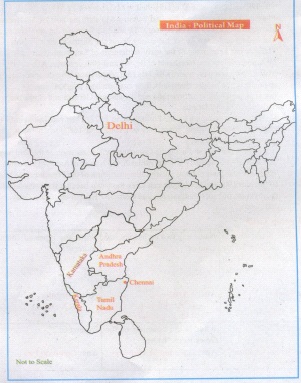
Mark the following places in the political map of India.
a. Delhi
b. Chennai
c. Tamil Nadu
d. Andhra Pradesh
e. Kerala
f. Karnataka
67.
Explain in detail classification on the basis of ownership?
68.
Make a tabular column in the following headings.
| Religion | Name of the founder with picture | Name of their Parents | Key Principle | Sects | Symbol |
69.
How can resources be conserved?
70.
Write the Gandhian thought on conservation of resources.
71.
Write any five welfare measures you would do if you were a king like Ashoka?
72.
Kalinga war became a turning point in Ashoka’s life. How?
73.
Narrate four noble truths of Buddha?
74.
Write about the Vedic women in a pragraph.
75.
You know the importance of conservation of forests. Do you think conservation of mountains is also equally important?
76.
Agriculture was one of their occupations. How can you prove this? (with findings)
77.
What are the causes of Prejudice?
78.
City of temples. Give short notes.
79.
Write a short note on Iraq.
80.
Compare the lifestyle of Old Stone Age man with present day lifestyle.
81.
Explain Linguistic diversity and cultural diversity.
82.
Mention the classification of land forms.
83.
Explain the characteristics of the various spheres of the Earth.
84.
What are the effects of rotation and revolution?
1.
(d)
Magadha
2.
(b)
Mahavira
3.
(c)
Tirthankaras
4.
(d)
Harappa
5.
(b)
Viz
6.
(a)
cultivation
7.
(a)
Badrabahu
8.
(d)
All
9.
(b)
Saranath
10.
(a)
1/3
11.
(c)
Central Asia
12.
(b)
1 and 3
13.
(c)
Ambedkar
14.
(c)
Peninsula
15.
(c)
Andes
16.
(b)
Lithosphere
17.
(a)
Jupiter
18.
(d)
Silappathikaram
19.
(b)
Fragrant wood
20.
(a)
Loading and unloading of ships took some-months.
21.
(d)
Ashoka
22.
(c)
caves
23.
(a)
It had advanced sanitation and drainage system
24.
(a)
sharp weapons
25.
(a)
1997
26.
(d)
All of these
27.
(a)
gender discrimination
28.
(c)
Ethnological museum
29.
(d)
Jawaharlal Nehru
30.
(d)
Meghalaya
31.
(d)
The Arctic Ocean
32.
(d)
December 22
33.
(d)
Kancheepuram
34.
(b)
Indus Valley
35.
(a)
Copper, bronze, silver, gold, but not iron
36.
(b)
Africa
37.
(c)
gradual
38.
(b)
Hunting
39.
The use of any natural resource depends on the place it is available, the form in which it is available and the technology necessary to avail it
40.
People are also referred to as resources
41.
The receding of coal and petrol was in need of an inexhaustible resource (time).
42.
| Jainism | Buddhism |
| Jina, Tirthankaras, Digambara,Agama | Mahayana, Stupas Nirvana,Tripitakas, |
43.
(i) Use of iron plough and axe helped to put more areas of land under cultivation.
(ii) Crops of wheat, rice and barley were cultivated.
(iii) With the growth of agriculture, the idea of private possession of land came into existence.
(iv) New crafts and arts developed leading to production of commodities for sale
44.
(i) In the later Vedic period the Aryans tamed elephants, apart from cow, goat, sheep and horse.
45.
The sky gods like Prithvi (Earth), Agni (fire), Vayu (wind), Varona (rain), Indra (Thunder).
46.
The present needs of resources are met and the conserving of resources for the future are balanced, we call it sustainable development.
47.
Actual resources are resources that are being used and the quantity available is known. (e.g.) Coal at Neyveli.
48.
Antarctica.
49.
Third order of land form.
50.
When prejudice gets stronger, it develops into a stereotype. stereotype is a false view or idea about something.
51.
Prejudice means to judge other people in a negative or inferior manner, without knowing much about them. It happens when people have false belief and ideas.
52.
1. Pacific Ocean
2. Atlantic Ocean
53.
The types of diversity are
(i) Land forms and Lifestyle diversity
(ii) Social diversity
(iii) Religions diversity
(iv) Linguistic diversity
(v) Cultural diversity
54.
People speak different languages, eat different kinds of food, celebrate their own festivals and different cultures, worship in different ways, yet we live together. This is known as diversity.
55.
Scholars like Dharmabalar, Jothibalar, Sumathi and Bodhi Dharamar where born in Kanchi.
56.
| Naalangadi | Allangadi |
| Day Market of Sangam Age is called Naalangadi. | Evening Market of Sangam Age is called Allangadi |
57.
(i) Tamil Literature
(ii) Accounts of foreign travellers
(iii) Archaeological finds provide us information about the ancient town of Tamilagam.
58.
(i) Indus people were great traders.
(ii) There is evidence for extensive maritime trade with Mesopotamia. Indus seals have been found as for as Mesopotamia which are modern day Iraq, Kuwait and parts of syria.
(iii) King -Naram-Sin of Akkadian Empire (Sumerian) has written about buying jewellery from the land of Melukha (a region in the Indus Valley).
(iv) Cylindrical seals similar to those found in Persian Gulf and Mesopotamia have also been found in the Indus area.
(v) A naval dockyard has been discovered in Lothal. It shows the maritime activities of the Indus people.
59.
(i) Literary sources
(ii) Aerial photographs
(iii) Magnetic scanner
(iv) RADAR
(v) Remote sensing methods.
60.
Modern human beings; hunting and gathering society; still used crude stone implements.
61.
Evolution is the process through which the human kind changes and develops towards an advanced stage of life.
62.
(i) Potteries
(ii) Toys
(iii) Tools
(iv) Ornaments
63.
(i) Some would have stayed back, without joining the hunting team.
(ii) So for their benefit, these pictures could have been drawn.
(iii) They might have done it as a part of their passtime.
64.
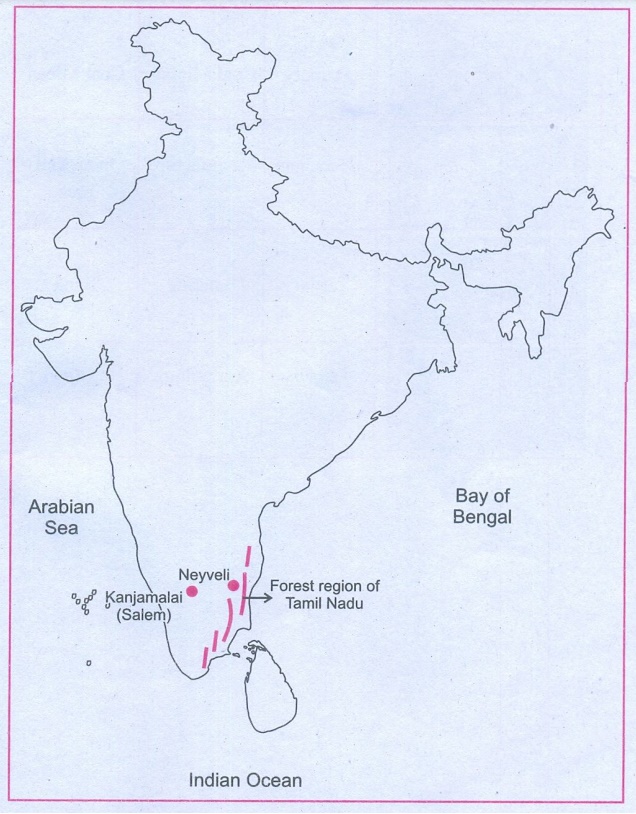
65.
a. Bay of Bangal
b. North America and South America
c. Almost completely surrounded by Eurasia and North America.
d. Palk Strait.
e. Indian Ocean to the west, the South Pacific Ocean to the East and the Southern
Ocean to the South.
f. Isthumusses -ANarrow piece ofland connecting two larger areas across an expanse of water. Isthumus of Panama - Central America.
66.
67.
On tile basis of ownership
Based on ownership resources can be classified into Individual resources, Communityowned
resources, National resources and International resources. '
(i) Individual resources are resources privately owned by individuals. (e.g.) Apartments.
(ii) Community-owned resources are resources which can be utilised by all the members of the community. (e.g.) Public parks.
(iii) National resources are resources within the political boundaries and oceanic area of a country. (e.g.) Tropical forest regions of India,
(iv) International resources are all oceanic resources found in the open ocean. Resources found in this region can be utilized only after an international agreement. (e.g.) Ambergris.
68.
| Religion | Nameof the founder with picture | Name of their Parents | Key Principle | Sects | Symbol |
| Buddhism | Siddhtha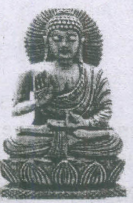 |
Suddhodana, Mayadevi |
Non-Violence |  |
|
| Jainism | Vardhamana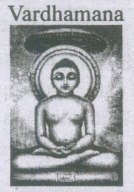 |
Siddharth, Trishala |
Karma 3. Place |
 |
69.
Sustainable development can take place when
(i) The reasons of depletion are identified.
(ii) Wastage and excess consumption is prevented.
(iii) Reusable resources are recycled.
(iv) Pollution is prevented.
(v) Environment is protected.
(vi) Natural vegetation and wild life are preserved.
(vii) Alternative resources are used.
70.
Mahatma Gandhi blamed "human beings" for depletion of resources because of
(i) Over exploitation of resources
(ii) Unlimited needs of human beings. So, conservation is very important
71.
If I were a King like Ashoka; I will implement some schemes.
Education:
To provide quality and equal free education to all from primary to higher studies.
Medical Aid:
To provide quality and free medical aid to all.
Health:
To provide basic needs like food, shelter, dress to all.
Economics:
To develop the economic status of our country giving importance to agricultural activities.
Employment:
To create employment opportunities for growing population from long term schemes.
Information technology:
Due to up coming technologies in the world I will implement new schemes to modernise the
72.
(i) Ashoka fought the Kalinga war in 261 B.C.
(ii) He won the war and captured Kalinga.
(iii) The horror of war was described by the king himself in the Rock Edict XIII.
(iv) After the battle of Kalinga, Ashoka became a Buddhist.
(v) He under took tours to different parts of the country instructing people on policy of Dhamma.
(vi) Ashoka sent his son Mahindra and his daughter Sanghamitra to Srilanka to propagate Buddhism.
(vii) He took importance in the welfare of the people like hospitals, laying roads, irrigation, etc.
(viii) So, Ashoka was considered as a great emperor of ancient India.
73.
Buddha's Four Noble Truths:
(i) Life is full of sorrow and misery.
(ii) Desire is the cause of misery
(iii) Sorrows and sufferings can be removed by giving up one's desire.
(iv) The desire can be overcome by following the right path.
74.
Status of women in Rig Vedic Period:
(i) In Rig Vedic society, women relatively enjoyed some freedom.
(ii) The wife was respected as the mistress of the household.
(iii) She could perform rituals in her house.
(iv) Child marriage and sati were unknown.
(v) There was no bar on the remarriage of widows.
(vi) Nevertheless, the women were denied right.to inherit property from their parents.
(vii) They played no role in public affairs.
Later Vedic period:
(i) In the later Vedic period the role of women in society, as well as their status, even within the family, declined.
(ii) Women could no longer perform rituals in the family.
(iii) The rules of marriage became much more rigid.
(iv) Polygamy became common.
(v) Widow remarriage was not encouraged.
(vi) Education was denied to women.
(vii) lntercaste marriages were spurned.
75.
(i) Mountains make up more than a quarter of the planet's land mass. These surfaces provide resources for nearly 700 million people through out the world.
(ii) Mountains provide energy resources, food and water to people all around the world.
(iii) But climate change could cause mountains to shrink.
(iv) Deforestation has also been a threat while natural disasters often damage many mountains.
(v) Mountains are among the most beautiful land masses in the world. So like conservation of forests, conservation of mountains also equally important.
76.
Agriculture was one of their occupation:
(i) Granaries were used to store food grains.
(ii) The remains of wheat, barley, millets, sesame and pulses have been found there.
(iii) A granary with walls made of mud bricks, which are still in a good condition, has been discovered in Rakhigarhi, a village in Haryana, belonging to mature Harappan phase.
77.
Some common social factors. that contributes to the rise of prejudice are
(i) Socialisation
(ii) Conforming behaviours
(iii) Economic benefits
(iv) Authorita, rian personality
(v) Ethno-cntrism
(vi) Group losure
(vii) Conflicts
78.
(i) Kanchi is also known as the temple city.
(ii) The famous temple of great architectural beauty, Kailasanathar temple, was built by later pallava king Rajasimha II at Kanchi.
(iii) During the Pallava period, a large number of cave temples were built.
(iv) Some temples are situated at Kancheepuram like Ekambaranather Temple, Ulaganath Perumal Temple, Varatharaja Perumal Temple.
79.
(i) Mesopotamian civilisation is the earliest civilisation in the world.
(ii) It is 6500 years old.
(iii) Now a days the city of Mesopotamia is called Iraq.
80.
| S.No | OLD STONE AGE LIFE STYLE | PRESENT DAY LIFE STYLE |
| 1. | The old stone Age people were went from place to place in searching food. | Present day man built houses and began to Iive in permanent place |
| 2. | They wore dresses made out of leaves, barks and skins of animals | Now a days people dresses wear made out of cotton, silk, wool and artificial rays. |
| 3. | They ate vegetables, fruits roots and meat of the animals | Present day these kind of foods are cooked and eaten by people. |
| 4. | They lived in caves. | Storeys houses are built by him. |
| 5. | They live depended in nature | We live in uses of modern technologis |
81.
(i) According to census of India 2001, India has 122 major languages and 1599 other languages.
(ii) Four major Indian language families are Indo-Aryan, Dravidian, Austroasiatic, and Sino Tibetian. Tamil is the oldest Dravidian language.
(iii) Historically, the Portuguese, the Dutch, the British, the Danish and the French came to India for trade and their occupation of India or some parts of it has left behind a certain impact upon the culture and language of the people.
(iv) Because the British ruled over the entire country for over three hundred years before independence in 1947, the English language gained prominence in India. In due course, English has emerged as an important language and a medium of instruction in schools and colleges.
(v) It is widely used in official communication and daily life.
Cultural Diversity :
(i) The term 'culture' refers to customs and practices of people, their language, their dress code, cuisine, religion, social habits, music, art, and architecture.
(ii) The culture of a group of people is reflected in their social behavior and interactions.
(iii) The group identity fostered by social patterns is unique to a group.
(iv) Art and architecture are an integral part of every community.
(v) It develops as a part of culture and tradition of a community.
(vi) Each of the 29 states and 7 Union territories of India has rich traditions and unique ways of artistic expression.
82.
CLASSIFICATION OF LAND FORMS:
First Order:
Continents: The vast land masses on earth are called continents.
Oceans: Oceans are vast expanse of water.
Second Order:
Mountains: A landform that rises 600 metre above its surroundings and has steep slopes is called a mountain.
Plateaus: Plateaus are the elevated portions of the earth that have flat surfaces bounded by steep slopes.
Plains: Plains are a flat and relatively low lying lands.
Third Order:
(i) Third order landforms are formed on Mountains, plateaus, and plains mainly by erosional and depositional activities of rivers, glaciers, winds and waves.
(ii) Valleys, beaches and sand dunes are some examples of the third order landforms.
83.
(i) The earth is the most suitable planet to support life.
(ii) It has thrge major components that we call as the realms of the Earth lithosphere, hydrosphere and atmosphere.
Lithosphere:
(i) The lithosphere is the land on which we live.
(ii) It is the solid outer layer of the earth consisting of rocks and soils.
Hydrosphere:
(i) The hydrosphere consists of water bodies such as oceans, seas, rivers, lakes, ice caps.on mountains and water vapour in the atmosphere.
Atmosphere:
(i) Atmosphere is the envelope of air that surrounds the earth.
(ii) Different types of gases make up the atmosphere.
(iii) The major gases are Nitrogen 78% and Oxygen 21%.
(iv) The other gases like Carbon dioxide, Hydrogen, Helium, Argon and Ozone are present in meager amounts.
Biosphere:
(i) The narrow belt of interaction among the lithosphere, the hydrosphere and the atmosphere, where life exists is known as biosphere.
(ii) Bio means life in Greek.
(iii) It consists of distinct zones.
(iv) Each zone has its own climate, plant and animal life.
(iv) These zones are known as ecosystems.
84.
Rotation:
(i) It is the spinning movement of the earth on its axis.
(ii) The rotation of the earth causes day and night.
(iii) As the earth is spherical in shape, only one half of it is illuminated by the sun at a time.
(iv) The other half remains dark.
(v) The illuminated portion of the earth experiences day, whereas the darkened part of the earth experiences night.
Revolution:
(i) It is the movement of the earth around the sun on its elliptical path.
(ii) The inclination of the earth on its axis and its revolution around the sun cause different seasons.

6th Standard Syllabus & Materials
6th Standard
TN 6th Social Science T3 - GEO - Understanding Disaster Sample Question Papers Study Material - QB365 Set A
NEW6th Standard
TN 6th Social Science T3 - GEO - Globe Sample Question Papers Study Material - QB365 Set A
NEW6th Standard
TN 6th Social Science T3 - GEO - Asia and Europe Sample Question Papers Study Material - QB365 Set A
NEW6th Standard
TN 6th Social Science T3 - HIS - South Indian Kingdoms Sample Question Papers Study Material - QB365 Set A



Tamilnadu Stateboard 6th Standard Subjects
Tamilnadu Stateboard Standards



