
 100% FREE ACCESS
6th Standard Syllabus & Materials
6th Standard
TN 6th Tamil பருவம் 1 - இயல் 1 - மொழி -தமிழ்த்தேன் - இன்பத்தமிழ் Sample Question Papers Study Material - QB365 Set A
NEW6th Standard
TN 6th English T1 - Supplementary - The Apple Tree and The Farmer Sample Question Papers Study Material - QB365 Set A
NEW6th Standard
TN 6th English T1 - Prose - When The Trees Walked Sample Question Papers Study Material - QB365 Set A
NEW6th Standard
TN 6th Social Science T3 - CIV - Road Safety Sample Question Papers Study Material - QB365 Set A
NEW6th Standard
TN 6th Social Science T3 - CIV - Local Bodies - Rural and Urban Sample Question Papers Study Material - QB365 Set A
NEW6th Standard
TN 6th Social Science T3 - CIV - Democracy Sample Question Papers Study Material - QB365 Set A

Published on: 04/02/2020
6th Standard Social Science Term 1 - Geography - Land and Oceans Chapter Important Questions
Download Tamil Nadu 6th Standard Social Science question papers, model tests, one-mark questions, important questions, and public exam papers in PDF format. Free study materials and answer keys for TN State Board students.
Questions + Answers key
Take MCQ Social Science Test
1.
The Reunion islands are present in ________ Ocean.
Arctic
Antartic
IndianPacific
Pacific
2.
Bering sea is the marginal sea of the Ocean.
Pacific
Indian
Atlantic
Arctic
3.
'Roof of the world'denotes to
Tibetan Plateau
Chhotanagpur Plateau
Deccan Plateau
Malwa Plateau
4.
The International Mountain Day is
December 10th
December 11th
December 12th
December 13th
5.
The longest mountain range In the world is
Himalayas
Rocky
Andes
Alps
6.
Andes mountain is located in
North America
South America
Asia
Europe
7.
The largest continent is
Europe
Australia
NorthAmerica
Asia
8.
Which of the following oceans is the busiest ocean?
The Pacific Ocean
The Atlantic Ocean
The Indian Ocean
The Arctic Ocean
9.
The Malacca Strait connects
The Pacific and Atlantic Oceans
The Pacific and Southern Oceans
The Pacific and Indian Oceans
The Pacific and Arctic Oceans
10.
Which of the following is the smallest ocean on Earth?
The Pacific Ocean
The Indian Ocean
The Atlantic Ocean
The Arctic Ocean
11.
You know the importance of conservation of forests. Do you think conservation of mountains is also equally important?
12.
December 11 International Mountain Day.
13.
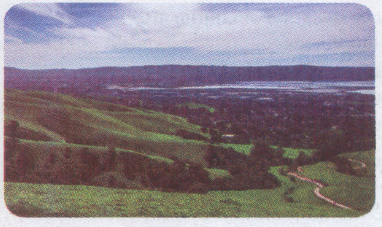
1. Name the landform.
2. What order of a landform is this?
3. Which activity of river is this landform formed by?
14.
Give the important features of the Pacific Ocean.
15.
Plains are highly populated. Give reasons
16.
Write a note on plateaus.
17.
Mention the classification of land forms.
18.
When you are walking on the Marina beach in Chennai, which order of landform are you on?
19.
Complete the given table with the help of an atlas. Follow the example
| S.No | Continent | Plateau | Plains |
| 1. | Asia | Tibetan Plateau | Yangtze Plain |
| 2. | North America | ||
| 3. | South America | ||
| 4. | Australia | ||
| 5. | Europe | ||
| 6. | Africa |
20.
Complete the given table with the help of an atlas. Follow the example
| S.No | Mountain Ranges | Peaks | Continents | Elevation (m) |
| 1. | The Himalayas | Everest | Asia | 8,848 |
| 2. | The Rockies | |||
| 3. | The Andes | |||
| 4. | The Alps | |||
| 5. | The Eastern Ghats |
21.
What are oceans?
22.
Name the continents which surround the Atlantic Ocean.
23.
What is a continent?
24.
The process of removal of surface material from the Earth's crust is called __________.
25.
Sand dunes form the _______ order landforms.
26.
The _________ Plain in North India is one of the largest plains in the world.
27.
The plains have been the ________ from the earliest times.
28.
The flat topped part of the plateau is called __________.
29.
In Sangam period, Mountain and its environs are classified as _______ land.
30.
The highest peak in the world is ________.
31.
The largest ocean is ___________ .
32.
__________ is the mineral rich plateau in India.
33.
The world's largest continent is __________.
34.
Map reading (with the help of atlas )
a. A sea in the east of India
b. Continents in the west of Atlantic Ocean
c. Continents in the south of Arctic Ocean
d. A strait between India and Sri Lanka
e. Oceans which surround Australia
f. Find out the Isthumusses
(Create more questions)
1.
(c)
IndianPacific
2.
(a)
Pacific
3.
(a)
Tibetan Plateau
4.
(b)
December 11th
5.
(c)
Andes
6.
(b)
South America
7.
(d)
Asia
8.
(b)
The Atlantic Ocean
9.
(c)
The Pacific and Indian Oceans
10.
(d)
The Arctic Ocean
11.
(i) Mountains make up more than a quarter of the planet's land mass. These surfaces provide resources for nearly 700 million people through out the world.
(ii) Mountains provide energy resources, food and water to people all around the world.
(iii) But climate change could cause mountains to shrink.
(iv) Deforestation has also been a threat while natural disasters often damage many mountains.
(v) Mountains are among the most beautiful land masses in the world. So like conservation of forests, conservation of mountains also equally important.
12.
Prepare slogans, posters and placards to celebrate International Mountain Day.
(i) "Mountains are among the most beautiful land masses in the world."
(ii) "Mountains are beautiful as they rise up above the clouds and show just how grand the world can be."
(iii) "Great things are done when men and mountains meet."
(iv) "How glorious a greeting the Sun gives the mountains."
(v) "Mountains are earth's undecaying monuments."
(vi) "The mountains, forests and seas render men savage, they develop fierce, but yet do not destroy the human. "
(vii) "Men stumble over pebbles, never over mountains."
(viii) "Each fresh peak ascended teaches something."
(ix) "Mountains are the beginning and end of all natural scenery."
(x) "He who climbs upon the highest mountains laughs at all tragedies, real or imaginary.
13.
1. Valley
2. Third Order
3. Erosion
14.
(i) The important features of the pacific ocean:
(ii) The pacific ocean is the largest and deepest ocean on the earth.
(iii) It covers about one-third of the earth's total area and spreads for about 168.72 million sq.km
(iv) This oceans shape is roughly triangular with its apex in the north at the bering strait which connects the pacific ocean with the arctic ocean.
(v) The bering sea, the china sea and the Philippines sea, the sea of Japan and Tasman sea are some of the marginal seas of the pacific ocean.
(vi) Indonesia, philippines, japan, hawaii, newzealand are some of the islands located in this ocean.
(vii) The deepest point mariana trench is 10,994m and is located in the pacific ocean.
(viii) A chain of volcanoes is located around the pacific ocean called the pacific ring of fire.
15.
Plains are highly populated.
Reason:
(i) Plains are a flat and relatively low-lying lands.
(ii) Plains are usually less than 200 metre above sea level.
(iii) Most plains are formed by rivers and their tributaries and distributaries.
(iv) These plains are used extensively for agriculture due to the availability of water and fertile soil.
(v) They are most suitable for human inhabitation.
(vi) Hence, they are the highly populated regions of the world.
(vii) The Indo-Gangetic plain in North India is one of the largest plains in the world.
(viii) The plains formed by river cauvery and vaigai are important plains found in tamil nadu.
16.
Plateaus:
(i) Plateaus are the elevated portions of the earth that have flat surfaces bounded by steep slopes.
(ii) The elevation of plateaus may be a few hundred metre or several thousand metre.
(iii) Tibetan plateau is the highest plateau in the world.
(iv) So, it is called as the 'Roof of the world'.
(v) The flat lopped part of the plateau is called tableland.
(vi) The plateaus are generally rich in minerals.
(vii) The Chota Nagpur plateau is one of the mineral rich plateaus in India.
(viii) Therefore, rnining is one of the major aclivities of the people living here.
(ix) The deccan plateau in peninsular india is of volcanic origin. Dharmapuri plateau, coimbatore plateau, madurai plateau are found in tamil nadu.
17.
CLASSIFICATION OF LAND FORMS:
First Order:
Continents: The vast land masses on earth are called continents.
Oceans: Oceans are vast expanse of water.
Second Order:
Mountains: A landform that rises 600 metre above its surroundings and has steep slopes is called a mountain.
Plateaus: Plateaus are the elevated portions of the earth that have flat surfaces bounded by steep slopes.
Plains: Plains are a flat and relatively low lying lands.
Third Order:
(i) Third order landforms are formed on Mountains, plateaus, and plains mainly by erosional and depositional activities of rivers, glaciers, winds and waves.
(ii) Valleys, beaches and sand dunes are some examples of the third order landforms.
18.
Third order of land form.
19.
| S.No | Continent | Plateau | Plains |
| 1. | Asia | Tibetan Plateau | Yangtze Plain |
| 2. | North America | Colorado Plateau | Great Plains |
| 3. | South America | Altiplano Plateau | Pampas |
| 4. | Australia | Western Plateau known as Australian shield | Nullarbor |
| 5. | Europe | Hardangervidda | North European Plain |
| 6. | Africa | East African Plateau | Serengeti Plains |
20.
| S.No | Mountain Ranges | Peaks | Continents | Elevation (m) |
| 1. | The Himalayas | Everest | Asia | 8,848 |
| 2. | The Rockies | Elbert | N. America | 4,401 |
| 3. | The Andes | Aconcagna | S. America | 1,069 |
| 4. | The Alps | Mont Blanc | Europe | 806 |
| 5. | The Eastern Ghats | lindhagada | Asia (In A.P, India) | 1,690 |
21.
Oceans are vast expanse of water.
22.
The Atlantic ocean is bounded by North America and South America in the West, and Europe and Africa in the East.
23.
The vast land masses on Earth are called Continents.
24.
()
Erosion
25.
()
Third
26.
()
Indo-Gangetic
27.
()
cradle of civilisations
28.
()
Table land
29.
()
Kurinji
30.
()
Mt. Everest
31.
()
The Pacific Ocean
32.
()
Chotanagpur Pleateau
33.
()
Asia
34.
a. Bay of Bangal
b. North America and South America
c. Almost completely surrounded by Eurasia and North America.
d. Palk Strait.
e. Indian Ocean to the west, the South Pacific Ocean to the East and the Southern
Ocean to the South.
f. Isthumusses -ANarrow piece ofland connecting two larger areas across an expanse of water. Isthumus of Panama - Central America.

6th Standard Syllabus & Materials
6th Standard
TN 6th Social Science T3 - GEO - Understanding Disaster Sample Question Papers Study Material - QB365 Set A
NEW6th Standard
TN 6th Social Science T3 - GEO - Globe Sample Question Papers Study Material - QB365 Set A
NEW6th Standard
TN 6th Social Science T3 - GEO - Asia and Europe Sample Question Papers Study Material - QB365 Set A
NEW6th Standard
TN 6th Social Science T3 - HIS - South Indian Kingdoms Sample Question Papers Study Material - QB365 Set A



Tamilnadu Stateboard 6th Standard Subjects
Tamilnadu Stateboard Standards



