
 100% FREE ACCESS
7th Standard Syllabus & Materials
7th Standard
TN 7th Tamil பருவம் -1 இயல் 1 - அமுதத்தமிழ் - ஒன்றல்ல இரண்டல்ல Important Questions And Answers Study Material - QB365 Set A
NEW7th Standard
TN 7th Tamil பருவம் -1 இயல் 1 - அமுதத்தமிழ் - எங்கள் தமிழ் Important Questions And Answers Study Material - QB365 Set A
NEW7th Standard
TN 7th English T1 - Poem - Your Space Important Questions And Answers Study Material - QB365 Set A
NEW7th Standard
TN 7th English T1 - Prose - A Prayer to the Teacher Important Questions And Answers Study Material - QB365 Set A
NEW7th Standard
TN 7th English T1 - Poem - The Listeners Important Questions And Answers Study Material - QB365 Set A
NEW7th Standard
TN 7th English T1 - Prose - The Wind on Haunted Hill Important Questions And Answers Study Material - QB365 Set A

Published on: 13/05/2022
QB365 provides detailed and simple solution for every book back questions in class 7 Maths subject.It will helps to get more idea about question pattern in every book back questions with solution.
latest Book back QuestionsDownload Tamil Nadu 7th Standard Maths question papers, model tests, one-mark questions, important questions, and public exam papers in PDF format. Free study materials and answer keys for TN State Board students.
Questions + Answers key
Take MCQ Maths Test1.
Construct the flow chart to find whether the given number is a positive integer or negative integer or zero and write step by step process.
2.
The lifetime (in days) of 11 types of LED bulbs is given in days. 365, 547, 730, 1095, 547, 912, 365, 1460, 1825, 1500, 2000. Find the median life time of the LED bulbs.
3.
The weights of 10 students (in kg) are 35, 42, 40, 38, 25, 32, 29, 45, 20, 24 Find the median of their weight?
4.
The mean of 9 observations is 24. Find the sum of the 9 observation.
5.
Describe the transformation involved in the following pair of figures. Write translation, reflection or rotation.
(i)

(ii)

(iii)

6.
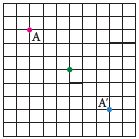
Rotate the pink point about the green point by given angle of rotation and direction
(i) 90˚ counter clockwise
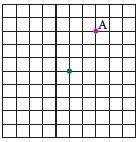
(ii) 180˚
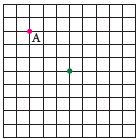
7.
Using the identity (x + a)(x + b) = x2 + x(a + b) + ab ,find the following product.
(4x + 3y) ( 4x + 5y)
8.
Factorise by using the identity: a2 -b2 = (a +b)(a−b)
(i) a2 -1
(ii) 9k2 -25
(iii) 64x2 - 81y2
9.
Simplify by using the identity (a + b)(a − b) = a2 -b2.
(i) (3x + 4)(3x − 4)
(ii) 53 x 47.
10.
Simplify the following using the identity (a + b)2 = a2 + 2ab + b2 .
(i) (2x + 5)2
(ii) 212
11.
An item was sold at Rs. 200 at a loss of 4 %. What is its cost price.
12.
A shopkeeper bought a chair for Rs. 325 and sold it for Rs.350. Find the profit percentage.
13.
During Aadi sale the price of shirt decreased from Rs. 90 to Rs. 50. What is the percentage of decrease.
14.
Kuzhal’s mother makes dosa by mixing the batter made from 1 portion of Urad dhal with 4 portions of rice. Represent each of the ingredients used in the batter as percentage.
15.
Kuralmathi bought a raincoat and saved Rs. 25 with discount of 20%. What was the original price of the raincoat?
16.
There are 560 students in a school. Out of 560 students, 320 are boys. Find the percentage of girls in that school.
17.
75 students from a Government High school appeared for S.S.L.C. examination. 72 of them are declared passed in the examination. Find the percentage of students passed.
18.
Write the following percentage into fraction \(\cfrac { 3}{ 5} \%\)
19.
Write the following percentage into fraction
60%
20.
Out of 20 beads, 5 beads are red. What is the percentage of red.
21.
Write \(\cfrac { 1 }{ 5 } \) as per cent
22.
Find the value of the following
(i) 3.26 x 10
(ii) 3.26 x 100
(iii) 3.26 x 1000
(iv) 7.01 x 10
(v) 7.01 x 100
(vi) 7.01 x 1000
23.
Latha purchased a churidar material of 3.75 m at the rate of Rs 62.50 per metre. Find the amount to be paid.
24.
Round 189.0007 upto 3 places of decimal.
25.
Round 99.95 to the nearest tenth place.
1.
In this question we are asked to find the given integer x is a positive number or a negative number or a zero. For that, first we have to assign the value of x and check whether x is greater than 0. If ‘yes’, we will print “x is a Positive number”. If ‘no’ then we will check again if the value of x is less than 0. If ‘yes’, we will print “x is a Negative number”. If ‘no’, then we will print “x = zero”. Step by Step process:
| Step by Step process |
| 1. assign the value of x 2. check x > 0 3. if ‘yes’ print 4. “x is a Positive number” 5. check again x < 0 6. if ‘yes’ print 7.“x is a Negative number” 8. if ‘no’ print “x is equal to zero”. |
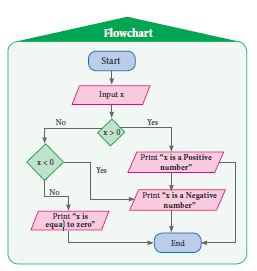
| Verifying the condition x > 0 | Verifying the condition x < 0 | Verifying the condition x = 0 |
| For a particular value x = 7926 7926 > 0 Yes x is a Positive number |
For a particular value x = -2589 -2589 > 0 No -2589 < 0 Yes x is a Negative number |
For a particular value x = 0 0 > 0 No 0 < 0 No x is equal to zero |
2.
Arranging the data in ascending order, we have,
365, 365, 547, 547, 730, 912, 1095, 1460, 1500, 1825, 2000.
The number of observations are 11, which is odd.
\(Median=\left( \cfrac { n+1 }{ 2 } \right) ^{ th }term\)
= \(\left( \cfrac { 11+1 }{ 2 } \right) ^{ th }term\)
= 6 th term = 912
Therefore, the median is 912.
Hence, the median lifetime of the LED bulb is 912 days.
3.
Arranging the weights in ascending order, we have, 20, 24, 25, 29, 32, 35, 38, 40, 42, 45
Here, n = 10 , which is even.
Therefore, median weight = \(\cfrac { 1 }{ 2 } \left\{ \left( \cfrac { n }{ 2 } \right) ^{ th }term+\left( \cfrac { n }{ 2 } +1 \right) ^{ th }term \right\} \)
= \(\cfrac { 1 }{ 2 } \left\{ \left( \cfrac { 10 }{ 2 } \right) ^{ th }term+\left( \cfrac { 10 }{ 2 } +1 \right) ^{ th }term \right\} \)
= \(\cfrac { 1 }{ 2 } \left\{ { 5 }^{ th }tern+{ 6 }^{ th }term \right\} \)
= \(\cfrac { 1 }{ 2 } \left\{ 32+35 \right\} kg=\cfrac { 67 }{ 2 } =33.5kg\)
Hence, Median is 33.5 kg.
4.
\(Arthemetic\ Mean=\cfrac { Sum\ all\ observation }{ Number\ of\ observation } \)
Thus, \(24=\cfrac { Sum\ of\ all\ observations }{ 9 } \)
Sum of all observations = 9 x 24 = 216
5.
(i) Reflection
(ii) Rotation
(iii) Translation
6.
(i) 90˚ counter clockwise
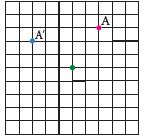
(ii) 180o
7.
(x + a)(x + b) = x2 + x(a + b) + ab
put x = 4x, a = 3y, b = 5y is the above formula, we get
\( (4 x+3 y)(4 x+5 y) =(4 x)^{2}+(4 x)(3 y+5 y)+(3 y \times 5 y) \)
\(\\ =16 x^{2}+(4 x)(8 y)+15 y^{2} \)
\(\\ =16 x^{2}+32 x y+15 y^{2} \)
8.
(i) a2 −1 = a2 −12 = (a + 1)(a − 1) [since, 12 = 1 x 1 = 1]
Therefore, the factors of a2 -1 are (a + 1) and (a − 1).
(ii) 9k2 − 25 = (32 x k2 ) − 52 = (3k)2 −52 [since, amxbm =(axb)m ]
= (3k + 5)(3k − 5) |since,a2- b2 = (a + b)(a - b)|
Therefore, the factors of 9k2 -25 are (3k + 5) and (3k − 5).
(iii) 64x2 −81y2 = (82xx2 ) − (92xy2 ) = (8x)2 −(9y)2
= (8x + 9y)(8x − 9y)
Therefore, the factors of 64x2 -81y2 are (8x + 9y) and (8x – 9y).
9.
(i) (3x + 4)(3x − 4)
Substitute, a = 3x and b = 4 in the identity (a+b) x (a − b) = a2 −b2, we get,
(3x + 4)(3x − 4) = (3x)2 −42
(32 x x2 )−16 = 9x2 −16
(ii) 53 x 47 = (50 + 3) x (50 − 3).
Take, a = 50 and b = 3,
Substituting the values of ‘a’ and ‘b’ in the identity (a + b)(a – b) = a2 – b2), we get,
53 x 47 = 502 −32
= 2500 − 9
= 2491.
10.
(i) (2x + 5)2
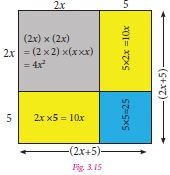
Let the side of the square be 2x + 5 units.
Then its area is side´side , that is (2x + 5)2
The geometrical representation of the given expression is as shown in Figure.
Area of the bigger square = Area of two squares+ Area of two rectangles.
(2x + 5)2 = 4x2 + 25 + 10x + 10x
= 4x2 + (10 + 10)x + 25 (Adding like terms)
= 4x2 + 20x + 25 .
(ii) 212
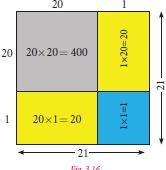
Let the side of the square be 21. Hence, its area is 212 .
Consider 212 as (20 + 1)2 which is one of the way to represent it geometrically as shown in Figure.
Now,
Area of the bigger square = Area of two squares+ Area of two rectangles.
212 = 400 + 1 + 20 + 20 = 441.
Aliter method:
We know the identity,(a + b)2 = (a + b)(a + b)
= a2 + 2ab + b2
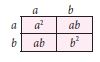
To find the value of 212
We take,212 = (20 + 1)2
= (2 0 + 1)(20 + 1)
Here, a = 20 and b = 1.
Therefore,
\( a^{2}+2 a b+b^{2}=20^{2}+2 \times 20 \times 1+1^{2} \)
\(\\ =400+40+1=441 \)
11.
To find the cost price,
Loss per cent = \(\cfrac { Loss }{ C.P } \times 100\)
\(4\%=\cfrac { Loss }{ C.P } \times 100\)
\(\\ 4\%=\cfrac { Loss }{ 200 } \times 100\)
Loss
C.P = S.P + Loss
= 200 + 8
= 208
Hence the cost price of the item is Rs.208.
12.
\(Profit\quad percent=\cfrac { Profit }{ C.P } \times 100\)
= \(\cfrac { 25 }{ 325 } \times 100=\cfrac { 100 }{ 13 } =7\cfrac { 9 }{ 13 } \%\)
13.
Original price = the price of the shirt before Aadi month
Amount of change = the decrease in the price = 90 – 50 = Rs. 40
Therefore, the percentage of decrease = \(\cfrac { Amount\ of\ change }{ Original\ amount } \times 100\)
= \(\cfrac { 40 }{ 90 } \times 100=\cfrac { 400 }{ 9 } \)
= \(44\cfrac { 4 }{ 9 }\%\)
14.
Representing ingredients used in the batter as ratio, we get, rice : urad dhall = 4 :1
Now, the total number of parts is 4 +1 = 5 .
That is \(\cfrac { 4 }{ 5 } \) portion of rice is mixed with \(\cfrac { 1 }{ 5 } \) portion of urad dhall.
Thus, the percentage of rice would be \(\cfrac { 4 }{ 5 } \times 100\%=\cfrac { 400 }{ 5 } =80\%\)
The percentage of urad dhall would be \(\cfrac { 1 }{ 5 } \times 100\%=\cfrac { 100 }{ 5 }\% =20\%\)
15.
Let the price of the raincoat (in Rs. ) be P. So 20% of P = 25
\(\cfrac { 20 }{ 100 } \times P=25\)
\(P=\cfrac { 25\times 100 }{ 20 } =125\)
Therefore, the original price of the raincoat is Rs.125.
16.
Total number of students = 560
Number of boys = 320
Number of girls = 560 – 320 = 240
\(Percentage=\cfrac { 240 }{ 560 } \times 100\%=\cfrac { 24 }{ 56 } \times 100\%\)
= \(\cfrac { 3 }{ 7 } \times 100\%=\cfrac { 300 }{ 7 } \%\)
= 42.86%
17.
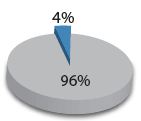
Total number of students = 75
Number of students declared passed = 72
Percentage = \(\cfrac { 72 }{ 75 } \times 100\%\)
= \(\cfrac { 24 }{ 25 } \times 100\%\)
= 24 x 4%
= 96%
18.
\(\cfrac { 3 }{ 5 } =\cfrac { \frac { 3 }{ 5 } }{ 100 } =\cfrac { 3 }{ 500 } \)
19.
\(60\%=\cfrac { 60 }{ 100 } =\cfrac { 6 }{ 10 } =\cfrac { 3 }{ 5 } \)
20.
We have \(\cfrac { 5 }{ 20 } =\cfrac { 5 }{ 20 } \times \cfrac { 100 }{ 100 } =\cfrac { 5 }{ 20 } \times 100\%=\cfrac { 500 }{ 20 }\% =25\%\)
21.
We have \(\cfrac { 1 }{ 5 } =\cfrac { 1 }{ 5 } \times \cfrac { 100 }{ 100 } =\cfrac { 1 }{ 5 }\% \times 100=\cfrac { 100 }{ 5 }\% =20\%\)
22.
(i) 3.26 x 10 = 32.6
(ii) 3.26 x 100 = 326.0
(iii) 3.26 x 1000 = 3260.0
(iv) 7.01 x 10 = 70.1
(v) 7.01 x 100 = 701.0
(vi) 7.01 x 1000 = 7010.0
23.
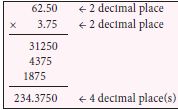
Cost of churidhar material = Rs. 62.50 per metre
Length of churidhar material = 3.75 m
Amount to be paid = 3.75 x 62.50
= Rs. 234.3750
= Rs.234.38 (rounded to two decimals)
24.
Round 189.0007 upto 3 places of decimal means rounding to the nearest thousandth place.
Underline the digit in the thousandth place of 189.0007 gives 189.0007 In 189.0007 we observe that the digit next to the thousandth place value is 7, which is greater than 5.
Therefore, we should add 1 to the underlined digit. Hence, we get 189.001. So the rounded value of 189.0007 upto 3 places of decimal is 189.001.
So the rounded value of 189.0007 upto 3 places of decimal is 189.001
25.
Underline the digit to be rounded 99.95.
Since the digit right to the tenth place is 5, we add 1 to the tenth place (underlined digit) of 99.95 and we get 100.0.
Look at the number line shown below

So, the rounded value of 99.95 is 100.0.

7th Standard Syllabus & Materials
7th Standard
TN 7th English T1 - Supplementary - On Monday Morning Important Questions And Answers Study Material - QB365 Set A
NEW7th Standard
TN 7th English T1 - Prose - Eidgah Important Questions And Answers Study Material - QB365 Set A
NEW7th Standard
TN 7th Social Science T1 - ECO - Production Important Questions And Answers Study Material - QB365 Set A
NEW7th Standard
TN 7th Social Science T1 - GEO - Interior of the Earth Important Questions And Answers Study Material - QB365 Set A



Tamilnadu Stateboard 7th Standard Subjects
Tamilnadu Stateboard Standards




