
 100% FREE ACCESS
7th Standard Syllabus & Materials
7th Standard
TN 7th Tamil பருவம் -1 இயல் 1 - அமுதத்தமிழ் - ஒன்றல்ல இரண்டல்ல Important Questions And Answers Study Material - QB365 Set A
NEW7th Standard
TN 7th Tamil பருவம் -1 இயல் 1 - அமுதத்தமிழ் - எங்கள் தமிழ் Important Questions And Answers Study Material - QB365 Set A
NEW7th Standard
TN 7th English T1 - Poem - Your Space Important Questions And Answers Study Material - QB365 Set A
NEW7th Standard
TN 7th English T1 - Prose - A Prayer to the Teacher Important Questions And Answers Study Material - QB365 Set A
NEW7th Standard
TN 7th English T1 - Poem - The Listeners Important Questions And Answers Study Material - QB365 Set A
NEW7th Standard
TN 7th English T1 - Prose - The Wind on Haunted Hill Important Questions And Answers Study Material - QB365 Set A

Published on: 06/08/2019
Download Tamil Nadu 7th Standard Maths question papers, model tests, one-mark questions, important questions, and public exam papers in PDF format. Free study materials and answer keys for TN State Board students.
Questions + Answers key
Take MCQ Maths Test1.
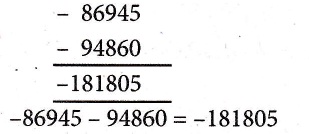
Subtract 94860 from (-86945)
2.
If P = -15 and Q = 5 find (P-Q) + (P+Q)
3.
The product of two integers is −135. If one number is −15, Find the other integer.
4.
Find the expression to be added with 5a − 3b + 2c to get a − 4b − 2c?
5.
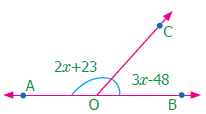
In the given figure, find the value of x.
6.
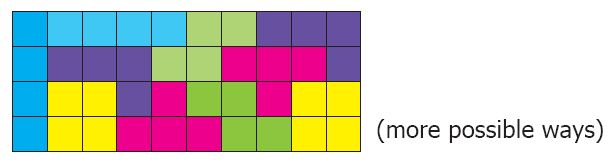
Fill in 4 x 10 rectangle completely, using all the five tetrominoes twice
7.
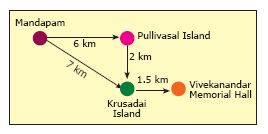
Find the shortest route to Vivekanandar Memorial Hall from the Mandapam using the given map.
8.
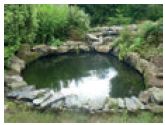
During summer, the level of the water in a pond decreases by 2 inches every week due to evaporation. What is the change in the level of the water over a period of 6 weeks?
9.
Construct the following angles using ruler and compass only.
(i) 60°
(ii) 120°
(iii) 30°
(iv) 90°
(v) 45°
(vi) 150°
(vii) 135
10.
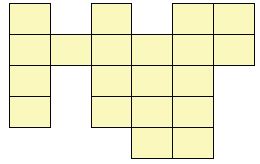
Shade the figure completely, by using five Tetromino shapes only once.
11.
Find the height of the parallelogram whose base is four times the height and whose area is 576 sq. cm.
12.
If the base and height of a parallelogram are in the ratio 7:3 and the height is 45 cm then, find the area of the parallelogram
13.
The height of the parallelogram is one fourth of its base. If the area of the parallelogram is 676 sq. cm, find the height and the base
14.
The area of a trapezium is 1586 sq. cm. The distance between its parallel sides is 26 cm. If one of the parallel sides is 84 cm then, find the other side.
15.
A truck requires 108 liters of diesel for covering a distance of 594 km. How much diesel will be required to cover a distance of 1650 km?
16.
A student was asked to subtract (–12) from (–47). He got −30.Is he correct? Justify.
17.
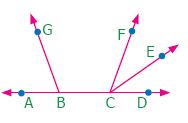
Name the pairs of adjacent angles.
18.
It takes 120 minutes to weed a garden with 6 gardeners If the same work is to be done in 30 minutes, how many more gardeners are needed?
19.
The weight of 72 books is 9 kg. what is the weight of 40 such books? (using unitary method)
20.
A group of 21 students paid Rs. 840 as the entry fee for a magic show. How many students entered the magic show if the total amount paid was Rs.1,680?
21.
Identify the like terms among the following : 7x, 5y, −8x, 12y, 6z, z, −12x, −9y, 11z.
22.
Find the numerical coefficient of each of the following terms: −3yx, 12k, y, 121bc, − x, 9pq, 2ab
23.
A ground is in the shape of parallelogram. The height of the parallelogram is 14 metres and the corresponding base is 8 metres longer than its height. Find the cost of levelling the ground at the rate of Rs.15 per sq. m.
24.
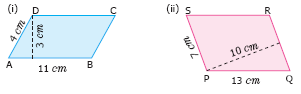
Find the area and perimeter of the following parallelograms:
25.
In a quiz competition, Team A scored +30,–20, 0 and team B scored –20, 0, +30 in three successive rounds. Which team will win? Can we say that we can add integers in any order?
26.
Find two consecutive odd numbers whose sum is 200.
27.
Given that AB is a straight line. Calculate the value of x° in the following cases.

28.
Simplify
(i) (x + y − z) + (3x − 5y + 7z) − (14x + 7y − 6z)
(ii) p + p + 2 + p + 3 − p − 4 − p − 5 + p + 10
(iii) n + (m + 1) + (n + 2) + (m + 3) + (n + 4) + (m + 5)
29.
Add 2 to me. Then multiply by 5 and subtract 10 and divide now by 4 and 1 will give you 15! Who am I?
30.
A lift is on the ground floor. If it goes 5 floors down and then moves up to 10 floors from there. Then in which floor will the lift be?
1.
2.
\(\frac{\mathrm{P}-\mathrm{Q}}{\mathrm{P}+\mathrm{Q}}=\frac{-15-5}{-15+5}=\frac{-20}{-10}=2\)
3.
Let a, b be two integers.
The product of two integers = -135
a x b = -135
One number,a = -15
b = ?
Other number \(=\frac{135}{-15}=9\)
∴ The other number = 9
4.
(5a - 3b + 2c) + Expression = a - 4b - 2c
Expression = (a - 4b - 2c)- (5a- 3b + 2c)
= (a - 4b - 2c) + (-5a - 3b +2c)
= (a - 5a) + (-4b + 3b) + (-2c - 2c)
= (1 - 5)a + (-4 + 3)b + (-2 - 2)c
= -4a - b - 4c
5.
From the figure
2x + 23 + 3x - 18 = 180o [linear pair]
5x + 5 = 180o
5x = 175o
x = 35o
6.
7.
Possible routes from Mandapam to Vivekandar Memorial are
route 1:
(a) . Mandapam \(\longrightarrow \) Pullivasal Island \(\longrightarrow \) Krusadai Island \(\longrightarrow \) Vivekanandar Memorial Hall.
Distance = 6 Km + 2 Km + 1.5 Km = 9.5 Km
route 2:
(b) Mandapam\(\longrightarrow \) Krusadai Island\(\longrightarrow \) Vivekanandar Memorial Hall.
Distance = 7 Km + 1.5 Km = 8.5 Km
8.5 km < 9.5 km
\(\therefore \) Shortest route: Mandapam \(\longrightarrow \) Krusadai Island\(\longrightarrow \) Vivekanandar Memorial
8.
The level of the water in a pond decreases in a week = -2 inches.
Level of water decreases in 6 weeks = 6 x -2 = -12 inches
The change in the level of the water over a period of 6 week is -12 inches
9.
(i) 60°
Construction:
Step 1: Drawn a line and marked a point 'A' on it.
Step 2: With A as center drawn an arc of convenient radius to meet the line at a point B.
Step 3: With the same radius and B as center drawn an arc to cut the previous arc at C.
Step 4: Joined AC. The ∠ABC is the required angle with the measure 60
.JPG)
(ii) 120°
Construction:
We know that there are two 60° angles in 120°.
∴ We can construct two 60° angles consecutively construct 120°
Step 1: Drawn a line and marked a point 'A' on it
Step 2: With 'A' as center, drawn an arc of convenient radius to the line at a point B.
Step 3: With the same radius and B as center, drawn an arc to cut the previous arc at C
Step 4: With the same radius and C as center, drawn an arc to cut the arc drawn in step 2 at D
Step 5: Joined AD. Then ∠BAD is the required angle with measure 120°.
.JPG)
(iii) 30°
Constructions:
Since 30° is half of 60°, we can construct 30° by bisecting the angle. 60°.
Step 1: Drawn a line and marked a point A on it.
Step 2: With A as center drawn an arc of convenient radius to the line to meet at a point B.
Step 3: With the same radius and B as center drawn an arc to cut the previous arc at C.
Step 4: Joined AC to get ∠BAC = 60°
Step 5: With B as center drawn an arc of convenient radius in the interior of ∠BAC
Step 6: With the same radius and C as center drawn an arc to cut the previous arc at D
Step 7: Joined AD. ∴ ∠BAD is the required angle of measure 30°.
.JPG)
(iv) 90°
Construction:
Step 1: Drawn a line and marked a point' A' on it.
Step 2: With 'A' as center, drawn an arc of convenient radius to the line at a point B.
Step 3: With the same radius and B as center drawn an arc to cut the previous arc at 'C'.
Step 4: With the same radius and C as center, drawn an arc to cut the arc drawn in step 2 at D.
Step 5: Joined AD. ∠BAD = 120°.
Step 6: With C as center, drawn an arc of convenient radius in the interior of ∠CAD.
Step 7: With the same radius and D as center, drawn an arc to cut the arc at E.
Step 8: Joined AF ∠BAE = 90°.
.JPG)
(v) 45°
Construction:
Step 1: Drawn a line and marked a point A on it
Step 2: With A as center, drawn an arc of convenient radius to the line at a point B.
Step 3: With the same radius and B as center drawn an arc to cut the previous arc at C.
Step 4: With the same radius and C as center, drawn an arc to cut the arc drawn in step 2 at D.
Step 5: Joined AD. ∠BAD = 120°.
Step 6: With G as center and any convenient radius drawn an arc in the interior of ∠GAB
Step 7: With the same radius and B as center drawn an arc to cut the arc at F.
Step 8: Joined AF. ∠BAF = 45°
.JPG)
(vi) 150°
Construction:
Since 50° = 60° + 60° + 30°; we construct as follows
Step 1: Drawn a line and marked a point A on it.
Step 2: With' A' as center, drawn a full arc of convenient radius to the line at a point B and at E the other end.
Step 3: With the same radius and B as center, drawn an arc to cut the previous arc at C.
Step 4: With the same radius and C as center drawn an arc to cut the already drawn arc at D.
Step 5: With D as center, drawn an arc of convenient radius in the interior of ∠DAE
Step 6: With E as center and with the same radius drawn an arc to cut the previous arc at F.
Step 7: Joined AF, ∠FAB = 150°.
.JPG)
(vii) 135°
Construction:
Step 1: Drawn a line and marked a point A on it.
Step 2: With 'A' as center, drawn an arc of convenient radius to the line at a point B.
Step 3: With the same radius and B as center drawn an arc to cut the previous arc at C.
Step 4: With the same radius and C as center, drawn an arc to cut the arc at D.
Step 5: With C and D as centers drawn arcs of convenient (same) radius in the interior of ∠CAD. Marked the point of intersection as E.
Step 6: Joined AE, through G. ∠BAE = 90°.
Step 7: Drawn angle bisector to ∠GAH through F
Now ∠BAF = 135°.
.JPG)
10.
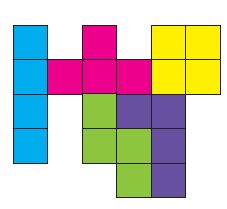
11.
base = 4 times of the height
b = 4h
Area of parallelogram = 576
b x h = 576
4h x h = 576
4h2 = 576
h2 = I44 cm
h = 12 cm
Ans : Height of the parallelogram is 12 cm.
12.
Given: b : h = 7 : 3 and h = 45 cm
\(\Rightarrow \ \frac{\mathrm{b}}{\mathrm{h}}=\frac{7}{3}
\)
\(\Rightarrow \ \frac{\mathrm{b}}{45}=\frac{7}{3}
\)
\(\Rightarrow \ b=\frac{7}{3} \times 45
\)
b = 105 cm
Area of the parallelogram = b x h sq.units
= 105 x 45 = 4725 sq.cm
13.
Given: Height of parallelogram \(=\frac{1}{4} of\ its\ base
\)
h \(=\frac{1}{4} b
\)
Area of the parallelogram = 676
b x h = 676
\(b \times \frac{1}{4} b=676\)
b x b = 676 x 4
b x b = 26 x 26 x 2 x 2
b = 26 x 2
Base (b) = 52 cm
\(h=\frac{1}{4} \times b
\)
\(b=\frac{1}{4} \times 52
\)
h = 13
14.
Given: A = 1586 sq.cm, h = 26 cm, a = 84 cm, b = ?
Area of trapezium = 1586
\(\frac{1}{2} \times \mathrm{h}(\mathrm{a}+\mathrm{b}) =1586
\)
\(\frac{1}{2} \times 26(84+\mathrm{b}) =1586
\)
\(84+\mathrm{b} =\frac{1586 \times 2}{26}
\)
b = 122 - 84
b = 38 cm
15.
Let x be the amount of diesel to cover 1650 km.
| Diesel (litres) | 108 | x |
| Distance (km) | 594 | 1650 |
This is a direct proportion.
\(\frac{x_{1}}{y_{1}} =\frac{x_{2}}{y_{2}}
\)
\(\frac{108}{594} =\frac{x}{1650}
\)
\(x =\frac{108 \times 1650}{594}
\)
x = 300
300 litres diesel required to cover 1650 km.
16.
-47 -(-12) = -47 + 12 = -35
A student got -35.
No, he is not correct
17.
From the figure the pair ofadjacent angles are
i) \(\angle\)ABG and, \(\angle\)CBG
ii) \(\angle\) DCE and \(\angle\)ECF
iii) \(\angle\)ECE and \(\angle\)ACF
iv) \(\angle\)ACF and \(\angle\)ECD.
v) \(\angle\)BCF and \(\angle\)FCE
18.
| Number of gardeners | 6 | x |
| Time in minutes | 120 | 30 |
This is an inverse proportion,
x1 y1 = x2 y2
6 x 120 = x \(\times\) 30
\(x=\frac{7 \times 180}{84} \Rightarrow x=24\)
24 gardeners are needed. Already 6 gardeners are available. Therefore, 18 more gardeners are needed.
19.
The weight of 72 books = 9 kg
The weight of 1 book = \(\frac{9}{72} \mathrm{~kg}\)
The weight of 40 books \(=\frac{9}{72} \times 40=5 \mathrm{~kg}\)
20.
Rs. 840 paid for 21 students.
Rs. 1680 (double of its amount) paid for 42 students (double the students).
21.
(i) 7x, -8x, -12x are like terms containing same algebraic variable 'x'.
(ii) 5y, 12 -9y are like terms containing same algebraic variable 'y'.
(ili) 6z, z and 11 z are like terms containing same algebraic variables 'z'.
22.
| TERMS | NUMERICAL CO-EFFICIENT |
| -3 yx | -3 |
| 12k | 12 |
| y | 1 |
| 121bc | 121 |
| -x | -1 |
| 9pq | 9 |
| 2ab | 2 |
23.
h = 14 m,b = 14 + 8 = 22 m
Area of ground (parallelogram) = b x h sq.units
= 22 x 14 = 308 m2
Cost of levelling the ground = Rs. 15 per sq.m
Cost of levelling the ground = 308 x 15 = Rs. 4620
24.
(i) Area of a parallelogram
= b x h sq.units
= 11 x 3 = 33 cm2
Perimeter of the parallelogram
= sum of the length of the four sides.
= 11+ 4 + 11 + 4 = 30 cm.
(ii) Area of a parallelogram
= b x h sq.units
= 7 x 10 = 70 cm2
Perimeter of the parallelogram
= sum of the length of the four sides.
= 13 + 7 + 13 + 7 = 40 cm
25.
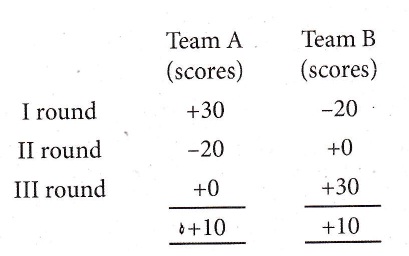
(i) Both Team A and B scored 10 marks. Quiz is draw.
(ii) Yes, we can add integers in any orders since addition is commutative
26.
let the two consecutive odd numbers be 'x' and
x + 2
Given that their sum is 200
x + (x + 2) = 200
x + x + 2 = 200
(1 + 1) x + 2 = 200
2x + 2 = 20A
2x + 2 - 2 = 200 - 2
[Subtract 2 on both sides]
2x = 198
\(\frac{2 x}{2}=\frac{198}{2}\)
[Divide by 2 on both sides]
x = 99
x + 2 = 99 + 2
x + 2 = 101
The two consecutive odd numbers are 99 and 101.
27.
(i) From the figure
∠AOC + ∠BOC = 180°
72° + xo = 180°
72° + xo - 72° = 180° - 72°
xo = 108°
(ii) From the figure
∠AOC + ∠BOC = 180°
3x + 42° - 180°
3xo + 42° - 42°= 180o - 42°
3xo = 138°
xo = \(\frac{{138}^o}{3}\) = 46o
xo = 46°
(iii) From the figure
∠AOC + ∠BOC = 180°
4xo + 2xo = 180°
6xo = 180°
xo = \(\frac{{138}^o}{6}\)
xo = 30°
28.
(i) (x +y - z) + (3x .: 5y + 7z) - (14x + 7y - 6z)
= (x +y -z) + (3x - 5y + 7z) + (-14x -7y + 6z)
= (x + 3x - 14x) + (y - 5y -7y) + (-z + 7z + 6z)
= (1 + 3 - 14) x + (1-5 -7) y + (-1 + 7 + 6) z
= -10x -11y + 12z
(ii) p + p + 2 + p + 3 - p - 4 - P - 5 + p + 10
= (p + p + p - p - p + p) + (2 + 3 -4-5 + 10)
=(1 + 1 + 1 - 1 - 1 + 1)p +(15 -9)
= 2p + 6
(iii) n + (m + 1) + (n + 2) + (m + 3) + (n + 4) + (m + 5)
n + (m + 1) + (n + 2) + (m + 3) + (n + 4) + (m + 5)
=(n + n + n) + (m + m + m) + (1 + 2 + 3 + 4 + 5)
= (1 + 1 + 1) n + (1 + 1 + l)m + 15
= 3m + 3n + 15
29.
Statement Expression
Me x
Add 2 to me x + 2
Multiply by 5 ( x + 2) x 5
Subtract 10 ( x + 2) x 5 -10
Divide by 4 \(\frac{(x+2) 5-10}{4}\)
Resulting 15 \(\frac{(x+2) 5-10}{4}=15\)
\(\frac{(x+2) 5-10}{4}=15\)
(x + 2)5 - 10 = 15 x 4
(x + 2)5 - 10 = 60
5x + 10 - 10 = 60
5x = 60
\(x=\frac{60}{5}\)
x = 12
I am 12
30.
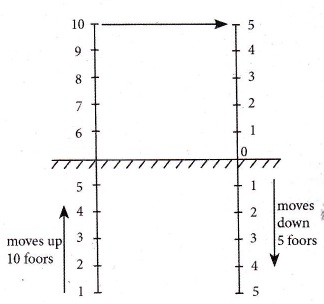
Lift in the ground floor denotes 0.
It goes 5 floors down = -5
It moves up to 10 floors = +10
Position of the lift = 10 - 5 = 5
Lift will be in the 5m floor

7th Standard Syllabus & Materials
7th Standard
TN 7th English T1 - Supplementary - On Monday Morning Important Questions And Answers Study Material - QB365 Set A
NEW7th Standard
TN 7th English T1 - Prose - Eidgah Important Questions And Answers Study Material - QB365 Set A
NEW7th Standard
TN 7th Social Science T1 - ECO - Production Important Questions And Answers Study Material - QB365 Set A
NEW7th Standard
TN 7th Social Science T1 - GEO - Interior of the Earth Important Questions And Answers Study Material - QB365 Set A



Tamilnadu Stateboard 7th Standard Subjects
Tamilnadu Stateboard Standards




