
 100% FREE ACCESS
8th Standard CBSE Syllabus & Materials
8th Standard CBSE
CBSE 8th Social Science Theme D - Factors of Production - New Model Questions Papers Study Material - QB365 Set A
NEW8th Standard CBSE
CBSE 8th Social Science Theme C - Universal Franchise and India's Electoral System - New Model Questions Papers Study Material - QB365 Set A
NEW8th Standard CBSE
CBSE 8th Social Science Theme B - The Rise of the Marathas - New Model Questions Papers Study Material - QB365 Set A
NEW8th Standard CBSE
CBSE 8th Social Science Theme B - Reshaping India's Political Map - New Model Questions Papers Study Material - QB365 Set A
NEW8th Standard CBSE
CBSE 8th Social Science Theme A - Natural Resources and Their Use - New Model Questions Papers Study Material - QB365 Set A
NEW8th Standard CBSE
CBSE 8th Science Keeping Time with Skies - New Model Questions Papers Study Material - QB365 Set A

Published on: 25/10/2019
CIV - Understanding Laws
Download CBSE Class 8th Standard CBSE Social Science question papers, sample papers, important questions, and previous year solved papers in PDF format. Get free study materials, NCERT solutions, and exam preparation resources for Class 8th Standard CBSE Social Science
Questions + Answers key
Take MCQ Social Science Test
1.
What is the role of citizens in formulation of new laws?
2.
Equality cannot be established merely by law ? Explain why? What are the other ways to promote equality ?
3.
How does new laws came into force? Discuss with a suitable example.
4.
How did the African-Americans fight against unjust laws in the USA ?
5.
Why was the Rowlatt Act not liked by Indian nationalists ? What happened after the passing of this 'Black Act' ?
6.
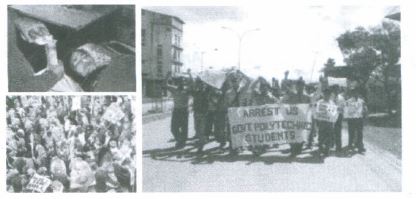
List the three forms of protest that you seen in the given photos.
7.
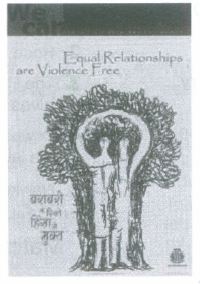
In the following poster, what do you understand by the phrase 'Equal Relationships are Violence Free'?
8.
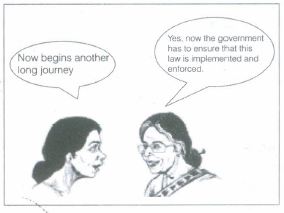
From the below storyboard, can you list two different ways in which people lobbied Parliament
9.
How are laws for the country made?
10.
Write a note on the Rowlatt Act.
1.
(i) The role of citizens is crucial in helping Parliament to frame different concerns that people might have into laws.
(ii) For the need of a new law and in the process of being passed, at every stage the voice of the citizen becomes a crucial element. The voice can be heard through-TV reports, newspaper, editorials, radio broadcasts and local meetings.
(iii) We should elect our representative of Parliament carefully. Then we should use newspapers and the media to frame out the work that is being done by our M.P.s and criticise their actions when we feel it is required.
(iv) Our involvement and enthusiasm helps Parliament to perform its functions properly.
(v) Citizens can oppose the bills introduced in Parliament by organizing a press conference.
(vi) Citizens can protest, campaign or show solidarity against the laws which they feel are unjust and unfair.
2.
Equality established through the legal constitutional means is called Formal Equality. This refers to the Constitutional provisions of "equality before law" and "equal protection by law". However, despite these Constitutional provisions, India's record on achievement of equality has been dismal. This is because equality cannot be established by law alone.
In addition, there is also a need to introduce special programmes or schemes to help disadvantaged groups. These could be in the forms of affirmative action policies, mid-day meal scheme, etc. Also, there is a need to bring an attitudinal change in society, which means inculcating democratic values of tolerance and equal recognition.
3.
(i) The Pa,rliament plays an important role in making laws. Different groups also create pressure on the government to give shape to new laws concerning different issues. These groups use various forums such as press, protests etc. to voice their demands and ideas.
(ii) For example, the Protection of Women from Domestic Violence Act began in 1990s but took legal shape only in 2005. In 1999, Domestic Violence Bill was drafted and widely circulated.
(iii) In 2002, it was introduced in the Parliament. The National Commission for Women made submissions to the Parliamentary Standing Committee as the bill was not up to mark with their demands.
(iv) The Standing Committee submitted its recommendations to the Rajya Sabha and these were tabled in the Lok Sabha.
(v) After the demands were accepted by the committee in 2005, a new bill was reintroduced and passed by both the houses of the Parliament. On the President's assent, the bill became an act in 2006.
4.
In America there was a segregation law according to which all public spaces, including the streets, were divided between the whites and the African- Americans. In a famous incident, an African- American woman Rosa Parks had refused to give up her seat on a bus to a white man on 1st December 1955. She was protesting the law on segregation. Her refusal was an input event that ignited the fire of protest against unjust laws in USA. It had caused the start of the Civil Rights Movement, which led to the Civil Rights Act in 1964, that prohibited discrimination on the basis of race, religion or national origin in the U.S.A.
5.
(i) During the British rule, Rowlatt Act was passed after the end of the First World War. It was not liked by the Indian nationalists. It was considered a powerful example of British arbitrariness because it allowed the British government to imprison people without due trial. Indian nationalists, including Mahatma Gandhi, were vehement in their opposition to the Rowlatt bills. Despite the large number of protests, the Rowlatt Act came into effect on March 10, 1919.
(ii) In Punjab, protests against this Act continued quite actively. On April 10, 1919 two leaders of the movement, Dr. Satya Pal and Dr. Saifuddin Kichlew were arrested. To protest these arrests, a public meeting was held on 13th April at Jallianwala Bagh in Amritsar. General Dyer entered the park with his troops. They closed the only exit gate and without giving any warning, General Dyer ordered the troops to fire on empty-handed people. Several hundreds of people died in this gunfire and thousands were wounded including women and children. The scene of Jallianwala Bagh massacre was very terrible.
6.
The three forms of protest seen in the above photos are:
(I) Hunger strike
(ii) Dharna
(iii) Public rally
7.
Equal relationship means that both the husband and the wife enjoy equal rights in the household. Neither the husband nor the wife tries to suppress or use violence against the other. Such relationships are based on equality and are free of violence.
8.
Following two are the ways in which people lobbied Parliament:
(i) Public debates and discussion
(ii) Petition to the government
9.
The Parliament is the supreme law-making institution of the country. The Parliament is made up of the elected representatives of the people. These representatives introduce bills in the Parliament, which are discussed and then passed into law to become acts if found suitable.
Sometimes, different groups in society raise the need for a particular law. Aggrieved people can come together and appeal for an act to reduce their grievances. The required bill is drafted and consulted upon. Then, it is introduced in the Parliament by people's representatives (or Members of Parliament), voting is done and the bill is passed in both Houses of Parliament. Finally, with President's assent, the Bill becomes law.
10.
The Rowlett Act came into effect on 10th March 1919. This Act allowed the British
Government to imprison Indians without due trial. The Act was another example of British arbitrariness. Indian nationalists, including Mahatma Gandhi, vehemently opposed this unjust act.
In Punjab especially, the protests were intense and two leaders of the movement, Dr Satyapal and Dr Saifuddin Kitchlew, were arrested. A public meeting was held on 13th April at Jallianwala Bagh the same year to protest these arrests. However, the meeting ended tragically as the peaceful gathering was fired at by the British General Dyer.

8th Standard CBSE Syllabus & Materials
8th Standard CBSE
CBSE 8th Science Particulate Nature of Matter - New Model Questions Papers Study Material - QB365 Set A
NEW8th Standard CBSE
CBSE 8th Science Pressure, Winds, Stroms and Cyclones - New Model Questions Papers Study Material - QB365 Set A
NEW8th Standard CBSE
CBSE 8th Mathematics Quadrilaterals - New Model Questions Papers Study Material - QB365 Set A
NEW8th Standard CBSE
CBSE 8th Mathematics A story of Numbers - New Model Questions Papers Study Material - QB365 Set A



CBSE 8th Standard CBSE Subjects
CBSE Standards




