
 100% FREE ACCESS
8th Standard CBSE Syllabus & Materials
8th Standard CBSE
CBSE 8th Social Science Theme D - Factors of Production - New Model Questions Papers Study Material - QB365 Set A
NEW8th Standard CBSE
CBSE 8th Social Science Theme C - Universal Franchise and India's Electoral System - New Model Questions Papers Study Material - QB365 Set A
NEW8th Standard CBSE
CBSE 8th Social Science Theme B - The Rise of the Marathas - New Model Questions Papers Study Material - QB365 Set A
NEW8th Standard CBSE
CBSE 8th Social Science Theme B - Reshaping India's Political Map - New Model Questions Papers Study Material - QB365 Set A
NEW8th Standard CBSE
CBSE 8th Social Science Theme A - Natural Resources and Their Use - New Model Questions Papers Study Material - QB365 Set A
NEW8th Standard CBSE
CBSE 8th Science Keeping Time with Skies - New Model Questions Papers Study Material - QB365 Set A

Published on: 28/09/2019
HIS - Civilising the 'Native' - Educating the Nation
Download CBSE Class 8th Standard CBSE Social Science question papers, sample papers, important questions, and previous year solved papers in PDF format. Get free study materials, NCERT solutions, and exam preparation resources for Class 8th Standard CBSE Social Science
Questions + Answers key
Take MCQ Social Science Test
1.
Imagine, you were a witness to a debate between Mahatma Gandhi and Macaulay on English education. Write a page on the dialogue you heard.
2.
What steps did the East India Company take to improve the system of vernacular education?
3.
Describe the differences of opinion between the Orientalists and the Anglicists.
4.
Write a short note on Tagore's "abode of peace".
5.
What did Wood's Despatch of 1854 state?
6.
Describe the attitude of Colebrooke towards India.
7.
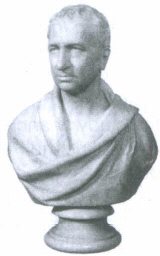
(i) Identify the personality.
(ii) What do you know about him?
8.
Why did many Company officials in India want to promote Indian rather than Western learning?
9.
What measures were undertaken by the Company to improve the system of vernacular education?
10.
What were differences between the Orientalists and the Anglicists?
1.
Once I was in the adjoining room where Mahatma Gandhi and Macaulay were involved in a serious debate on English education.
These are the excerpts of the conversation which I heard:
Gandhiji: "Colonial education has created a sense of inferiority in the minds of Indians.
" Macaulay: "This is so because in my opinion India is an uncivilised country that needs to be civilised.
" Gandhiji: "Western education is only focused on reading and writing rather than oral knowledge".
Macaulay: "A single shelf of good European library is worth the whole native literature of India and Arabia."
Gandhiji: "Education ought to develop a person's mind and soul.
"Macaulay: "Teaching of English can be a way of civilising people, changing their castes, values and culture."
Gandhiji: Literacy by itself cannot be counted as education. By education I mean in all round drawing out of the best in child and human-body mind and literacy is only one of the means which educates people."
2.
(i) East India Company appointed a number of government pandits, each incharge of looking after four to five schools.
(ii) The task of the pandit was to visit the pathshalas and try and improve the standard of teaching.
(iii) Each guru was asked to submit periodic reports and take classes according to a regular timetable.
(iv)Teaching was now based on textbooks and learning was tested through annual examination.
(v) Students were asked to pay regular fees, attend regular classes, sit on fixed seats and obey the new rules of discipline.
(vi) Pathshalas which accepted the new rules were supported through government grants. Those who were unwilling to work within the new system, received no government support.
3.
Orientalists :
(i) Orientalists thought that in order to understand India, it was necessary to discover the sacred and legal texts that were produced in the ancient period.
(ii) They thought that Eastern education would help Indians rediscover their own heritage and understand the lost glories of their past as well as, it would help the British to become the guardians of Indian culture and masters.
(iii) They also believed for the British, in order to win a place in the hearts of the "natives", Indians ought to be taught what they were already familiar with once what they valued, and not subjects that were alien to them.
Anglicists:
(i) Anglicists said that knowledge of the East was full of errors and unscientific thought. Eastern literature was no-serious and light-hearted.
(ii) Anglicist thought the aim of the education ought to be to teach what was useful and practical. So Indians should be made familiar with the scientific and technical advances that Europe had made.
(iii) They felt that knowledge of English would make the Indians aware of the developments in Western science and philosophy. Teaching of English could thus be a way of civilizing people, changing their tastes, values and culture.
4.
(i) Tagore wanted to set up a school where a child could be happy, where he could be free and creative, where he was able to explore his own thoughts and desires.
(ii) Tagore felt that childhood ought to be a time of self learning, outside the rigid and restricting discipline of the schooling system set up by the British.
(iii) Teachers had to be imaginative, understand the child, and help the child develop his curiosity.
(iv) According to Tagore, the existing schools killed the natural desire of the child to be creative, his sense of wonder.
(v) Tagore was of the view that creative learning could be encouraged only within a natural environment. So he chose to set up his school 100kilometres away from Calcutta, in a rural setting. He saw it as an abode of peace (shantiniketan), where while living in harmony with nature, children could cultivate their natural creativity.
5.
(i) In 1854, the East India Company in London sent an educational despatch to the Governor-General in India. Issued by Charles Wood, the President of the Board of Control of the Company, it came to be known as Wood's Despatch.
(ii) Outlining the educational policy that was to be followed in India, it emphasized once again the practical benefits of a system of European learning, as opposed to Oriental knowledge.
(iii) It emphasized on European ways of life, as it would change their tastes and desires, and create a demand for British goods.
(iv) European learning would improve the moral character of Indians. It would make them truthful and honest, and thus supply the Company with civil servants who could be trusted and depended upon.
(v) Education in English crippled Indians, distanced them from their own social surroundings, and made them "strangers in their own lands". Speaking a foreign tongue, despising local culture, the English educated did not know how to relate to the masses.
(vi) Western education, Mahatma Gandhi said, focused on reading and writing rather than oral know-ledge; it valued textbooks rather than live experience and practical knowledge. He argued that education ought to develop a person's mind and soul.
6.
(i) Colebrooke came to represent a particular attitude towards India.
(ii) He had a deep respect for ancient cultures, both of India and the West.
(iii) He felt that India had attained glory in the ancient past, but it had subsequently declined.
(iv) In order to understand India, it was necessary to discover the sacred and legal texts that were produced in the ancient period.
(v) For only those texts could reveal the real ideas and laws of the Hindus and Muslims, and only a new study of these texts could form the basis of future development in India.
(vi) Colebrooke went about discovering ancient texts, understanding their meaning, translating them, and making their findings known to others.
(vii) This project, he believed, would help Indians to re-discover their own heritage, and understand the lost glories of their past. In this process, the Britishers would become the guardians of Indian culture as well as its masters.
7.
(i) He is Henry Thomas Colebrooke.
(ii) Henry Thomas Colebrooke was an English Orientalist. He had a deep respect for ancient cultures both of India and the West. He was a scholar of Sanskrit and ancient sacred writings of Hinduism. With William Jones, he went about discovering ancient texts and interpreting these.
8.
Many Company officials in India argued that the British ought to promote Indian rather than Western learning because:
(i) They felt that institutions should be set-up to encourage the study of ancient Indian texts and teach Sanskrit and Persian literature and poetry.
(ii) The officials thought that Hindus and Muslims ought to be taught what they were already familiar with and what they valued, not subjects that were alien to them.
(iii) The officials believed that by introducing these measures, the British could hope to win a place in the hearts of the 'natives' and only then they could expect to be respected by their subjects.
9.
After 1854, the East India Company decided to improve the system of vernacular education. The measures taken by the Company were:
(i) It appointed a number of government pandits, each in charge of looking after four to five schools. The task of the pandit was to visit the pathshalas and try to improve the standard of teaching.
(ii) Each pandit or teacher was asked to submit periodic reports and take classes according to a regular time-table.
(iii) Teaching was based on textbooks and learning was to be tested through a system of annual examination.
(iv) Students were asked to pay a regular fee, attend regular classes, sit on fixed seats and obey the new rules of discipline.
10.
These points show the differences between the Orientalists and the Anglicists:
(i) The Orientalists had a deep knowledge of the languages and culture of Asia. They favoured the development of Sanskrit and Persian language in India. But their critics, viz. Anglicists preferred English language and urged that English should be the medium of instruction in the educational institutions.
(ii) The Orientalists tried to set-up such institutions that encouraged the study of ancient Indian texts. But Anglicists like TB Macaulay urged that the British Government in India stop promoting Oriental institutions.
(iii) The Orientalists translated many Sanskrit and Persian texts into English, set-up the Asiatic Society and started a journal called Asiatick Researches. But Macaulay emphasised that teaching of English could be a way of civilising people, changing their tastes, values, and culture.

8th Standard CBSE Syllabus & Materials
8th Standard CBSE
CBSE 8th Science Particulate Nature of Matter - New Model Questions Papers Study Material - QB365 Set A
NEW8th Standard CBSE
CBSE 8th Science Pressure, Winds, Stroms and Cyclones - New Model Questions Papers Study Material - QB365 Set A
NEW8th Standard CBSE
CBSE 8th Mathematics Quadrilaterals - New Model Questions Papers Study Material - QB365 Set A
NEW8th Standard CBSE
CBSE 8th Mathematics A story of Numbers - New Model Questions Papers Study Material - QB365 Set A



CBSE 8th Standard CBSE Subjects
CBSE Standards




