
 100% FREE ACCESS
8th Standard CBSE Syllabus & Materials
8th Standard CBSE
CBSE 8th Social Science Theme D - Factors of Production - New Model Questions Papers Study Material - QB365 Set A
NEW8th Standard CBSE
CBSE 8th Social Science Theme C - Universal Franchise and India's Electoral System - New Model Questions Papers Study Material - QB365 Set A
NEW8th Standard CBSE
CBSE 8th Social Science Theme B - The Rise of the Marathas - New Model Questions Papers Study Material - QB365 Set A
NEW8th Standard CBSE
CBSE 8th Social Science Theme B - Reshaping India's Political Map - New Model Questions Papers Study Material - QB365 Set A
NEW8th Standard CBSE
CBSE 8th Social Science Theme A - Natural Resources and Their Use - New Model Questions Papers Study Material - QB365 Set A
NEW8th Standard CBSE
CBSE 8th Science Keeping Time with Skies - New Model Questions Papers Study Material - QB365 Set A

Published on: 10/10/2019
HIS - India After Independence
Download CBSE Class 8th Standard CBSE Social Science question papers, sample papers, important questions, and previous year solved papers in PDF format. Get free study materials, NCERT solutions, and exam preparation resources for Class 8th Standard CBSE Social Science
Questions + Answers key
Take MCQ Social Science Test
1.
What were the major objectives of new nation?
2.
Write a short note on India's foreign policy.
3.
What were the problems that the newly independent nation of India faced?
4.
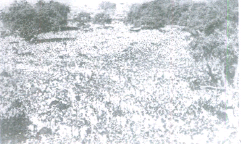
(i) Whose ashes are being immersed in the picture?
(ii) When was he assassinated?
(iii) By whom was he assassinated
5.
Explain the context and special features of India's foreign policy after independence.
6.
When was the Indian Constitution adopted and what were its features?
7.
This is a picture of Potti Sriramulu. Answer the following questions associated with him:
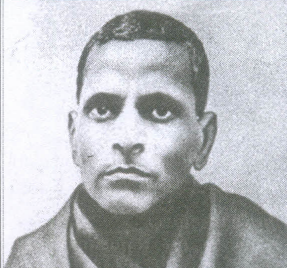
(i) Who was Potti Sriramulu? Why did he become famous?
(ii) What was his demand?
(iii) When was the Andhra State formed?
8.
Read the source and answer the questions given below:
Nehru wrote in a letter to the Chief Ministers of states: We have a Muslim minority who are so large in numbers that they cannot, even if they want, go anywhere else. That is a basic fact about which there can be no argument Whatever the provocation from Pakistan and whatever the indignities and horrors inflicted on non-Muslims there, we have got to deal with this minority in a civilized manner. We must give them security and the rights of citizens in a democratic State.
(i) In the above-mentioned source, Nehru is talking about which basic fact?
(ii) What did Nehru demand from the Chief Ministers of states?
1.
The major objectives of new nations were:
(i) Industrial development.
(ii) In 1950, the planning commission was set up to help and design suitable politics for economic development.
(iii) In 1956,the Second Five Year Plan was formulated.
(iv) This plan focused strongly on the development of heavy industries such as iron and steel, and on the building of large dams.
(v) These sectors would be under the control of the State
2.
(i) India gained freedom after the Second World War.
(ii) A new international body-The United Nations was formed in 1945.
(iii) At this time, colonial empires were collapsing and many countries were attaining independence.
(iv) Prime Minister Jawaharlal Nehru, who was also the foreign minister of India, developed free India's foreign policy in this context.
(v) Non-alignment formed the bedrock of this foreign policy.
(vi) This was also the period when the cold war emerged, that is, power rivalries and conflicts between the USA and USSR emerged and both countries were creating respective military alliances.
(vii) The non-aligned movement urged the countries not to join either of the two major alliance groups.
(viii) Non aligned countries such as India played an active role in mediating between the American and Soviet Alliances.
(ix) They tried to prevent war by taking humanitarian and moral stands.
3.
The problems that newly independent nation of India faced were:
Political:
(i)As a result of partition, 8 million refugees had come into the country from Pakistan. These people started looking for homes and jobs.
(ii) Then there was the problem of princely states, almost 500 of them, each ruled by a maharaja or a nawab, each of whom had to be convinced to join the new nation.
Social:
(i) India's population in 1947was around 345 million. It was also divided between high castes and low castes, between majority Hindu community and Indians who practised different faiths.
(ii) The citizens spoke different languages, wore different kinds of dress, ate different kinds of food and practised different professions. It was difficult to make them live together in the form of one nation state.
Economic:
(i) At the time of independence, a vast majority of Indians lived in the villages, in which farmers and peasants depended on monsoon for their survival.
(ii) In the cities, crowded slums were occupied by factory workers who had little access to education or healthcare.
(iii) The new nation had to lift its masses out of poverty by increasing the productivity of agriculture and by promoting industries for creation of new job opportunities.
4.
(i) Mahatma Gandhi's ashes are being immersed in the picture.
(ii) He was assassinated on 30 January, 1948
(iii) He was assassinated by a frantic Nathuram Godse
5.
India got freedom soon after the Second World War.A new international body- The United Nationswas formed two years before, i.e. in 1945.
At this time, many colonial empires were collapsing and new countries were attaining independence. The international politics was dominated by the cold war.
Prime Minister Jawaharlal Nehru, who was also the foreign minister of India, developed free India's foreign policy in this context.
(i) Non-alignment formed the bedrock of this foreign policy.
(ii) Non-aligned countries such as India played an active role in mediating between the American and Soviet Alliances.
(iii) Non-aligned countries tried to prevent war by taking more stand against war.
(iv) However for different reasons, many non-aligned countries including India got involved in wars
6.
The Indian Constitution was adopted on 26th January 1950. Main features of the Indian
constitution are:
(i) Universal Adult Franchise It adopted Universal Adult Franchise. According to this, all Indians above the age of 21 would be allowed to vote in state and national elections
(ii) Equality to all citizens It guaranteed equality before the law to all citizens, regardless of their caste or religious affiliations.
All the people of different religions would be given the same opportunities when it came to seeking jobs in government or the private sector, they have the same rights before the law.
(iii) Granting special privilege to Scheduled Castes (SC) and Scheduled Tribes (ST) It offered privileges for the poorest and most disadvantaged Indians. A certain percentage of seats in legislatures, as well as jobs in government services, are reserved for them.
(iv) Abolition of untouchability The practice of untouchability was abolished. The Hindu temples were open to all including the untouchables.
7.
(i) Potti Sriramulu was a Gandhian leader in Andhra Pradesh. He became famous because of a hunger strike.
(ii) He demanded for an independent state for Telugu speaking people.
(iii) On October 1,1953the new state of Andhra Pradesh came in to being after the demise of Potti Sriramulu.
8.
(i) After partition, large number of Muslims decided to stay back in India rather than going to Pakistan. The number was so large that even if they wanted, it would have been difficult to shift them to somewhere else.
(ii) He demanded from the Ministers of States to deal with the minority group in a civilised manner. Secondly, providing them security and the rights of citizens in a democratic State was also his demand

8th Standard CBSE Syllabus & Materials
8th Standard CBSE
CBSE 8th Science Particulate Nature of Matter - New Model Questions Papers Study Material - QB365 Set A
NEW8th Standard CBSE
CBSE 8th Science Pressure, Winds, Stroms and Cyclones - New Model Questions Papers Study Material - QB365 Set A
NEW8th Standard CBSE
CBSE 8th Mathematics Quadrilaterals - New Model Questions Papers Study Material - QB365 Set A
NEW8th Standard CBSE
CBSE 8th Mathematics A story of Numbers - New Model Questions Papers Study Material - QB365 Set A



CBSE 8th Standard CBSE Subjects
CBSE Standards




