
 100% FREE ACCESS
8th Standard CBSE Syllabus & Materials
8th Standard CBSE
CBSE 8th Social Science Theme D - Factors of Production - New Model Questions Papers Study Material - QB365 Set A
NEW8th Standard CBSE
CBSE 8th Social Science Theme C - Universal Franchise and India's Electoral System - New Model Questions Papers Study Material - QB365 Set A
NEW8th Standard CBSE
CBSE 8th Social Science Theme B - The Rise of the Marathas - New Model Questions Papers Study Material - QB365 Set A
NEW8th Standard CBSE
CBSE 8th Social Science Theme B - Reshaping India's Political Map - New Model Questions Papers Study Material - QB365 Set A
NEW8th Standard CBSE
CBSE 8th Social Science Theme A - Natural Resources and Their Use - New Model Questions Papers Study Material - QB365 Set A
NEW8th Standard CBSE
CBSE 8th Science Keeping Time with Skies - New Model Questions Papers Study Material - QB365 Set A

Published on: 21/10/2025
Download CBSE Class 8th Standard CBSE Science question papers, sample papers, important questions, and previous year solved papers in PDF format. Get free study materials, NCERT solutions, and exam preparation resources for Class 8th Standard CBSE Science
Questions + Answers key
Take MCQ Science Test
1.
Curd is formed from the milk. Explain how.
2.
Write a short paragraph on the harmful effects of microorganisms.
3.
Mention two human diseases that are transmitted by a carrier.
4.
Name the process in yeast that converts sugars into alcohol.
5.
Explain and draw nitrogen cycle.
6.
Observe the figure and answer the following questions.
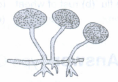
(a) Name the microorganism and the group to which it belongs.
(b) Name the food item on which the organism grows.
(c) Does it grow well in dry or in moist conditions?
(d) Is it safe to eat infected bread?
7.
Typhoid is a ________ disease.
protozoan
viral
bacterial
fungi
8.
Viruses reproduce only inside the cells of :
host organism
Only surface of microbes
plants
animals
9.
Which is not classified as major group of the micro-organisms?
Bacteria
Fungi
Protozoa
Plants
10.
Paheli dug two pits, A and B, in her garden. In pit A, she put a polythene bag packet with some agricultural waste. In pit B, she dumped the same kind of waste but without packing it in a polythene bag. She then covered both the pits with soil. What did she observe after a month?
Waste in pit A degraded faster than that in pit B
Waste in pit B degraded faster than that in pit A
Waste in both pits degraded almost equally
Waste in both pits did not degrade at all
11.
A disease in human beings caused by virus is
typhoid
influenza
dysentery
cholera
12.
Which of the following reproduces only inside a host cell?
Bacteria
Virus
Amoeba
Fungus
13.
The two microorganisms which live in symbiotic association in lichens are
fungus and Protozoa
alga and bacteria
bacteria and Protozoa
alga and fungus
14.
Pathogenic microorganisms present in host cells are killed by medicines called
pain killer
antibodies
antibiotics
vaccines
15.
The gas released during the preparation of bread is
oxygen
carbon dioxide
nitrogen
sulphur dioxide
16.
Alcohol is produced with the help of
sodium chloride
yeast
nitrogen
carbon dioxide
17.
Edward Jenner discovered the process of fermentation.
18.
Oxygen and nitrogen make the 78% of air.
19.
Anthrax is the common disease in human and other animals.
20.
Microorganisms can be seen with naked eyes
21.
All microbes are disease causing
22.
Polio
23.
Paramecium
24.
Spirogyra
25.
Aspergillus
26.
Lactobacillus
27.
Name one commercial use of yeast.
28.
Name one nitrogen fixing bacteria?
29.
What are pathogenic microorganisms?
30.
Give two groups of microorganisms which live in colonies.
31.
How many cells are generally present per microorganism?
1.
Lactobacillus bacterium present in curd converts milk into curd. It multiplies in milk and converts it into the curd
2.
Microorganisms are harmful for human beings in many ways. They cause diseases in humans, plants and animals, e.g.
(i) In humans, bacteria cause diseases such as cholera, typhoid, tuberculosis, etc.
(ii) In cattle, the foot and mouth disease is caused by a virus.
(iii) Also several microbes cause diseases in plants, e.g. tikka disease, late blight of potato. Some microbes grow on food and secrete toxic substances which make the food poisonous.
3.
Malaria and dengue are transmitted by carrier to humans.
4.
Fermentation is the process by which yeast converts sugars into alcohol.
5.
Nitrogen cycle.
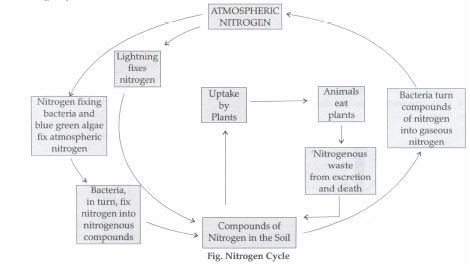
(i)Our atmosphere has 78% of nitrogen gas. Certain bacteria and blue-green algae are present in soil that fix nitrogen.
(ii) They convert it into compounds of Nitrogen.
(iii) These compounds can be used by plants through soil.
(iv) Plants synthesize proteins and other compounds.
(v)Animals feeding on plants get these.
(vi)When plants and animals die, bacteria and fungi present in the soil decompose them and again convert into nitrogenous compounds.
(vii) Certain bacteria convert them into nitrogen gas, which goes back to the atmosphere.
6.
(a) Microorganism is bread mould (Rhizopus) and the group is fungi.
(b) Organism grows on moist and stale bread.
(c) It grows well in moist condition.
(d) No, the fungus spoils the bread by producing poisonous substances (toxins).
7.
(c)
bacterial
8.
(a)
host organism
9.
(d)
Plants
10.
(b)
Waste in pit B degraded faster than that in pit A
11.
(b)
influenza
12.
(b)
Virus
13.
(d)
alga and fungus
14.
(c)
antibiotics
15.
(b)
carbon dioxide
16.
(b)
yeast
17.
(b)
18.
(b)
19.
(b)
20.
(b)
21.
(b)
22.
()
Viral disease
23.
()
Protozoa
24.
()
Algae
25.
()
Fungi
26.
()
Bacteria
27.
()
Baking bread/manufacture of alcoholic drinks.
28.
()
Rhizobium.
29.
()
Those microorganisms that cause diseases in other organisms are called pathogenic microorganisms.
30.
()
Bacteria, fungi.
31.
()
Microorganisms are generally single celled except algae.

8th Standard CBSE Syllabus & Materials
8th Standard CBSE
CBSE 8th Science Particulate Nature of Matter - New Model Questions Papers Study Material - QB365 Set A
NEW8th Standard CBSE
CBSE 8th Science Pressure, Winds, Stroms and Cyclones - New Model Questions Papers Study Material - QB365 Set A
NEW8th Standard CBSE
CBSE 8th Mathematics Quadrilaterals - New Model Questions Papers Study Material - QB365 Set A
NEW8th Standard CBSE
CBSE 8th Mathematics A story of Numbers - New Model Questions Papers Study Material - QB365 Set A



NCERT Books

Syllabus

Exam Pattern

Sample Question Papers

Previous year Question Papers

Important Notes

MCQ Practice test

NCERT Exemplers

Case study Questions

Image Based Questions

Passage based Questions

HOT Questions

Value Based Questions

Model Questions Papers
NCERT ( Book Back ) Questions

Assertion and Reason
Important Questions And Answers

CBSE 8th Standard CBSE Subjects
CBSE Standards


