
 100% FREE ACCESS
8th Standard Syllabus & Materials
8th Standard
TN 8th Tamil இயல் 3 - கல்வி கரையில - வினைமுற்று Important Questions And Answers Study Material - QB365 Set A
NEW8th Standard
TN 8th Tamil இயல் 2 - ஈடில்லா இயற்கை - மயங்கொலிகள் Important Questions And Answers Study Material - QB365 Set A
NEW8th Standard
TN 8th Tamil இயல் 2 - ஈடில்லா இயற்கை -பட்டமரம் Important Questions And Answers Study Material - QB365 Set A
NEW8th Standard
TN 8th Tamil இயல் 2 - ஈடில்லா இயற்கை - இயற்கையை போற்றுவோம் Important Questions And Answers Study Material - QB365 Set A
NEW8th Standard
TN 8th Tamil இயல் 1 - தமிழ் இன்பம் - ஆழிக்கு இணை Important Questions And Answers Study Material - QB365 Set A
NEW8th Standard
TN 8th Tamil இயல் 2-ஈடில்லா இயற்கை - திருக்குறள் Important Questions And Answers Study Material - QB365 Set A

Published on: 01/10/2019
Term 1 Micro-Organisms
Download Tamil Nadu 8th Standard Science question papers, model tests, one-mark questions, important questions, and public exam papers in PDF format. Free study materials and answer keys for TN State Board students.
Questions + Answers key
Take MCQ Science Test1.
Why micro organisms are essential for agriculture?
2.
How diseases causing micro organisms enter into human beings?
3.
What are pathogens?
4.
5.
Write the four types of bacteria, based on their shape.
6.
Write a short note on Probiotics.
7.
How can we improve the beneficial bacterial count in human beings?
8.
Write a short note on common human diseases caused by micro organisms.
9.
How micro organisms are useful in the field of medicine?
10.
Write a short note on bacteria and its structure.
1.
a) Natural fertilizer:
Micro organisms act upon degradable waste and making the soil fertile.
b) Nitrogen fixation
Rhizobium bacteria living in the root nodules of leguminous plants enrich the soil by fixing the atmospheric nitrogen as nitrates.
c) Bio control agents:
Bacillus thuringiensis control insects trichoderma protects, roots and control plant pathogens. Baculoviruses attack insects and other arthropods.
(OR)
Microorganisms make compost from degradable waste, fix the atmospheric nitrogen.
2.
Pathogens enter into the body through cuts and wounds in the skin, mouth or nose.
3.
Disease causing micro organisms are called pathogens.
Pathogenic organisms are of 5 types :
i) viruses
ii) fungi
iii) worms
iv) bacteria
v) protozoa
4.
5.
i) Bacilli - Rod shaped bacteria.
Eg. Bacillus anthracis
ii) Spirilla - Spiral shaped bacteria.
Eg. Helicobacter pylori.
iii) Cocci - Spherical or ball shaped bacteria
Eg. Streptococus pneumoniae
iv) Vibrio - Comma shaped bacteria
Eg. Vibrio cholera
6.
Probiotics are live food supplements used in yoghurt and other fermented milk products. Eg. Lactobacillus acidophilus and Bifidobacterium bifidum. These bacteria improve the microbial spectrum in the gut and thus contribute to the following effects.
1. Decrease the risk of colon cancer.
2. Decrease cholesterol absorption.
3. Prevent diarrhoeal diseases by increasing the immunity power.
7.
1. Eat a diverse range of foods.
2. Eat lots of vegetables, legumes, beans and fruit,
3. Eat fermented foods.
4. Don't eat too many artificial sweeteners.
5. Eat prebiotic foods.
6. Breast feed for atleast six months.
7. Eat whole grains.
8. Eat a plant-based diet.
9. Eat foods rich in polyphenols.
10. Take a probiotic supplement.
8.
| Human Diseases | Causative microorganisms | Mode of transmission | Symptoms | Preventive measures/ Treatment |
| Tuberculosis | Mycobacterium tuberculosis (Bacteria) | Through air and sputum of infected person | Persistent cough, blood mucus, loss of weight, breathlessness | BCG Vaccine |
| Cholera | Vibrio cholera (Bacteria) | By flies and by contaminated food and water | Watery diarrhea, vomiting, rapid dehydration. | Anticholera vaccine, maintaining personal hygiene. |
| Common cold | Influenza (virus) | Through air | Running nose, sneezing | Isolation of patient |
| Rabies | Rhabdo viridae (virus) | Animal Bite | Fever, hallucination, paralysis inability to swallow | Anti-rabies vaccine. |
| Amoebic dysentery | Entamoeba histolytica (Protozoa) | Food water and flies | Severe diarrhea and blood in stool | Proper sanitation to be followed and metronidazole antibiotic to be, administered |
| Malaria | Plasmodium (Protozoa) | Female Anopheles mosquito | Nausea, vomiting High fever | Antimalarial drugs like quinine, chloroquine, to be taken and also usage of mosquito repellents and nets. |
9.
We obtain antibiotics and vaccines from microbes.
Antibiotics:
The word 'Anti' means against. Antibiotic is a substance produced by living organisms which is toxic for other organisms. Sir Alexander Fleming was the first person to discover the antibiotic penicillin in the year 1928. The antibiotic penicillin was obtained from the fungi penicillium chrysogenum. It is used to treat disease such as tetanus, diphtheria, antibiotic streptomycin is obtained from Streptomyces bacteria to cure various bacterial infections eg, Plague.
Vaccines:
Vaccines are prepared from dead or weakened microbes - Edward Jenner was the first person to discover small pox vaccine. He coined the term vaccination. When the vaccine is injected to the body of a patient, the body produces antibodies to fight against the germs. These antibodies remain inside the body and protects from future invasion of the germs. Therefore vaccination is otherwise called as immunization.
Eg: MMR vaccine for measles, Mumps, Rubella.
BCG (Bacille Calmette Guerin) vaccine for tuberculosis.
10.
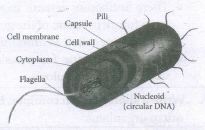
Bacteria are single-celled prokaryotes (cells without nuclei). They are considered to be the first living organisms on earth. Bacteria are grouped under the Kingdom Monera. The study of bacteria is called Bacteriology. The size of bacteria range from 1 μm to 5 μm (micrometer). Bacteria are of two types based on respiration
i) Aerobic bacteria (requires oxygen)
ii) Anaerobic bacteria (Does not requires oxygen)
Cell Structure:
A bacterium has on outer covering known as the cell wall. Nuclear material is represented by a nucleoid without nudear membrane. An extra chromosomal DNA called plasmid is present in the cytoplasm. Protein synthesis is carried out by 70 S ribosomes. Other cell organelles (mitochondria, golgi body, endoplasmic reticulum etc.) are absent flagella aid in locomotion.

8th Standard Syllabus & Materials
8th Standard
TN 8th Tamil இயல் 3 - கல்வி கரையில - பாடறிந்து ஒழுகுதல் Important Questions And Answers Study Material - QB365 Set A
NEW8th Standard
TN 8th Tamil இயல் 3-கல்வி கரையில - பல்துறைக் கல்வி Important Questions And Answers Study Material - QB365 Set A
NEW8th Standard
TN 8th Tamil இயல் 3-கல்வி கரையில - புத்தியைத் தீட்டு Important Questions And Answers Study Material - QB365 Set A
NEW8th Standard
TN 8th Tamil இயல் 2 - ஈடில்லா இயற்கை - தமிழர் மருத்துவம் ( நேர்காணல்) Important Questions And Answers Study Material - QB365 Set A



Tamilnadu Stateboard 8th Standard Subjects
Tamilnadu Stateboard Standards




