
 100% FREE ACCESS
8th Standard Syllabus & Materials
8th Standard
TN 8th Tamil இயல் 3 - கல்வி கரையில - வினைமுற்று Important Questions And Answers Study Material - QB365 Set A
NEW8th Standard
TN 8th Tamil இயல் 2 - ஈடில்லா இயற்கை - மயங்கொலிகள் Important Questions And Answers Study Material - QB365 Set A
NEW8th Standard
TN 8th Tamil இயல் 2 - ஈடில்லா இயற்கை -பட்டமரம் Important Questions And Answers Study Material - QB365 Set A
NEW8th Standard
TN 8th Tamil இயல் 2 - ஈடில்லா இயற்கை - இயற்கையை போற்றுவோம் Important Questions And Answers Study Material - QB365 Set A
NEW8th Standard
TN 8th Tamil இயல் 1 - தமிழ் இன்பம் - ஆழிக்கு இணை Important Questions And Answers Study Material - QB365 Set A
NEW8th Standard
TN 8th Tamil இயல் 2-ஈடில்லா இயற்கை - திருக்குறள் Important Questions And Answers Study Material - QB365 Set A

Published on: 04/11/2019
Download Tamil Nadu 8th Standard Science question papers, model tests, one-mark questions, important questions, and public exam papers in PDF format. Free study materials and answer keys for TN State Board students.
Questions + Answers key
Take MCQ Science Test1.
What are the functions of skeleton in human body?
2.
How is the skeleton of a bird well-suited for flying?
3.
What are antagonistic muscles? Give one example.
4.
Differentiate between the following.
a) Movement and Locomotion.
b) Endoskeleton and Exoskleton
c) Pectoral and Pelvic girdle
d) Ball and socket Joint and Hinge Joint
e) Voluntary and Involuntary muscle.
5.
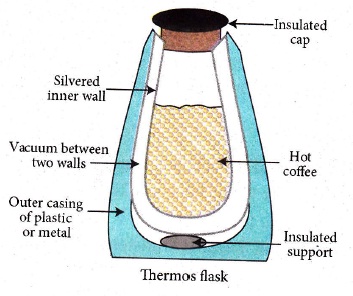
Explain the working of thermos flask.
6.
Write a note on thermostat.
7.
Briefly explain the nutritional needs of adolescence.
8.
Briefly describe the menstrual cycle.
9.
What are the physical changes that occur in boys and girls during adolescence?
10.
Balance the following chemical equation.
a) Na + O2 → Na2O
b) Ca + N2 → Ca3N2
c) N2+ H2 →NH3
d) CaCO3 +HCl → CaCl2 + CO2 +H2O
e) Pb(NO3)2 → PbO + NO2 + O2
11.
Write the skeleton equation for the following word equation and then balance them.
a) Carbon + Oxygen → Carbon dioxide
b) Phosphorus + Chlorine → Phosphorus pentachloride.
c) Sulphur + Oxygen → Sulphur dioxide
d) Magnesium + hydrogen → Magnesium + Hydrogen chloride chloride
12.
Write the chemical formula for the following compounds
a) Aluminium sulphate
b) Silver nitrate
c) Magnesium oxide
d) Barium chloride
13.
Find the valency of the element which is underlined in the following formula.
a) NaCl
b) CO2
c) Al (PO4)
d) Ba (NO3)2
e) CaCl2
14.
What are the effects of acid rain? How can we prevent them?
15.
Name the compounds produced when the following substances burn in oxygen.
a) Carbon
b) Sulphur
c) Phosphorous
d) Magnesium
e) Iron
f) Sodium
16.
What happens when carbon dioxide is passed through lime water? Write the equation for this reaction.
17.
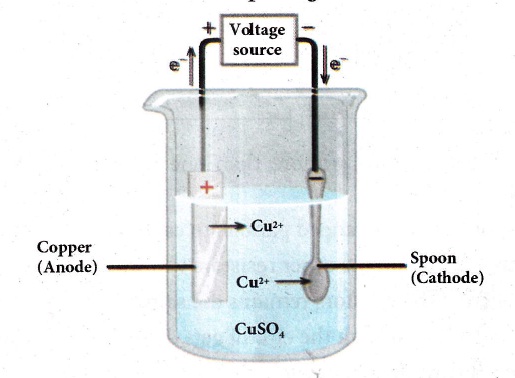
What is electroplating? Explain how it is done.
18.
How lightning takes place?
19.
What is electroscope? Explain how it works?
20.
Explain three ways of charge transfer.
1.
(i) It provides structure and shape to the body.
(ii) It supports and surrounds the internal organs of the body.
(iii) Calcium and phosphorous, the two minerals that the body needs for important regulatory functions, are stored inside the bones.
(iv) Red blood cells are produced in the bone marrow.
(v) The bones of the skeletal system act as levers for muscular action. Muscular movement would not be possible without tendons and ligaments.
2.
► A bird has streamlined body.
► Its bones are light and strong.
► They are hollow and have air spaces between them.
► The hind limbs of birds are modified as claws, which help them to walk and to perch.
► The breast bones are modified to hold massive flight muscles which help in moving wings up and down
► Birds have special flight muscles and the forelimbs are modified as wings.
► The wings and tail have long feathers which help in flying.
3.
► Muscles often work in pairs which work against each other. These are called antagonistic pairs.
► The two muscles, the biceps and triceps are working against each other.
►When the biceps contracts the lower arm is raised and the arm bends. In this position the triceps muscle is relaxed.
► To straighten the arm the reverse happens. The triceps contracts straightening the arm, while the biceps relaxes.
4.
(a)
| S.No | Locomotion | Movement |
| 1 | Locomotion is the movement of an organism from one place to another |
Movement is the act of changing the place or position by one or more parts of the body, |
| 2 | It is always voluntary | It can either be voluntary or involuntary |
| 3 | Locomotion takes Place at the organism level. |
A movement takes Place at the biological level |
| 4 | Locomotion doesnt necessarily require energy |
Movement requires energy |
(b)
| S.No | Exoskeleton | Endoskeleton |
| 1 | It is skeleton that is found on the exterior layer of the body. |
It is the skeleton that is found inside the human body. |
| 2 | It basically originates from embryonic ectoderm or mesoderm. |
It originates from the mesoderm |
| 3 | These are found scales in the fishes, outer layer of the tortoise and feather of the birds. It is dead and it protects and preserves the inner organs |
These are found in almost all vertebrates and form the main body structure. |
(c)
| S.No | Pectoral girdle | Pelvic girdle |
| 1 | It is situated in shoulder region (fore limb) |
It is situatbd in hip region (Hind limb) |
| 2 | It is made up of two bone - clavicle, scapula |
It is made up of three bones - ilium, iichium, pubis |
| 3 | The glenoid cavity is shallow | Acetabulum cavity is deep |
| 4 | It is relativity less strorng | It is relatively molg deep |
(d)
| S.No | Ball and socket joint | Hinge joint |
| 1 | A ball shaped head of one bone articulate with the cup like socket of an adjacent, bone |
A cylindrical protrusion of one bone articulates with the trough -shaped depression of an adjacent bone |
| 2 | Movement can occur in three planes | Movement is restricted to one place |
| 3 | Wide range of movements | Only bending and straightening movement |
| 4 | shoulder joint, hip joint | Elbow joint, knee joint |
(e)
| S.No | Voluntary muscle | Involuntary muscle |
| 1 | These muscles ones desire or work according to are under control |
These muscles are not under our conscious control |
| 2 | Attached to bones | Attached to soft parts of the body like blood vessels, iris ,bronchi |
| 3 | Multi nucleated | single,central nucleus is present |
5.
Thermos flask:
The thermos flask is an insulating storage vessel that keeps its content hot cooler than the surroundings for longer time.
Working:
(i) A thermos flask has double wails, which are evacuated.
(ii) It is silvered on the inside.
(iii) The vacuum between the two walls prevents heat being transferred from the inside to the outside by conduction and convection.
(iv) with very little air between the walls, there is almost no transfer of heat from the inner wall to the outer wall or vice versa inner wall to the outer wall or vice versa
(v) Conduction can only occur at the points where the two walls meet, at the top of the bottle and through an insulated support at the bottom
(vi) The silvered walls reflect radiated heat buck to the liquid in the bottle.
6.
Thermostat.
(i) A thermostat is a device which maintains the constant. temperature of a place or an object
(ii) The word thermostat is derived from two Greek words, thermo, meaning heat and 'static' meaning staying the same.
(iii) Thermostats are used in any device or system that gets heated or cools down to a pre-set temperature
(iv) It turns an appliance on or off when a particular temperature is reached.
(v) Sometimes, a thermostat functions both as the sensor and the controller thermal of a system.
(vi) Examples for thermostats include building heater, central heater in a room, air conditioner water heater, as welt as kitchen equipments including oven and refrigerators.
7.
(i) Adolescence is a stage of rapid growth and development
(ii) A diet with proper calories and other nutrients is needed for proper growth and physical activity
(iii) Balanced diet includes proteins, carbohydrates, fats and vitamins in requisite proportions.
(iv) Our Indian Meal of roti/rice, dal, milk, fruits and vegetables forms a balanced food.
(v) The nutritional deficiencies during this period not only retard the physical growth, but also impair the intellectual development and may also delay sexual maturation.
Minerals
(i) Adolescents need minerals in their diet.
(ii) Since there is an increase in skeletal mass and blood volume during adolescence, the body needs calcium, phosphorus and iron.
(i) Calcium:-
Calcium intake needs to be increased to prevent osteoporosis in later life.
It is present in milk and
(ii) Iodine:-
It helps to prevent thyroid gland related diseases
(iii) Iron:-
(i) Iron builds blood and iron-rich food such as green leaf vegetables, |aggery, meat, dates, fish, chicken, citrus, Indian goose berry and whole pulse are good for adolescents.
(ii) Lack of iron in the diet results in anemia
(iii) To make up for the loss, adolescents need to have a diet rich in iron.
(iv) In boys, iron deficiency occurs due to muscle spurt whereas in girls it occurs due to menstruation in addition to the muscular growth.
8.
(i) When a girl reaches puberty at the age of about 10, the sex hormones released into her blood cause some of the ova in her ovaries to become mature.
(ii) Usually one mature ovum is released from one of the ovaries into the oviduct once in every 28 days. This is called ovulation
(iii) Before ovulation the inner wall of uterus becomes thick and spongy, and full of tiny blood vessels. It prepares itself to receive the fertilized ovum.
(iv) If the ovum does not get fertilized then the thick and soft inner lining of uterus is no longer needed and hence it breaks. So the thick and soft inner lining of uterus along with the blood vessels and the dead ovum comes out of the vagina in the forrn of a bleeding called menstruation.
(v) Menstruation usually occurs 14 days after ovulation and usually lasts for about 3 to 5 days.
(vi) After menstruation is over, the inner lining of the uterus starts building up again so that it may become ready to receive the next ovum.
(vii) If the ovum does not get fertilized even now then menstruation takes place again. This cycle of menstruation is repeated again and again in women after every 28 days. The menstrual cycle is controlled by hormones.
9.
During adolescence, there will be
(i) Changes in body size
(ii) Changes in body proportion
(iii) Development of primary sex characteristics
(iv) Development of secondary sex characteristics
Secondary sex characteristics are the physical feature which distinguishes male from female.
| Characters | Girls | Boys |
| (i) Body size | Height and weight increase | Height and weight increase |
| (ii) Bodyproportion | Hip broadens | Shoulder broadens |
| (iii) Muscle | Fatty and Subcutaneous tissues develop | Muscles develop |
| (iv) Hair | Hair grows in arm pits and pubic area |
Hair grows in arm pits and pubic area and facial hair also appears |
| (v) Voice | Voice becomes shrill | Voice break take place due to lengthening of vocal cord and enlarging of larynx |
| (vi) Sexual characters | Breast develops | Size of the penis lncreases |
10.
\(a) 4 \mathrm{Na}+\mathrm{O}_{2} \rightarrow 2 \mathrm{Na}_{2} \mathrm{O}\)
\(b) 3 \mathrm{Ca}+\mathrm{N}_{2} \rightarrow \mathrm{Ca}_{3} \mathrm{~N}_{2} \)
\(c) \mathrm{N}_{2}+3 \mathrm{H}_{2} \rightarrow 2 \mathrm{NH}_{3}\)
\(d) \mathrm{CaCO}_{3}+2 \mathrm{HCl} \rightarrow \mathrm{CaCl}_{2}+\mathrm{CO}_{2}+\mathrm{H}_{2} \mathrm{O} \)
\(e) 2 \mathrm{~Pb}\left(\mathrm{NO}_{3}\right)_{2} \rightarrow 2 \mathrm{PbO}+4 \mathrm{NO}_{2}+\mathrm{O}_{2}\)
11.
\(\text { a) } \mathrm{C}+\mathrm{O}_{2} \rightarrow \mathrm{CO}_{2}\)
b) skeleton equation : \( \mathrm{P}+\mathrm{Cl}_{2} \rightarrow \mathrm{PCl}_{5} \)
Balanced equation : \( 4 \mathrm{P}+10 \mathrm{Cl}_{2} \rightarrow 4 \mathrm{PCl}_{5} \)
\(\text { c) } \mathrm{S}+\mathrm{O}_{2} \rightarrow \mathrm{SO}_{2}\)
c) skeleton equation : \(\mathrm{Mg}+\mathrm{HCl} \rightarrow \mathrm{MgCl}_{2}+\mathrm{H}_{2} \)
Balanced equation : \(\mathrm{Mg}+2 \mathrm{HCl} \rightarrow \mathrm{MgCl}_{2}+\mathrm{H}_{2} \)
12.
a) Aluminium Sulphate - Al2(SO4)3
b) Silver Nitrate - AgNO3
c) Magnesium Oxide - MgO
d) Barium Chloride - BaCl2
13.
a) NaCl - Na+ - Valency 1
b) CO2 - C - Valency 0
c) Al (PO4) - Al+ - Valency 3
d) Ba (NO3)2 - Ba+ - Valency 2
e) CaCl2 - Ca+ - Valency 2
14.
Effects of Acid rain
(i) It irritates eyes and skin of human beings
(ii) It inhibits germination and growth of seedlings
(iii) It changes the fertility of the soil, destroys plants and aquatic life.
(iv) It causes corrosion of many buildings, bridges etc.
Preventive measures
(i) Minimising the usage of fossil fuels such as petrol, diesel etc.
(ii) Using CNG (Compressed Natural Gas)
(iii) Using non-conventional source of energy
(iv) Proper disposal of the industrial wastes.
15.
a) Carbon - Carbondioxide CO2
b) Sulphur - Sulphur dioxide SO2
c) Phosphorous - Phosphorous trioxide P2O3
Phosphorous pentoxide P2O5
d) Magnesium - Magnesium Oxide MgO
e) Iron - Iron oxide Fe3O4
f) Sodium - Sodium Oxide Na2O
16.
When a limited amount of CO2 is passed through lime water, it turns milky due to the formation of insoluble calcium carbonate.
\(\mathrm{Ca}(\mathrm{OH})_{2}+\mathrm{CO}_{2} \rightarrow \mathrm{CaCO}_{3}+\mathrm{H}_{2} \mathrm{O}\)
When an excess amount of CO2 is passed through lime water, it first turns milky and the milkiness disappears due to the formation of soluble calcium hydrogen carbonate Ca(HCO3)2.
17.
Electroplating :
The process of depositing a layer of one metal over the surface of another metal by passing electric current is called electroplating.
Procedure:
1. Take a glass jar and fill it with copper sulphate solution.
2. Take a copper metal plate and connect it to the positive terminal of the battery.
3. Connect an iron spoon to the negative terminal of the battery.
4. Now, dip them in the copper sulphate solution.
5. Pass electric current through the copper sulphate solution.
6. A thin layer of copper metal is deposited on the iron spoon and an equivalent amount of copper is lost by the copper plate.
18.
Lightning:
i) Lightning is an example of discharge that takes place in clouds.
ii) Lightning is produced by discharges of electricity from cloud to cloud or from cloud to ground.
iii) During thunderstorm air is moving upward rapidly and it carries small ice crystals upward. At the same time, small water drops move downward.
iv) When they collide, ice crystals become positively charged and more upward and the water drops become negatively charged and move downward.
v) So the upper part of the cloud is positively charged and the lower part of the cloud is negatively charged.
vi) When they come into contact, electrons in the water drops are attracted by the positive charges in the ice crystals.
vii) Thus electricity is generated and lightning is seen.
viii) Sometimes, the lower part of the cloud which is negatively charged comes into contact with the positive charges accumulated near the mountains, trees and even people on the earth.
ix) This discharge produces a lot of heat and sparks that results in lightning.
x) Huge quantities of electricity are discharged in lightning flashes and temperatures of over 30,000°C or more can be reached.
19.
Electroscope:
An electroscope is a scientific instrument used to detect the presence of electric charge on a body.
Types:
There are two types of electroscope.
a) Pith-ball electroscope
b) Gold-leaf electroscope.
Principle:
It works on the principle that like charges repel each other.
Structure of a gold leaf electroscope:
It is made up of a glass jar. A vertical brass rod is inserted into the jar through a cork. The top of brass rod has a horizontal brass rod or a brass disc. Two gold leaves are suspended from the brass rod inside the jar.
Working -
i) If a negatively charged object is brought near the top disc of the electroscope, it causes free electrons in the electroscope to move down into the leaves, leaving the top positive. Since both the leaves have negative charge, they repel each other and move apart.
ii) If a positive object is brought near the top disc of the electroscope, the free electrons in the electroscope start to move up towards the disc. The bottom has a net positive charge. The leaves repel other and move apart.
20.
Three ways of charge transfer:-
(i) Transfer by friction
(ii) Transfer by conduction
(iii) Transfer by Induction
(i) Transfer by friction:-
1. When two materials are rubbed together some electrons are transferred from one material to the other, leaving them both with a net electric charge.
2. E.g. when a glass rod is rubbed with a silk cloth, the free electrons in the glass rod are transferred to silk cloth.
3. Glass rod acquires a positive charge and the silk cloth acquires a negative charge.
(ii) Transfer by conductions :
1. Charges can be transferred to an object by bringing it in contact with a charged body. The method of transferring charges from one body to other body is called transfer by conduction.
2. E.g. when a negatively charged ebonite rod is brought near a hollow paper cylinder, negative charges in the rod are attracted by the positive charges in the cylinder.
3. When the paper cylinder is touched by the rod, some negative charges are transferred to the paper cylinder and they repel each other.
(iii) Transfer by Induction:
1. The process of charging an uncharged body by bringing a charged body near to it but without touching it is called induction.
2. E.g. when a negatively charged plastic rod is brought near a neutral rod, the near end of the neutral rod becomes positively charged and the farther end becomes negatively charged.

8th Standard Syllabus & Materials
8th Standard
TN 8th Tamil இயல் 3 - கல்வி கரையில - பாடறிந்து ஒழுகுதல் Important Questions And Answers Study Material - QB365 Set A
NEW8th Standard
TN 8th Tamil இயல் 3-கல்வி கரையில - பல்துறைக் கல்வி Important Questions And Answers Study Material - QB365 Set A
NEW8th Standard
TN 8th Tamil இயல் 3-கல்வி கரையில - புத்தியைத் தீட்டு Important Questions And Answers Study Material - QB365 Set A
NEW8th Standard
TN 8th Tamil இயல் 2 - ஈடில்லா இயற்கை - தமிழர் மருத்துவம் ( நேர்காணல்) Important Questions And Answers Study Material - QB365 Set A



Tamilnadu Stateboard 8th Standard Subjects
Tamilnadu Stateboard Standards




